









Top 10 Tech Startups Hiring Junior Developers in Colombia in 2026
By Irene Holden
Last Updated: April 11th 2026
Too Long; Didn't Read
Bold and Rappi are the top picks for junior developers in Colombia in 2026 - Bold for hands-on fintech product ownership and modern stacks at Series C scale, and Rappi for structured onboarding and exposure to high-scale systems, microservices and ML-powered features. Colombia’s tech ecosystem is growing about 24% year-over-year with a projected shortfall of roughly 60,000 developers, so roles in Bogotá and Medellín are plentiful across startups and nearshore hubs and entry-level fintech positions commonly pay between COP 4.5 million and COP 7 million per month with larger employers often starting near COP 5 million.
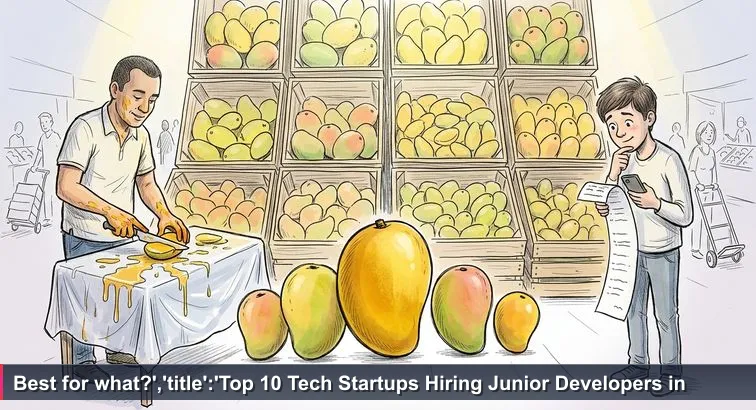
You’re in Paloquemao with that handwritten “Top 5 Mangos” sign in front of you and a vendor repeating the same thing every good mentor would ask a junior dev in Bogotá or Medellín: “¿Mejor… para qué?” In Colombia’s tech market, “best startup” is as incomplete as “best mango” when you don’t know if you’re making jugo, ensalada, or postre.
From “best” to “best for what”
The local ecosystem is exploding. Regional staffing analyses like the ProSource Colombia IT staffing guide put growth at around 24% year-over-year, with Colombia now the third-largest software talent pool in LatAm and a developer deficit expected to pass 60,000 roles. On paper, that sounds like you can’t go wrong - yet juniors in Bogotá, Medellín, Cali and Bucaramanga still feel lost.
That’s where listicles help and hurt. A “Top 10 Startups Hiring” headline promises certainty, but without your own filter it’s just another market stall sign. The right question is: do you want a place optimized for mentorship, for AI exposure, for salary stability, or for pure startup chaos and ownership?
How this Top 10 actually works
Every company on this list:
- Operates in Colombia, usually anchored in Bogotá or Medellín
- Shows concrete 2025-26 evidence of hiring junior or early-career devs
- Plays in high-growth verticals like fintech, connectivity, edtech, HRTech, proptech, or SaaS
Think of it as your Paloquemao map, not a universal ranking. Use directories like Wellfound’s Colombia startup listings to cross-check who’s actively hiring, then match each name here to your own recipe: preferred stack, city, appetite for risk, and how close you want to stand to real AI/ML work in production.
Table of Contents
- Start here: choose the startup that fits your goals
- Bold
- Rappi
- Platzi
- Simetrik
- Mercado Libre
- Habi
- Somos Internet
- Welli
- Hunty
- Luable
- How to actually get hired by these startups
- Frequently Asked Questions
For sector-focused advice, see the comprehensive guide to AI careers in Colombia with finance and retail use cases.
Bold
Bold is the card reader you now see in panaderías, tiendas de barrio, and tiny restaurants from Suba to Envigado. It builds digital payment solutions for small and medium businesses, putting low-friction card readers and online payments into merchants’ hands and showing up in rankings like StartupBlink’s top Colombian startups list as one of the country’s fastest-growing fintechs.
By 2026 it’s operating at a Series C / late-stage growth pace, with its main hub in Bogotá and a mix of hybrid and remote roles. Internally, you’ll find the usual modern fintech stack: Node.js/TypeScript services, React frontends, and cloud infrastructure similar to AWS. The product focus is narrow but deep: payments, merchant tools, and financial APIs tuned to Colombia’s SMB reality.
Why it’s a strong first job
Rapid merchant growth translates into real, messy problems for junior devs: fraud checks, transaction latency, and dashboards that matter to shop owners’ daily sales. You get:
- Clear ownership over features that directly move processed transaction volume
- Hands-on practice with regulated fintech constraints like security and PCI
- Daily exposure to APIs, webhooks, and high-traffic backend endpoints
Based on Glassdoor’s junior salary reports for Bogotá, entry-level devs in fintech typically see offers around COP 4.5M-7M per month, with the upper end more common for strong English and backend skills.
Practical entry tips
To signal fit, build something that looks and feels like Bold’s world:
- A mini “payment gateway” clone: React frontend, Node.js backend, Postgres for fake transaction logs
- Webhook-driven flows (e.g., “payment succeeded” events) wired into notifications or dashboards
- Metric-focused descriptions on your CV like “processed 5,000+ test transactions/day in staging” instead of “built an app”
Rappi
Rappi is the orange backpack weaving through traffic in Chapinero, Laureles, and Ciudad Jardín - a delivery app that became a full super-app: groceries, restaurants, travel, even banking. As Colombia’s first unicorn, it’s a reference name on any LatAm CV and a major gravity well for engineering talent.
What you actually work on
Behind each order are high-scale systems: microservices coordinating shoppers and riders, payment gateways, and recommendation engines nudging users toward that extra postre. Teams span logistics, marketplace, ads, and consumer fintech (RappiBank), using stacks that often include Java or Go on the backend and Kotlin, Swift, or Flutter for mobile. AI shows up in ETA prediction, dynamic pricing, demand forecasting, and fraud detection - so even pure software roles sit close to ML in production.
Compared with seed-stage startups, Rappi offers more structure: documented onboarding, clearer career ladders, and specialized squads. It also keeps junior-friendly paths open, such as its “Farmer Jr” track and entry-level engineering roles regularly advertised on platforms like startup.jobs for Rappi positions.
How a junior can stand out
Instead of applying to “Rappi” in general, aim at a specific tribe - Last-Mile Logistics, RappiBank, Growth - and mirror their problems in your projects. For example:
- A route-optimization toy project in Python that assigns riders to orders in a simulated Bogotá rush hour
- A junior-level system design doc for “service to match orders to couriers with retries and timeouts”
- Small experiments with surge pricing or delivery time prediction using open datasets
If you’re coming from a bootcamp or university in Colombia, highlight end-to-end projects and teamwork. Programs that emphasize backend, SQL, and cloud - like a 16-week Python + DevOps track or a 25-week AI-product path - map well to Rappi’s need for engineers who can reason about services, data, and experimentation, not just write code in isolation.
Platzi
Platzi is the green headphones you see on TransMilenio at 6 a.m. - videos paused mid-lesson, notebooks full of code. Born in Bogotá and now a remote-first company, it’s one of Latin America’s flagship edtech startups and a Y Combinator W15 graduate, with a platform serving hundreds of thousands of students learning programming, design, English, data, and more.
Why Platzi works for first-time devs
Unlike most startups, Platzi is literally built around juniors. It frequently hires interns and junior developers directly from its own student base and from partner programs like Laboratoria, a trend echoed in regional bootcamp overviews such as Youth STEM’s review of Latin American bootcamps. Managers expect you to be in permanent “learning mode,” not to arrive as a finished product.
The tech stack is modern and web-focused: React on the frontend, Django/Python and Go on the backend, and heavy use of cloud platforms like AWS and Azure for content delivery and data. For a junior, that means hands-on experience with production-grade codebases and CI/CD pipelines rather than endless tutorials.
Everyday AI and data, not just buzzwords
Because Platzi lives on learning outcomes, AI and analytics show up everywhere:
- Recommendation engines for “next course to take” and personalized learning paths
- Engagement experiments (A/B tests) across thousands of learners
- Dashboards tracking completion rates, churn, and cohort performance
Even if you’re not a data scientist, you’ll integrate services that touch ML models, event tracking, and experimentation frameworks.
How to position yourself
To get noticed, align your portfolio with Platzi’s reality:
- Complete and showcase a full Platzi career path (e.g., React + Node or Python + Data) with deployed projects
- Contribute to open-source tools used in education (LMS plugins, video players, chat features)
- Run or document a small study group or workshop - Platzi values people who can teach as well as code
Open roles appear frequently on Y Combinator’s Work at a Startup page for Platzi, where a focused cover letter explaining how you improved a learning funnel or community feature can stand out fast.
Simetrik
Simetrik is the invisible layer behind reconciled spreadsheets and spotless financial reports at banks, retailers, and fintechs across LatAm. From its base in Bogotá, it builds SaaS tools that automate complex financial reconciliations and compliance workflows for enterprises operating in dozens of markets.
Where Simetrik is in its journey
The company is in a Series B, fast-scaling phase, having raised roughly $55M and expanded to more than 35 countries, according to Colombian startup watchlists like Cuantico VP’s 2026 report. Its hub remains Bogotá, but remote roles are increasingly common as large clients come on board across Latin America and beyond.
Simetrik lives where high-volume financial data meets strict audit requirements. That means engineering is less about flashy UIs and more about reliability, traceability, and performance under heavy data loads.
Why juniors learn fast here
For early-career developers, Simetrik is a crash course in:
- Designing and querying robust data models for transactions, accounts, and ledgers
- Building and maintaining data pipelines on cloud platforms like AWS or GCP
- Implementing secure APIs and authentication flows for banks, payment gateways, and large merchants
Because the product is enterprise B2B SaaS, you also see how technical choices affect critical KPIs like uptime, error rates, and client retention.
How to demonstrate you’re a fit
Before applying, build a mini “Simetrik” of your own:
- A service that ingests CSV transaction files from two fake payment providers
- Reconciliation logic that flags mismatches using Python + Pandas or Node.js + SQL
- A minimal dashboard or API to query discrepancies and export reports
In interviews, be ready to sketch tables for transactions, customers, and balances, and to explain how you’d monitor such a system in production. Showing that you understand both the data and the business stakes makes you stand out in a field of juniors who only talk about features, not financial impact.
Mercado Libre
Mercado Libre is the yellow box that shows up in apartment lobbies from Usaquén to El Poblado. Headquartered in Argentina but deeply rooted in Colombia, it’s Latin America’s leading e-commerce and fintech platform, with major tech and operations centers in Bogotá and Medellín and products like the marketplace, Mercado Pago, logistics, and ads running at continental scale.
Regional giant, local opportunity
Although it’s a public company, Mercado Libre still behaves like a fast-moving tech firm: small product squads, constant experimentation, and aggressive expansion across LatAm. Regional talent reports show it as a consistent employer of early-career engineers in Colombia, with Junior Software Developer roles in Bogotá and Medellín typically starting around COP 5M per month, making it a reference point for entry-level compensation in the country.
What juniors actually work on
As a junior you’re unlikely to “build Mercado Libre,” but you will own pieces of systems that touch millions of users:
- Search and recommendation components that decide what buyers see first
- Marketplace services handling inventory, orders, and seller tools
- Fintech and risk modules inside Mercado Pago for payments and fraud scoring
- Logistics optimization across warehouses and last-mile delivery routes
Most teams use battle-tested stacks such as Java/Kotlin on the backend, React/TypeScript on the frontend, and heavy use of cloud-native tooling.
How to prepare from Colombia
Interview processes resemble other “big tech” flows: algorithmic challenges plus light system design. Practicing medium-level problems and basic architecture diagrams is essential. Track open roles on platforms like LinkedIn’s software engineer listings for Bogotá, and prioritize projects that mirror their world - inventory systems, checkout flows, or simple recommendation engines - so your portfolio feels immediately relevant to hiring managers in their Bogotá and Medellín hubs.
Habi
Habi is the startup quietly turning Bogotá’s chaotic property hunt into something closer to online shopping. Instead of endless classified ads and phone calls, it offers a data-driven way to buy and sell homes, focusing on liquidity, transparent pricing models, and a smoother transaction experience across Colombian cities and Mexico. It recently reached unicorn status and is consistently highlighted as one of the country’s top growth-stage startups in analyses like The StartupVC’s overview of Colombian tech companies.
Where software meets messy real estate data
Habi’s core advantage is its pricing engine. It ingests property characteristics, neighborhood trends, time-on-market, and macro indicators to estimate fair values and decide which homes to buy or list. For engineers, that means building systems where data quality and model integration directly affect multi-million-peso decisions.
Juniors can expect exposure to:
- ML-driven valuation and recommendation models (even if you’re on the software, not data science, team)
- Full-stack web apps for listings, customer journeys, and internal operations tools
- Fintech-style flows for mortgages, credit scoring, and transaction risk management
How to signal you’re “Habi-ready”
Before applying, build a tiny “fake Habi”: a property valuation tool where users input basic features (barrio, estrato, size, age) and you return a price using a simple heuristic or regression. Deploy it, document your architecture, and highlight how you’d plug in a future ML model.
Strengthen your real-estate vocabulary (escrituras, avalúos, notarías) and practice explaining regression, feature engineering, and model evaluation in plain Spanish. In interviews, emphasize your ability to collaborate with ops and sales teams - at Habi, on-the-ground insights from brokers and city teams are as critical as your code.
Somos Internet
Somos Internet is what happens when Medellín’s “valle del software” obsession meets the very real problem of patchy connectivity. From a base in the Aburrá Valley, the startup builds high-speed internet infrastructure and the software to manage it, targeting neighborhoods and businesses that traditional ISPs underserve.
Series A momentum from Medellín
The company recently closed a $14M Series A round led by Union Square Ventures and Ribbit Capital, flagged as a “startup to watch” in 2026 ecosystem reports. That funding is fueling aggressive hiring in Medellín and remote roles across Colombia, at a time when firms see the country as a cost-effective hub for nearshore engineering; analyses like Alcor’s Colombian hiring guide note savings of up to 48% versus US-based developers with similar skills.
Tech-wise, Somos leans on Go and Python in the backend, React on the frontend, and a heavy dose of networking and DevOps tooling. You’re not just building CRUD apps; you’re wiring software into routers, antennas, and monitoring systems that customers notice immediately when something breaks.
Why juniors grow fast here
For early-career devs, Somos Internet offers:
- Hands-on experience with real-world network management and observability
- Performance-focused work where latency, packet loss, and uptime are daily concerns
- Early exposure to AI-adjacent problems like anomaly detection and predictive maintenance on network data
Because the team is still in a Series A stage, juniors work close to founders and senior engineers, seeing product, infrastructure, and customer issues up close.
How to pitch yourself
To look “Somos-ready,” focus your portfolio on infrastructure-flavored projects:
- A small dashboard in React that monitors simulated routers or IoT devices, with live metrics and alerts
- Scripts in Go or Python that log latency, uptime, and error rates to a database for analysis
- Evidence of comfort with Linux basics, Docker, and core networking concepts like TCP/IP, DNS, and routing
Layer that with involvement in Medellín’s Ruta N events or local DevOps/AI meetups, and you present as someone who can handle both the technical and ecosystem sides of building next-gen connectivity from Colombia.
Welli
Welli sits at the crossroads of two systems Colombians wrestle with every day: money and healthcare. Based in Bogotá and positioned as a growth-stage fintech, it focuses on making medical services more accessible through credit products and flexible payment plans. Recent coverage of Colombian startups to watch notes that Welli has raised around $25M in funding, a war chest aimed at accelerating product development and nationwide expansion.
For a junior developer, that translates into building tools that have a direct, human impact: turning a rejected procedure into something a family can actually afford. Inside the codebase, you’ll touch:
- Patient-facing apps where users apply for financing and manage their payment plans
- Clinic and hospital dashboards tracking approved procedures, payouts, and risk
- Internal back-office tools for underwriting, collections, and regulatory reporting
The heart of Welli’s business is risk. Behind each approved surgery or dental treatment is a model estimating the probability of default, expected loss, and a sustainable installment schedule. Working here means getting close to AI- and data-driven systems for credit scoring and offer optimization, even if your title says “Software Engineer” rather than “Data Scientist.” Understanding concepts like PD, LGD, and scorecards becomes part of your daily vocabulary.
To stand out, build a small credit-simulation app: let users input income, expenses, and a target procedure cost, then compute basic affordability metrics and flag high-risk cases. Document your schema, SQL queries, and any heuristic “risk model” you design. Pair that with strong communication and an understanding of the broader junior market - resources like TECLA’s overview of junior developer roles show how employers increasingly value juniors who can own internal tools and analytics, not just frontends.
Hunty
When your CV has disappeared into the void of a hundred ATS filters, Hunty is the startup trying to flip that script. Based in Bogotá with a strong remote culture, it builds an AI-powered platform that helps candidates find better-matched jobs and gives companies smarter tools to run their recruiting.
AI-powered HRTech with room for juniors
Hunty operates at a Seed / early-growth stage and recently raised around $1M to expand its software for recruiters and jobseekers. It’s highlighted as a key HRTech player in Colombia in regional “startups to watch” reports, which track how local founders are attacking the broken hiring experience from both sides of the market. The tech stack mixes Python and Node.js on the backend with modern web frontends and specialized AI/ML tools for matching and ranking.
Why it’s attractive for AI-curious juniors
Hunty sits at the intersection of recommendation systems, ATS-style SaaS, and candidate-facing UX. For an early-career dev, that means exposure to:
- Matching algorithms and scoring functions that pair CVs with job descriptions
- Experiment-heavy product work, A/B tests, and funnel analytics for signups and conversions
- End-to-end feature ownership in a small team: APIs, UI, and instrumentation
You won’t just “call an AI API” - you’ll wire models into real user journeys where bad ranking means missed opportunities for real people.
Portfolio moves that get noticed
To match Hunty’s problems, build a mini job-matching engine: ingest a few candidate profiles and postings, then use simple text-similarity (TF-IDF or embeddings) to rank fit and visualize results. Explain your data model and evaluation criteria as clearly as your code.
Boost your odds by hanging out where HRTech founders look for talent: startup directories like Wellfound’s Colombia startup listings, local Discord/Slack tech communities, and virtual meetups. Emphasize empathy for candidates and recruiters in your applications - Hunty cares as much about how you understand users as how fast you ship features.
Luable
Luable, known locally as MejorCDT, is the kind of startup you hear about in Telegram trading groups and YC demo videos before you ever see a billboard. It simplifies investments for regular users by comparing and managing products like Colombian CDTs through a clean, consumer-first interface. The team is lean, remote-first with a strong Bogotá presence, and backed by Y Combinator S21, with roughly $1M in Seed funding.
Why a tiny YC startup is a big learning curve
At Seed stage there’s no room for spectators. Luable’s engineers touch everything: React flows, Node.js APIs, database design, analytics events, even occasional product copy. You work directly with founders, ship weekly (or daily) iterations, and see how small UI changes move activation, retention, and assets-under-management metrics. There’s less process than in a Rappi or Mercado Libre, but far more ownership from day one.
The stack is what you’d expect from a YC consumer fintech: modern JavaScript/TypeScript, cloud services, and third-party integrations with financial institutions. For juniors interested in fintech and product, this is a front-row seat to how a tiny team can compete with banks on UX.
How to look “Luable-ready”
Instead of generic CRUD apps, build something close to their world:
- A CDT comparison dashboard: fake rates, terms, and banks; filters and sorting in React
- A small Node.js API that stores offers, tracks user selections, and emits basic analytics events
- Tests plus a simple CI setup to prove you can move fast without breaking everything
When roles pop up on platforms like Y Combinator’s Colombia jobs board, use your cover letter to walk through one product experiment you shipped, how you measured impact, and what you changed based on the data.
How to actually get hired by these startups
By the time you’ve compared your tenth “Top 10 Startups” list, it can feel like staring at that Paloquemao sign again: too many good options, no idea which one is right for your recipe. Getting hired is less about finding a mythical “best” company and more about learning to press, smell, and taste-test each opportunity before you take a bite.
Evaluate before you say yes
Treat each startup like an investor would. In interviews and your own research, look for signals of health and growth, not just cool branding.
- Runway & funding: Ask how long they can operate at current burn. Recent rounds (like the many Series A/B deals highlighted in Colombian VC reports) are a good sign.
- Revenue & customers: Enterprise SaaS and fintechs should be able to name paying clients and core metrics (MRR, churn, ticket size).
- Hiring velocity: A steady stream of roles across engineering, product, and sales on LinkedIn often indicates real traction, not just hype.
- Technical signal: Blogs, talks, or open-source repos show there’s an engineering culture you can learn from.
Use the Bogotá-Medellín advantage
Both cities are dense with opportunities: unicorns like Rappi, regional leaders like Mercado Libre, and nearshore giants such as Globant, IBM, Accenture, Endava, and PSL all sit a few metro stops or a short bus ride away. Plug into meetups at spaces like Ruta N, iNNpulsa events, university hackathons, and Discord/Slack communities where startup engineers actually hang out. Many junior offers still start with a casual “coffee chat” after a talk or workshop.
Skill up and show the work
Colombian hiring managers repeatedly say they want juniors who can both code and communicate. Guides on what junior developers should be focusing on emphasize solid foundations in JavaScript or Python, SQL, cloud basics, and version control, plus clear explanations of tradeoffs. Structured paths help: programs like a 16-week backend + DevOps track or 25-week AI-product bootcamp in the COP 8,496,000-15,920,000 range can give you portfolio projects, 1:1 coaching, and mock interviews. With outcomes around 78% employment, 75% graduation, and 4.5/5 ratings from hundreds of reviews, community-based bootcamps demonstrate that consistent practice beats raw talent when it comes to landing that first offer.
Frequently Asked Questions
Which startup on this list is best to start my junior developer career in Colombia?
It depends on your goal: for structured onboarding and scale choose Rappi or Mercado Libre, for rapid ownership and equity pick seed-stage firms like Luable or Hunty, and for AI/data exposure consider Habi, Simetrik or Platzi. Colombia’s ecosystem is growing ~24% YoY and junior offers commonly range from about COP 4.5M-7M/month, so match the startup to the learning you want.
Which startups pay the most for junior developers in Bogotá or Medellín?
Large players typically lead on pay - Mercado Libre and Rappi are among the top benchmarks (Mercado Libre junior roles often start near COP 5M/month), while fast-growing fintechs like Bold and Simetrik commonly offer in the COP 4.5M-7M/month band. Some remote roles are paid in USD (roughly $1,500-$2,700/month), so stack, English level and role seniority matter.
How should I choose between a seed-stage and a growth-stage startup on this list?
Seed-stage startups (e.g., Luable, Hunty) give you faster ownership and close founder access but carry higher risk, while growth-stage firms (Simetrik, Habi, Bold) usually offer more process, mentorship and stability - check recent funding like Simetrik’s Series B (~$55M) or Welli’s ~$25M round as signals. Always ask during interviews how many months of runway they have and about customer revenue or MRR.
What technical skills should I build to get hired quickly by these Colombian startups?
Prioritize JavaScript/TypeScript with React and Node, Python, plus at least one backend language like Java or Go, SQL, and cloud basics (AWS/GCP); basic AI/ML literacy or experience calling LLM APIs is increasingly valuable. With a projected developer shortfall of ~60,000 roles in Colombia, practical full-stack, cloud and data skills will make you more competitive.
What's the quickest way to get noticed by startups in Bogotá and Medellín?
Combine targeted projects that map to a company’s product (for example, a mini payment gateway for Bold or a property valuation toy for Habi) with in-person networking at Ruta N, iNNpulsa or local meetups and bootcamp/university pipelines (Platzi, Nucamp, Laboratoria). In Colombia’s fast-growing ecosystem, a relevant demo plus a warm intro usually beats blind applications.
Top gratuito 2026: formaciones tecnológicas en bibliotecas y centros comunitarios colombianos
Explore the best AI Tech Bootcamps in Colombia in 2026 to find programs that match your budget and city.
See our ranking of women-in-tech groups in Colombia (2026) for cost-effective AI training options.
Ranking: Highest paying tech companies in Colombia for engineers
For practical advice, follow the ranked list of industries hiring AI talent in Colombia in 2026 and the recommended career-changer verdicts.

Irene Holden
Operations Manager
Former Microsoft Education and Learning Futures Group team member, Irene now oversees instructors at Nucamp while writing about everything tech - from careers to coding bootcamps.