









Top 10 Industries Hiring AI Talent in Lexington-Fayette Beyond Big Tech in 2026
By Irene Holden
Last Updated: March 12th 2026
Too Long; Didn't Read
Healthcare and Automotive Manufacturing lead Lexington-Fayette's AI job market in 2026, with salaries reaching $165,000 and AI-exposed industries seeing 4x higher productivity growth. From Logistics to AgTech, non-big tech sectors offer stable, high-impact roles at major employers like UK HealthCare and Toyota, supported by the University of Kentucky's new AI degree and the region's affordable living.
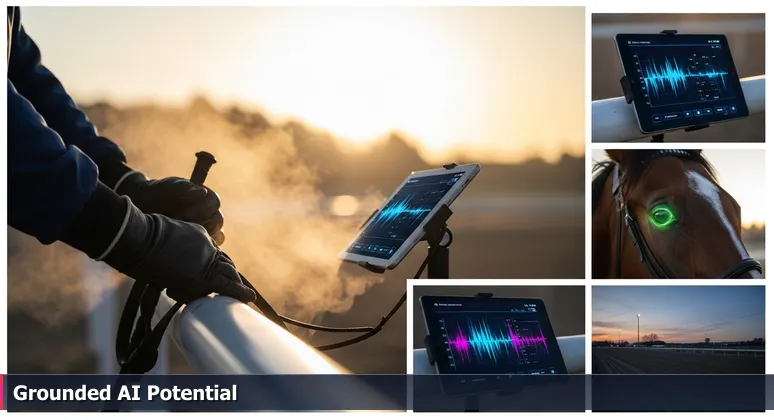
The most transformative shifts in a career - or an industry - often arrive quietly, embedded in the familiar. In Lexington, it's in the morning mist at Keeneland where a tablet analyzes a thoroughbred's gait, or in the precise hum of a Toyota assembly line where computer vision spots microscopic defects. Here, the AI revolution is being written on the ground, within the industries that have long formed the Bluegrass economy.
This is a revolution of enhancement, not replacement. According to regional analysis, non-tech "AI-exposed" industries in the area are reporting nearly 4x higher productivity growth than those that are not. For professionals, this creates a landscape ripe with opportunity beyond coastal tech giants, offering mission-driven work and the chance to become a strategic translator between cutting-edge technology and tangible, world-building industries.
With a lower cost of living, proximity to anchors like UK HealthCare and Toyota, and a growing startup ecosystem, Lexington-Fayette offers a compelling alternative. The local talent pipeline is strengthening, evidenced by the University of Kentucky launching the state's first B.S. in AI in Fall 2026 to meet soaring demand. As UK AI student Michelle Alcantara noted, the goal is focusing on "using AI in fields like agriculture and healthcare where it can improve lives and make systems more efficient."
Table of Contents
- AI in Lexington-Fayette: A New Frontier
- Healthcare & Biotech
- Automotive & Advanced Manufacturing
- Logistics & Supply Chain
- Fintech & Banking
- Education Technology & Higher Ed
- Retail & E-commerce
- Energy & Utilities
- Agriculture & AgTech
- Government & Public Sector
- Real Estate & PropTech
- The Future of AI Careers in Lexington-Fayette
- Frequently Asked Questions
Develop the skills needed for AI careers in Lexington's industries in 2026 with this resource.
Healthcare & Biotech
Anchored by the massive UK HealthCare system, Lexington's healthcare sector is undergoing a profound AI-driven transformation where the core mission is enhancement, using algorithms as a "second lens" to augment clinical expertise. This work requires a unique blend of deep technical skill and intimate domain knowledge.
"AI is a transformative force for clinical efficiency," says Dr. Stephen Behnke, CEO of Lexington Clinic, highlighting the sector's strategic embrace of the technology.
Roles like Medical Imaging Deep Learning Specialists are in high demand to develop algorithms that analyze CT and MRI scans with superhuman precision, identifying early signs of disease. This work demands expertise in HIPAA-compliant data handling and seamless clinical workflow integration, not just model building.
For senior or specialized roles, such as Clinical AI Fellows, salaries range from $130,000 to $155,000+. This sector is an exceptional fit for career changers with backgrounds in life sciences or medical fields who can bridge the critical gap between data science and patient care, translating complex model outputs into actionable clinical insights.
The growth trajectory is exceptionally high as organizations rapidly adopt robotic surgical assistants and AI-enhanced diagnostic tools. It represents the top destination in Lexington for AI professionals seeking work with immediate, tangible impact on community health outcomes.
Automotive & Advanced Manufacturing
At facilities like Toyota Motor Manufacturing Kentucky in Georgetown, AI is solving critical, ground-level problems in quality control, predictive maintenance, and robotic safety, building what industry insiders call sophisticated "electro-industrial stacks." This sector represents a powerful blend of physical engineering and digital intelligence, where AI talent directly impacts uptime, safety, and precision.
The roles are deeply practical. Computer Vision Engineers design systems for real-time defect detection on the assembly line, while Robotics & Automation Specialists program collaborative robots (cobots) with intelligent virtual safety systems. Required skills extend beyond pure model building to include edge optimization - deploying lean models directly onto factory-floor hardware - and using tools like Docker and Kubernetes for robust, scalable deployment in industrial environments.
Compensation reflects the high-value integration work, with positions like Advanced Technology Manufacturing Engineers often commanding $60 to $80 per hour (or $125,000 - $165,000+ annualized). This field is ideal for professionals with mechanical or industrial engineering backgrounds who want to pivot into tech, as they intuitively understand the physical systems the AI is meant to monitor and optimize.
The growth trajectory is strong, driven by the adoption of virtual safety systems and automated inventory management. As a regional hub for advanced manufacturing, Lexington-Fayette offers AI professionals a chance to work on global-scale industrial challenges with immediate, measurable outcomes, right in the heart of Kentucky's manufacturing corridor.
Logistics & Supply Chain
Kentucky's central geography and status as a top-ranked air cargo hub make the Bluegrass region a natural epicenter for logistics innovation, where AI talent is hired to compress the critical cycle time from data insight to operational action. Professionals in this field build the intelligent backbone for moving everything from automotive parts to pharmaceuticals with unprecedented efficiency.
Roles like AI Global Supply Chain Associates and Logistics AI Engineers focus on creating models for hyper-accurate demand forecasting, dynamic route optimization for fleets, and managing complex inventories across regional warehouses. The technical challenge here is less about building the most advanced model in a lab and more about practical integration - seamlessly connecting AI outputs with legacy Enterprise Resource Planning (ERP) systems like SAP that run global operations.
Additional key skills include using Natural Language Processing (NLP) to automatically parse shipping documents, bills of lading, and customer communications, turning unstructured text into actionable data. Salaries for these mission-critical roles are highly competitive, ranging from $99,000 to $164,000, reflecting the value of ensuring supply chains remain resilient and responsive.
This sector offers a clear, high-impact path for career changers. For individuals with experience in warehouse management, transportation, or procurement, it's an opportunity to transition into a tech role where you're not optimizing abstract data flows, but ensuring critical parts arrive at a plant like Lockheed Martin on time or streamlining the distribution network for regional manufacturers. The work has immediate, tangible consequences for the local and national economy.
Fintech & Banking
In Lexington's financial sector, a quiet but critical arms race is underway as local institutions harness AI for security, personalized service, and operational resilience. Unlike the flashier fintech hubs, the focus here is on protecting assets and ensuring the stability of community-focused banks and credit unions that form the bedrock of the regional economy.
The primary problems AI solves are sophisticated fraud detection, precise risk modeling, and back-office efficiency. AI Fraud Analysts build models that spot anomalous transaction patterns in milliseconds, while Financial Systems ML Engineers create algorithms for more accurate credit risk assessment. A key differentiator is the paramount importance of data security and regulatory compliance, making trustworthiness as crucial as technical prowess.
Salaries reflect this need for reliable expertise. Senior Technology Business Partners, who must expertly translate business needs into technical solutions, can earn $125,000 to $180,000+. This industry is perfect for detail-oriented professionals from finance, accounting, or compliance backgrounds looking to pivot into tech.
The trade-off is potentially less flashy work than at a speculative hedge fund, but with the profound reward of directly protecting your neighbors' financial well-being. As noted in regional analysis, banking is identified as a top-four industry for tech needs, with local leaders like Stock Yards Bank and Central Bank actively integrating AI to secure their operations and serve customers more intelligently.
Education Technology & Higher Ed
With the University of Kentucky leading the charge, the local education sector is applying AI to fundamentally personalize learning and streamline institutional operations. This goes beyond administrative tools to creating adaptive learning platforms that tailor content to individual student pace and using predictive analytics to identify at-risk students for early intervention.
Roles such as AI Developers and Instructional Designers are in demand to build these systems, while Data Analysts leverage AI to optimize resource allocation and improve student outcomes. Required skills include familiarity with frameworks like TensorFlow and PyTorch, but also a strong grounding in the ethical implications of using AI in educational settings - ensuring fairness and avoiding bias in systems that shape young minds.
Salaries at major institutions like UK and Bluegrass Community & Technical College are competitive, typically ranging from $101,000 to $130,000. This field is a compelling destination for former educators, academic advisors, or administrators who understand pedagogical challenges firsthand and can bridge the gap between technology and effective teaching.
The growth trajectory is expanding rapidly, fueled by initiatives like the University of Kentucky launching the state's first B.S. in AI and the Fayette County Public Schools' technology integration plans. The work is inherently mission-driven, directly impacting the skill development and future opportunities for Kentucky's next generation of workers and citizens.
Retail & E-commerce
Lexington's retail sector, from corporate anchors like Valvoline to tech-driven local marketplaces, is leveraging AI to compete through hyper-efficient operations and deeply personalized customer engagement. The focus is on compressing waste and amplifying relevance in a crowded marketplace.
AI professionals in this sector tackle very concrete business problems:
- AI Product Managers and Automated Inventory Specialists build systems that predict stockouts before they happen and dynamically optimize warehouse layouts.
- Technical Marketing Candidates employ AI for real-time dynamic pricing and personalized ad targeting that resonates with local consumer behavior.
Key required skills involve robust API integration to automate business processes and what's often called "AI literacy" - the ability to clearly communicate the value of complex models to non-technical managers and stakeholders. Salaries for these roles reflect their direct impact on the bottom line, ranging from $113,000 to $153,000.
This sector offers a prime opportunity for professionals with experience in supply chain, marketing, or store management to move into a tech role. You're applying AI to solve tangible challenges - like reducing spoilage for a local grocer or increasing online conversion rates for a regional brand - with immediate, measurable impact on business health and community service.
Energy & Utilities
As Kentucky's energy grid transforms into an intelligent network, local utilities require AI to manage unprecedented complexity and ensure unwavering reliability. Companies like LG&E, Kentucky Utilities (KU), and East Kentucky Power Cooperative are at the forefront, hiring talent to turn vast streams of IoT sensor data into predictive power and stability.
The roles are critical to regional infrastructure. Predictive Maintenance Analysts build models that analyze data from transformers and substations to forecast equipment failures days or weeks before an outage occurs. Smart Grid ML Engineers design systems to dynamically balance energy load, especially as renewable sources like solar and wind become more integrated into the grid.
The work is defined by heavy systems integration, requiring professionals to blend hardware knowledge of grid infrastructure with sophisticated software models. Skills in IoT data analysis and working within regulated environments are paramount. Salaries in this stable, essential sector are solid, ranging from $90,000 to $140,000.
This field is an outstanding fit for engineers from traditional energy, electrical, or civil engineering backgrounds seeking to pivot into tech. The trade-off is a potentially more measured pace than a startup, but the work is profoundly impactful - ensuring the lights stay on and energy costs remain manageable for every home, business, and hospital in the region. According to regional analysis, utilities are leading in technology position needs as they modernize infrastructure to meet 2026 demands.
Agriculture & AgTech
The Bluegrass region's iconic agricultural and equine industries are receiving a sophisticated, high-tech makeover, with AI solving labor-intensive challenges in monitoring animal health, optimizing crop yields, and enabling precision agriculture. This is where deep Kentucky tradition meets cutting-edge innovation, creating a uniquely fertile ground for AI professionals.
Companies like Alltech and pioneering equine health tech firms are hiring talent to apply AI across the sector:
- Precision Ag Data Scientists analyze satellite and drone imagery to assess crop health, soil conditions, and irrigation needs.
- Mechatronics Specialists work on autonomous navigation systems for tractors and farm equipment.
- Specialists in animal monitoring develop systems using computer vision to track livestock welfare and thoroughbred biomechanics.
Required skills include deep learning for visual analysis and sensor fusion, combining data from multiple streams to create a coherent picture of the farm or field. Salaries in this strategic growth area are competitive at $95,000 to $135,000.
"I want to focus on using AI in fields like agriculture and healthcare where it can improve lives and make systems more efficient," says Michelle Alcantara, a University of Kentucky AI student, capturing the sector's mission-driven appeal.
This sector represents a perfect niche for individuals with agronomy, animal science, or practical farming backgrounds who want to transition into tech. The work connects deeply to the local identity and has a direct impact on sustainability, food security, and the economic health of Kentucky's foundational industries.
Government & Public Sector
State and local governments in Frankfort and Lexington are increasingly turning to AI as a tool for systemic improvement, seeking to enhance public services and internal efficiency in measurable ways. This represents a shift toward more responsive, data-informed governance that directly benefits Kentucky residents.
Roles like AI Transformation Consultants and Data Policy Analysts work on diverse, impactful projects - from optimizing traffic light sequences to reduce downtown Lexington congestion, to using Natural Language Processing (NLP) to automatically categorize and route citizen service requests for faster resolution. The unique challenge here is operating effectively within strict public policy, procurement, and cybersecurity frameworks, where transparency and accountability are as important as technical performance.
Salaries in the public sector are often moderate compared to private tech but come with excellent benefits, job stability, and compelling work-life balance, typically ranging from $85,000 to $125,000. This path is ideal for individuals passionate about civic tech and systemic improvement who derive satisfaction from knowing their models make government more effective for all Kentuckians.
The hiring process may be less frenetically competitive than in private tech, offering a viable entry point. As discussed in regional policy analysis, there is a recognized need for public sector AI talent to help manage workforce transitions and reinvest efficiency savings into retraining, making this a strategically important growth area with deep community impact.
Real Estate & PropTech
The final frontier for AI's practical application in Lexington is the built environment. While still an emerging field locally, PropTech is growing as real estate firms, property managers, and developers seek intelligent tools to manage assets, streamline operations, and refine valuation models in a dynamic market.
Roles in this sector are business-centric and applied. AI Solution Architects design systems for property management companies to automate maintenance requests and optimize energy use across portfolios. Valuation ML Specialists build explainable AI (XAI) models that assess property values more accurately by analyzing vast datasets - including neighborhood trends, school district changes, and local development plans - going far beyond simple comparable sales.
The required skills here are uniquely blended. While technical prowess in building models is essential, equal weight is placed on communication and trust-building - the ability to translate complex, algorithmic outputs into clear insights for brokers, investors, and traditional appraisers. Salaries reflect this hybrid expertise, ranging from $100,000 to $150,000.
This sector is a strategic opportunity for professionals with real estate, finance, or data analysis experience looking to enter the AI space. The work is directly influential, perfect for those who want to see their technology shape investment decisions, commercial leasing, and community development in a growing city like Lexington. Positions such as the AI/ML Senior Product Consultant listed by major firms like CBRE indicate the professionalization and demand rising in this niche.
The Future of AI Careers in Lexington-Fayette
The narrative of an AI career is decisively shifting. It's no longer solely about migrating to coastal tech hubs with their skyrocketing costs of living. In Lexington-Fayette, the frontier is about embedding intelligence into the heart of healthcare, manufacturing, logistics, and the storied equine industry. The opportunity lies in becoming a translator and an architect - someone who can see the deep potential in long-established systems and give them new eyes.
This local path offers distinct advantages: strong salaries that stretch further thanks to a lower cost of living, mission-driven work that tangibly improves your community, and a front-row seat to the thoughtful reinvention of the world's most enduring industries. With the University of Kentucky strengthening the talent pipeline and affordable, flexible bootcamps like Nucamp offering accessible pathways for career changers, the barrier to entry is lower than ever.
The most groundbreaking AI work isn't happening in a vacuum. It's happening where technology meets tradition, where algorithms learn the rhythms of assembly lines, hospital corridors, and fertile fields. In Lexington, the future isn't being predicted in the cloud - it's being built on the ground, by professionals who understand that the most transformative applications of AI are often the most practical ones, rooted in the place they call home.
Frequently Asked Questions
Which industries in Lexington-Fayette are hiring the most AI talent in 2026?
Healthcare and biotech, led by UK HealthCare, are top for roles like Medical Imaging Deep Learning Specialists, with salaries up to $155,000+. Automotive, logistics, and fintech also show high demand, driven by employers like Toyota and local banks.
Why should AI professionals consider non-tech industries in Lexington-Fayette over big tech hubs?
These industries offer mission-driven work with less competition and a lower cost of living than coastal cities. Local data shows AI-exposed sectors have nearly 4x higher productivity growth, making it a smart career move with tangible impact.
What salary ranges can I expect for AI roles in Lexington-Fayette's key industries?
Salaries vary by field: healthcare roles earn $130,000 to $155,000+, automotive from $125,000 to $165,000+, and logistics between $99,000 and $164,000. Overall, compensation is competitive and paired with the area's affordable living costs.
Can I transition into an AI career in Lexington-Fayette if I have a background in healthcare or engineering?
Yes, industries like healthcare and manufacturing value domain expertise. For example, UK HealthCare hires clinical AI fellows with medical backgrounds, and Toyota seeks engineers for AI optimization, making it ideal for career changers.
What specific AI skills are in demand among Lexington-Fayette employers?
Computer vision for manufacturing at Toyota, natural language processing for logistics, and data security for fintech roles are key. The University of Kentucky's new AI program is boosting the local talent pipeline to meet these needs.
Start your tech career by exploring how to fund tech training in Lexington-Fayette through our step-by-step blueprint.
Compare AI salary ranges in Lexington-Fayette to national averages with our 2026 analysis.
Learn about the top coworking and incubation options in Lexington for tech in this ranked guide.
Find a curated list of AI tech bootcamps for 2026 in Fayette County with local insights.
For insights on 2026 tech job market in Lexington-Fayette without degree requirements, check this out.

Irene Holden
Operations Manager
Former Microsoft Education and Learning Futures Group team member, Irene now oversees instructors at Nucamp while writing about everything tech - from careers to coding bootcamps.