









Top 10 Industries Hiring AI Talent in Fayetteville Beyond Big Tech in 2026
By Irene Holden
Last Updated: March 4th 2026
Too Long; Didn't Read
Healthcare and logistics are the top industries hiring AI talent in Fayetteville beyond Big Tech in 2026, with healthcare offering senior roles at over $180,000 and logistics paying up to $220,000. These sectors stand out due to their mission-driven focus, strong regional job growth like 7,400 new healthcare positions, and practical applications in Northwest Arkansas's economy, benefiting from local expertise and a lower cost of living.
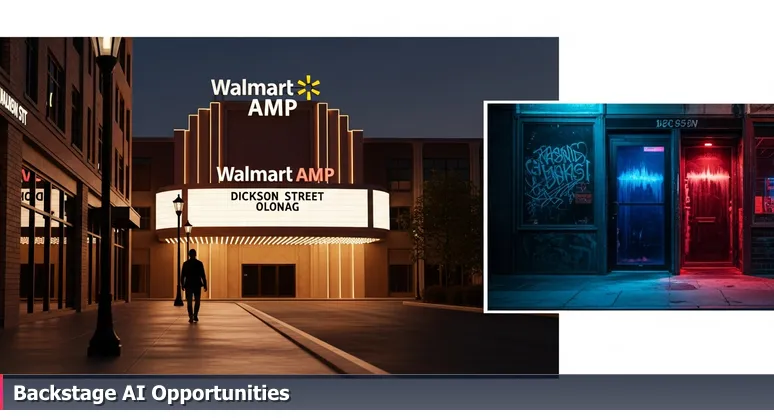
We've all done it on Dickson Street: eyes locked on the distant marquee of the Walmart AMP, we miss the groundbreaking new band playing a perfect set in the more intimate venue right next door. The career landscape for AI talent in Fayetteville today follows a remarkably similar pattern. While "headliner" tech roles are visible, the most transformative and stable opportunities are being built backstage in the foundational industries that power Northwest Arkansas.
This shift is driven by a deliberate regional strategy, including the "Healthcare + AI Workforce Readiness Plan", which focuses on augmenting existing jobs rather than replacing them. As Stefanie Pawluk of the Northwest Arkansas Council noted, "AI is more likely to augment healthcare roles than replace them," a sentiment echoing across logistics, retail, and food production. The result is a surge in demand for hybrid roles that blend AI/ML literacy with deep domain expertise in fields like freight logistics, clinical workflows, and agricultural science.
For career changers, this is a significant advantage. You're not competing with Silicon Valley PhDs; your hands-on industry knowledge is the irreplaceable context that makes AI solutions work. Salaries are competitive, often ranging from $80,000 to over $220,000, and are amplified by NWA's lower cost of living. The region's explosive growth, detailed in the City of Fayetteville's Target Industry Sectors report, creates a direct pipeline from local education programs to these high-impact roles.
This is where practical, accessible education becomes critical. Bootcamps like Nucamp's Solo AI Tech Entrepreneur program provide the specific technical skills to complement your domain expertise, offering an affordable and flexible path to securing your backstage pass to the region's AI transformation.
Table of Contents
- Discover AI Careers in Fayetteville
- Healthcare and Clinical Biotech
- Logistics and Advanced Supply Chain
- Fintech and Banking Services
- Food Production and Agricultural Technology
- Retail and Shopper Intelligence
- Energy, Utilities, and Sustainable Operations
- Education Technology and Workforce Development
- Aerospace, Defense, and Advanced Manufacturing
- Real Estate, Construction, and Property Technology
- Government, Public Sector, and Ethical AI Governance
- Frequently Asked Questions
To understand the local market, refer to the comprehensive guide to AI jobs in Fayetteville.
Healthcare and Clinical Biotech
Healthcare isn't just a service sector in Northwest Arkansas; it's a strategic growth industry projected to add over 7,400 regional jobs by 2036. AI is the central engine of this expansion, but with a crucial, human-centric focus. As highlighted by regional analysis, the consensus is clear: "AI is more likely to augment healthcare roles than replace them."
"AI is more likely to augment healthcare roles than replace them." - Stefanie Pawluk, Northwest Arkansas Council
This philosophy is active at employers like Mercy Hospital Northwest Arkansas, which lists roles for AI Health Analysts and Clinical Workflow AI Engineers with salaries reaching $180,000+. The unique challenge and differentiator here is applying AI within the non-negotiable frameworks of HIPAA and clinical safety protocols.
The Core of Healthcare AI Work
Professionals in this sector build tools for analyzing diagnostic imaging, optimizing patient scheduling, and interpreting clinical notes, often using frameworks like Langchain and Databricks integrated directly with Epic systems. For career changers with a background in biology, nursing, or medical administration, this sector is a perfect fit. Your domain knowledge is a massive asset, often outweighing the need for a pure computer science pedigree.
Career Pathways and Considerations
- Mission-Driven Impact: The work directly improves patient outcomes and operational efficiency.
- Domain Expertise is Key: Clinical knowledge is critical for developing safe, explainable AI integrations.
- Focus on Robustness: The tradeoff may involve less cutting-edge model development and more emphasis on reliable, auditable systems.
This makes healthcare an ideal landing spot for those who want to leverage AI for tangible good, applying it where technical skill meets profound human need in NWA's growing medical ecosystem.
Logistics and Advanced Supply Chain
Northwest Arkansas isn't just a logistics hub; it's a global nerve center where AI acts as a strategic "accelerator" for moving the world's goods. For companies like J.B. Hunt and ArcBest, the multi-billion-dollar question of efficiency is answered with practical AI. Roles such as AI & Self-Healing Engine Managers for last-mile delivery and Logistics Optimization Modelers command impressive salaries from $110,000 to $220,000.
"AI in this sector is about 'decision synchronization' across complex networks." - Sam M. Walton College of Business
Solving Tangible, High-Stakes Problems
The AI challenges here are intensely physical and immediate: building models for dynamic route optimization that respond to Fayetteville traffic and Oklahoma weather in real-time, creating predictive systems to prevent inventory stockouts (one regional success story cited a 30% reduction in out-of-stocks), and designing automated triage for shipment exceptions.
This work is unique because it requires deep domain knowledge in freight, warehousing, and transportation economics. For someone with experience in operations management, trucking, or warehouse logistics, pivoting into an AI role here is highly viable. You’re bringing irreplaceable context to the code, making your skills exceptionally valuable for solving the region's core business challenges, as detailed in industry analyses from the Walton College.
The path forward isn't about becoming a pure data scientist overnight; it's about leveraging your hard-won operational knowledge and augmenting it with the AI skills that turn logistics networks into synchronized, self-optimizing systems.
Fintech and Banking Services
The financial sector in Northwest Arkansas is undergoing a quiet revolution, migrating to cloud-native AI platforms to fundamentally automate and secure operations. Arvest Bank's collaboration with Google Cloud to build groundbreaking lending capabilities is a prime example. Institutions across the region are now hiring for AI Financial Analysts, Risk Management Consultants, and Contact Center AI (CCAI) Specialists, with top salaries extending from $87,400 to $293,800.
The core AI problems in fintech involve high-stakes precision: fraud detection systems that analyze millions of transactions for anomalous patterns, Document AI for automating commercial loan processing, and ensuring stringent regulatory compliance (KYC/AML). The uniqueness of this work lies in the non-negotiable demand for accuracy, auditability, and security. An AI model that "hallucinates" a loan amount is not an option in a world governed by financial regulations.
For professionals from accounting, auditing, or consumer banking, this represents a logical and high-impact career shift. Your understanding of financial products, risk, and regulations is the critical domain knowledge needed to train and validate trustworthy models that handle real money and maintain customer trust. As noted in coverage of regional banking innovation, this work is about building "groundbreaking lending capability." While the pace may be more measured than in a startup, the stability and clear impact on operational efficiency and security are powerful draws for those seeking to apply AI where it counts.
Food Production and Agricultural Technology
At first glance, a poultry processing plant in Springdale might seem an unlikely AI hub. Yet for companies like Tyson Foods and Simmons Foods, AI and computer vision are critical instruments for safety, efficiency, and innovation. They are actively hiring for Senior Automation & Robotics Engineers and AI/ML Computer Vision Specialists, with estimated salaries ranging from $100,000 to $160,000 to tackle intensely physical problems.
The work here represents the ultimate backstage pass, blending digital intelligence with the physical world. Your model’s output might directly control a robotic arm on a processing line. The primary applications include:
- Programming computer vision systems to inspect thousands of products per minute for quality defects.
- Optimizing complex, temperature-controlled protein processing lines for maximum yield and safety.
- Managing and maintaining robotics in challenging industrial environments.
This sector is a serious tech frontier, underscored by Tyson Ventures actively scouting AI startups for food innovation, as showcased in their public demo days. For career changers from food science, industrial engineering, or agriculture - including the many related programs at the University of Arkansas - this field offers a direct and meaningful path.
You’ll be solving problems of scale, safety, and sustainability that impact the global food supply, offering a tangible sense of purpose that’s hard to match in a purely digital domain. It's where code meets the conveyor belt, and your work directly tunes the instrument of modern food production.
Retail and Shopper Intelligence
While Walmart's global tech presence is the marquee headliner, the broader retail AI ecosystem in Northwest Arkansas extends into specialized, nuanced roles focused on the science of shopping itself. Beyond core algorithm development, there's high demand for Conversational AI Data Scientists, In-Club AI Engineers, and GenAI Strategy Directors, with salaries spanning $90,000 to $286,000.
The problems here are about understanding the "customer journey" at a massive, hyper-local scale. This involves developing AI agents that can reason and act in real-time on the sales floor, personalizing promotions dynamically, and managing inventory with street-level precision. One regional success story involved using AI to analyze local weather and event data, resulting in a 30% reduction in out-of-stock situations at specific stores.
This work requires a powerful blend of technical skill - Python, SQL, and Agentic Frameworks like Pydantic - and a deep, almost intuitive understanding of consumer behavior and retail telemetry. For marketing professionals, store managers, or inventory specialists, transitioning into these roles means leveraging your frontline experience to train and guide AI systems that serve millions of customers.
It’s a sector where behavioral insight is as valuable as computational power. As highlighted in job listings for Staff Data Scientists, these roles focus on turning vast amounts of retail data into actionable intelligence. Your career in retail is not a barrier; it's your backstage pass, providing the essential context to build AI that doesn't just process data, but understands the shopper.
Energy, Utilities, and Sustainable Operations
In the critical infrastructure that powers everyday life in Northwest Arkansas, companies like Summit Utilities are on a mission to democratize AI within their operations. This stable sector offers roles such as AI Analysts and Process Improvement Specialists, with estimated salaries between $80,000 and $120,000. The work is foundational, focusing on reliability and community resilience above all else.
The primary AI challenges involve predictive maintenance for aging infrastructure - where industry experts at McKinsey note AI can reduce unplanned outages by up to 70% - and optimizing complex energy load distribution across regional grids. Unlike consumer software, a power grid AI cannot afford to "go down" or hallucinate; the emphasis is on robust, explainable models integrated with operational technology (OT).
What makes this sector unique is its focus on "AI democratization," the process of upskilling existing engineering and field staff to wield AI tools effectively. This involves careful testing of AI agents for operational safety and developing purpose-built chatbots to handle customer inquiries efficiently.
For career changers from civil engineering, environmental science, or field operations within utilities, this field is an excellent fit. Your hands-on knowledge of physical systems - the substations, pipelines, and transmission lines - is the invaluable training data for creating AI solutions that are not just theoretically sound but practically deployable. It offers a career directly tied to sustainability and the quiet, reliable functioning of the community, ensuring the lights stay on and the region grows smarter.
Education Technology and Workforce Development
With the University of Arkansas in its backyard, Fayetteville is a natural epicenter for applying AI to learning and workforce development. Driven by the regional push for "AI Workforce Readiness," institutions from the University to NorthWest Arkansas Community College are creating roles for AI Adjunct Instructors and Program Associates for AI Enablement. While instructional salaries vary, these administrative and curriculum development positions typically range from $60,000 to $100,000.
The core mission here is dual-faceted and critical for the region's future: first, using AI to improve educational outcomes through personalized learning platforms and intelligent tutoring systems, and second, teaching AI literacy to prepare the next generation of nurses, engineers, and business leaders. This work is less about building monolithic software and more about creating the tools, curricula, and support systems that empower every other educator and professional in NWA.
For former teachers, instructional designers, or corporate trainers, this represents a direct and meaningful pivot into tech. You are not just using AI; you are shaping how an entire regional workforce understands and applies it. The compensation may be lower than some corporate roles, but the impact on regional economic mobility and the opportunity to be at the forefront of pedagogical innovation are significant rewards.
This sector highlights the clear need for accessible upskilling paths. Programs like Nucamp's AI Essentials for Work bootcamp are directly aligned with this mission, offering a practical, 15-week pathway for education professionals to gain the exact AI literacy they need to teach or develop new programs. It’s a perfect example of how affordable, focused training helps build the local talent pipeline, turning educators into the architects of Northwest Arkansas's AI-enabled future.
Aerospace, Defense, and Advanced Manufacturing
The presence of global aerospace and defense contractors like Lockheed Martin creates a niche in Northwest Arkansas for high-stakes, precision AI applications. While some roles support regional or remote projects, they represent the pinnacle of applied AI, with positions such as AI/ML Data Engineers and Senior Aerospace Engineers with AI specialization offering salaries from $90,000 to $159,500.
The problems solved here are cutting-edge and carry immense responsibility: using machine learning for predictive maintenance on flight-critical aerospace materials, simulating complex propulsion systems, and employing CAD-based AI assistance for intricate engineering design. As seen in listings for senior AI engineers, the work demands extreme rigor.
The uniqueness of this sector is its non-negotiable emphasis on precision, security, and verifiability. Models must be robust, explainable, and often developed within environments requiring security clearances. This is AI where failure is not an option, applied to national priority technologies and life-critical systems.
For professionals with backgrounds in mechanical or aerospace engineering, physics, or advanced manufacturing, this field is a powerful destination. Your deep technical domain knowledge isn't just helpful - it's the essential foundation for creating trustworthy models. It offers stable, long-term projects and the significant reward of knowing your work operates at the very frontier of both technology and security.
Real Estate, Construction, and Property Technology
Northwest Arkansas's explosive growth isn't just a construction boom - it's a complex data problem, and the real estate sector is turning to AI to manage it. From national homebuilders like Lennar to consulting powerhouses like PwC, there's growing demand for AI Analysts for property valuation and AI Native Engineers, with salaries ranging from $90,000 to $130,000. This work directly shapes the future skyline of Fayetteville, Rogers, and Bentonville.
The key problems involve fusing quantitative AI with qualitative, local insight. Professionals use computer vision and geospatial data to assess property values and development potential, optimize construction project management against supply chain variables, and automate asset management for large investment portfolios. According to PwC's analysis of industry trends, this represents a fundamental shift: nearly half of all real estate skills are undergoing a "hybrid transformation" via AI.
For career changers from real estate, urban planning, architecture, or construction management, this is a powerful opportunity to get backstage. Your instinct for location, value, zoning laws, and project flow provides the essential training data for AI systems. You're not just using a tool; you're encoding your professional expertise into models that will manage the region's physical development for decades.
This sector perfectly exemplifies the "hybrid role" advantage in NWA. Success doesn't require abandoning your hard-won domain knowledge but augmenting it. Gaining the technical skills to execute this transformation - through foundational programs in data science and Python - allows you to directly influence how and where Northwest Arkansas grows, turning your industry experience into the algorithm for smarter development.
Government, Public Sector, and Ethical AI Governance
As AI becomes woven into the fabric of society, the public sector in Arkansas is proactively building its capacity for responsible oversight and equitable implementation. Entities like the City of Fayetteville and the State of Arkansas are creating new roles for AI Governance & Risk Analysts and AI Platform Support specialists, with estimated salaries of $70,000 to $110,000. This represents a fundamentally different kind of backstage work - one focused on building the guardrails, not just the engines.
The focus here isn't on developing consumer AI products, but on creating the essential frameworks for "responsible adoption." This involves critical, mission-driven tasks: auditing public-facing algorithms for bias, ensuring transparency in automated government services, and developing ethical guidelines for AI use across the state workforce. It's work dedicated to the public good, equity, and long-term societal impact over profit.
This emerging field is a direct outgrowth of the region's strategic planning, which identifies key sectors for growth and ensures technology benefits the entire community. For professionals from public administration, law, policy, or social sciences, it offers a compelling chance to pivot into tech with immediate civic impact. While salaries are typically lower than corporate roles, the job security is high, and the work is foundational.
You are ensuring the AI revolution championed by NWA's corporate giants also benefits all its citizens. It’s a career path that answers the call for ethical stewardship, making sure the powerful technology being developed backstage is used to build a fairer and more transparent future for Arkansas, as envisioned in the region's targeted development strategies.
Frequently Asked Questions
What industries in Fayetteville are hiring AI talent beyond Big Tech?
In Fayetteville and Northwest Arkansas, AI talent is in demand across diverse sectors like healthcare, logistics, fintech, and food production. Driven by local employers and initiatives, these industries offer roles from AI health analysts to logistics optimization modelers, with healthcare alone projected to add over 7,400 regional jobs by 2036.
What can I expect to earn in AI roles in Fayetteville's non-tech industries?
Salaries vary by industry; for example, senior AI positions in healthcare can reach $180,000+, while logistics roles range from $110,000 to $220,000. With Northwest Arkansas's lower cost of living, these earnings offer strong value compared to higher-priced tech hubs.
Do I need a computer science degree to work in AI in these Fayetteville industries?
Not necessarily; many roles value domain expertise as much as technical skills. For instance, healthcare AI prefers backgrounds in biology or nursing, and logistics roles benefit from operations experience, supported by the University of Arkansas talent pipeline for career changers.
Why is Fayetteville a good place for AI careers outside of Big Tech?
Fayetteville offers a lower cost of living, proximity to major employers like Walmart and Tyson Foods, and a growing AI startup ecosystem. Initiatives like the Healthcare + AI Workforce Readiness Plan drive demand across traditional industries, enhancing job stability and impact.
Are there AI opportunities in Fayetteville for people without a tech background?
Yes; sectors like retail and AgTech seek hybrid roles where domain knowledge is key. For example, marketing professionals can pivot to conversational AI data science, leveraging local training programs and the region's focus on real-world problem-solving.
Explore the highest paying technology companies in Fayetteville and their total compensation packages.
For a guide on cybersecurity jobs in Fayetteville, explore this resource.
Looking for leading AI employers in Fayetteville? This article has you covered.
This comprehensive analysis covers AI salary trends and company tiers in Fayetteville for 2026.
This guide covers 2026 free tech skill-building in Fayetteville centers, including Google certificates and workshops.

Irene Holden
Operations Manager
Former Microsoft Education and Learning Futures Group team member, Irene now oversees instructors at Nucamp while writing about everything tech - from careers to coding bootcamps.