









Top 10 Industries Hiring AI Talent in Des Moines Beyond Big Tech in 2026
By Irene Holden
Last Updated: February 28th 2026
Too Long; Didn't Read
Insurance and banking top the industries hiring AI talent in Des Moines beyond big tech in 2026, leveraging the region's strong InsurTech and financial services presence. Insurance roles offer salaries up to $181,000, while banking exceeds $237,000, driven by AI applications in claims automation and fraud detection, all supported by Des Moines' lower cost of living and growing startup ecosystem.
The most advanced AI systems in Iowa aren't found in data centers, but powering the intelligent engines within legacy industries. In the Des Moines-West Des Moines metro, AI is solving high-stakes problems in insurance claims offices, John Deere tractor cabs, and Hy-Vee distribution centers. This transformation is fueled by a pragmatic approach where deep domain expertise is the most valuable currency, creating fertile ground for career-changers seeking impact without the coastal price tag.
The pervasive myth that an AI career requires relocating to Silicon Valley is being dismantled here. Des Moines is winning the integration race precisely because it's not a pure-tech city. According to a regional business survey, local leaders underscore that success depends on "collaboration as a strategic necessity," pairing technical adoption with people-centered strategies.
The financial proof is compelling. AI roles in banking and insurance here command salaries rivalling coastal hubs - reaching $237,000 and $181,000+, respectively - but are amplified by central Iowa's significantly lower cost of living. Furthermore, a finance degree is currently the top-sought credential for AI-adjacent roles, underscoring the premium on industry knowledge.
This isn't about technology replacing jobs, but enabling expansion. Nationally, 82% of small businesses using AI have increased their workforce, deploying it as a tool for growth. In Des Moines, the career path has converged; the competitive advantage lies with those who can speak the language of both code and corn, of algorithms and actuarial tables.
Table of Contents
- AI Careers in Des Moines: A New Frontier
- Education Technology
- Government & Public Sector
- Energy & Utilities
- Manufacturing & Industrial Engineering
- Logistics & Supply Chain
- Retail & E-commerce
- Agriculture & AgTech
- Healthcare & Healthtech
- Banking & Fintech
- Insurance & Insurtech
- Forging Your AI Career in Des Moines
- Frequently Asked Questions
For a detailed overview, read The Complete Guide to Starting an AI Career in Des Moines, IA in 2026.
Education Technology
In Des Moines, artificial intelligence is becoming the cornerstone of a more responsive and efficient educational ecosystem. Local institutions from Drake University to Des Moines Public Schools are deploying AI to craft personalized learning paths and automate administrative burdens, a critical step for upskilling the workforce our regional economy depends on.
The work uniquely fuses pedagogy with technology, demanding an understanding of both algorithms and how students learn. Projects range from developing natural language processing tools for grading assistance to building adaptive learning platforms that adjust content difficulty in real time for Iowa students. Success here hinges on respecting student privacy laws like FERPA and aligning tools with actual classroom needs.
This sector presents an excellent fit for career-changers, particularly former educators or administrators. Their irreplaceable context on curriculum standards, classroom dynamics, and instructional design is the secret sauce for building AI tools that teachers will actually use, effectively bridging the gap between technological capability and practical application.
Salaries for roles such as AI Learning Architect and Educational Data Scientist range from $75,000 to $130,000. As highlighted in an analysis of Des Moines AI jobs, the trajectory is focused on long-term workforce development, with growth tightly linked to initiatives for upskilling the next generation.
Government & Public Sector
Artificial intelligence is being harnessed by Iowa's public sector to deliver services more efficiently and craft smarter policy. From the Iowa Department of Transportation optimizing traffic flow to the City of Des Moines automating permit processing, AI tools are deployed to improve community life while managing taxpayer resources with greater precision, as explored in analyses on how states and localities are using AI.
The work here carries a unique mandate: a focus on ethical, transparent, and equitable AI. Practitioners must navigate public procurement rules, build civic trust, and rigorously audit systems to ensure they are free from bias that could disadvantage residents. It's AI for the public good, where the measure of success is tangible community benefit in Polk County and beyond.
This creates a strong career pathway for those with policy, legal, or civic backgrounds. Understanding bureaucratic processes and public accountability frameworks is as crucial as technical skill. A former city planner or attorney moving into an AI Policy Analyst role, for example, can directly shape the governance frameworks that ensure responsible technology use.
Salaries in this emerging field are estimated from $65,000 to $115,000, often aligning with state pay scales. The trajectory is defined by a purposeful drive for efficiency, a point underscored at the 2026 AI Public Policy Forum, where discussions centered on "purposeful AI use to reduce taxpayer burden."
Energy & Utilities
Iowa's leadership in renewable energy, particularly wind power, is being supercharged by artificial intelligence. Companies like MidAmerican Energy employ AI for the critical task of balancing supply and demand on the smart grid, forecasting energy production from vast wind farms, and managing distributed resources to keep the system stable and efficient.
The work represents AI at the physical infrastructure layer, integrating real-time data from thousands of IoT sensors across the state. It demands expertise in time-series forecasting and complex optimization algorithms that must account for both cost and sustainability metrics, directly supporting Iowa's green energy transition.
This sector offers a strong fit for career-changers from traditional power or civil engineering backgrounds. These professionals possess an essential understanding of the grid's physical constraints and regulatory environment, knowledge that is crucial for building AI models that can safely and effectively control real-world energy systems.
Salaries for specialized roles like Energy AI Engineer range from $95,000 to $138,000. The growth is targeted and strategic, aligning with the region's focus on "Innovation Excellence" in emerging technology as a key pillar for economic development, a priority noted in discussions by central Iowa leaders on AI's influence.
Manufacturing & Industrial Engineering
On factory floors across Iowa, from Vermeer Corporation in Pella to Bridgestone in Des Moines, artificial intelligence is preventing costly downtime before it happens. By analyzing real-time sensor data from industrial equipment, AI models predict mechanical failures, enabling proactive maintenance that minimizes disruption and waste in production lines.
This field specializes in edge AI, deploying lean, efficient models directly onto factory machinery rather than in distant cloud servers. The work requires gritty, practical skills in integrating AI with industrial control systems like PLCs and SCADA, focusing on tangible ROI through reduced waste and improved operational efficiency.
The career-changer fit here is ideal. Mechanical and industrial engineers possess the deep understanding of physical processes and machinery that is essential for identifying which problems are ripe for an AI solution. This synergy is so valued that, according to an analysis of hiring trends, a mechanical engineering background is one of the most sought-after degrees for AI integration roles in industry.
Salaries for positions like Manufacturing Systems Engineer (AI/ML) reflect this demand, ranging from $77,000 to $141,000. The trajectory remains steady, driven by the continuous pursuit of improvement and automation that defines advanced manufacturing, with local employers like Accumold also actively integrating these technologies.
Logistics & Supply Chain
Des Moines's strategic position as a central Midwest crossroads makes it a natural hub for logistics innovation, where AI is solving complex puzzles of movement and storage. Companies like Ruan Transportation leverage AI for dynamic route optimization, saving millions in fuel costs, while distributors use machine learning to forecast inventory with precision, drastically reducing waste.
This field applies advanced operations research and optimization algorithms to the physical movement of goods. It's a high-stakes discipline where a more efficient model can directly impact a company's bottom line through better asset utilization and faster delivery times, turning data into a competitive advantage in transportation.
The career-changer fit is very strong for professionals with experience in warehouse management, procurement, or transportation. Their hands-on knowledge of real-world constraints - such as dock schedules, driver hours-of-service regulations, or seasonal shipping volumes - is critical for building AI models that are not just theoretically sound but practically deployable.
Salaries for Supply Chain AI Specialists are robust, ranging from $87,000 to $157,000. The field remains a cornerstone of the regional economy, with logistics and supply chain management consistently ranking among the top AI-adjacent degrees sought by employers for roles that blend analytical and operational expertise.
Retail & E-commerce
In the competitive aisles of Hy-Vee and at the counters of Casey's General Stores, artificial intelligence is reshaping the customer experience and operational backbone. Local retail giants deploy AI for hyper-personalization, tailoring marketing to individual shopping habits, and for supply chain agility, using predictive models to ensure shelves are stocked while minimizing perishable waste.
This is AI operating at the speed of consumer behavior, requiring rapid A/B testing and real-time analytics. The unique work involves stitching together online and in-store data to create a seamless customer journey, where a recommendation engine in an app influences the next purchase made at a physical register, blending digital and physical retail into one intelligent system.
The career-changer fit is excellent for marketers, merchandisers, and store operators. A Hy-Vee department manager's deep knowledge of seasonal buying patterns in Des Moines is invaluable for training demand forecasting models, creating solutions that a pure technologist could not conceptualize. This reflects a broader trend where, as noted in a Yahoo Finance analysis, job hiring is growing fastest for strategic AI application skills beyond just coding.
Salaries for roles like E-commerce AI Analyst range from $92,000 to $153,000. Growth is focused and sustained by intense competition, with AI serving as a tool for expansion. This aligns with national data showing that the majority of small businesses embracing AI have used it to increase, not replace, their workforce.
Agriculture & AgTech
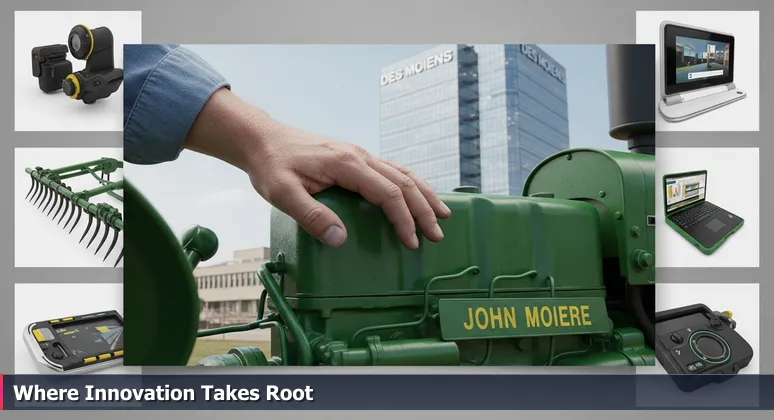
As Iowa's foundational industry, agriculture is undergoing a profound intelligent transformation. From John Deere's Des Moines Works developing vision-guided, autonomous tractors to Corteva Agriscience creating models that predict crop yields with unprecedented accuracy, AI helps farmers plant, nourish, and harvest with surgical precision, addressing the fundamental challenge of feeding a growing population.
The work is uniquely grounded, involving computer vision for weed and pest detection, machine learning trained on vast geospatial and soil data sets, and robotics operating in unpredictable outdoor environments. It's AI that gets its boots dirty, solving high-value problems where a marginal gain in efficiency translates to significant economic and environmental impact across thousands of acres.
For career-changers, the fit is unbeatable. Agronomists, farmers, and equipment specialists possess the irreplaceable foundational knowledge. They can instinctively identify which field-level challenge - be it optimizing nitrogen application or early disease identification - would yield the greatest return from an AI-powered solution, ensuring technology solves real problems.
Precision Ag Data Scientists command salaries from $95,000 to $145,000. Demand is increasing sharply, particularly for expertise in autonomous vehicle systems and drone-based AI analytics, as highlighted in regional job market analyses. This solidifies AgTech not as a niche, but as a long-term growth sector where Iowa's domain expertise provides a global competitive edge.
Healthcare & Healthtech
Within major health systems like UnityPoint Health and MercyOne, artificial intelligence is becoming a vital partner in patient care and hospital operations. AI applications range from analyzing medical images to support diagnostics to predicting patient health risks and streamlining administrative burdens, allowing clinicians to focus more intently on the human element of medicine.
The work carries a profound human impact and operates under stringent regulations like HIPAA. It demands rigorous model validation, close collaboration with doctors and nurses, and an unwavering ethical compass. Building an AI tool that helps detect early-stage cancer is a mission-driven endeavor with different stakes than optimizing commercial algorithms, requiring both technical skill and clinical empathy.
This creates a superb career pathway for clinicians, medical researchers, and hospital administrators. A nurse transitioning into a Clinical AI Trainer role, for example, ensures models are trained on relevant, high-quality data and integrated safely into existing care workflows. Their domain knowledge is critical for navigating the complexities of healthcare delivery, as seen in specialized roles like Molina Healthcare's Senior Data Scientist - GenAI Engineer, which requires expertise in regulated industry governance.
Salaries for roles such as Medical AI Scientist reflect this specialized demand, ranging from $72,000 to $178,000, with senior positions in generative AI reaching even higher. The growth is stable and critical, as healthcare remains a leading industry for replacing manual, repetitive data tasks with intelligent automation, ensuring both better outcomes and operational sustainability.
Banking & Fintech
In Des Moines's financial institutions, from Wells Fargo's extensive operations to the growing fintech ecosystem, artificial intelligence is revolutionizing risk management and customer service. AI powers real-time fraud detection that scans millions of transactions in milliseconds, enables personalized financial advice, and automates complex processes in commercial lending, focusing on enhancing security and enabling better service at scale.
This domain demands an unparalleled focus on security, accuracy, and regulatory compliance. The stakes are exceptionally high - a model error in retail might mean a poor product recommendation, but in finance, it can trigger serious financial loss and legal consequences. Success requires expertise in explainable AI and secure data handling to build systems that are both powerful and accountable to regulators.
"Will AI take the finance jobs the Des Moines metro depends on? It’s not about replacing jobs, but about managing risk and enabling better service," notes regional business coverage that examines this pivotal shift in the local economy.
The career-changer fit is excellent for professionals with backgrounds in banking, commercial lending, or financial analysis. A former loan officer moving into an AI Decision Science Consultant role brings irreplaceable business context, intuitively understanding which lending criteria are most predictive of success - knowledge that is perfect for training and validating sophisticated models. This synergy is so critical that a finance degree is currently the top-sought credential for AI-adjacent roles in the market.
Compensation reflects this high-value integration, with salaries for roles like AI Product Manager ranging from $116,000 to $237,000. The growth trajectory is steep as firms like Principal Financial Group and emerging players modernize legacy systems, embedding AI into their core operations to stay competitive. This positions banking and fintech as one of the most lucrative and dynamic sectors for AI talent in central Iowa.
Insurance & Insurtech
As the historic "Insurance Capital of the West," Des Moines is ground zero for the AI revolution in risk and protection. Companies from Principal Financial Group and Wellmark to a vibrant InsurTech startup ecosystem use artificial intelligence to automate claims processing from photos, price policies with incredible granularity, and detect sophisticated fraudulent patterns, transforming the century-old industry from within.
This is where traditional actuarial science converges with cutting-edge machine learning. The work is deeply integrated with complex regulatory frameworks, requiring models that are not only accurate but also interpretable for state regulators and transparent for policyholders. It represents a sophisticated, high-stakes blend of data science, financial risk, and law.
The career-changer fit is arguably the best of any sector. Actuaries, underwriters, and claims adjusters possess decades of intuitive, experience-based knowledge about risk - the exact qualitative insight needed to train, validate, and govern AI models effectively. Their domain expertise is the irreplaceable secret sauce that pure-tech companies cannot replicate.
This sector leads regional AI adoption, offering roles like AI Underwriting Specialist with salaries from $105,000 to over $181,000. The growth trajectory is rapid, as firms evolve from pilot programs to AI-native core operations. This shift, as underscored by central Iowa business leaders, requires "collaboration as a strategic necessity," creating integrated teams where tech experts and industry veterans work side-by-side to build the future of insurance.
Forging Your AI Career in Des Moines
The path forward in Des Moines isn't about choosing between a tech career and a traditional one; in 2026, they have converged. Your competitive advantage lies in becoming a hybrid professional who can translate deep industry knowledge into intelligent systems, whether your expertise is in actuarial tables, supply chain logistics, or clinical workflows.
For those ready to build this hybrid skill set, accessible, practical education is key. Programs like the AI Essentials for Work bootcamp (15 weeks, $3,582) focus on immediate, practical skills like prompt engineering and AI-assisted productivity, ideal for professionals aiming to leverage AI in their current roles. For more technical depth, the 25-week Solo AI Tech Entrepreneur Bootcamp ($3,980) teaches how to build and ship AI-powered products, a perfect foundation for contributing to Des Moines's growing InsurTech and AgTech startup scene.
Supported by a collaborative ecosystem including organizations like StartupDSM, the Des Moines metro proves the most transformative work happens when advanced technology is rooted in real-world soil. With bootcamp outcomes including a ~78% employment rate and community-based learning connecting you to local peers, the opportunity is here to not replace the engines of our economy, but to become the intelligence within them.
Frequently Asked Questions
How did you decide which industries are hiring AI talent in Des Moines beyond big tech?
We ranked industries based on factors like salary data, career changer fit, and unique AI applications in the Des Moines metro. For example, insurance leads due to high adoption and salaries up to $181,000, driven by local giants like Principal Financial Group and the growing insurtech startup scene.
Which industry pays the most for AI roles in the Des Moines area?
Banking and fintech offer the highest compensation, with salaries ranging from $116,000 to $237,000 for roles like AI Product Manager. This reflects Des Moines' strong financial services presence, where firms like Wells Fargo operations prioritize AI for fraud detection and personalized finance.
Is it possible to transition into an AI career from a non-tech background in Des Moines?
Yes, many industries value domain expertise over pure tech skills. For instance, in insurance, former underwriters can move into AI roles with salaries from $105,000 to $181,000, while in healthcare, clinicians bring crucial context for AI tools in systems like UnityPoint Health.
Why is agriculture a key sector for AI talent in Iowa's capital region?
Agriculture leverages AI for precision farming and autonomous machinery, with roles like Precision Ag Data Scientist earning $95,000 to $145,000. Des Moines-based companies like John Deere drive this demand, making it a growth area for AI applications in unpredictable outdoor environments.
What advantages does Des Moines offer for AI professionals compared to coastal tech hubs?
Des Moines provides a lower cost of living and AI roles deeply integrated into traditional sectors like insurance and retail. For example, AI analysts in retail at Hy-Vee earn $92,000 to $153,000, offering meaningful work without the high expenses of cities like Silicon Valley.
Read about comprehensive tech apprenticeships in Des Moines tailored for 2026 career starters.
Access information on free library tech workshops in Des Moines.
This guide explains the 2026 tech job market in Des Moines, Iowa for professionals.
This article offers insights into top cybersecurity employers in Des Moines like Principal Financial Group and UnityPoint Health.
For a ranking of lucrative tech positions in Des Moines without a degree, see here.

Irene Holden
Operations Manager
Former Microsoft Education and Learning Futures Group team member, Irene now oversees instructors at Nucamp while writing about everything tech - from careers to coding bootcamps.