









Top 10 Industries Hiring AI Talent in Corpus Christi Beyond Big Tech in 2026
By Irene Holden
Last Updated: February 27th 2026
Too Long; Didn't Read
The top industries hiring AI talent in Corpus Christi beyond Big Tech in 2026 are energy and manufacturing, fueled by over $60 billion in local investments driving an industrial renaissance. Energy roles, led by employers like Valero, offer median salaries around $128,200 with 13% growth for predictive maintenance, while manufacturing jobs, such as at Tesla's refinery, reach top pay up to $234,200 for AI automation that cuts costs by 60%. These sectors provide high-paying, stable careers in transforming traditional infrastructure, all enhanced by Corpus Christi's no state income tax and growing tech ecosystem.
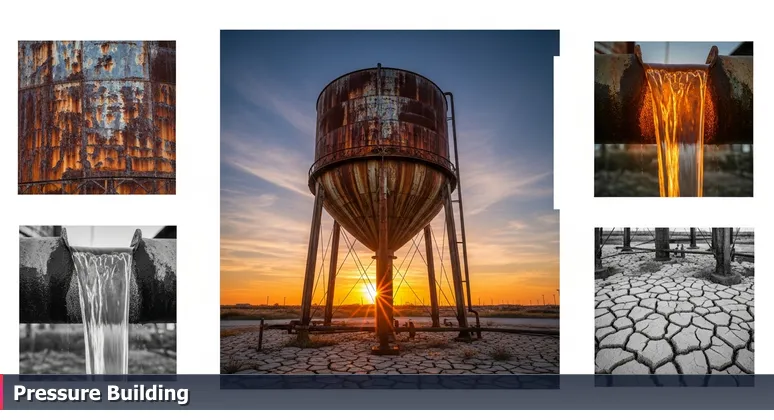
You drive past them every day: the hulking water towers of the Coastal Bend, their purpose seeming as rusted as their seams. But look closer at dusk, and you might catch the overflow - a silent testament to the immense, active pressure within. Corpus Christi’s career landscape mirrors this. The real innovation isn't in the gleaming offices of Big Tech. It’s inside the refineries, ports, and depots that have defined our city for generations.
Fueled by over $60 billion in private capital investments, a quiet industrial renaissance is underway, and AI is its essential, pressurized intelligence. For AI talent, unprecedented opportunity lies in powering the very infrastructure of South Texas. This shift is exemplified by initiatives like the Port of Corpus Christi's Strategic Plan 2026, which deploys digital models and AI to become the nation's most technologically advanced port.
As Stephen Lynch, Collaboration Manager at Workforce Solutions, observes, "AI is going to be a game changer… there is opportunity for individuals to explore a new career path." The narrative for 2026 isn't about job displacement but reconfiguration, using AI to extend human impact within the mission-critical systems that sustain our community, all while enjoying the Texas coast's benefits of no state income tax and a lower cost of living. The pressure is building within traditional industries now leveraging predictive analytics - the question is, will you be part of the flow?
Table of Contents
- Introduction
- Energy, Oil & Gas, and Petrochemicals
- Manufacturing and Industrial Automation
- Healthcare and Biotech
- Aerospace and Defense
- Maritime, Ports, and Logistics
- LNG and Utilities
- Education and Research
- Government and Public Sector
- Finance and Banking
- Retail and Tourism/Hospitality
- Conclusion
- Frequently Asked Questions
Discover how to start an AI career in Corpus Christi with this complete resource covering skills and employers.
Energy, Oil & Gas, and Petrochemicals
The titans of the Coastal Bend’s economy are undergoing a profound digital transformation, with companies like Valero Energy and Cheniere Energy hiring AI Engineers and Predictive Maintenance Specialists to create "smart," autonomous operations. The core mission is shifting from reactive to predictive, using IoT sensor data and machine learning to forecast equipment failures before they cause costly or dangerous shutdowns.
This work is uniquely tangible and high-stakes; your model directly ensures the safe, efficient flow of energy. With a 13% projected growth over five years, this sector offers strong stability, especially for those with engineering backgrounds who can bridge data science and physical processes. Commanding median salaries around $128,200, these roles place you at the forefront of the AI-powered energy grid that is critical to the region's future.
For career changers, this path requires building a robust skill set in industrial data and ML operations. Affordable, local upskilling options, like a 25-week bootcamp focused on AI product development, provide the practical foundation to enter this high-impact field and contribute to Corpus Christi's energy-tech ecosystem.
Manufacturing and Industrial Automation
Corpus Christi's manufacturing sector is experiencing explosive growth, with new facilities prioritizing high-tech automation and creating demand for roles like AI Automation Engineer and Robotics Technician. These professionals implement computer vision for defect detection, optimize production lines with AI, and manage critical edge computing on the factory floor.
The unique technical challenge lies in seamlessly integrating AI with existing operational technology (OT) - such as PLC programming and robotic systems - to drive real-time efficiency and safety. This sector is a prime destination for career changers from traditional manufacturing, electrical, or mechanical fields who can speak both engineering and data languages.
The payoff for this specialized integration work is significant, offering the top salary bands in the region, from $202,380 to $234,200. The impact is equally measurable: as highlighted in a local manufacturing case study, implementing AI for predictive maintenance has achieved up to 60% cost reductions and 30% less downtime. This path offers a direct, hands-on role in renewing the region's industrial base with intelligent systems.
Healthcare and Biotech
Local healthcare systems like CHRISTUS Spohn and Driscoll Children’s Hospital are rapidly adopting AI to augment human expertise and address clinician shortages. They are hiring for roles focused on diagnostic imaging analysis, predictive patient deterioration models, and hospital resource optimization - work that operates within a strict regulatory environment where skills in clinical data privacy (HIPAA) are paramount.
The impact is profoundly personal; your work directly influences patient outcomes. This field is ideal for career changers with backgrounds in life sciences, nursing, or medical administration who understand clinical workflows and can validate diagnostic models. Specialized positions, particularly in medical imaging AI, can command salaries at the top of the $83,700 to $203,592 range, offering a powerful blend of mission-driven work and technical challenge.
This local adoption is part of a national trend where AI is becoming essential behind the scenes. For those transitioning into this field, practical training is key. Foundational technical skills can be built through focused programs, such as a 15-week course in AI essentials, providing the crucial bridge between healthcare domain knowledge and the AI tools transforming patient care.
Aerospace and Defense
With major installations like Naval Air Station Corpus Christi and the Corpus Christi Army Depot (CCAD), the defense sector is a stable, high-paying anchor for AI talent in the region. Roles such as AI Systems Engineer and Defense Data Analyst focus on cutting-edge applications like predictive maintenance for military aircraft, embedded AI for avionics, and complex logistics optimization.
The work carries unique requirements, often mandating a security clearance (Secret/Top Secret) and strict adherence to MIL-SPEC compliance frameworks. This creates a specialized, secure career path with exceptional job security and the chance to contribute to mission-critical national security projects. It represents a clear example of the broader trend where AI demand is fueling hiring in non-tech sectors.
This sector is an excellent fit for veterans, engineers, and systems thinkers who thrive in structured, high-stakes environments. The compensation reflects the specialization required, with salaries ranging from $134,000 to $193,250, making it a less competitive but highly rewarding path for those with the right credentials and mindset.
Maritime, Ports, and Logistics
As the Port of Corpus Christi executes its ambitious modernization, AI has become the central nervous system for becoming the nation's most technologically advanced port. This creates high demand for Logistics AI Engineers and Maritime Data Analysts who solve complex, real-world problems like optimizing ship traffic in the crowded channel, predicting global trade flows, and managing real-time supply chain disruptions using massive datasets from terminal systems and global ship tracking.
The port is pioneering innovative applications, such as using AI-generated training scenarios (OPTICS) to prepare for emergencies faster than real-life drills allow. This practical, high-impact work is part of why the sector's tech workforce recently grew by 18%. For professionals, it means engaging with the tangible flow of global commerce that defines the Coastal Bend.
This industry is perfect for career changers from logistics, maritime operations, or supply chain management who understand domain challenges and want to apply AI-driven optimization. Building the necessary technical skills is accessible through targeted education, such as a 16-week program in backend development with Python and SQL, which provides the foundational data engineering and analysis capabilities crucial for this field. With salaries ranging from $73,703 to $127,500, it represents a stable and growing path at the intersection of traditional industry and cutting-edge intelligence.
LNG and Utilities
Closely tied to yet distinct from traditional energy, the LNG and utilities sector faces its own critical AI challenges. Employers like Cheniere Energy and AEP Texas require AI talent to ensure grid reliability, perform precise energy demand forecasting, and run environmental simulation modeling for sustainable operations. The core problem is balancing generation, storage, and distribution in a grid increasingly stressed by factors like data center demand and renewable integration.
This work involves sophisticated time-series forecasting and simulation, making it a strong fit for individuals with backgrounds in electrical engineering, environmental science, or energy trading who can translate physical constraints into algorithmic solutions. The sector's growth is stable and essential, focused on community resilience and maintaining the backbone of modern life.
Salaries are competitive, ranging from $119,532 to $138,766, and the work is less susceptible to the commodity market's boom-and-bust cycles, offering a dependable career path. As part of the region's broader industrial tech transformation, this sector represents a crucial piece of the puzzle, applying pressurized intelligence to the systems that power homes and businesses daily.
Education and Research
Institutions like Texas A&M University-Corpus Christi and Texas A&M AgriLife Research serve as major hubs for AI research talent, employing Research Scientists to conduct AI-augmented investigations in fields critical to the region, such as coastal resilience, precision agriculture using UAV imagery, and marine science. These roles engage in grant-funded R&D with tangible, real-world impact, often offering more exploratory freedom than corporate environments.
The unique advantage of this sector is the ability to blend deep domain expertise with cutting-edge AI, applying intelligence to protect shorelines and optimize crops. This work is part of a broader movement in education to leverage AI, as discussed in explorations of always-on AI across the student journey to scale support and enhance learning outcomes. It represents a perfect fusion of intellectual pursuit and public service.
This sector is ideal for career changers with advanced degrees (Ph.D., Master's) in scientific or technical fields who want to apply AI to their existing domain knowledge. Offering competitive academic salaries ranging from $114,350 to $161,224, it provides a stable, purpose-driven path for those who want their AI work to contribute directly to the environmental and agricultural future of the Coastal Bend.
Government and Public Sector
The City of Corpus Christi and Nueces County are actively shifting toward "AI-augmented" public service, creating roles for Public Safety Data Analysts and Smart City Coordinators. These professionals use AI to optimize traffic flow, predict infrastructure maintenance needs, and analyze data for public health initiatives, all with a necessary focus on ethics, equity, and transparent public policy.
This practical integration is already visible in local government. The City has implemented "Ask Cece," an AI chatbot supporting 75 languages to streamline resident services and information access. While salaries of $103,500 to $147,000 may not match the highest private-sector peaks, they represent strong compensation for public service and reflect the growing value of this skillset in civic tech.
This sector is a fantastic fit for career changers from public administration, social sciences, or civil engineering who want to improve civic life directly. It offers unmatched purpose and stability, allowing professionals to apply data intelligence to renew the very infrastructure and services that bind the community together, ensuring they work smarter for every resident.
Finance and Banking
Regional financial institutions like Kleberg Bank and Navy Army Community Credit Union are strategically adopting AI to enhance their competitiveness against national fintech firms. They seek AI/ML Associates and Fraud Detection Specialists to build quantitative models, develop personalized customer service algorithms, and strengthen anti-money laundering (AML) compliance systems.
The core problems of risk assessment and fraud detection remain classic, but the solutions are decidedly modern. AI is deployed to identify subtle, complex patterns that would remain invisible to traditional rules-based systems, providing a critical edge. This work requires a dual expertise: a firm grasp of financial regulations like KYC/AML paired with strong technical programming and modeling skills.
This sector offers a solid, less volatile entry point for career changers from finance, accounting, or auditing. With salaries ranging from $96,250 to $142,250, it provides competitive compensation and the chance to directly impact community financial health. As noted in broader analyses of 2026 tech hiring, data and AI roles are in consistently high demand across all sectors, including the stable world of finance, making this a reliable path for applying intelligence to the flow of capital.
Retail and Tourism/Hospitality
While not the largest employer of core AI engineers, Corpus Christi's retail and tourism sector deploys AI strategically for measurable growth and efficiency. Major employers like H-E-B and Visit Corpus Christi hire for roles in customer sentiment analysis, dynamic inventory and demand forecasting, and personalized marketing campaigns aimed at both local shoppers and visitors to the Coastal Bend.
The work focuses on driving revenue and optimizing operations in competitive, thin-margin businesses, often through consumer behavior analysis and e-commerce optimization. This sector serves as an excellent entry point for career changers from marketing, business management, or retail operations who possess a natural knack for data and customer insights. Salaries range from $80,000 to $119,000, positioning it on the more accessible end of the AI spectrum while offering a fast-paced, consumer-focused environment.
The adoption of AI here is part of a broader trend empowering local businesses. As highlighted by the Texas Association of Business, 82% of Texas small businesses using generative AI report it helped them grow their workforce. In a city defined by both major retailers and vibrant small businesses, AI becomes a tool for community-scale resilience and innovation.
Conclusion
As the sun sets on the Corpus Christi skyline, the overflow from our industrial water towers catches the light, a reminder that the most vital systems are often the ones we've learned to overlook. The AI career path here isn't about escaping the city's industrial identity but about renewing it from within with pressurized intelligence. It lives in the predictive hum of a refinery, the optimized path of a cargo ship, and the augmented diagnosis in a local hospital.
These roles offer something remote tech hubs often cannot: a direct, tangible connection to the mission-critical work that powers a community. They come with the concrete benefits of life on the Texas coast - no state income tax, a lower cost of living, and a stake in a growing, future-focused economy. The transformation across energy, defense, and maritime sectors proves that, as one Forbes expert notes, the narrative is about "job reconfiguration," using AI to extend human impact within essential systems.
Beginning this journey is more accessible than ever. With local upskilling options like a 25-week AI bootcamp for under $4,000, specifically designed to build products and solutions, career changers can practically and affordably acquire the skills to contribute to this renaissance. The pressure has been building within Corpus Christi's foundational industries. Now, the flow of opportunity is here.
Frequently Asked Questions
What industries in Corpus Christi are hiring AI talent beyond Big Tech in 2026?
The top industries include Energy & Gas, Manufacturing, Healthcare, Aerospace & Defense, and Maritime, among others. For example, Energy roles offer median salaries around $128,200, and Manufacturing can pay over $234,000 for automation specialists, driven by over $60 billion in private investments in the region.
How do AI salaries in Corpus Christi compare to other cities, especially with Texas's tax benefits?
AI salaries in Corpus Christi are competitive, with ranges from $73,703 in Maritime to over $234,200 in Manufacturing. Combined with Texas's no state income tax, take-home pay can be higher than in many other states, making it an attractive option for career changers.
Can I transition into an AI career in Corpus Christi if I'm from a non-tech background?
Yes, many industries welcome career changers. For instance, Healthcare seeks those with clinical backgrounds for AI roles in diagnostics, and Energy prefers engineers who can blend data science with physical processes. Domain knowledge is highly valued in Corpus Christi's industrial-focused AI jobs.
What specific companies in Corpus Christi are hiring for AI roles, and what do they focus on?
Key employers include Valero Energy and Cheniere Energy for predictive maintenance in energy, the Port of Corpus Christi for maritime logistics AI, and Corpus Christi Army Depot for defense applications. These companies use AI to optimize operations, from refinery safety to ship traffic management.
Is the demand for AI talent in Corpus Christi expected to grow in the coming years?
Yes, demand is rising with sectors like Energy projecting 13% growth over five years and Maritime tech workforce increasing by 18%. Initiatives like the Port's Strategic Plan 2026 and AI-driven projects in government and utilities ensure sustained opportunities in the region.
Get the facts on tech career affordability in Corpus Christi, TX in 2026 from Nucamp's expert analysis.
Discover the key factors influencing AI salaries in Corpus Christi, such as no state income tax and industry demand.
Learn how WIOA and Pell Grants for tech training in Corpus Christi can support your career goals.
For a detailed overview of the Top 10 AI Tech Bootcamps in Corpus Christi, TX in 2026, refer to this comprehensive guide.
Read about Corpus Christi, Texas tech employment opportunities without a college degree in this resource.

Irene Holden
Operations Manager
Former Microsoft Education and Learning Futures Group team member, Irene now oversees instructors at Nucamp while writing about everything tech - from careers to coding bootcamps.