









Top 10 Free Tech Training at Libraries and Community Centres in Papua New Guinea in 2026
By Irene Holden
Last Updated: April 22nd 2026
Too Long; Didn't Read
The best free tech training in PNG is at the American Corner in Port Moresby's National Library, offering weekly workshops on digital skills and job readiness. Offline e-library systems at provincial libraries now serve over 40,000 students without data costs, while mobile labs from Digicel and LiteHaus reach remote communities. These hubs are your PMV network to tech careers - show up and learn.
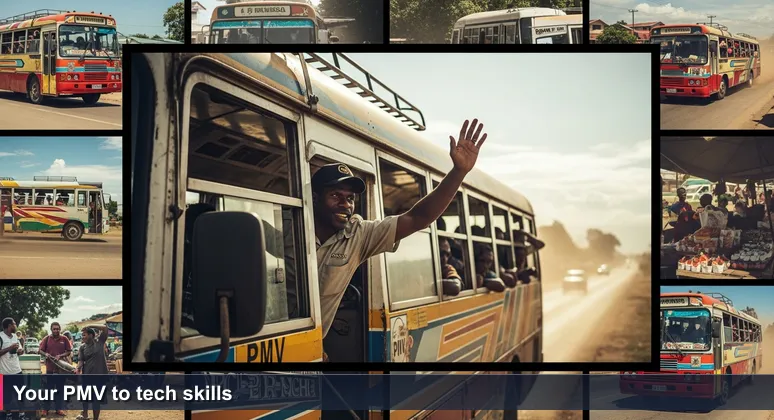
You're at a PMV stop in Port Moresby. The bus pulls up - battered, loud, full. The conductor yells “Waigani! Waigani!” and you squeeze in. Nobody expects a luxury ride. You just need to get there. That’s exactly how tech education works in Papua New Guinea right now. The dominant narrative says learning digital skills requires your own laptop, your own data plan, your own fast internet. In a country where mobile data costs remain among the highest in the Pacific, that narrative excludes most people.
But here’s what most don’t realise: libraries and community centres are the PMV network of tech education. You don’t own the vehicle; you just board it. The National Library’s American Corner, Unitech’s Matheson Library, LiteHaus digital classrooms - these are known stops on a system that routes around the infrastructure gap. At the 2026 Digital Transformation Summit, Prime Minister James Marape declared that ICT and AI will be “the engine of PNG’s next 50 years.” The government is embedding AI into governance, NICTA is offering full scholarships for women in tech, and offline e-library systems already serve 40,000+ students without requiring any data costs.
“ICT will drive us into a merit-based society… we cannot afford to be left behind.” - Prime Minister James Marape, 2026 Digital Transformation Summit
The question shifts from “What can I afford?” to “Which route do I take?” Here are the ten best free training stops on the network, ranked by accessibility, consistency, and real-world value for someone starting from zero.
Table of Contents
- Introduction: The PMV Network of Tech Education
- Community Transformation Centers (CTC)
- LiteHaus International Digital Classrooms
- Buk bilong Pikinini Digital Learning Days
- Innovative Training Centre (Lae)
- PNG Women's Business Resource Centre - Cyber Safety Workshops
- Digicel PNG Foundation Outreach - Mobile Tech Labs
- National Library Service - Provincial Offline E-Libraries
- Unitech Matheson Library Outreach (Lae)
- PNG Women in ICT Empowerment Centre - Cyber Safety & Digital Skills
- National Library & Archives - American Corner (Port Moresby)
- Conclusion: Your First 30 Days and The Bottom Line
- Frequently Asked Questions
Read our complete guide to starting an AI career in Papua New Guinea in 2026 for detailed salary data and employer insights.
Community Transformation Centers (CTC)
The Community Transformation Centers (CTC) run by the IEEE Smart Village programme function like the rural PMV routes connecting remote villages to town. These are not glass-walled training hubs - they’re practical rooms where you sit down with a device and a facilitator who starts from the very beginning: keyboard basics, word processing, saving a file. The focus is on young adults who missed formal education, offering IT training, adult literacy, and vocational skills at no cost.
In 2026, these centres are expanding their curriculum to include basic data literacy - understanding what information is, how to organise it, and why it matters for the AI-driven economy the government is pushing. As Prime Minister Marape stated, ICT will drive PNG toward a “merit-based society,” and the CTC model ensures that even those far from Port Moresby’s tech corridors can get on board. The sessions are modular: you can miss a day and pick up where you left off, designed deliberately for areas where intermittent power is the norm rather than the exception.
Who is this for? Anyone living within reach of a pilot site who needs to start from absolute zero. No prior computer experience required. The centres are located within a 10km radius of major regional schools, making them accessible by foot or short PMV ride. You walk in, you learn, you leave with a skill that didn’t cost a single toea in data or tuition.
LiteHaus International Digital Classrooms
LiteHaus International runs digital classrooms on a disarmingly simple principle: put a device in a room, load self-guided modules, and let people learn at their own pace. No trainer stands at the front. No fixed schedule dictates your progress. You show up during operating hours at a partner community centre, claim a device, and follow the on-screen prompts from keyboard basics through to word processing and spreadsheet creation. The model is designed for someone who has never touched a computer and feels too embarrassed to ask basic questions in a group setting.
The beauty of this approach is its scalability. LiteHaus has expanded its Pacific presence significantly in 2026, with partner centres now operating across multiple provinces in PNG, often housed in community halls and church buildings. Because the training is entirely pre-loaded, it doesn’t depend on internet connectivity or the availability of a skilled facilitator. You walk in, you work through the material, you leave knowing how to type a letter or organise data in a table. According to the organisation’s Pacific programme overview, the focus remains on foundational digital literacy that transfers directly to employment contexts.
One practical note for PNG learners: bring your own headphones if you want audio guidance. The centres provide the devices but not accessories. The daily access model means you can return as often as needed to reinforce skills, making this one of the most flexible free training options available for self-motivated learners anywhere from Port Moresby to Lae.
Buk bilong Pikinini Digital Learning Days
Buk bilong Pikinini’s Digital Learning Days flip the script on who belongs in tech training. While the name suggests children’s programming, these periodic events deliberately include family-oriented sessions where parents learn alongside their kids. The 2026 Digital Learning Day zeroed in on cybersecurity awareness and safe internet practices - topics that many adult learners never encountered because they came to technology later in life. For anyone aiming at AI and machine learning, understanding data privacy isn’t optional; it’s the foundation everything else rests on.
The format is hands-on, not lecture-based. You sit with a device and follow along as a facilitator walks through recognising phishing attempts, managing passwords, and evaluating online sources. These events are held in partnership with libraries and community centres across Port Moresby and provincial capitals, making them accessible without travelling far. The emphasis on ethical technology use is rare among free training options in PNG, and it directly prepares participants for the kind of data-handling responsibilities that employers like Bank South Pacific and Digicel PNG expect from entry-level tech staff.
There’s a catch: events fill up fast. Capacity is limited, and the free registration opens through community networks and social media announcements. The best strategy is to follow Buk bilong Pikinini’s channels and register the moment a date is posted. This is ideal for parents who want to build digital confidence alongside their children, and for absolute beginners who prefer a structured event-based format over open-ended drop-in sessions.
Innovative Training Centre (Lae)
Lae is PNG’s industrial engine, and the Innovative Training Centre positions its curriculum to serve exactly those local employers. The centre promotes an “industry relevant curriculum” tailored for 2026 needs, meaning the skills taught here are directly mapped to what logistics companies, manufacturing firms, and the Port Moresby-Lae corridor businesses actually demand. For someone eyeing AI, the foundational competencies - data entry, basic programming logic, spreadsheet management - are precisely the prerequisites you need before tackling machine learning concepts.
What distinguishes this hub from general digital literacy programmes is its deliberate connection to Lae’s employment market. The curriculum is designed with input from businesses operating in Morobe Province, ensuring that a graduate walks out with skills that a local employer recognises and values. The centre offers regular intakes throughout 2026, with a smart learning experience that blends face-to-face instruction with practical exercises. Given Lae’s status as PNG’s manufacturing and shipping hub, the training here carries weight when you list it on a job application for roles at companies like Santos or Newcrest’s Lae operations.
A practical note: Lae enjoys better internet infrastructure than most provincial centres, but power outages remain a reality. The centre designs its sessions to work around these constraints, typically using pre-loaded materials that don’t require continuous connectivity. This is the best option in the Momase region for someone who wants training that leads directly to employment, not just general computer familiarity.
PNG Women's Business Resource Centre - Cyber Safety Workshops
The PNG Women's Business Resource Centre runs free cyber safety workshops in Port Moresby that are arguably the most immediately useful tech training available in the city right now. While the name suggests women-only programming, these monthly 2-hour sessions are open to all micro, small, and medium business owners - and anyone who handles money or data digitally. The content is relentlessly practical: how to spot phishing attempts, secure your business accounts, manage mobile devices safely, and recognise scams that specifically target PNG entrepreneurs.
For someone pursuing AI and machine learning, understanding digital security is prerequisite knowledge. Before you can build models or analyse data, you need to know how digital systems get compromised. These workshops teach exactly that, and they do it in a format that respects your time - two hours, once a month, at the Century 21 Haus in Hohola, accessible by PMV from most parts of Port Moresby. The 2026 sessions scheduled for late April and early May filled within days of announcement, which tells you how urgently the community needs this knowledge.
The real value lies in the immediate applicability. You walk out of a session and can change your passwords, enable two-factor authentication, and secure your business accounts that same afternoon. For the cost of the bus fare to Hohola, you gain protection that could save you thousands of kina. Contact +675 7200 0000 to register when the next round opens - seats are limited, and the demand far outstrips the supply.
Digicel PNG Foundation Outreach - Mobile Tech Labs
The Digicel PNG Foundation operates community grants that fund mobile tech labs - essentially, portable training units that move between communities based on demand. This is the PMV of tech education: the lab arrives, sets up in a community hall or school, runs training for a few days or weeks, then packs up and moves to the next location. The schedule is driven entirely by community requests, meaning if your area wants training, you need to ask for it through local leaders.
For someone pursuing AI and machine learning, the general digital literacy provided here is the essential first gear. You learn to navigate operating systems, use basic software like word processors and spreadsheets, and understand how digital tools work in practical contexts. From there, you can progress to more specialised training at fixed hubs like the American Corner or Unitech’s outreach programmes. The Foundation’s reach extends to provincial capitals across PNG, making this one of the few options for communities where no permanent training centre exists.
The critical reality check: these labs are demand-driven. If your community isn’t requesting them, they won’t come. Talk to your local councillor or community leader about putting in a formal request to the Digicel PNG Foundation. In 2026, with the government pushing ICT and AI as central to PNG’s economic future, the Foundation has been expanding its grant programmes to meet rising demand. For people in rural areas where fixed training centres don’t exist, this mobile model is often the only route onto the digital network.
National Library Service - Provincial Offline E-Libraries
The National Library Service has deployed offline e-library systems in provincial libraries across Lae, Mount Hagen, Goroka, and other centres. These systems contain digital textbooks, curriculum materials, and learning resources that you can access without spending a single toea on data. The technology works through a local intranet: you bring your phone or laptop, connect to the library’s internal network, and browse content that has been pre-loaded onto the system. No internet connection required. No data costs.
In 2026, these systems have been expanded to serve over 40,000 students nationwide, according to the programme’s operators. The content library includes basic computer science materials, mathematics resources, and - critically for aspiring AI professionals - foundational programming concepts. You can work through introductory Python or JavaScript material at your own pace, in a quiet, air-conditioned space, without worrying about mobile data running out halfway through a lesson. The offline e-library essentially transforms a provincial library into a self-directed learning hub for anyone with a compatible device.
The practical reality: you need a phone or laptop to connect. Some libraries have limited devices available for on-site use, but availability varies by location. Call ahead to check before making the trip. The resources are self-directed, which means discipline is required - there’s no instructor guiding you through the material. But for someone with a smartphone and a few spare hours between PMV trips, this is arguably the most cost-effective way to access quality learning materials anywhere in PNG’s provinces.
Unitech Matheson Library Outreach (Lae)
The Matheson Library at the Papua New Guinea University of Technology runs public-facing workshops that carry a distinct advantage: Unitech is an ITU Centre of Excellence, giving it access to international curriculum resources that most community centres simply don’t have. The workshops cover e-resource research - how to find and evaluate information online - and internet safety, taught face-to-face at the library in Lae. For someone building toward AI, these are critical skills: you need to know how to locate quality data, how to verify sources, and how to protect yourself while doing research.
What makes this programme rank highly is the institutional weight behind it. When you tell a Port Moresby employer or a recruiter at Digicel PNG or Bank South Pacific that you’ve completed training at Unitech’s Matheson Library, they know you’ve been exposed to a certain standard. The sessions are periodic, coordinated with District Administrators and community leaders, meaning they’re designed to reach people beyond the university’s main campus. The library offers public access for e-resource training, and in 2026, the curriculum has been updated to reflect the growing emphasis on data-driven decision-making across PNG’s public and private sectors.
The practical reality: these workshops are periodic, not ongoing. Contact the Matheson Library directly and ask to be added to their notification list for the 2026 community workshop calendar. For people in Lae who want university-level exposure to digital skills without enrolling in a full degree programme, this is the most credible free option available in the Momase region.
PNG Women in ICT Empowerment Centre - Cyber Safety & Digital Skills
The PNG Women in ICT Empowerment Centre (PNGWIEC) runs cyber safety and digital skills workshops out of the Century 21 Haus in Hohola that cut straight to what matters: protecting your money and your data. While the name emphasises women entrepreneurs, these monthly 2-hour sessions are open to all micro, small, and medium business owners in Port Moresby. The curriculum focuses on practical mobile device management, securing business accounts from the scams that increasingly target PNG small businesses, and basic digital hygiene that most people only learn after losing money.
For someone aiming at AI and machine learning, consider this: the most in-demand tech skills in PNG right now aren’t about building models - they’re about applying digital tools to solve real business problems. Understanding how to secure a smartphone, recognise phishing attempts, and manage passwords is prerequisite knowledge for anyone who wants to work with data. These workshops teach exactly that, in a format that fits around work schedules. The location in Hohola is accessible by PMV from Waigani, Gordons, and most other Port Moresby suburbs.
The workshops are among the most popular free tech offerings in the city, with seats filling within days of announcement. Lifelong learning opportunities in Port Moresby are expanding rapidly in 2026, but demand still outstrips supply. Register the moment you hear about the next session by contacting +675 7200 0000. The growing PNG tech workforce needs people who understand both the power and the risks of digital systems - and this is where that foundation gets built.
National Library & Archives - American Corner (Port Moresby)
The American Corner at the National Library & Archives in Port Moresby is the gold standard for free tech training in PNG. Here’s why it ranks number one: consistency, quality, and relevance. The workshops run weekly, every Friday from 10:30 to 11:30 AM, covering professional development, digital research skills, and interview preparation. The trainers are vetted through the U.S. Embassy partnership with the National Library, meaning the curriculum is informed by international best practices rather than local improvisation.
For someone pursuing AI, the American Corner offers something most other hubs don’t: exposure to global standards. The resources include materials from American educational institutions, and the digital research sessions teach you how to find, evaluate, and cite information - skills that transfer directly to data analysis and machine learning work. The library itself is a quiet, air-conditioned space, a genuine luxury in Port Moresby’s heat. You can spend hours there beyond the workshop time, using their computers and internet connection to practice what you’ve learned, all at no cost.
The location is accessible by PMV from most parts of the city. The Friday morning slot conflicts with work for many people, but Port Moresby’s growing tech sector increasingly supports professional development time. If you can commit to a weekly schedule, this programme provides the most consistent foundation-builder on the entire list. The physical sign-up sheets at the front desk or their Facebook page are how you secure your spot.
Conclusion: Your First 30 Days and The Bottom Line
Here’s how to combine what’s available into a structured starting point that costs nothing but your time and bus fare:
- Week 1: Visit the American Corner at the National Library on Friday for the professional development workshop. Spend the rest of the week using their computers to practice basic typing and internet navigation.
- Week 2: Head to a provincial library with an offline e-library system. Download resources on basic programming concepts. If you’re in Port Moresby, the National Library has these systems too.
- Week 3: Attend a LiteHaus digital classroom session to practice word processing and spreadsheet basics. These skills transfer directly to any tech job.
- Week 4: Register for the PNG Women’s Business Resource Centre cyber safety workshop. Apply what you learn to secure your devices and accounts.
Throughout the month: Use library computers (free internet) to access online platforms for coding basics. Combine this with the offline e-library resources for theory. After 30 days, you’ll have basic digital literacy, cybersecurity awareness, and familiarity with programming concepts. From here, consider employer-sponsored programmes through Digicel, Bank South Pacific, or Santos, which often fund technical training for promising candidates.
The PMV system works because people know the routes, share the space, and get where they need to go. PNG’s free tech training network works the same way. In 2026, with the government pushing ICT and AI as “the engine of PNG’s next 50 years” at the Digital Transformation Summit, the infrastructure is expanding rapidly. More libraries are getting offline e-library systems. More community centres are hosting digital classrooms. More corporate foundations are funding mobile labs. The advances in technology are pushing PNG forward, and the resources are free. The question isn’t whether you can afford to learn - it’s whether you’ll show up at the stop when the bus arrives.
Frequently Asked Questions
Which of these free tech training hubs is best for absolute beginners with no computer experience?
The Community Transformation Centers (CTC) under the Smart Village Initiative and LiteHaus International Digital Classrooms are designed for people starting from zero. They offer modular, self-guided sessions that don't require prior computer experience, and the CTCs even accommodate intermittent power outages.
How do I access these training resources if I live outside Port Moresby, say in Lae or Mount Hagen?
Many hubs have provincial reach: the National Library's offline e-library systems are available in Lae, Mount Hagen, Goroka, and other centres, serving over 40,000 students. Unitech's Matheson Library in Lae runs periodic workshops, and Digicel PNG Foundation's mobile tech labs can come to your community if requested through local leaders.
Do I need my own laptop or internet data to attend these training sessions?
Not necessarily. Most hubs provide devices on-site - for example, LiteHaus and the American Corner have computers available. The National Library's offline e-library lets you access digital textbooks using your phone without data costs, though some locations may have limited devices, so call ahead.
What kind of tech skills can I actually learn from these free programmes that will help me get a job in AI?
You'll build foundational skills like basic computer use, data literacy, cybersecurity awareness, and programming logic. The PNG Women in ICT Empowerment Centre's cyber safety workshops teach practical security, while the offline e-libraries include programming resources. These skills are prerequisites for AI roles and valued by employers like Digicel PNG and BSP.
How often do these training sessions run, and can I fit them around my work schedule?
Schedules vary: the American Corner in Port Moresby runs weekly every Friday 10:30-11:30 AM, while PNG Women's Business Resource Centre workshops are monthly. LiteHaus offers daily walk-in access, and the offline e-libraries are open during library hours (typically 9 AM-4 PM). Many programmes are modular, so you can miss a session and pick up later.
If you're considering upskilling, read the 2026 AI bootcamp rankings for PNG.
Get the full list of AI events and communities in PNG for 2026 in this article.
See the best tech companies for AI engineers in Papua New Guinea ranked.
For a comprehensive guide, check out the top 10 tech coworking spaces and incubators in Papua New Guinea in 2026.

Irene Holden
Operations Manager
Former Microsoft Education and Learning Futures Group team member, Irene now oversees instructors at Nucamp while writing about everything tech - from careers to coding bootcamps.