









Top 10 Free Tech Training at Libraries and Community Centers in Thailand in 2026
By Irene Holden
Last Updated: April 24th 2026
Too Long; Didn't Read
Thailand's best free tech training in 2026 is the stackable path combining DEPA's Coding Thailand 2026, Digital Community Centres, and Thai MOOC, offering a complete journey from basic digital literacy to AI and data science. With over 1,000 Digital Community Centres nationwide and 185 courses on BMA's NEXT LEARN, you can learn Python, web dev, and robotics without spending a baht. This ecosystem is reinforced by free workshops at TCDC and meetups via Eventbrite, making it genuinely comprehensive for motivated learners.
html
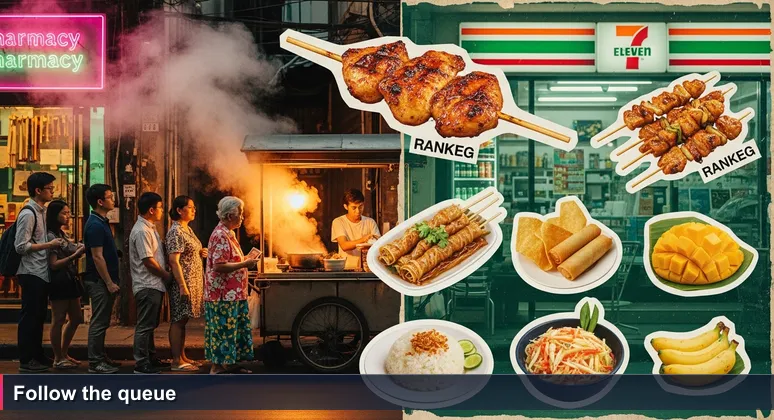
You've walked past that soi cart a hundred times. No sign, no Instagram handle - just steam, a metal wok, and a patient queue of office workers, a grandmother in a sarong, a student - all holding crumpled banknotes and saying nothing. The cart has no name, but the line tells you everything. The same problem plagues tech training in Thailand. DEPA spends millions on Coding Thailand 2026. The Bangkok Metropolitan Administration launches NEXT LEARN with 185 courses. The Ministry of Digital Economy and Society seeds Digital Community Centres into thousands of sub-districts. And most people walk right past them.

Finding free quality tech training in Bangkok isn't a resource problem - it's a wayfinding problem. The same instincts that lead you to a hidden khao man gai stall (follow the locals, look for the queue, ignore the storefront) lead you to a TCDC workshop or a Community Learning Centre. According to Nation Thailand's coverage of the DE Ministry's rollout, these centers are "designed as a public hub for learning and access to online resources... helping to promote lifelong learning, e-commerce, and digital literacy at the grassroots level."

This list of 10 free training resources is your map to the hidden sois. No app required - just showing up where the smart, curious people already are. That grandmother in the queue? She might be learning to use the SCB mobile banking app so her son in Bangkok can send her money. The office worker? Building a portfolio for a role at Kasikornbank or LINE Thailand. The student? Preparing for AI roles in the Eastern Economic Corridor. The queue grows longer every day - and now you know where it leads.
``
Table of Contents
- The Street Food of Tech Training
- Community Learning Centres (CLCs)
- Eventbrite Free Science & Tech Events
- TCDC (Thailand Creative & Design Center)
- BMA 'NEXT LEARN' (185 Courses)
- National e-Library via Provincial Libraries
- Coding Thailand 2026 (DEPA)
- Digital Community Centres (DE Ministry)
- Thai MOOC (University-Level Content)
- Bangkok City Library (Physical Hub)
- The Stackable Free Learning Path
- Your First 30 Days: A Practical Plan
- When Free Isn't Enough: Next Steps
- Frequently Asked Questions
This ultimate resource for AI job seekers in Thailand covers everything.
Community Learning Centres (CLCs)
``html
Before you dismiss this as "too basic," understand what's happening inside these unassuming buildings. According to DVV International's research on Thailand's Community Learning Centres, these centers serve as the critical focal point for knowledge transfer in rural and semi-urban areas. They help solve everyday problems and improve quality of life in alignment with local Thai culture.
A krueng chai (เครื่องใช้) in Nong Khai might teach an elderly woman how to use the SCB mobile banking app so her son in Bangkok can send her money without a trip to the branch. That same centre recently ran a basic AI literacy session using DEPA's materials. It's not flashy, but it's the bedrock of digital inclusion in Thailand.
Why should an aspiring AI professional care? Because 90% of tech training in Bangkok assumes you already have a computer and an internet connection. For the 40% of Thai adults who don't, CLCs are where the journey starts. And if you ever want to teach tech, this is where you'll find your most motivated students. As OpenGov Asia reports on digital literacy programs, "By equipping older people with essential digital skills, the programme is enhancing their quality of life and fostering greater social cohesion and empowerment."
Ranked at #10 because the content is genuinely entry-level - but the access is national, reaching every tambon across Thailand. The queue here is quiet, but it's the longest in the country.
``
Eventbrite Free Science & Tech Events
The most overlooked free tech training in Thailand happens at 7 PM on a Tuesday in a coworking space near Ekkamai. A small group - maybe 15 people - gathers around a projector. Someone from a fintech startup walks through their approach to natural language processing for Thai language chatbots. No syllabus, no certificate, just raw knowledge exchange. Browse free science and tech events on Eventbrite in Thailand and you'll find a surprising density of these gatherings.

The Chiang Mai AI Meetup, for example, runs weekly through July 2026, often covering topics like "AI for Educators" and practical Python for data analysis. These gatherings happen in cafes, coworking spaces, and community halls across Bangkok and Chiang Mai. They are often bilingual Thai/English, and skill levels range from intermediate to advanced depending on the meetup.

Why does this matter to your career? Because these meetups, more than any formal course, teach you the actual skills employers want. When a Kasikornbank hiring manager asks about your experience with machine learning pipelines, saying "I presented at a tech meetup on Mueang Thong Thani Road" lands harder than "I completed a self-paced online module." You build a network and a reputation - not just a certificate.

Ranked at #9 because the quality is variable and you need to sift through postings. But when you find the right group, it's gold. The queue here isn't visible on any main road - you have to know which soi to turn down.
TCDC (Thailand Creative & Design Center)
``html
If you've never been inside the magnificent building on Charoen Krung Road, you're missing one of Bangkok's best-kept secrets for tech learners. The Thailand Creative & Design Center (TCDC) regularly runs free workshops covering AI tools for designers, basic web development, and digital prototyping. Their maker space - with 3D printers and laser cutters - is accessible during open hours, letting you experiment with hardware without buying your own equipment.
Recent sessions have covered using generative AI for textile design and building simple chatbots for e-commerce - skills directly applicable to roles at Shopee or Lazada, where UI/UX and design thinking matter as much as backend logic. TCDC bridges the gap between coding and creativity, something most tech training in Thailand fails to do. With branches in Bangkok (Charoen Krung), Chiang Mai, and Khon Kaen, it's accessible to learners across the country.
Not all sessions are free - some require membership starting at ฿500/year for students. But the exhibitions and many workshops cost zero baht. According to FOURDIGIT's service design education program, which partners with TCDC, these creative-tech intersections are where Thailand's next wave of product designers and AI innovators are being shaped. Ranked at #8 because while the free content is excellent, the best workshops sometimes require a membership card - but the queue for those free slots is well worth joining.
``
BMA 'NEXT LEARN' (185 Courses)
`
In February 2026, the Bangkok Metropolitan Administration turned the Bangkok City Library into a digital learning hub. The NEXT LEARN platform launched with over 185 courses spanning two main categories: "Next Skills" covering modern world tech and digital literacy, and "Next Jobs" focused on career enhancement for Bangkok's workforce. All courses are self-paced and designed for residents who need to level up without enrolling in formal degree programs.

The physical hub sits near Democracy Monument on Ratchadamnoen Klang Road, in a historic building converted into a modern library. What makes it special is not just the course catalog - it's the quiet study spaces, free Wi-Fi, and community of self-learners who camp out at the tables from morning until evening. If you're a freelancer, remote worker, or student who needs a free place to code for six hours, this is your best option in central Bangkok. The library also hosts occasional workshops on topics like "Python for Data Journalism" and "Building Your First Mobile App."

Access requires a BMA library membership - free or nominal fee - and most courses are in Thai. According to the Bangkok City Library guide, the space has become a magnet for self-learners. Ranked at #7 because the platform is new and course quality varies - some are excellent, others feel rushed. But if you live in Bangkok and want to learn how to build a basic website or understand data analytics, this is your tax money working for you. The queue forms quietly at the library entrance every morning - join it.
National e-Library via Provincial Libraries
`
The Thai government's National e-Library initiative transforms provincial libraries into digital learning centers. Walk into the Chiang Mai Public Library or the Phuket Public Library, and you're not just entering a room of printed books - you're stepping into a node of a national network. The digital resources include e-books, online courses, and periodic workshops on topics like online safety, basic programming, and using government digital services.

The Thai Library Association has been fostering partnerships among librarians to achieve community-focused services, ensuring that even small provincial libraries receive training materials and support. According to OpenGov Asia's review of nationwide efforts, "By equipping older people with essential digital skills, the programme is enhancing their quality of life and fostering greater social cohesion and empowerment."

Why should an aspiring AI developer care? If you live outside Bangkok - in Khon Kaen, Udon Thani, or Hat Yai - this might be your only free access point for digital learning. The provincial library system reaches areas that private training centers never will. Ranked at #6 because the digital divide in Thailand remains significant: rural libraries often have slower internet and older computers. But the infrastructure is improving, and the queue is forming. Don't overlook your local public library - it's closer to a digital hub than you think.
Coding Thailand 2026 (DEPA)
The Digital Economy Promotion Agency (DEPA) has launched a targeted national program that covers coding basics, artificial intelligence, robotics, and AIoT (Artificial Intelligence of Things) - all completely free with zero application required. According to Thailand AI News, the initiative is designed to develop independent digital skills among Thai youth and interested learners of all ages, with regional workshops taking place at innovation hubs across the country, including locations in the Eastern Economic Corridor (EEC).

The program's importance extends beyond technical skilling. As Prasert Jantararuangtong, Minister of Digital Economy and Society, stated, the initiative will "help improve Media and Information Literacy (MIL) and reduce the spread of fake news and other online threats." This places Coding Thailand 2026 within a larger national strategy to build digital resilience among Thai citizens, not just technical competence.

If you complete these modules, you're learning skills that the Thai government actively wants you to have. Companies like Honda and CP Group are actively hiring workers with AI and robotics skills in the EEC corridor, making this training directly relevant to employers. Ranked at #5 because the content is genuinely beginner-friendly and nationally recognized - but some modules feel like schoolwork, targeted primarily at youth. The queue here is digital, but it's growing as word spreads through school networks and community centers across Thailand.
Digital Community Centres (DE Ministry)
``code
The Ministry of Digital Economy and Society has been aggressive in its rollout, with over 1,000 centers now operating across the country. According to Nation Thailand's coverage of the initiative, these centers are "designed as a public hub for learning and access to online resources... helping to promote lifelong learning, e-commerce, and digital literacy at the grassroots level." Each center provides free broadband internet access, computers with office software, and specialized e-learning applications.
Local success stories are already emerging from this infrastructure. Street vendors in Udon Thani are learning to launch e-commerce stores. Elderly citizens are navigating secure banking apps for the first time. Small business owners are creating their first LINE official accounts. As OpenGov Asia's review of Thai digital literacy programs notes, these efforts are "enhancing their quality of life and fostering greater social cohesion and empowerment."
Why does this matter for an AI career? Because scale creates opportunity. When you have over 1,000 centers teaching digital basics, you build a population ready for advanced training. If you have relatives outside Bangkok who need digital skills, point them to the nearest Digital Community Centre. Ranked at #4 because the content is often foundational rather than advanced - but the infrastructure is unmatched anywhere else in Thailand. The queue here stretches across all 77 provinces.
``
Thai MOOC (University-Level Content)
University-quality tech training without paying tuition is rare, but Thai MOOC delivers exactly that. Courses come directly from institutions like Sukhothai Thammathirat Open University, King Mongkut's University of Technology Thonburi (KMUTT), and Chulalongkorn University. The platform offers dozens of free courses covering Python programming, web development, cybersecurity fundamentals, and introductory data science - all self-paced, all taught by the same professors who teach students paying over ฿50,000 per semester.

The most valuable aspect of Thai MOOC is its academic depth. Instead of learning only how to implement a Python library, you learn why algorithms work at a fundamental level. This distinction matters if you're aiming for roles at research-heavy employers like PTT's AI lab or the National Science and Technology Development Agency (NSTDA), where theoretical understanding is as important as practical skill. Completely free digital certificates are available upon completion of each course, giving you verifiable credentials without spending a single baht.

The platform covers a full range of tech topics, but its strength lies in foundational computer science concepts rather than corporate tooling. You'll understand recursion, data structures, and algorithm complexity - knowledge that transfers across any programming language or framework. According to OpenGov Asia's review of digital literacy initiatives, programs like Thai MOOC are "enhancing quality of life and fostering greater social cohesion and empowerment" by making high-quality education accessible to all.

Ranked at #3 among free resources because the depth of content is impressive, but Thai MOOC lacks career support and project-based learning. You'll learn Python from a computer science professor - but you won't build a portfolio. For that, you need to combine Thai MOOC with practical application at a tech meetup or a TCDC workshop. The queue is digital, but the line of motivated learners stretches across all 77 provinces.
Bangkok City Library (Physical Hub)
On Ratchadamnoen Klang Road near Democracy Monument sits a historic building converted into Bangkok's most valuable free tech study space. The Bangkok City Library houses the NEXT LEARN platform in physical form - over 185 courses accessible from modern terminals, plus free Wi-Fi that you can use with your own device. According to the American Library Association's report on digital literacy in public libraries, spaces like this are becoming critical infrastructure for closing the digital skills gap in urban centers across Asia.

What makes this library indispensable isn't just the course catalog - it's the community of self-learners who arrive when the doors open and stay until closing. Freelance developers, career-switching accountants, and university students share the long wooden tables, each working through their own learning path. The library hosts occasional workshops as well; recent sessions have covered "Python for Data Journalism" and "Building Your First Mobile App". If you need a quiet place to code for six hours straight with zero distractions, this is your best option in central Bangkok.

Access requires a BMA library membership - free or a nominal fee - and most materials are in Thai, though some English-language digital resources are available. The guide to learning to code in Thailand on Nucamp notes that combining library-based self-study with community meetups creates the most effective learning loop for aspiring developers on a budget. Ranked at #2 because the library is one physical location - if you live in Bang Na or Nonthaburi, it's not practical for daily use. But for anyone in central Bangkok, it's the single best free study space in the city.
The Stackable Free Learning Path
What makes this #1 is not any single program - it's the fact that Thailand's government now offers a complete, stackable free learning path from absolute beginner to job-ready intermediate. Start at a Digital Community Centre for entry-level digital literacy and computer basics. Graduate to Thai MOOC for Python, data analytics, or cybersecurity. Supplement with Coding Thailand 2026 modules for AI and robotics fundamentals. Practice at a TCDC free workshop applying AI to design or business. Connect with the community at an Eventbrite tech meetup. Each step is free, designed by a different agency, but they fit together seamlessly.

The combined path addresses the most common failure point in self-learning: getting stuck. When you're at a Digital Community Centre and can't figure out a concept, there's a human being to help you. When you're on Thai MOOC and need to practice, you can go to the Bangkok City Library. When you're working on a project and need feedback, a tech meetup exists. According to Asia Centre's report on digital literacy campaigns in Thailand, local professors and community leaders have completed "Train the Trainer" courses and are now delivering localized, hands-on 3-hour digital courses to over 100 vulnerable end beneficiaries each, fostering localized tech competence across the country.

The government investment behind this ecosystem is substantial. Thailand's education tenders in 2026 continue to fund digital infrastructure and training materials, ensuring that these free resources remain available and improving. The whole is greater than the sum of its parts - Thailand's free tech training ecosystem in 2026 is genuinely comprehensive, if you know how to navigate it. Why it's #1: Because the path exists, it's free, and it's designed for people who don't have a roadmap. Join the queue - it may be digital, but it leads somewhere real.
Your First 30 Days: A Practical Plan
Here's a practical first 30 days using only the resources listed above, designed to move you from zero to confident intermediate without spending a single baht. Each week builds on the previous, turning isolated resources into a coherent learning path.
- Week 1: Foundational - Walk into your nearest Bangkok City Library or district library. Register for BMA NEXT LEARN membership (free). Pick one course: Python Basics or Introduction to Data Science. Spend 1 hour per day on your chosen course. When you hit a confusing concept, search Thai MOOC for a supplementary university-level explanation. Use the library's free Wi-Fi and quiet study spaces daily.
- Week 2: Government Digital Literacy - Enroll in the Coding Thailand 2026 online modules. Focus on AI and robotics basics. Complete at least 3 modules. Use these new skills to build a small project: a simple chatbot using free tools, or analyze a dataset from Kaggle. This project becomes your portfolio piece.
- Week 3: Community and Practice - Find a free tech meetup on Eventbrite near your area. Attend one session. Talk to at least two people about their learning journeys. Join the group's LINE or Facebook community. These connections will sustain your motivation and open doors to opportunities at employers like True, Kasikornbank, or LINE Thailand.
- Week 4: Application - Take your small project and expand it. Use free Thai MOOC resources to learn web deployment (Heroku free tier or Netlify). Share your project with the meetup group for feedback. By Day 30, decide: are you ready to go deeper?
As NSTDA's launch of ThaiLLM demonstrates, Thailand is investing heavily in sovereign AI infrastructure. Your learning journey now aligns with national priorities and real hiring demand across the Eastern Economic Corridor and Bangkok's tech hubs.
When Free Isn't Enough: Next Steps
Free resources can take you from absolute beginner to confident intermediate. They can teach you to write Python, analyze data, and understand AI fundamentals. But they won't make you job-ready for a top tech firm alone. The gap between "I can write Python" and "I can deliver production ML models for a SCB fraud detection team" is the gap that structured programs bridge.
Three paths exist beyond free resources. University degrees suit those who need credentials for government positions or corporate HR filters - many roles at PTT and True still require degrees. Vocational colleges like Rajamangala University of Technology offer hands-on, practical training with industry partners for ฿30,000-50,000 per semester. Paid bootcamps provide accelerated, project-based learning with career support. For example, Nucamp's Solo AI Tech Entrepreneur program runs 25 weeks at approximately ฿139,300 with monthly payments, preparing students to build AI-powered products for Thailand's growing startup ecosystem.
Choose based on your goal: a credential, hands-on practice, or a career pivot. Free resources show you what's possible; structured programs help you deliver it. The street food teaches you the taste; the restaurant meal is where you learn to cook professionally.
Frequently Asked Questions
I'm a complete beginner with no tech background. Which free option should I start with?
Start with a Community Learning Centre (CLC) or Digital Community Centre for basic digital literacy, including using banking apps or government e-services. Then move to Coding Thailand 2026 (DEPA) for AI and coding basics - both are designed for absolute beginners and offer human support, which is critical when you're stuck.
How do I actually access the free training at TCDC or the Bangkok City Library?
For TCDC, walk into any branch (Bangkok on Charoen Krung, Chiang Mai, Khon Kaen) during open hours - many workshops are free, though some require a student membership for ฿500/year. For Bangkok City Library, register for a free BMA NEXT LEARN membership at the library near Democracy Monument to access 185+ online courses and use the quiet study spaces.
Are these free programs recognized by employers like True or Kasikornbank?
Direct recognition varies - employers rarely list specific free courses as requirements. However, completing Thai MOOC courses from top Thai universities (e.g., Chulalongkorn) shows initiative and foundational knowledge. What carries more weight is attending tech meetups (Eventbrite) where you can present projects to hiring managers from SCB or Lazada. The free path builds skills; structured programs provide credentials.
I live outside Bangkok. What free options are available in provinces like Chiang Mai or Udon Thani?
Provincial libraries offer National e-Library access with e-books and digital skills workshops. Digital Community Centres have 1,000+ locations nationwide with free internet and computers - street vendors in Udon Thani have used them to launch e-commerce stores. Chiang Mai also has TCDC and active AI meetups. Check your tambon's Community Learning Centre for local schedules.
What should I do after finishing the 30-day free learning plan from the article?
The article outlines three paths: pursue a university degree (for government or HR-filtered roles at True or PTT), enroll in a vocational college (for hands-on industry partnerships), or join a paid bootcamp costing ฿30,000-100,000 for accelerated project-based learning with career support. Your choice should align with your target employer - bootcamps suit SCB fraud detection teams; universities suit traditional corporate roles.
This guide to Thailand tech salaries and expenses in 2026 reveals the gap between generalist and specialist roles.
Discover the top-rated AI bootcamps in Thailand with detailed reviews and data.
Get an introduction to Thailand's AI and coding job market in 2026.
Compare total comp at Agoda, Shopee, and more with our 2026 Thailand tech salary ranking.
Explore our curated list of top coworking spaces for AI founders in Thailand to find your ideal workspace.

Irene Holden
Operations Manager
Former Microsoft Education and Learning Futures Group team member, Irene now oversees instructors at Nucamp while writing about everything tech - from careers to coding bootcamps.