









Top 10 Free Tech Training at Libraries and Community Centers in France in 2026
By Irene Holden
Last Updated: April 14th 2026
Too Long; Didn't Read
In 2026, France's top free tech training starts at your local municipal library, offering workshops and free access to premium platforms like LinkedIn Learning with just a library card. The Conseiller Numérique Program, with a 93% success rate in developing digital skills, also stands out by embedding trained advisors in community centers nationwide for practical, cost-free learning.
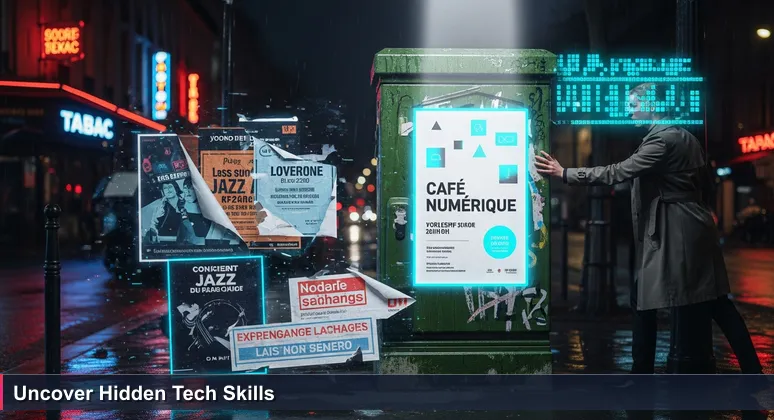
The most important tech bulletin in your arrondissement isn't online. It's the layered collage of posters on a sidewalk utility box, a testament to the local, communal exchange of information that defines French civic life. This is the ethos behind France's most accessible tech education: a sophisticated, publicly-funded ecosystem embedded in the libraries and community centers you walk past daily.
Before investing in private bootcamps, explore this landscape. It's a democratic network designed to turn curiosity into competence, funded by the national strategy to bridge the fracture numérique. Programs like the nationally funded Conseiller Numérique are proven engines for digital inclusion, with 93% of participants reporting new capabilities they previously lacked.
Your journey might start with a free library card from your municipal médiathèque, which often grants remote access to premium platforms like LinkedIn Learning. It could lead to a walk-in workshop at a France Services center or hands-on time with a 3D printer at the Carrefour Numérique² Fab Lab. This guide isn't about finding a single "best" resource, but mapping your path through an interconnected, open-air campus built into the fabric of your city.
Table of Contents
- Introduction to Free Tech Training in France
- France Travail Ateliers Cyber
- Tiers-Lieux, Fab Labs & Repair Cafés
- Public University Auditeur Libre Lectures
- FUN MOOC & CNAM Open Modules
- BnF Public Workshops
- France Services Ateliers Numériques
- Carrefour Numérique² at Cité des Sciences
- Conseiller Numérique Program Workshops
- Le CNAM Libre Accès & GRETA Centers
- Municipal Libraries & Médiathèques
- Your 30-Day Free Learning Blueprint
- From Free Foundations to Paid Precision
- Frequently Asked Questions
Get everything you need to know about AI careers in France from this guide.
France Travail Ateliers Cyber
Often overlooked by the employed, these drop-in workshops at France Travail offices have expanded into a crucial public service. Originally for job seekers, the "Ateliers Cyber" are now open to all, focusing on the practical tech of career advancement in a competitive market.
The curriculum is sharply pragmatic: crafting a standout LinkedIn profile, leveraging AI-powered job aggregators, and safely navigating digital applications. A key module demystifies the Compte Personnel de Formation (CPF) platform, ensuring attendees understand their state-funded training rights. It’s less about coding and more about using technology to systematically unlock professional opportunities.
Access is deliberately barrier-free. No registration with France Travail is required for these specific events. You can find local, walk-in sessions listed on the public Mes Événements Emploi portal. This model exemplifies the shift in public policy from reactive unemployment services to proactive, lifelong career-tech support for every citizen.
For anyone in France building a professional digital identity from scratch, or simply needing to modernize their approach, these free ateliers are an efficient first step. They provide the tactical knowledge needed to navigate the job market, whether you're aiming for a Parisian startup or a tech role at Airbus in Toulouse.
Tiers-Lieux, Fab Labs & Repair Cafés
These community-driven spaces are where digital theory meets the physical world. Often supported by municipal funding, tiers-lieux, Fab Labs, and Repair Cafés form a nationwide network that serves as the essential antidote to purely screen-based learning, emphasizing creation, repair, and collaborative problem-solving.
What’s taught here is intensely tactile: soldering, 3D printer operation, basic electronics with Arduino, and hardware repair. At a Repair Café, you might fix a laptop while learning about its components; a Fab Lab could host a workshop on laser-cutting prototypes. It's education through making.
Access is typically free for introductory sessions and community repair events. More advanced Fab Lab use may require a nominal annual fee (€10-€30), but the ethos remains open. The best way to find local events is through platforms like L'Agenda du Libre, which lists workshops and "install parties" across France.
- Practical skill-building with tools
- Demystification of everyday technology
- Collaboration in community hubs
For aspiring hardware engineers, product designers, or anyone who learns by doing, these spaces are invaluable. They represent the hands-on, innovative spirit found in France's tech ecosystem, from the maker communities in Lyon to the hardware startups emerging in Grenoble. As noted in analyses of these collaborative spaces, they are crucial for translating digital concepts into tangible objects and solutions.
Public University Auditeur Libre Lectures
Behind the imposing facades of France's public universities lies an open-door tradition that few fully exploit. As an auditeur libre (free auditor), you can attend lectures for enrichment, accessing world-class academic thinking in computer science and AI without the pressures of formal enrollment or exams.
The focus here is uncompromisingly theoretical: university-level courses in algorithms, machine learning foundations, data structures, and big data architecture. You could attend a series on neural networks at Université Paris Cité or cryptography at Sorbonne Université, absorbing the same material as degree-seeking students.
- Algorithms and data structures
- Machine learning theory
- Big data systems architecture
- Cryptography and cybersecurity fundamentals
Access policies vary but are often remarkably accessible. Some institutions, following models like the University of Luxembourg, charge a small annual administrative fee of approximately €30-€50. Others permit informal guest attendance for free if lecture hall space allows. The key is checking the "Formation continue" or "Auditeur libre" sections of local university websites.
This path demands self-discipline and comfort with academic pacing, but it offers unparalleled depth. It's ideal for self-directed learners building a robust theoretical framework to complement practical bootcamp skills, or for those testing their interest before committing to a formal degree - a hidden layer of France's education system waiting to be peeled back.
FUN MOOC & CNAM Open Modules
For those seeking structure without sacrificing flexibility, the France Université Numérique (FUN) platform and modules from Le CNAM provide a compelling middle ground. These are not informal tutorials but structured, semester-like courses from France's top Grandes Écoles and universities, delivered online with video lectures, quizzes, and peer forums.
The curriculum spans from foundational Python and web development to specialized courses on AI ethics and cybersecurity. Le CNAM, a national leader in lifelong learning, often offers free access to the introductory modules of its professional certification tracks. This allows you to sample the pedagogy and subject matter before any financial commitment.
Access is strategically designed: 100% free to audit the full content. A fee (typically €30-€90) is required only if you want a formal certificate of completion. This model aligns with France's broader open learning vision, which prioritizes accessibility while maintaining academic rigor.
Ideal for building a disciplined, academic foundation on your own schedule, these resources prove you can follow a sustained curriculum. They serve as perfect preparatory ground before investing in a focused bootcamp, ensuring you enter more intensive training with proven self-motivation and core concepts firmly in place.
BnF Public Workshops
The Bibliothèque nationale de France has masterfully pivoted from being a silent repository of knowledge to an active educator in navigating our digital reality. Its public workshops address the most pressing modern tech challenges, peeling back the layers between information and understanding much like the architectural layers of its Tolbiac site.
What’s taught here is crucial for any tech professional: advanced digital research methods, using sovereign open data portals, and, most vitally, media and AI literacy. Workshops guide you in identifying deepfakes or critically assessing outputs from generative AI, blending traditional research rigor with new digital realities. These sessions, often held during national events, tackle the fracture numérique at its most sophisticated level.
Access is straightforward and free. Consult the BnF Agenda for workshops marked tout public. Some require advance registration due to limited space, especially during popular series like the Nuits de la lecture. This initiative is part of a national response, as the 2025 Education and Training Monitor for France highlighted that 46% of adults lack basic digital skills.
For anyone pursuing AI or machine learning, developing this critical thinking and information-validation competency is as essential as mastering coding syntax. In an era of synthetic media, learning to interrogate digital sources at the BnF provides an invaluable foundation for responsible innovation.
France Services Ateliers Numériques
Your local mairie or town hall is more than a place for administrative paperwork; it's often the home of a France Services center, the state's frontline in combating the fracture numérique. With over 2,500 points nationwide, this network delivers pragmatic, patient workshops designed for those taking their very first digital steps.
The curriculum is built for immediate life and administrative competency. It covers navigating essential government portals like Impôts.gouv.fr and Ameli.fr, establishing basic cybersecurity hygiene, and using everyday apps for communication and banking. Sessions are intentionally slow-paced and supportive, as highlighted in a typical Permanence Numérique 2026 announcement.
- Government service navigation
- Phishing awareness and password security
- Everyday app and device use
Access is deliberately simple: completely free, often on a walk-in basis during dedicated "Permanence" hours. Find your nearest point via the official France Services network. This system ensures that foundational digital autonomy - a non-negotiable prerequisite for participating in the modern economy or pursuing further tech training - is available to every citizen, from rural villages to metropolitan suburbs.
For absolute beginners, this is the essential, zero-pressure starting line. It builds the core confidence required before you can even contemplate writing a line of code or training a model, embodying France's commitment to leaving no one behind in the digital transition.
Carrefour Numérique² at Cité des Sciences
Step inside the Cité des Sciences et de l'Industrie at La Villette, and you'll find a space that hums with a different energy. Carrefour Numérique² is a flagship public Fab Lab where learning is visceral and project-based, surrounded by industrial-grade tools that democratize access to digital fabrication.
This is where abstract designs become physical objects. Workshops and open sessions cover hands-on skills in 3D modeling and printing, laser cutting, virtual reality development, and robotics programming with electronics platforms like Arduino and Raspberry Pi. You might join a Maestro VR session or a themed series like the "Vacances Numériques" for immersive, tactile learning.
Access mirrors its community ethos: entry to the space and many basic workshops is free. You typically only pay for the raw materials you consume, such as filament for 3D printing. The agenda regularly lists "Free access" Fab Lab hours, inviting makers of all levels to experiment.
For aspiring product designers, VR developers, or anyone who needs to bridge the digital and physical, Carrefour Numérique² is unparalleled. It represents the cutting edge of France's public commitment to hands-on tech education, providing the tools to literally build the future.
Conseiller Numérique Program Workshops
Funded by the France Relance plan and now a cornerstone of national policy, the Conseiller Numérique program represents the gold standard in public digital upskilling. It embeds thousands of trained "digital advisors" in libraries, Maisons France Services, and local associations, creating a human-centered support network across the country.
The curriculum is broad-spectrum and needs-based, covering everything from smartphone basics and email to collaborative tools, cloud storage, and data privacy. What sets it apart is its proven, measurable impact. According to impact assessments on the European Digital Skills and Jobs Platform, 93% of participants report new digital capabilities, and 60% feel significantly more confident and less stressed when using technology.
Access is seamlessly integrated into community life. The service is completely free through partner host organizations. You don't seek out a course catalog; you find a local advisor for structured, supportive coaching. This model has been so successful it's highlighted as a European good practice for closing the digital divide.
For learners at the beginning or intermediate level, this program provides the ideal bridge. It offers the accountability of a human coach and curriculum structure that free online resources lack, building the digital fluency necessary to then pursue more specialized technical training in AI or development.
Le CNAM Libre Accès & GRETA Centers
While Le CNAM’s free MOOCs provide excellent theory, its most strategic offering for career-changers is the "libre accès" policy at its regional centers. Similar models exist at GRETA centers, the national network for adult education. Here, you can typically attend the initial sessions of a professional certificat or titre professionnel course for free or a nominal fee, providing a risk-free trial of intensive training.
The curriculum is explicitly aligned with market needs. You might sample modules from professional tracks in web development, network administration, software testing, or data analysis. This allows you to experience the teaching style, cohort, and subject matter intensity of a program that could lead to a recognized credential.
Access is designed for exploration. For example, you could take the introductory 30-hour module of a 400-hour "Web Developer" course at no cost to gauge your fit. These discovery sessions are listed alongside full programs on institutional websites, including the Campus France portals that guide international and domestic students toward accredited training.
This is the most direct bridge between free exploration and paid, credentialed training. For anyone considering a professional reconversion into tech, it provides an invaluable, zero-cost method to validate a career path before committing significant time or tapping into your Compte Personnel de Formation funds.
Municipal Libraries & Médiathèques
Your local library has undergone a quiet revolution. No longer just a repository of books, the municipal bibliothèque or médiathèque is now the primary, most accessible hub for lifelong tech learning in France. Its power lies not only in its own workshops but in its role as a gateway to the entire digital ecosystem, a transformation globally recognized in studies of smart cities.
On-site, you'll find recurring workshops on office software, basic coding with Scratch or Python, internet safety, and introductions to AI tools. These sessions provide the guided first steps in a supportive, community environment. Many libraries also serve as host sites for the highly effective Conseiller Numérique program, further integrating this national upskilling effort into local neighborhoods.
The staggering additional value, however, comes with your free library card. Networks like Bibliothèques de Paris or Lyon provide remote, unlimited access to premium learning platforms like LinkedIn Learning, Skilleos, and Coursera. This turns a simple card into a master key for thousands of professional courses, effectively outsourcing a vast digital curriculum to the public sector.
For everyone starting out, the library is the indispensable foundation. It provides the physical tools, the community, the human guidance, and the digital keys. It is the single most powerful and underutilized entry point in France's sophisticated tech learning landscape.
Your 30-Day Free Learning Blueprint
This blueprint sequences France's public resources to build unstoppable learning momentum without spending a cent. It transforms the civic infrastructure around you into a personalized, four-week campus.
- Week 1: Establish Your Base. Get a free card at your local médiathèque. Explore their event calendar for a beginner workshop on Excel or computer basics. Immediately use your new card credentials to log in from home to LinkedIn Learning and start a "Python for Beginners" course.
- Week 2: Build Confidence & Context. Attend a walk-in Permanence Numérique at your France Services center to master a practical task like secure video calls. Then, find a public workshop on "AI Literacy" at your library or the BnF to understand the technological landscape you're entering.
- Week 3: Get Hands-On & Theoretical. Book a free introductory session at Carrefour Numérique² or a local Fab Lab to experiment with 3D modeling. Simultaneously, enroll in a free "Introduction to Computer Science" MOOC on the FUN platform to build crucial theoretical depth alongside your practical skills.
- Week 4: Explore Professional Pathways. Use your library’s LinkedIn Learning access to complete a short "Career Paths in Tech" series. Then, find a libre accès information session at your regional CNAM or GRETA center for a professional track like "Front-End Developer," testing the waters of a formal reconversion.
This systematic approach leverages the unique interconnectivity of France's public learning ecosystem, proving you can build a substantial skill foundation entirely within the framework your city already provides.
From Free Foundations to Paid Precision
The public ecosystem excels at building foundational skills, demystifying technology, and proving you can learn - with programs like Conseiller Numérique demonstrating a 93% success rate for core digital competencies. It turns curiosity into capability. However, transitioning to job-ready, specialized roles in AI engineering or full-stack development within France's competitive tech scene typically requires the intensity, collaborative project experience, and direct career support of a focused bootcamp.
This is where a program like Nucamp’s bootcamps becomes the strategic next step. After using public resources to confirm your interest and build initial Python skills (from a library's LinkedIn Learning) or web fundamentals (from a CNAM MOOC), you can invest with precision. Nucamp offers specialized, affordable pathways like its 25-week Solo AI Tech Entrepreneur Bootcamp (€3,700) or its 15-week AI Essentials for Work program (€3,300), which are structured to deliver the advanced curriculum and portfolio projects employers at companies like Dassault Systèmes or Capgemini seek.
With a reported 78% employment rate for graduates and flexible payment plans, such bootcamps are designed to bridge the gap between public foundational training and private sector employment. Start public, learn for free to build confidence, then invest privately to gain specialized expertise. Your career in France's vibrant tech ecosystem, from Parisian scale-ups to Toulouse's aerospace giants, begins by leveraging the full spectrum of learning this country uniquely provides.
Frequently Asked Questions
Are all these training resources really free, or are there any costs involved?
Most are completely free, such as France Travail's Ateliers Cyber and municipal library workshops. However, some like Fab Labs may have minimal fees for materials, often around €10-30 per year for advanced use, but introductory sessions remain free.
What specific tech skills can I learn from these public programs in France?
You can learn diverse skills, from digital job-seeking tools at France Travail to hands-on 3D printing at Carrefour Numérique² and AI theory in university lectures. For example, the Conseiller Numérique Program helps 93% of participants gain practical digital competencies.
How do I find and sign up for these free training sessions in my area?
Start by visiting your local municipal library or France Services center for walk-in events. Online, check platforms like the BnF Agenda or FUN MOOC for schedules, with many sessions listed on resources like Mes Événements Emploi for nationwide access.
I'm a complete beginner in tech. Are these programs suitable for me?
Yes, many programs cater to absolute débutants, such as Ateliers Numériques at France Services Centers and basic workshops at libraries. The Conseiller Numérique Program reports that 60% of participants feel significantly more confident after attending.
Can attending these free workshops help me transition into a tech career in France?
Absolutely - they build foundational skills and digital confidence, with a 93% success rate for new capabilities. After gaining basics, you can advance to bootcamps like Nucamp for specialized training, leveraging France's tech hubs from Paris to Toulouse for job opportunities.
To navigate the French tech job market in 2026, read this article on apprenticeships and internships.
This article lists degree-free technology positions in the French market with actionable advice.
Follow this step-by-step tutorial for aspiring AI engineers in France to navigate the local job market.
This article details CPF and other public funds for tech training in the French context.
For a deep dive into France tech career 2026, check out this article.

Irene Holden
Operations Manager
Former Microsoft Education and Learning Futures Group team member, Irene now oversees instructors at Nucamp while writing about everything tech - from careers to coding bootcamps.