









Top 10 Entry-Level Full Stack and Frontend Jobs in 2026 (Roles, Pay, and How to Get Hired)
By Irene Holden
Last Updated: January 18th 2026
Too Long; Didn't Read
Aim for Junior Full Stack Developer or Entry-Level Full Stack Engineer - they combine the highest hiring volume with the best entry pay and teach the end-to-end skills employers want. Junior Full Stack roles typically pay about $102,500-$142,000 while Entry-Level Full Stack Engineers run higher, around $111,000-$158,000; both expose you to frontend, backend, databases, and cloud/DevOps basics that pair well with AI tooling. Structured, project-focused paths (like Nucamp’s 22-week Full Stack program) are a practical way to build the 2-3 portfolio projects hiring managers expect.
The Glass, the Labels, and the One-Button Choice
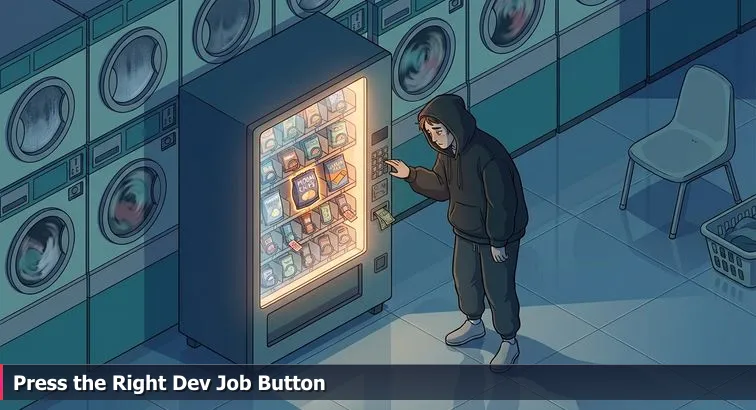
You’re standing in front of that humming vending machine after a long shift, last clean hoodie, last crumpled five-dollar bill. Behind the glass: rows of neat snacks, some with “SOLD OUT” tags, all with glossy photos on the front and tiny ingredient labels on the back. Press the wrong button and you’re stuck with something you didn’t really want, at least for tonight.
The 2026 entry-level dev market feels a lot like that. Job titles like “Junior Frontend Engineer,” “Associate Software Engineer,” and “Entry Level Full Stack Developer” look interchangeable from a distance. The front of the package shows salary ranges and shiny tech stacks. The ingredient label - what you’ll actually do all day, how much mentorship you’ll get, and how much AI is quietly expected to do the boring parts - only shows up when you press in close.
What the Market Really Looks Like (Past the Doom-Scrolling)
Under the glass, demand is still very real. The Bureau of Labor Statistics and industry surveys summarized in Coursera’s full-stack salary guide point to roughly 15% growth for software and web developers through 2034. Other analyses project a developer shortage approaching 2.0 million roles by 2026, especially for folks who can work across the stack and into the cloud instead of just one narrow slice.
At the same time, the roles themselves are shifting. About 31% of developers now identify as full stack, according to stats compiled by OneHour Digital’s full stack career report, which matches what many hiring managers say: they want “versatile generalists” who can move from UI to API to database without dropping the ball. That’s exactly why this list focuses on full stack and frontend slots - they’re where beginners and career-switchers tend to get the most leverage for the skills they’re investing in.
AI Raised the Bar, It Didn’t Remove the Door
Here’s the part nobody can really dodge anymore: AI tools are doing a lot of the work that used to be the junior developer’s proving ground. Copilot can scaffold components, ChatGPT can spit out boilerplate tests, and cloud templates can stand up a basic backend in minutes. Employers see that, and many now quietly expect “senior-lite” juniors who can design, debug, and stitch AI and cloud tools together without getting lost.
But that doesn’t make the vending machine disappear - it just changes what’s on the ingredient label. The roles in this list still run on the same core stack: HTML, CSS, JavaScript, React, Node, SQL/NoSQL, Git, and honest problem-solving. Those fundamentals are what let you use AI effectively - spotting bad suggestions, wiring in APIs, and reasoning about bugs - instead of being the person AI replaces. Every slot we’ll cover is accessible if you treat AI as an accelerator on top of those basics, not a shortcut around them.
How to Read This “Top 10” Without Getting Trapped
This list ranks ten of the best entry-level full stack and frontend roles in the US for 2026 based on four things: accessibility for serious beginners, job posting volume, realistic salary ranges, and how well each role positions you to work with AI instead of competing against it. Think of each role as a numbered button on the keypad - B7, C3, D1 - not a life sentence. Your real job over the next few minutes is to notice which packages match the ingredients you actually want to cook with for the next few years, then press one button on purpose instead of out of panic.
Table of Contents
- Introduction
- Junior Full Stack Developer
- Entry Level Full Stack Engineer
- Junior Frontend Developer
- Entry Level Software Developer
- Junior React Developer
- Junior Web Developer
- Junior Full Stack Software Developer
- Junior Frontend Engineer
- Associate Software Engineer
- Associate Web Developer
- How to Use This List Without Getting Stuck
- Frequently Asked Questions
When you’re ready to ship, follow the deploying full stack apps with CI/CD and Docker section to anchor your projects in the cloud.
Junior Full Stack Developer
Snapshot: Why This Slot Ranks First
On the vending machine keypad, this is the big, overstuffed burrito in the middle row: not the flashiest branding, but filling, versatile, and popular enough that it’s always one nudge away from a “SOLD OUT” tag. As a title, Junior Full Stack Developer shows up on thousands of postings, often with salary ranges around $102,500-$142,000 in the US, based on entry-level full stack salary data summarized by ZipRecruiter’s 2026 estimates. Posting volume is consistently high on Indeed, LinkedIn, and Glassdoor, because companies like the idea of one person who can move from UI to API to database without handing work off at every step.
| Aspect | 2026 Snapshot | Why It Matters |
|---|---|---|
| Salary Range (US) | $102,500-$142,000 | Top-of-vending-machine pay for entry roles, especially for career-switchers. |
| Job Posting Volume | High across remote and on-site roles | Makes this one of the more realistic first buttons to press. |
| Role Focus | End-to-end web features (frontend + backend) | Builds a broad foundation you can later specialize from. |
What You Actually Do Between Frontend and Backend
The front of the package says “work on everything,” but the ingredient label is more specific. Day to day, junior full stack devs are expected to ship end-to-end features: building responsive UIs with HTML, CSS, and modern JavaScript (usually React), wiring those components up to REST APIs, and then dropping into a Node/Express backend to add or tweak endpoints. You’ll write and debug database queries in SQL or NoSQL stores, fix bugs anywhere from misaligned buttons to broken business logic, and contribute basic unit or integration tests so changes don’t blow up production.
In 2026, AI is baked into that workflow. Teams assume you’ll use tools like Copilot or ChatGPT to scaffold components, generate test skeletons, and draft docs, then rely on your own understanding of the stack to refactor, secure, and debug what the model produced. The unspoken expectation is that you can still reason about HTTP requests, data models, and state management if the AI suggestions are wrong or incomplete.
The Core Stack and AI-Ready Skills
Underneath the title, the skill label reads like a complete JavaScript meal. Employers almost always want solid HTML5, CSS3, and modern JavaScript (ES6+), plus a major frontend framework (React is the most common ask on US job boards), a backend like Node.js with Express, and at least one database - often MongoDB or PostgreSQL. Git and GitHub/GitLab are non-negotiable, as is comfort with JSON and basic REST API design.
What’s changed in 2026 is the “nice-to-have” section. Even juniors get bonus points for knowing how to deploy to cloud platforms (AWS, Azure, or modern hosts like Render and Vercel), containerize services with Docker, and plug in AI APIs from providers like OpenAI or Anthropic. Those aren’t just resume buzzwords; they’re the glue that lets you turn AI suggestions into working, deployed features instead of code snippets that only run on your laptop.
How to Break In Without “3 Years of Experience”
Here’s the catch: a lot of “junior” full stack postings quietly ask for multiple years of experience, because AI has automated much of the old-school junior grunt work. To look like the “senior-lite” junior hiring managers want, you need a portfolio of 2-3 serious full stack projects that go beyond to-do lists - think a small SaaS app with authentication and billing, a notes app that calls an AI API to summarize content, or a mobile-friendly React + React Native frontend backed by a Node/Express API and MongoDB.
That’s where a structured path helps. Programs like Nucamp’s 22-week Full Stack Web and Mobile bootcamp are designed around exactly this role: roughly 10-20 hours per week of study, a complete JavaScript stack (React, React Native, Node.js, Express, MongoDB), and a dedicated 4-week capstone to build and deploy a real full stack app. With early-bird tuition around $2,604, small weekly live workshops capped at 15 students, and a Trustpilot rating of about 4.5/5 from hundreds of reviews, it’s intentionally aimed at career-switchers who need both affordability and structure. However you learn, your real goal is the same: show you can ship features across the stack, explain where you used AI versus where you had to think for yourself, and feed your “crumpled bill” (resume, LinkedIn, GitHub) into the hiring machine in a way that doesn’t get spit back out by filters and applicant tracking systems.
Entry Level Full Stack Engineer
Premium Slot on the Keypad
On the keypad, this role is the premium version of the same snack: same calories as “Junior Full Stack Developer,” but with fancier branding and a higher price. Entry Level Full Stack Engineer roles routinely advertise salary ranges around $111,000-$158,000 in the US, and year-over-year postings for this exact title have climbed by 35%+ as companies double down on cloud-based products and internal platforms. Reports like Fullstack Academy’s full stack salary analysis echo the same pattern: full stack engineers tend to sit near the top of entry-level pay bands, especially in product-led and SaaS companies that expect them to handle a lot of responsibility from day one.
| Title | Typical Salary Range (US) | Expectation Level |
|---|---|---|
| Junior Full Stack Developer | $102,500-$142,000 | Focus on implementing features, less on architecture. |
| Entry Level Full Stack Engineer | $111,000-$158,000 | End-to-end ownership plus system design and DevOps basics. |
Day-to-Day: Features Plus Architecture
On the front of the package, the job description still talks about building web apps and shipping features. The fine print adds more: you’re expected to implement functionality end to end (UI → API → database), participate in system design discussions (how services talk to each other, where to put state, how to handle failures), and help maintain CI/CD pipelines and deployment scripts. You may be the one wiring up monitoring and alerts, tracking down performance bottlenecks like slow queries or chatty APIs, and integrating third-party services for payments, email, or AI-powered features. AI tools are assumed, but mainly as accelerators - you’re judged on how well you can debug, harden, and extend the code they generate, not just how fast you can accept a suggestion.
The Ingredient Label: Skills and Stack
Underneath the shiny “Engineer” title, the ingredient list mixes full stack coding chops with early DevOps and cloud skills. You still need strong frontend fundamentals (HTML, CSS, JavaScript/TypeScript and a framework like React), backend experience with Node.js and a framework such as Express or Nest, and solid database skills with relational systems like PostgreSQL or MySQL. On top of that, hiring managers look for understanding of API design (REST, sometimes GraphQL), trade-offs between monoliths and microservices, and cloud basics on AWS, Azure, or GCP - enough to deploy services, manage environment variables, read logs, and reason about latency and cost. Docker is increasingly table stakes, and exposure to infrastructure-as-code tools (Terraform, for example) is a differentiator, especially when you can explain how you used AI to sketch out infrastructure templates but then verified and customized them yourself.
"The senior developer is now the new entry level."
- Maame, Software Developer, DEV Community
Breaking In When Everyone Wants “Experience”
Because the label says “Engineer,” many of these roles quietly assume you already have experience behaving like one: that you’ve shipped at least one production-grade project with a documented API layer, real authentication, cloud deployment, logging, and a small CI pipeline that runs tests on every push. For career-switchers, that usually means being very intentional: targeting “Software Engineer I,” “Full Stack Engineer (New Grad),” or apprenticeship programs, building portfolio projects that look like internal tools or SaaS products rather than toy apps, and practicing how to talk through architecture trade-offs in interviews. Structured paths - CS degrees, post-grad residencies, or intensive full stack bootcamps followed by hands-on apprenticeships - give you the scaffolding to get there, but you still have to close the loop by showing how you make design decisions, how you used AI along the way, and how your choices would hold up once actual users and traffic hit your system.
Junior Frontend Developer
Best If You Care About What’s On the Glass
If the part of the vending machine you obsess over is the front of the package - the colors, the typography, how everything lines up - Junior Frontend Developer is your slot. This title usually comes with US salary ranges around $67,000-$87,000 for early-career roles, with demand that’s moderate to high, especially in tech hubs like San Francisco, New York, and remote-friendly product companies. Platforms like Built In’s entry-level frontend listings routinely feature dozens of openings at any given time, from marketing-heavy roles to application-focused UI work.
What the Job Really Looks Like Day to Day
The job description might shout “build beautiful experiences,” but the ingredient label is more practical. Most of your time is spent turning Figma or other design files into responsive, accessible pages using HTML, CSS, and JavaScript. You’ll build reusable UI components (buttons, cards, nav bars), handle state for things like forms and filters, and make sure everything works on a range of devices and browsers. When bugs show up, they’re often visual - broken layouts, odd spacing, weird hover states - or involve wiring the UI correctly to backend APIs.
AI is very much part of the picture here, but not in a “click to ship” way. Teams expect you to lean on tools for generating CSS variants, translating design tokens into component code, or scaffolding tests. Your real value is knowing when AI-generated code will hurt accessibility, bloat bundle size, or break responsiveness - and then fixing it by hand.
The Skill Ingredients Employers Check For
Almost every junior frontend posting boils down to a common list, even when the ad sounds fancy:
- Solid HTML5 semantics and CSS3 layout (Flexbox, Grid, responsive patterns).
- Comfortable, idiomatic JavaScript (ES6+) for interactivity and basic state.
- At least one modern framework, most often React in US job markets.
- Awareness of accessibility (a11y): ARIA attributes, keyboard navigation, color contrast.
- Experience turning designs into working UIs while collaborating with designers and backend devs.
The extras that help you stand out in 2026 include familiarity with component libraries (Material UI, Chakra, Tailwind), automated testing (Jest, React Testing Library, or Cypress), and basic performance tuning: image optimization, code splitting, and Lighthouse audits. Being able to explain where AI helped in your process - generating a first draft of a component or a test file - and where you had to step in with real frontend judgment is a big plus.
How to Turn Design-Friendly Skills Into a First Offer
If you’re coming from design, marketing, content, or any role where you already think about users and visuals, this is often the least brutal first button to press. The transition plan usually looks like this: build a visually polished portfolio with 2-3 projects that recreate real-world designs, make them responsive and accessible, and add meaningful interactivity (search, filters, multi-step forms). Emphasize your HTML/CSS depth instead of rushing straight to frameworks - employers can feel the difference when layouts “just work” across devices. From there, target titles like “Junior Frontend Developer,” “Junior Web UI Developer,” or “Front End Developer I,” and use your portfolio write-ups to show not just what you built, but how you thought about UX, a11y, and where AI sped you up without taking over the work.
Entry Level Software Developer
The Most Generic Label Behind the Glass
Among all the labels behind the vending machine glass, Entry Level Software Developer is the one that looks the most generic - like a plain white bag that could hide almost anything. That’s exactly what makes it powerful for career-switchers. Instead of locking you into “React only” or “frontend only,” this title can cover web apps, internal tools, light backend services, and even some data or AI-adjacent work, depending on the team. Salary ranges typically land around $65,000-$120,000 in the US for early-career roles, and job posting volume is very high; pages like Indeed’s entry-level software developer listings routinely span hundreds of openings across industries, from finance and healthcare to logistics and edtech.
What You Actually Ship in This Role
The front of the package might say “build software solutions,” but the ingredient label is more grounded. In most teams, you’ll be adding features to existing systems, fixing bugs, and refactoring older code to be more maintainable. Some days you’re touching a web UI; other days you’re updating a backend service, writing integration tests, or connecting internal APIs. You’ll sit in standups and sprint planning, estimate tasks, and learn the company’s stack and deployment process. AI shows up as a helper for boilerplate and quick prototypes, but managers still evaluate you on how well you understand requirements, reason about edge cases, and debug issues in unfamiliar code.
Skills That Travel Well Across Stacks
Because this title is broad, the must-have skills are less about one exact framework and more about solid fundamentals. Employers expect you to be comfortable with object-oriented programming in at least one major language (Java, C#, Python, or JavaScript/TypeScript), to understand basic data structures and algorithms, and to work within a standard software development lifecycle (from requirements to testing and deployment). You’ll need to speak HTTP and JSON well enough to consume or expose APIs, use Git daily, and not be afraid of a terminal window. The specifics vary by company - Java/Spring for a bank, C#/.NET for a corporate intranet, Node.js and React for a startup - but the underlying thinking is the same.
| Primary Language | Common Industry | Typical Focus |
|---|---|---|
| Java | Finance, large enterprises | Backend services, APIs, batch jobs |
| C# / .NET | Enterprise, healthcare | Internal tools, web apps, services |
| Python | Startups, data-heavy products | Scripting, APIs, data pipelines |
| JavaScript / TypeScript | SaaS, web platforms | Full stack web, frontend + Node.js |
A Practical Path In for Career-Switchers
For someone coming from outside tech, this is often the slot where your résumé doesn’t get instantly rejected for “not being React enough” or “not having cloud experience yet.” The trade-off is that you have to make your portfolio and story do more work: tailor your projects to the stacks you’re targeting (a Java API for one company, a full stack JS app for another), and talk less about specific libraries and more about how you solved real problems, wrote tests, and used AI tools to explore alternatives instead of to think for you. A structured path that mixes fundamentals with hands-on web work - like a 22-week full stack bootcamp covering JavaScript, React, Node, and MongoDB, followed by focused practice in algorithms and systems design - can help you look like a safe bet for these broad roles. From there, you can specialize into frontend, full stack, cloud, or AI-heavy work once you’ve got that first title on your LinkedIn instead of staring at the glass wondering which button to press.
Junior React Developer
The React-Flavored Frontend Slot
On the keypad, Junior React Developer is like the flavored version of the basic chips: still clearly a frontend snack, but with a very specific taste. Employers are explicit about wanting React, and they pay accordingly, with US salary ranges often running from around $85,000 up to roughly $153,000 for early-career roles, based on React-focused entry-level data pulled from job boards and salary aggregators. Demand is strong across SaaS, fintech, analytics dashboards, and agencies that standardize on React; a quick scan of platforms like Glassdoor’s junior frontend and React listings shows React called out by name in a large share of “junior” postings.
What Your Day Actually Looks Like
The front of the package says “build modern React apps,” but the ingredient label is a little more specific. Most days you’re living inside a React codebase: creating and refactoring components, wiring props and state together with hooks, and managing more complex data flows with something like Redux Toolkit, Zustand, or context. You’ll be handling routing, authentication flows, and forms, talking to REST or GraphQL APIs, and chasing down performance issues like unnecessary re-renders or slow list views. AI shows up as a keystroke-saver: generating skeleton components, basic tests, or type definitions, but teams still expect you to understand why something belongs in local vs. global state, or why a particular component keeps re-rendering and how to fix it.
The React Ingredient List: Skills That Matter
Underneath the React logo on the job ad, the real skill list looks something like this:
- Strong JavaScript (ES6+) and increasingly TypeScript for safer, more maintainable code.
- Deep comfort with React function components, hooks (
useState,useEffect,useMemo, etc.), and rendering behavior. - One or more state management approaches (Redux/Redux Toolkit, Zustand, or similar libraries).
- Styling via CSS Modules, CSS-in-JS (styled-components, Emotion), or utility frameworks like Tailwind.
- Integration with APIs using fetch or Axios, including error handling and loading states.
On many teams, React doesn’t live alone; it’s paired with meta-frameworks like Next.js for server-side rendering and API routes, or with design systems and Storybook-based component libraries. Being able to use AI to draft boilerplate while still hand-tuning accessibility, performance, and edge cases is a big part of what separates hireable juniors from “just started a React tutorial last week.”
| Role | Primary Focus | Typical Stack | Secretly Best For |
|---|---|---|---|
| Junior Frontend Developer | General web UIs and marketing sites | HTML/CSS/JS + one framework | Design-minded switchers who want broad browser skills. |
| Junior React Developer | Complex, app-like React interfaces | React + state library + API integrations | People who enjoy deep-diving into one frontend ecosystem. |
How to Look Like a “React Person,” Not Just “Used React Once”
From the outside, a lot of React roles blend together, which is why your portfolio has to make your slot on the keypad obvious. That usually means two or three React-heavy projects that show real complexity: a dashboard with charts and filters, a Kanban board with drag-and-drop and offline support, or a Next.js app with authentication and protected routes. In each, highlight how you structured state, avoided prop-drilling, and handled performance. Talk openly about where AI helped (for example, generating initial reducers or test files) and where you overrode its suggestions to improve accessibility or performance. Pair that with some structured learning - whether that’s a React-focused track in a full stack bootcamp or a self-directed curriculum that forces you to ship - and you stop looking like “just another junior” and start looking like the obvious choice for teams whose entire front-of-package branding is built on React.
Junior Web Developer
Reliable, Everywhere, and Not Too Fancy
Think of Junior Web Developer as the chips-and-a-drink combo in the corner row: not the flashy premium slot, but available almost everywhere and surprisingly satisfying if you’re trying to get in the door. Salary ranges typically land around $64,000-$93,000 in the US for early-career roles, and job posting volume is high, with projections of 853,000+ jobs in this general category across the country. Related salary data for junior web and frontend roles on sites like Salary.com’s junior web developer breakdown backs up the idea that this is one of the more attainable on-ramps, especially outside big tech hubs.
What You Actually Do: Sites, CMSs, and Small Apps
Behind the simple label, the work is a mix of “classic web” and light application development. Many junior web developers spend their days building and maintaining marketing sites, brochureware pages, and simple web apps. You’ll work heavily with content management systems like WordPress or Drupal, customize themes with PHP and JavaScript, and wire in forms, email providers, or payment widgets. You’re often the one fixing layout bugs, tweaking copy, making pages responsive, and handling basic hosting and DNS when something goes sideways.
The Skill Stack on the Ingredient Label
Hiring managers for these roles usually care less about bleeding-edge frameworks and more about whether you can own a site end to end. The core ingredients: solid HTML, CSS, and JavaScript, at least one CMS (WordPress plus enough PHP to be dangerous), and basic responsive design skills. You’ll need enough MySQL to understand how content is stored, enough Git to avoid overwriting teammates’ work, and enough deployment knowledge to get a site onto shared hosting, Netlify, or a VPS without panicking.
| Role | Main Focus | Typical Employers |
|---|---|---|
| Junior Web Developer | Websites, CMS, light interactivity | Agencies, local businesses, universities, nonprofits |
| Junior Frontend Developer | Rich UIs, design-heavy interfaces | SaaS companies, design-forward startups |
| Junior Full Stack Developer | End-to-end web apps (UI + API + DB) | Product teams, early-stage startups, consultancies |
Using This Role as a Stepping Stone
For career-switchers outside major tech cities, this is often the first slot where someone is willing to take a chance on you. The fastest way in is to build for real people: a site for a friend’s small business, a volunteer project for a nonprofit, a rebuild of a local organization’s slow, outdated site. Show that you can own the whole lifecycle - design implementation, content updates, basic SEO, performance improvements, and deployment. Once you’re in, you can layer on modern frontend or full stack skills through structured learning (like a part-time bootcamp that adds React, Node, and database work to your toolkit) and gradually move toward titles like “Frontend Developer,” “Full Stack Developer,” or “Frontend Engineer” as your projects and comfort with AI-assisted workflows grow more complex.
Junior Full Stack Software Developer
Product-Focused Full Stack in the Middle Rows
This title usually sits a couple of slots over from “Junior Full Stack Developer” on the keypad: same idea, but more explicitly tied to shipping a software product. As a Junior Full Stack Software Developer, you’re not just building generic CRUD apps; you’re working on subscription dashboards, internal tools, and SaaS features that paying customers rely on. US salaries commonly land in the $80,000-$128,000 range for early-career roles, and posting volume is high, especially for remote and hybrid teams that want one person who can touch UI, API, and database without heavy hand-holding.
How the Work Feels Day to Day
Once you’re past the title, the daily ingredient list looks like this: implement new product features across the stack, from React components and forms to Node/Express routes and SQL queries. You’ll work on authentication, permissions, billing integrations, and multi-tenant logic (so multiple companies can safely share the same app), and you’ll be expected to fix bugs that affect real users and revenue. Internal tooling is common too - admin dashboards, analytics views, and configuration panels that help non-engineers run the business. AI plays a very practical role here: generating boilerplate routes, draft tests, or admin UIs, while you make judgment calls about security, edge cases, and how new features affect existing data.
The SaaS-Flavored Skill Stack
Compared to more generic full stack roles, the ingredient label for this one leans heavily on modern web and SaaS patterns. Hiring managers usually want solid experience with a JavaScript stack (often Node.js + Express on the backend and React on the frontend), plus comfort with relational databases like MySQL or PostgreSQL, including schema design and migrations. You’re also expected to understand authentication flows (sessions or JWTs), role-based access control, and payment gateways such as Stripe. Reports like Talent500’s in-demand full stack skills guide add more items to the list: cloud fundamentals, CI/CD pipelines, containerization, and the soft skills to collaborate with product and design.
| Title | Typical Focus | Best For |
|---|---|---|
| Junior Full Stack Developer | General web apps across frontend and backend | Those wanting broad exposure before specializing. |
| Junior Full Stack Software Developer | SaaS features, business logic, internal tools | People excited by product thinking and customer impact. |
| Entry Level Full Stack Engineer | End-to-end features plus architecture and DevOps | Folks ready to lean into systems design and cloud early. |
Breaking In by Building Real Product Flows
To get taken seriously for this slot, you’ll need to show more than “I can make a to-do list.” Aim for at least one or two projects that look and behave like real SaaS products: a mini project-management tool with teams and billing, a course platform with subscriptions, or a feature-flag system with admin and user roles. Each should have login, role-based permissions, a clear data model, and some form of payment or subscription logic - even if it’s just using Stripe in test mode. In your README and interviews, focus on the business flows you modeled, how you rolled out changes without breaking existing users, and how you used AI to speed up routine coding while still owning the tricky decisions. Structured full stack training that culminates in a capstone project - paired with deliberate practice in cloud, CI/CD, and product thinking - can help you go from “knows React and Node” to “can be trusted with features customers actually pay for,” which is what this title is really advertising under the hood.
Junior Frontend Engineer
From Websites to “Apps in the Browser”
On the vending machine keypad, Junior Frontend Engineer sits right next to “Junior Frontend Developer,” but the ingredient label is heavier. The salary range tends to be a bit higher, around $73,000-$95,500 in the US, and postings are common on product teams building complex interfaces rather than marketing sites. Instead of mostly static pages, you’re working on full-blown web applications: dense dashboards, data tables, and multi-step workflows that feel closer to desktop software than a simple website.
Day-to-Day: Complex UIs and Serious State
The front of the package says “build rich user experiences,” but the reality is a lot of intricate UI work. You’re implementing tables with advanced filtering and sorting, chart-heavy dashboards, drag-and-drop interactions, and multi-step forms that autosave and validate as users go. You collaborate closely with backend engineers to design API contracts, and you’re expected to write robust unit, integration, and sometimes end-to-end tests so refactors don’t break everything. AI helps with boilerplate components and test scaffolding, but teams lean on you to reason about state management, caching, accessibility, and performance when the generated code isn’t quite right.
The Engineer-Level Ingredient List
Underneath the “Engineer” title, hiring managers are looking for deeper technical comfort than many generic frontend roles require. That usually includes advanced JavaScript (ES6+) and TypeScript, strong experience with React/Vue/Angular (React is the most common), and at least one serious state management approach (Redux, Zustand, MobX, or similar). Testing frameworks like Jest, React Testing Library, Cypress, or Playwright are part of daily life, not an afterthought, and you’re expected to understand HTTP, caching, and how your app talks to APIs well enough to debug tricky edge cases. As one hiring trend report from Full Scale’s developer hiring analysis put it, teams increasingly want engineers who can “own a feature from the UX discussion through to production monitoring,” not just wire up pixels.
| Role | Primary Work | Complexity Level |
|---|---|---|
| Junior Frontend Developer | Marketing sites, simpler UIs | Layouts, basic interactivity |
| Junior Frontend Engineer | Data-heavy web applications | Deep state, testing, performance |
How to Show You’re Ready for “Engineer” Expectations
To land this slot, your portfolio has to prove you can handle complexity, not just make things look good. Aim for projects like a trading-style dashboard with live or mocked data, a data table with virtualization and advanced filters, or a multi-step onboarding flow with autosave and validation. For each, include tests and a short write-up explaining how you structured state, kept performance in check, and where you used AI to move faster (for example, generating an initial test suite) versus where you made manual design and architecture decisions. When a hiring manager presses this particular button, they’re not just buying “a React person”; they’re betting on someone who can keep a complex, AI-accelerated frontend codebase sane over time.
Associate Software Engineer
The Enterprise-Branded Slot With a Career Ladder
On the vending machine keypad, Associate Software Engineer is the neatly branded corporate snack: consistent packaging, clearly printed nutrition facts, and a reputation for being part of a bigger meal. It’s one of the most common early-career titles in large organizations, with US base salaries often in the $75,424-$88,402 range and total compensation in some finance and enterprise roles reaching around $124,000+. Job posting volume is very high across banks, big tech, defense contractors, healthcare systems, and global consultancies, where hiring is done in waves and promotion paths (Associate → Mid → Senior) are clearly defined from day one.
Day-to-Day Inside a Big Codebase
The front of the package promises “building scalable systems” or “innovating with cloud,” but the ingredient label is more grounded. As an associate, you’re usually responsible for well-scoped pieces of a much larger system: implementing features within an existing service, fixing bugs in long-lived codebases, and writing tests around critical paths. You’ll follow established patterns, frameworks, and internal tooling; participate in design and code reviews; and work closely with QA, DevOps, and product managers. AI assistance is encouraged for boilerplate and internal documentation, but in regulated or risk-heavy domains (finance, healthcare, defense), every line still passes through human review and strict compliance checks.
The Skill Stack Enterprises Actually Check For
Unlike narrowly branded “React” or “Node” roles, this title is usually tied to a specific ecosystem: Java and Spring in banks, C#/.NET inside enterprises, Python in data-heavy products, or even C++ in embedded and defense work. Hiring managers expect solid CS fundamentals (data structures, algorithms, complexity), comfort with APIs and microservices, and enough database knowledge to work with SQL and basic schema design. Cloud platforms like AWS, Azure, or GCP show up as table stakes, at least at the “can deploy and debug” level. As one developer writing on DEV Community’s discussion of shifting expectations put it, many teams now assume entry-level engineers can already operate in production environments where AI-generated code, monitoring, and CI/CD are everyday realities.
| Role | Typical Employers | Primary Focus | Career Trajectory |
|---|---|---|---|
| Associate Software Engineer | Banks, large tech, defense, healthcare | Features in large systems, reliability, compliance | Structured ladder (Associate → Mid → Senior) |
| Entry Level Software Developer | SMBs, startups, varied industries | General app development, internal tools | More flexible, less formal progression |
| Junior Full Stack Developer | SaaS, agencies, product teams | End-to-end web features (UI + API + DB) | Path into senior full stack or specialization |
Getting in the Door - and Growing Once You’re Inside
For career-switchers, this slot can feel intimidating because postings often ask for strong fundamentals and familiarity with enterprise stacks, even at the associate level. The realistic path usually combines a structured learning program that covers web and full stack skills with deliberate self-study in algorithms, systems design, and the language ecosystem you’re targeting (Java, C#, or Python). Once you’re in, the trade-off is clear: less greenfield hacking, more process and review, but also stable mentorship, training budgets, and predictable promotions. If you can show in your projects that you understand how to work in a team - using Git and code review, writing tests, documenting decisions - and that you use AI to navigate large codebases instead of to avoid understanding them, pressing the “Associate Software Engineer” button can be a smart first move that sets you up for a long, compounding career rather than a quick sugar hit.
Associate Web Developer
For many people switching into tech, Associate Web Developer is the first title that doesn’t feel like it’s overselling their experience. It often appears as a gentler alternative to “Junior Web Developer,” with US salary ranges around $62,000-$94,500 and moderate job posting volume. Employers use it when they know they need someone to keep sites and smaller web apps running, but they’re realistic about hiring someone who will grow on the job rather than walk in as a framework expert.
What the Work Actually Looks Like
Under the hood, this role tends to skew more toward maintenance than greenfield builds. You’re updating existing pages, adjusting layouts when marketing changes copy, fixing broken links, and making sure the site looks right in different browsers and on different devices. A lot of work flows through a CMS like WordPress or Drupal: editing templates, tweaking themes with PHP and JavaScript, and wiring up basic integrations for forms, analytics, or email. You’ll also spend time doing cross-browser QA, chasing down CSS bugs, and responding to “this page looks weird on my phone” tickets.
AI fits into that picture as a helper rather than a replacement: generating quick code snippets for a tricky layout, suggesting accessibility fixes, or drafting test cases. But because you’re working on live sites, you still need enough judgment to reject unsafe suggestions and enough Git proficiency to roll back changes if something goes wrong.
The Core Skills on the Ingredient Label
Hiring managers for associate roles are usually looking for solid fundamentals rather than deep specialization. The non-negotiables are good HTML, CSS, and JavaScript, at least one major CMS (often WordPress), and a basic understanding of responsive design. Debugging skills with browser dev tools, comfort using Git, and a willingness to collaborate with non-technical stakeholders (marketers, content editors, designers) matter as much as any library choice. Career guides like Randstad’s overview of developer roles emphasize the same pattern: early-career web devs who master core web technologies and communication skills have an easier time moving into more advanced positions later.
| Role | Primary Focus | Typical Employers | Best For |
|---|---|---|---|
| Associate Web Developer | Site maintenance, CMS, small features | Universities, nonprofits, marketing teams | First tech role where you can learn while you ship. |
| Junior Web Developer | New sites + maintenance, more ownership | Agencies, small businesses, early startups | Those already comfortable owning full websites. |
| Junior Frontend Developer | Richer UIs, design-heavy projects | SaaS companies, digital product teams | Design-minded devs ready for more complex UI work. |
Using “Associate” as an Explicit Stepping Stone
The quiet advantage of this title is that it bakes “early in your journey” into the expectations. That gives you room to learn: to take over someone else’s code and improve it, to practice documenting changes so non-technical teammates can follow along, and to slowly introduce more modern frontend or full stack patterns as your skills grow. Many developers use an associate role as a launchpad, layering on structured learning in React, Node, and databases - through part-time programs like Nucamp’s 22-week full stack bootcamp or similar - to move into titles like Junior Frontend Developer or Junior Full Stack Developer within a year or two. If you’re okay starting with a maintenance-heavy job as long as there’s time and support to upskill, this is a very reasonable first button to press on the keypad.
How to Use This List Without Getting Stuck
Stop Trying to Find the Perfect Button
Staring at this list and trying to pick the “perfect” role can feel like standing at the vending machine, convinced there’s one magic button that fixes your entire career. There isn’t. Each title on this list is just a different first snack: some pay more but demand more, some are easier to reach but less glamorous, some give you broad exposure, others train you deep in one slice of the stack. The real decision isn’t “What’s the #1 job?” It’s, “Given my current skills, time, and energy, which slot gives me the best mix of learning, stability, and momentum over the next 12-24 months?”
A Simple Way to Rank Your Own Top 3
Instead of trying to optimize over all ten roles, zoom in on a short list. Pick three titles that feel plausible and interesting based on what you’ve already done - maybe Junior Web Developer, Junior React Developer, and Associate Web Developer if you’re more design-leaning, or Junior Full Stack Developer, Entry Level Software Developer, and Junior Full Stack Software Developer if you like working across the stack. Then score each role for your real life, not in abstract.
- Rate how close each role is to your current skills (1-5).
- Rate how well the typical pay lines up with your cost of living.
- Rate how much it exposes you to AI and full stack/cloud skills you want to grow.
- Rate how sustainable it feels for you in the next couple of years (mentorship, burnout risk, commute, schedule).
Career roadmaps like UCD’s guide for becoming a developer with no experience underline the same idea: you don’t need to match a job description 100% on day one, but you do need a path where each step builds toward something, not sideways into a dead end.
Align Your Learning Path, Portfolio, and Pitch
Once you’ve picked a primary target role and a backup, everything else should point in that direction: what you learn next, what you build, how you describe yourself on LinkedIn and your résumé. If you’re aiming for frontend-heavy roles, lead with HTML/CSS/JS projects and React UIs; if you’re targeting full stack or associate titles, emphasize end-to-end apps, APIs, and tests. Structured paths - university programs, community college, affordable bootcamps like Nucamp, or a mix of those - are useful not because they’re magic, but because they force you to ship projects that look like the roles you’re applying for. Networking matters just as much as applications; developers on communities like r/cscareerquestions consistently report that referrals and personal connections beat blind résumé drops, especially for crowded “entry-level” slots.
Show You Can Work With AI, Not Get Replaced By It
Across all ten roles, the pattern is the same: AI is doing more of the boilerplate, but humans are still on the hook for understanding systems, making trade-offs, and owning what ships. That’s good news if you’re willing to learn the fundamentals (HTML, CSS, JavaScript, React, Node or another backend, Git, SQL/NoSQL) and practice using AI as a power tool instead of a crutch. In your projects and interviews, be explicit about where AI helped (scaffolding components, drafting tests, suggesting refactors) and where you had to step in (debugging, performance, security, product decisions). That combination - solid ingredients plus smart use of new tools - is what turns “crumpled bill the machine keeps spitting back” into a clean swipe that actually drops something into the tray. Your first title is just that: a starting point. The important thing is that you press a button on purpose, learn hard from whatever comes out, and keep moving down the row.
Frequently Asked Questions
Which entry-level role on this list is best for getting hired fastest in 2026?
For fastest hires, Associate Web Developer or Junior Web Developer are often the easiest on-ramps because they have high posting volume and lower skill barriers; typical pay ranges around $62,000-$94,500. A focused, real-world portfolio plus a structured path like Nucamp’s 22-week bootcamp (with a 4-week capstone) speeds up that timeline.
Which entry-level job on the list pays the most?
Entry Level Full Stack Engineer generally sits at the top of entry pay bands (roughly $111,000-$158,000), with Junior Full Stack Developer also high ($102,500-$142,000). Expect those roles to require broader skills - system design, cloud basics, and the ability to use AI tools while still debugging and securing what the AI produces.
How should a career-switcher choose between frontend-focused and full-stack roles?
Pick frontend if you love visuals and UX; pick full stack if you want broader ownership and faster access to cloud/DevOps skills - about 31% of developers now identify as full stack and BLS projections still show ~15% growth in developer jobs through 2034. Align your learning and portfolio (2-3 targeted projects) to the role you want so your story matches job expectations.
Do I need to learn AI tools to land these entry-level roles?
Yes - employers expect juniors to use tools like GitHub Copilot or ChatGPT to scaffold code, but they value candidates who can verify, refactor, and debug AI output; in other words, AI is an accelerator, not a replacement. Emphasize fundamentals (HTML, CSS, JavaScript/TypeScript, Git) alongside demonstrating how you used AI responsibly on projects.
How many portfolio projects do I need and what should they show to get hired?
Aim for 2-3 serious projects: frontend roles should show polished, responsive, accessible UIs; full stack roles should include end-to-end apps with auth, APIs, and deployment (a small SaaS or notes app that calls an AI API is ideal). Structured programs like Nucamp’s capstone help produce deployable projects you can discuss in interviews.
If you need an in-depth primer, consult the comprehensive React fundamentals guide for modern UI development in 2026.
Compare vendor lock-in risks by consulting the ranked list of auth tools from free to enterprise.
To understand equity versus base pay, see the highest-paying VP and director compensation breakdown in the article.
If you’re mapping vulnerabilities, consult the comprehensive mapping of auth mistakes to the OWASP Top 10.
Explore a step-by-step MongoDB guide to transactions, replica sets, and sharding decisions.

Irene Holden
Operations Manager
Former Microsoft Education and Learning Futures Group team member, Irene now oversees instructors at Nucamp while writing about everything tech - from careers to coding bootcamps.