









The Junior Developer Hiring Crisis in 2026: How to Get Your First Backend Job
By Irene Holden
Last Updated: September 9th 2026
Key Takeaways
Yes - you can still get your first backend job in 2026, but you must stop expecting old entry-level lifts and instead build production-ready proof: pick one backend lane and spend 6-9 months mastering a language, SQL, Docker, CI/CD, cloud deployment, observability, and the ability to verify AI-generated code. That shift matters because junior roles now make up only about 8% of listings, entry-level postings are down roughly 40% in some markets, and single roles can draw thousands of applicants, even while overall software jobs grow about 15% through 2034 with roughly 129,200 openings a year - so your edge is demonstrable ownership and trust, not another tutorial project.
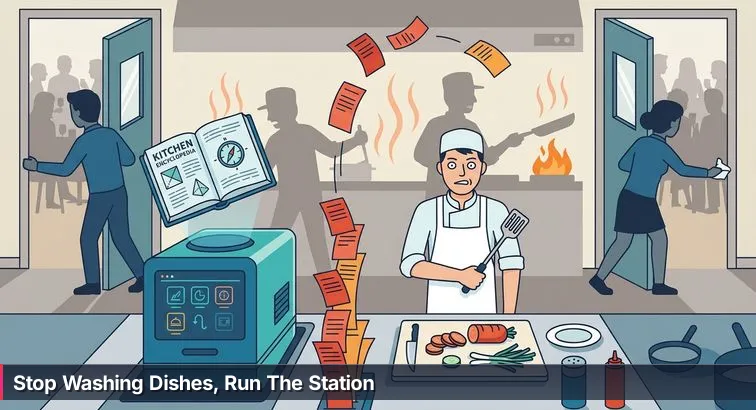
The way the junior backend market feels right now is a lot like being thrown onto the mains station five minutes before the dinner rush. You’ve done the tutorials, maybe a bootcamp, you’ve built a few CRUD apps. But once the “order tickets” start flying in - job posts, take-home challenges, rejections - it suddenly feels like everyone expects you to cook like a seasoned line chef on day one. That frustration and whiplash you’re feeling isn’t a you problem; it’s baked into how hiring works right now.
It’s not just you - the first rung really did break
When you look at the numbers, the sense that “there are no junior jobs” stops sounding dramatic and starts sounding like a straightforward description of the market. Analyses of graduate roles and AI-exposed software jobs show that junior and “new grad” roles have been hollowed out in a way we haven’t seen before.
- Junior positions now make up only about 8% of all software job listings, a historic low in recent graduate job analyses.
- Entry-level developer postings are down roughly 40% compared to pre-2022 levels in some markets, while applications keep rising.
- Some “junior” postings receive up to 2,847 applications for a single role, according to data summarized in an IntuitionLabs analysis of AI’s impact on graduate jobs.
- In Big Tech, new graduates made up just 7% of hires in 2025 - a 25% drop from 2023 - and companies like Google and Meta are hiring roughly 50% fewer new grads than they did in 2021.
- In the UK, tech graduate roles fell 46% in 2024, with another 53% drop projected for 2026, and some major Indian outsourcing firms have paused campus intakes entirely.
- In AI-exposed software roles, employment for workers aged 22-25 has declined by around 6-20% since 2022, while employment for those aged 35-49 in the same roles increased by 6-9%.
“Junior developers are extinct in 2026 - not because we don’t need new engineers, but because we broke the apprenticeship ladder that used to grow them.” - Max Wang, Software Engineer, in “Junior Developers are Extinct in 2026. Here is why.”, Medium
The paradox: broken entry-level, growing industry
Here’s the twist that makes this feel so unfair: backend development itself isn’t dying. According to the official U.S. Bureau of Labor Statistics outlook for software developers, overall software developer employment is projected to grow about 15% from 2024 to 2034, with roughly 129,200 openings per year. At the same time, early-career engineers are facing unemployment rates reported around 7.4% in some studies - nearly double the general unemployment rate for all workers in tech-heavy economies. So the kitchen is busy, more plates are going out, but the restaurant has quietly stopped hiring dishwashers and prep cooks and is fighting over the same pool of experienced chefs instead.
So what that actually means for you
All of this explains why firing off another 200 cold applications or grinding one more LeetCode list problem hasn’t magically changed your luck. The first rung of the ladder is damaged: “entry-level” roles often expect you to perform like mid-level devs, AI has eaten a lot of the repetitive junior work, and companies feel they can’t afford long ramp-up times. For you, that means two things. First, you’re not crazy or uniquely failing - this really is harder than it was a few years ago. Second, the way through is to stop thinking of yourself as someone begging for a chance to wash dishes, and start training like a chef who can actually run a small station: mastering one backend stack, learning to taste the sauce by debugging and verifying code (including AI-generated code), and building proof that you can own a real slice of a production system. The rest of this guide is about how to do exactly that, step by step, instead of just waiting for the job boards to magically get better.
In This Guide
- Why Getting Your First Backend Job Feels Impossible
- What Happened to Junior Backend Roles
- AI: Your New Sous-Chef and Your New Competition
- Why ‘Junior’ Often Means Mid-Level Today
- Choosing the Right Backend Lane
- Backend Skill Stack Employers Expect
- Using AI as a Sous-Chef, Not a Replacement
- Projects That Look Like Real Backend Work
- Manufacture Your Own Apprenticeship
- From Proof of Skill to Proof of Trust
- Job Search Strategies for an Overcrowded Market
- Patterns from People Who Broke In
- Frequently Asked Questions
-
Teams planning reliability work will find the comprehensive DevOps, CI/CD, and Kubernetes guide particularly useful.
What Happened to Junior Backend Roles
When you zoom out from your own job search and look at how companies are behaving, it becomes clear this isn’t just “you need a better resume.” The whole idea of a junior backend role as a place where you’re paid to learn has been quietly dismantled and replaced with, “Show up on day one and cook like a mid-level engineer.” That shift is driven by hard economics, AI, and a real squeeze on mentorship time inside teams.
AI can now do a lot of the “intern work”
On the company side, the first big change is that a lot of classic junior tasks - writing boilerplate endpoints, simple tests, and basic scripts - are now getting offloaded to coding assistants. Surveys of hiring managers summarized by Final Round AI’s report on AI and junior developers found that around 70% of managers believe AI can perform typical intern-level work, and roughly 37-57% say they would rather “hire AI” or trust AI over recent graduates for certain categories of tasks. From their point of view, the robot in the corner can already dice the onions and stir the sauce; why bring on a trainee who will be slow at the same jobs for the first 6-12 months?
- Simple CRUD endpoints and form handlers
- Basic unit and integration tests
- Straightforward SQL queries and migrations
- Glue code between services or third-party APIs
“If AI can do most intern-level tasks instantly and for free, you have to rethink why you’re hiring interns in the first place.” - Heather Doshay, Head of People, SignalFire, quoted in Final Round AI’s Software Engineering Job Market Outlook for 2026
The ROI math now favors seniors + AI over juniors + AI
That perception isn’t just vibes; there’s data behind it. A study of roughly 62 million workers in AI-exposed roles found that when companies adopt generative AI, junior employment drops 9-10% within six quarters, while senior employment barely changes. As analyzed in SoftwareSeni’s breakdown of the “broken rung” in developer careers, one senior engineer using AI is simply more predictable and less risky than two juniors using the same tools. Seniors already know how to design systems, spot edge cases, and debug; AI just lets them move faster. Juniors, by contrast, are still learning what “correct” even looks like, so every line of their code (including AI-generated code) demands more review and hand-holding.
Mentorship time got squeezed out of the business model
The last piece is mentorship. After several years of layoffs, reorganizations, and a shift toward remote and hybrid work, engineering managers are stretched thin. Many are overseeing larger teams, more systems, and more on-call load than before. That traditional 6-12 month “ramp” where juniors shadow seniors, sit in on design discussions, and slowly take over a service? For a lot of orgs, it now looks like a luxury. Put bluntly: they don’t feel they have the time to stand next to you at the grill and show you how to handle the rush one ticket at a time. So instead of budgeting for growth, they hire fewer people and expect each one - especially each backend hire - to run a station solo. For you, understanding this math is crucial: breaking in means presenting yourself not as “extra work for the team” but as someone who already reduces risk, can verify and debug AI-assisted code, and can take reliable ownership of a small slice of production from your first few weeks on the job.
AI: Your New Sous-Chef and Your New Competition
AI in backend work right now is exactly that humming robot on the prep table: it chops, stirs, and keeps the pans at the right temperature. It’s also the reason the owner thinks they can get away with hiring fewer humans. As a junior, that makes AI feel like both your best ally and the thing quietly pushing you out of the kitchen.
AI really did automate a lot of “dishwasher work”
Modern coding assistants can crank out a shocking amount of what used to be junior-level work in seconds. Tools like GitHub Copilot and Cursor will happily generate CRUD endpoints, draft SQL queries, stub out API clients, and even scaffold tests without you touching the keyboard. In practice, that means a lot of the repetitive, low-risk tasks that used to justify junior headcount now get handed to AI. As Zoho co-founder Sridhar Vembu put it in a recent interview, AI is a “double-edged sword” for the tech workforce: it makes experienced engineers dramatically more productive, but it also undercuts the economic case for hiring people whose main value is banging out boilerplate.
- Generate request handlers, DTOs, and validation logic from docstrings or comments
- Write first-pass unit and integration tests for straightforward code paths
- Draft migrations and basic reporting queries against your database schema
- Glue together REST calls to third-party services with reasonable defaults
“With AI tools, junior developers can produce incredibly strong work. I’m already seeing companies start hiring juniors again - but only if they can show they know how to work with AI, not be replaced by it.” - Angie Jones, VP of Engineering, Block, quoted in Code Conductor’s “Future of Junior Developers in the Age of AI”
The real skill test now is tasting the sauce, not following the recipe
Most developers complain about the same thing: AI code is often almost right. A JetBrains ecosystem survey cited by several analyses found roughly 66% of developers say their main frustration with AI is solutions that are “almost right, but not quite.” Seniors treat that as a starting point - they taste the sauce. They read the diff, think through edge cases, add tests, check performance, and adjust. Juniors who don’t have the fundamentals yet tend to just trust the recipe: if it compiles and passes a happy-path test, ship it. That gap shows up in productivity data too: in one large-scale study, senior engineers shipped about 2.5× more AI-generated code than juniors using the same tools, and roughly a third of seniors reported that over half their shipped code was AI-assisted compared to only 13% of juniors. The difference isn’t who has access to the robot - it’s who knows enough to verify what it’s doing.
How to let AI make you look senior instead of replaceable
So here’s what this actually means for you. If you try to use AI as a substitute for understanding, you look exactly like the stereotype managers are afraid of: someone who can paste code but can’t be trusted when things break. If you use AI as a sous-chef, you start to look weirdly senior, weirdly fast. In practice, that means writing at least the first version of a feature yourself, then asking your trustworthy business AI assistant to improve performance, add tests, or suggest alternative designs - and scrutinising every suggestion. It means using AI to explain confusing stack traces or unfamiliar libraries, then reproducing the fix on your own. And it means being able to sit in an interview, walk through AI-assisted code from your portfolio, and clearly explain what you changed, what you rejected, and why. Hiring managers reading reports like Stack Overflow’s “AI vs Gen Z: How AI has changed the career pathway for junior developers” are already adjusting their expectations: they don’t expect you to ignore AI, they expect you to show you can verify it. That’s the chef skill that makes the robot amplify you instead of replace you.
Why ‘Junior’ Often Means Mid-Level Today
Reading “junior backend developer” job ads in this market feels a bit like reading a menu that calls a dish “simple comfort food” and then lists truffle foam and a 12-hour jus in the description. The title says entry-level; the requirements quietly describe someone who’s already run a station through multiple dinner rushes.
The quiet upgrade from trainee to “already productive”
Before AI really hit workflows, junior roles were explicitly designed as apprenticeships. You were expected to know the basics of a language and web dev, and the company invested the first 6-12 months teaching you their stack, tools, and systems. A lot of postings today still use the word “junior,” but if you read past the first line, they’re asking for what used to be solid mid-level experience: multiple shipped features, ownership of services, and comfort with production incidents. Analyses of job listings show it’s now common to see “entry-level” or “new grad” roles that require 2-5 years of professional experience, plus prior exposure to distributed systems and cloud platforms. As one widely shared 2026 autopsy on the junior market on Medium put it, the “paid to learn” era has been quietly replaced by “paid to ship from week one.”
The mid-level skill list hiding in “entry-level” job posts
Under the hood, a lot of current “junior” backend descriptions read like this:
- Languages & frameworks: Python appears in roughly 40-46% of backend job descriptions, with JavaScript/TypeScript (often Node.js on the server) and enterprise stacks like Java or C# still extremely common.
- Cloud & DevOps: Experience with Docker, CI/CD (GitHub Actions, GitLab CI, etc.), and at least one major cloud (AWS, Azure, or GCP) is listed as “must-have” more often than not. Many ads also name-drop Kubernetes, Terraform, or Azure Kubernetes Service.
- AI collaboration: You’re expected to use AI tools daily, but also to debug without them, and to know when they’re unsafe (security, PII, compliance).
- Experience inflation: Bullet points like “2+ years building RESTful APIs in production,” “hands-on with microservices,” and “previous experience owning a service end to end” show up under “junior” or “entry-level.”
This lines up with broader skills breakdowns from places like TripleTen’s overview of software engineer skills, which now treat cloud platforms, CI/CD, and containerization as baseline, not nice-to-have, even for early-career roles.
Old junior vs. 2026 “junior”: what actually changed
To make this concrete, here’s how the role has shifted in practice.
| Dimension | Pre-AI Junior Role | 2026 “Junior” Role |
|---|---|---|
| Main expectation | Learn stack, fix bugs, ship small features with close guidance | Own a small service or feature area and ship reliably with light guidance |
| Experience asked for | Internships, bootcamp, or strong personal projects | 2-5 years experience, prior production ownership |
| Tooling | Language + framework + basic git | Language + framework + SQL + Docker + CI/CD + at least one cloud platform |
| AI expectation | Not a factor, or “nice to have” curiosity | Daily AI use plus ability to verify and debug AI-generated code |
What that actually means for how you aim
All of this isn’t to say “give up, it’s over,” but it does mean the target has moved. Trying to brute-force your way in with one more tutorial CRUD app or a little bit of everything on your resume will just keep you stuck. Instead, you need to deliberately build yourself into the kind of “junior” these postings secretly describe: someone with one focused backend stack, real comfort with production-adjacent tools (SQL, Docker, CI/CD, cloud), and enough systems understanding to debug and explain what your code is doing. Think less “I’m applying as a trainee” and more “I can already run a small station; I just haven’t done it professionally yet.” The rest of the roadmap is about how to get there without already having those 2-5 years in your work history.
Choosing the Right Backend Lane
Picking a backend stack right now is like choosing your station on the line: you can’t be on grill, salads, and desserts at the same time and expect to survive the dinner rush. In the same way, dabbling in five different stacks keeps you in permanent prep mode. What actually helps you get hired is going deep on one lane long enough that you can walk into an interview and talk about it like someone who’s really run that station.
Hot but overcrowded: generic “full stack JavaScript”
The first thing to understand is where the crowd already is. A huge share of career-switchers have followed the same path: HTML/CSS, JavaScript, React, Node.js/Express, and a NoSQL database like MongoDB. That MERN-style setup is absolutely useful, but because so many bootcamps and online courses push it as the default, junior “full stack” roles using it are incredibly saturated. When hundreds or thousands of people show up for the same React/Node posting, even strong candidates disappear into the noise. If your main goal is getting hired faster, it often makes more sense to avoid the most obvious pile-on and head for stacks that power less glamorous but more stable systems: banking, logistics, healthcare, internal tools.
Underestimated but stable backend lanes
Those “boring” backends tend to revolve around strongly typed, battle-tested stacks and relational databases. Think Python APIs with PostgreSQL, or Java and C# services talking to SQL Server and Oracle in big enterprises. These aren’t always the stacks people brag about on social media, but they quietly run the world - and they evolve more slowly, which is a gift when you’re learning. Here’s how three solid lanes compare if you’re planning your next 6-9 months of focused effort:
| Lane | Typical Stack | Where It Shows Up | Why It’s Good for Juniors |
|---|---|---|---|
| Python Backend | Python + FastAPI/Django, PostgreSQL, Docker | APIs, internal tools, data/ML platforms | Python is widely used in backend & AI; great docs and community; pairs well with DevOps and data work |
| Java / Spring | Java + Spring Boot, PostgreSQL/MySQL | Banks, insurance, big enterprise systems | Massive legacy and new codebases; strong demand for people who understand large, long-lived services |
| C# / .NET | C# + ASP.NET Core, SQL Server/PostgreSQL | Corporate apps, government, line-of-business tools | Tight integration with Windows and Azure; lots of internal apps that need maintenance and new features |
Commit for 6-9 months - and consider structured help
Whichever lane you pick, the key is commitment: give yourself at least 6-9 months where that stack is your home base. That’s enough time to get comfortable with the language, build 2-3 real projects, and start layering on production-adjacent skills like Docker, CI/CD, and cloud deployment. If your self-study has felt scattered, a structured program can compress that journey. For example, Nucamp’s Back End, SQL and DevOps with Python bootcamp is a 100% online, 16-week track built around exactly one of these lanes: Python, PostgreSQL, and DevOps fundamentals. It asks for about 10-20 hours per week, caps live workshops at 15 students, and costs around $2,124 on early-bird pricing - significantly less than many $10,000+ competitors. Whether you follow a bootcamp path or go solo, the principle is the same: pick one backend station, lay out your skills like good mise en place, and stay on that line long enough to actually get fast.
Backend Skill Stack Employers Expect
When employers talk about “backend experience” now, they’re not just asking if you can make an endpoint return JSON. They’re asking whether your mise en place is in order: language fundamentals, HTTP and APIs, databases and SQL, logs and tests, Docker and CI/CD, plus enough systems sense to keep a service alive when the metaphorical tickets start stacking up. In other words, they want someone who can own a small slice of production, not just follow a tutorial.
Core language and API skills
Your first layer is solid fluency in one backend language and its common web frameworks. That means you can write idiomatic code, structure a project sensibly, and build RESTful APIs that handle real-world concerns like auth, validation, and error handling. Serious curricula, like Nucamp’s 16-week Back End, SQL and DevOps with Python bootcamp, start with exactly this: Python fundamentals, object-oriented programming, and building robust applications before piling on anything else. Employers expect you to be comfortable with HTTP concepts (status codes, headers, idempotency), and to at least recognize patterns like gRPC or GraphQL, even if REST is your home base.
- Drill: Implement a small API (e.g., tasks or orders) with proper input validation, pagination, and structured error responses.
- Drill: Add authentication (JWT or sessions), then document the endpoints with OpenAPI/Swagger and walk through them as if you’re explaining them to another engineer.
Data, SQL, and persistence
Underneath that API, employers assume you can talk to a real database, not just an in-memory list. Relational databases like PostgreSQL, SQL Server, and MySQL are still the backbone of most production backends, and SQL remains a core, non-negotiable skill. A job-ready backend stack includes being able to design schemas, write joins and aggregations, reason about indexes, and understand transactions and isolation levels. That’s why programs aimed at backend roles deliberately pair language training with SQL and database design, integrating something like PostgreSQL management and Python-database integration into the core, not as an afterthought.
- Drill: Model a multi-entity domain (e.g., restaurants, menus, items, orders, payments), then write queries for reporting questions a real business would ask.
- Drill: Add an ORM (SQLAlchemy, Entity Framework, Hibernate, etc.) to your project and practice switching between raw SQL and ORM queries to solve the same problem.
DevOps, cloud, and systems thinking
The layer that separates “can code” from “can run a service” is the DevOps and systems piece. Employers increasingly expect you to know the basics of Docker, set up a simple CI/CD pipeline, and deploy to at least one major cloud (AWS, Azure, or GCP). Even junior-focused programs now bake this in alongside five dedicated weeks of data structures & algorithms to cover interview expectations and real-world problem solving. Industry leaders like Addy Osmani have been blunt that the future belongs to engineers who can reason about systems end-to-end: from load balancers through APIs and databases to background workers and back. As he puts it in his essay on the next two years of software engineering, “the premium will be on those who can design for performance and reliability, not just ship features.” That includes knowing how to read logs, add metrics, debug incidents, and verify AI-generated code with tests instead of trusting that “it compiled, so it’s fine.”
“The premium in the coming years will be on engineers who can reason about systems end-to-end, not just individual components.” - Addy Osmani, Engineering Leader & Author, Google
| Skill Area | What Employers Expect | How to Practice |
|---|---|---|
| Language & APIs | Idiomatic code, clean structure, solid REST fundamentals | Build and document a small service with auth, validation, and error handling |
| Databases & SQL | Confident with joins, indexes, transactions, and schema design | Design a realistic schema and answer reporting-style questions with SQL |
| DevOps & Cloud | Dockerized app, basic CI/CD, deployed to a cloud platform | Write a Dockerfile, set up a CI pipeline, and deploy your API to a managed service |
| Systems & DS&A | Understands request flow, failure modes, and core algorithms | Draw request/architecture diagrams and solve small DS&A problems daily |
- Drill: Containerize one of your projects, add a CI job that runs tests on every push, and deploy to a free or low-cost cloud tier.
- Drill: For that same project, sketch a sequence diagram of a request from client to database and label at least three possible failure points and how you’d detect them.
Using AI as a Sous-Chef, Not a Replacement
Using AI in your workflow is a lot like having a sous-chef who can chop, stir, and plate at superhuman speed. If you rely on them for everything during prep, you never actually learn the basics; if you refuse their help during a slammed dinner rush, you just get buried in tickets. The trick for a junior backend dev now is learning when to keep AI out of the kitchen on purpose, and when to lean on it hard - without letting it quietly become the one doing all the thinking.
When to keep AI out of the kitchen (on purpose)
There’s a strong temptation, especially early on, to throw every problem at an LLM and copy whatever comes back. That feels productive in the moment, but it robs you of the reps you need to actually understand your stack. In prep time - when you’re learning a new concept, building a toy service, or practicing data structures - you want the struggle. That’s where you develop the mental model that later lets you tell “almost right” from “actually correct.” Even guides aimed at helping new developers get jobs, like Frontend Mentor’s complete guide to getting a programming job in 2026, stress that you should use AI to clarify and explain, not to silently generate entire solutions while you watch. A good rule of thumb: write the first version yourself, then ask AI to critique or optimize it; if you couldn’t reproduce the result without AI, you leaned on it too early.
- Avoid AI for your very first implementation of a new pattern (auth flow, DB transaction, queue consumer).
- Use AI as a tutor: “Explain this stack trace,” “Why is this query slow?”, “What’s the difference between PUT and PATCH?”
- After you’ve solved something, ask AI for alternative approaches and compare them to what you did.
How to use AI like a sous-chef in real work
When you’re closer to a dinner rush situation - bigger personal projects, take-homes with deadlines, or tasks at work - AI becomes that insanely fast extra pair of hands. You still decide the menu and taste the sauce; the model just helps with the chopping. Let it scaffold boilerplate (route definitions, DTOs, config), generate repetitive tests, or draft migration scripts, then you focus your brainpower on the tricky bits: data modeling, failure modes, performance, and security. Treat every AI suggestion as an intern’s pull request: read it line by line, add logging where it’s missing, and write tests that would catch subtle bugs. Over time, this makes you weirdly productive for a “junior” because you’re combining human judgment with machine speed instead of swapping one for the other.
- Have AI outline a module or service, then you fill in the core business logic and edge cases.
- Generate tests from your code, then break them on purpose to see what they actually cover.
- Ask AI to review your implementation for security, performance, or readability, not to write it from scratch.
Proving you’re the chef, not the robot’s operator
The last piece is signaling to employers that you’re using AI as a multiplier, not a crutch. That means being transparent and thoughtful about AI in your portfolio and interviews. For at least one serious project, annotate the README with where you used AI - “This test suite started from an AI draft; here’s what I changed and why” - and write a short “AI postmortem” describing bad suggestions you caught and rejected. In interviews, talk through AI-assisted code the same way you would a teammate’s: what it does, what you verified, what you refactored. Hiring managers echo this over and over in 2026: they don’t care that you used an assistant; they care that you can debug, explain, and defend the result. As one engineer put it in a widely shared essay on harsh truths for juniors, “You won’t be hired for how fast you can prompt; you’ll be hired for how well you can debug what the prompt gives you.” - a reminder that tasting the sauce is still your job, no matter how fancy the robot on the counter gets.
“You won’t be hired for how fast you can prompt; you’ll be hired for how well you can debug what the prompt gives you.” - Senior Engineer, 7 Harsh Truths Every Junior Developer Must Hear Before 2026, Level Up Coding
Projects That Look Like Real Backend Work
Most junior portfolios look like a line cook’s first day of prep: a nicely chopped pile of veggies, maybe a perfectly fried egg, but nothing that proves you can survive a dinner rush. To get hired as a backend dev, you need projects that look like the real dishes a restaurant actually sells - messy constraints, multiple ingredients, and tickets flying in from every direction.
What real backend plates actually look like
In production, backend work is less “build a CRUD app from scratch” and more “keep this weird, half-legacy system alive while we bolt on a new feature.” That means stitching together multiple services and third-party APIs, handling auth and permissions, dealing with background jobs and queues, and making sure you can see what the system is doing through logs and metrics. Hiring managers and career guides, including analyses like Talent500’s breakdown of entry-level developer roles, increasingly talk about “proof of real-world experience” instead of just tutorials. For a backend portfolio, that proof looks like services that handle:
- Multi-user and role-based access (who can do what)
- Durable data in a real database with relationships, not just a single table
- Background processing (emails, reports, sync jobs) via queues or schedulers
- Failure scenarios: retries, timeouts, and proper error responses, not silent crashes
- Observability: structured logs, health checks, maybe basic metrics
Project pattern 1: Multi-tenant SaaS backend
A strong anchor project is a small but realistic multi-tenant SaaS. Think “restaurant management” for multiple locations: each restaurant (tenant) has its own users and data, with roles like owner, manager, and staff. On the technical side, you model tenants and users in a relational database, implement role-based authorization checks in your handlers, and add background jobs for daily reports (e.g., total orders, revenue per day). This forces you to think about schema design, data isolation, auth flows, and asynchronous work - exactly the kind of problems that show you can handle more than a to-do list.
- Use a real database (e.g., PostgreSQL) with migrations and foreign keys.
- Implement JWT-based auth with refresh tokens and per-tenant access control.
- Add a scheduled job or worker queue to generate daily or weekly summaries.
Project pattern 2: Real-time orders and external services
Another great pattern is anything that deals with real-time state and the outside world. For example, a food delivery backend that accepts orders, tracks courier locations, and streams live status updates to clients. Under the hood, you expose REST endpoints for creating and updating orders, use WebSockets or Server-Sent Events to push status changes, and integrate with a “courier location” service you either mock or simulate. This makes you deal with concurrent updates, idempotent operations (safe retries), and rate limiting - very real backend problems employers want to see you’ve wrestled with.
- Maintain an order state machine (placed, accepted, in_transit, delivered, cancelled).
- Broadcast updates over WebSockets/SSE to subscribed clients when state changes.
- Call an external API (or a mock) for courier positions and handle timeouts/failures gracefully.
Project pattern 3: AI-augmented, production-minded feature
Finally, it’s powerful to have a project that shows you can integrate AI like a professional, not just as a toy. Think of a “kitchen assistant” service that suggests prep lists and staffing for the night based on past orders and current reservations. The backend owns everything that makes this safe and reliable: it stores historical data, calls an AI API, validates and post-processes the model’s output, caches results, and avoids leaking secrets or PII. Guides on the future of junior developers, like Code Conductor’s 2026 AI-era playbook, emphasize that juniors who can orchestrate AI inside real systems stand out. To land that punch, make sure each serious project also ships with the invisible parts that scream “production”: Dockerfile and compose file, a simple CI pipeline that runs tests on every push, a health check endpoint, structured logging with request IDs, and a README that explains the architecture and what you’d improve next.
Manufacture Your Own Apprenticeship
The brutal truth right now is that the traditional apprenticeship path - internships, new-grad programs, junior roles with months of shadowing - has been cut down just when you needed it most. Instead of being slowly eased onto the line, you’re being told, “We only hire people who’ve already cooked a full service.” That means you can’t wait around for a company to train you; you have to manufacture your own apprenticeship, with real structure, feedback, and increasing responsibility, even before someone gives you a paycheck.
Why you can’t rely on the old ladder anymore
Teams are under pressure to ship more with fewer people, and AI has eaten a lot of the low-risk “junior tasks” that used to justify hiring trainees. Managers who are already overloaded don’t feel they have the time for 6-12 months of hand-holding, so the old “we’ll grow you into the role” mindset has quietly been replaced with “come back when you’ve already done this.” That shift is what some folks are calling an apprenticeship severance - the deliberate cutting of the bottom rung of the ladder. Essays like “The Apprenticeship Severance: AI Eliminated Entry-Level Jobs” argue that organizations are betting on short-term efficiency by buying senior talent and AI tools, while neglecting the pipeline of people who will become seniors later. For you, the practical implication is simple: you need to create your own sequence of increasing challenges, mentors, and code review, instead of expecting it to appear on a company onboarding plan.
What a self-made apprenticeship actually looks like
A real apprenticeship has three ingredients: deliberate practice, feedback, and stakes. You can recreate that by treating your learning like a job. Pick a single backend stack and commit to shipping increasingly realistic projects: start with a basic API, then a multi-user app with real auth, then something with background jobs and external integrations. Layer in code reviews by posting your work in developer communities, joining accountability groups, and contributing small pull requests to open source so you learn to read existing code and respond to feedback. Add stakes by doing small projects for real people - a local business, a non-profit, a friend’s startup idea - so you’re forced to deal with unclear requirements, messy data, and the pressure of someone actually depending on your code. Over a few months, that combination of practice, feedback, and responsibility starts to look a lot like the “on-the-job learning” companies say they don’t have room for anymore.
Where structured programs fit (and how to squeeze the most value out of them)
Doing all of that completely solo is possible, but it’s also where a lot of people stall out or spin their wheels. A good, affordable bootcamp can act as a scaffolding for your self-made apprenticeship, as long as it mirrors what backend roles actually expect. For example, Nucamp’s Back End, SQL and DevOps with Python bootcamp runs for 16 weeks, asks for about 10-20 hours per week, and combines Python fundamentals with PostgreSQL, Docker, CI/CD, and cloud deployment - plus five full weeks of data structures and algorithms specifically for interview prep. The price point (around $2,124 on early-bird, versus $10,000+ many competitors charge) and small live workshops capped at 15 students make it accessible to career-switchers, and the built-in 1:1 career coaching, portfolio help, and mock interviews turn class projects into job-ready proof-of-work. The 4.5/5 Trustpilot rating from roughly 398 reviews - with about 80% of them five-star - suggests that, for a lot of students, that structure and community are exactly what kept them moving when self-study alone wasn’t enough.
Turn “I’m learning” into “I’m apprenticing”
The mindset shift is the last piece. Don’t think of yourself as “doing some courses and projects”; think of yourself as an apprentice chef who’s designing their own training: quiet prep time for fundamentals, scheduled “services” where you build and ship real features, regular feedback from more experienced devs, and a clear progression in what you can handle. Whether you use a structured path like Nucamp, a mix of online resources and local meetups, or some hybrid, the goal is the same: by the time a hiring manager looks at your GitHub and talks to you, it should be obvious that you’ve already been on the line - maybe not in their kitchen yet, but in conditions close enough that trusting you with a small service doesn’t feel like a leap of faith.
From Proof of Skill to Proof of Trust
At this point, “I can build a CRUD app” is the bare minimum to even get your resume glanced at. With AI filtering applications and hundreds of people hitting the same “Apply” button, hiring managers aren’t just asking, “Can this person code?” They’re asking, “Can I trust this person with a small piece of production without babysitting them?” Your job is to turn your projects, contributions, and interactions into evidence that the answer is yes.
Why hiring managers are hunting for trust, not perfection
From the other side of the table, a junior hire is fundamentally a risk calculation. Managers know you’ll make mistakes; what they care about is whether you communicate, recover, and learn fast without blowing up the system or vanishing when things get hard. That’s why guides for employers, like Robert Half’s overview of entry-level software engineer roles, emphasize portfolios, internships, and communication skills alongside technical basics. They’re looking for proof that you’ve already worked in someone else’s codebase, shipped something real, and explained your decisions to non-experts. Code samples alone show skill; documented, deployed, and maintained projects start to show reliability.
- Polished repos with tests and docs show you finish what you start.
- Clear commit history and PRs show you can work in a team-style workflow.
- Write-ups about bugs and outages show you learn from failure instead of hiding it.
Design your portfolio as a trust-building artifact
Think of each serious project as a case study where you’re answering, “Here’s why you can trust me with a service like this.” It’s not just the code; it’s the way you explain the architecture, handle edge cases, and prove you’ve thought about operations. A good way to sanity-check yourself is to compare what you’re showing today with what a manager actually wants to see.
| Signal | Proof of Skill | Proof of Trust |
|---|---|---|
| Project code | Framework used correctly, features implemented | Tests, error handling, logging, and clear separation of concerns |
| README | Basic setup instructions | Architecture overview, trade-offs, and “what I’d do next” section |
| Deployment | Runs on localhost | Dockerized, simple CI, deployed to a cloud or demo environment |
| Experience | Solo projects only | Open source PRs, group work, or small client/internal tools |
Let people, not just code, vouch for you
The final layer of trust comes from other humans. Even tiny open source contributions prove you can navigate an existing codebase and respond to review. A simple internal tool for a local business shows you can handle vague requirements and deadlines. Short “learning notes” posts on LinkedIn or a blog demonstrate that you’re reflective and communicate clearly. Over time, this gives managers what they actually need: third-party signals that you show up, take feedback, and grow. As one hiring guide put it, “Entry-level developers need more than classroom knowledge; they need examples of applied work and the soft skills to explain it.” - a reminder that in a world where AI can generate code on demand, your edge is being the person others are comfortable handing the keys to.
- Ask maintainers before-and-after questions on your PRs to learn and build rapport.
- Offer to automate a small, annoying task for someone you know and document the result.
- Regularly publish short debriefs of tricky bugs or design decisions you’ve worked through.
“Entry-level software engineers need more than classroom knowledge; they need examples of applied work and the soft skills to explain it.” - Hiring Insights, Robert Half Technology
Job Search Strategies for an Overcrowded Market
The job hunt right now feels like standing in front of a ticket printer that never stops spitting out orders - new postings, rejections, auto-responses - while you’re trying to get anyone to notice the one plate you’ve actually finished. With AI screening resumes and some “entry-level” roles attracting thousands of applicants, spraying your resume at every backend opening isn’t a strategy; it’s a burnout plan. You need to be deliberate about which tickets you grab and how you get your work in front of real humans.
Stop playing the pure numbers game
Cold applications through job boards and ATS portals have a brutally low hit rate. Analyses of the junior market put the success rate of these applications at roughly 0.1-2% for getting to a first conversation, which is why so many early-career devs report sending 200-300 applications before hearing anything meaningful. Reports like Final Round AI’s Software Engineering Job Market Outlook for 2026 also point out that fully remote roles have gone global, pulling in competition from everywhere, while many companies quietly prefer local or hybrid candidates. So instead of applying to every “backend” role you see, build a short, focused target list and prioritize:
- Mid-sized companies (50-500 people) where each engineer matters and roles are broader.
- “Boring” industries like logistics, manufacturing, insurance, and government that still need solid backends but get fewer hype-driven applicants.
- Local or hybrid roles where a return-to-office preference shrinks the candidate pool instead of expanding it worldwide.
Use channels that actually cut through the noise
Different job search channels have wildly different odds, especially when everyone is using the same boards. You’ll still send some cold applications, but most of your energy should go into routes where humans see your name before an AI filter does.
| Channel | Typical Reach | Pros | How to Use It Well |
|---|---|---|---|
| Cold applications | Hundreds-thousands of applicants | Fast, easy to scale | Apply selectively where your stack and projects clearly match; tailor resume for each |
| Referrals & direct outreach | Dozens of candidates | Much higher response rates, warmer intros | Message engineers and hiring managers with specific questions and relevant project links |
| Communities & meetups | Dozens of engaged people | Organic relationships, insider info | Show up regularly, share learning notes, and ask for feedback before asking for referrals |
- Follow a simple “3:1 connection rule”: for every post you make, leave three thoughtful comments on other people’s posts or projects.
- After connecting, wait to ask about jobs until you’ve had at least one real conversation or exchange about tech.
Treat interviewing like a daily practice, not a final exam
Because the market is so crowded, getting an interview isn’t the finish line; it’s the next filter. People who break through treat interviewing as its own skill. Instead of cramming the night before, build a light but consistent routine: 30-45 minutes of data structures and algorithms most days (focusing on arrays, strings, hash maps, and trees), one small “system design” or architecture walk-through per week using your own projects, and regular mock interviews with peers, mentors, or bootcamp classmates. Keep track of every interview and rejection: what you were asked, where you stumbled, what you nailed. Then adjust your prep based on patterns instead of guessing. In an overcrowded market, the edge usually isn’t some secret job board; it’s the combination of targeted applications, warm introductions, and being noticeably sharper at explaining and debugging than the other juniors who made it to the same round.
Patterns from People Who Broke In
Amid all the horror stories about rejections and ghosting, there are people quietly landing their first backend roles right now. Their paths aren’t magical; they’re just very intentional. When you look across their stories, the pattern isn’t “I found a secret job board,” it’s “I adapted to how brutal the market is, then built a portfolio and network that made me hard to ignore.”
They accepted the market is tough - and moved anyway
The folks who eventually break in don’t waste much energy arguing with reality. They know internships are scarce (tech internship postings have dropped by around 30% since 2023 while applications rose about 7%), and they’ve seen that employers only expect a modest 1.6% increase in hiring for the graduating class of 2026. Analyses like the MarketWatch report on where the jobs actually are in 2026, summarized by Morningstar’s job market coverage, make it clear this isn’t suddenly going back to the 2019 vibe. The people who make it stop waiting for it to “get easy again” and start asking, “Given this, what can I control?” - then they double down on those levers.
They went deep on one lane instead of chasing every shiny thing
A common thread is ruthless focus. Rather than hopping between five frameworks every month, they pick one backend lane - say, Python + FastAPI + PostgreSQL, or C# + ASP.NET Core + SQL Server - and live there for 6-12 months. They build multiple projects in that stack, learn its ecosystem tools, and make sure their resume, GitHub, and LinkedIn all tell the same story: “I’m a backend dev in this lane.” That depth pays off in interviews, because they’re not giving shallow, copy-paste answers; they’re talking from repetition: they’ve debugged the same kind of bug three different ways, deployed similar services multiple times, and can sketch their go-to architecture from memory.
They over-indexed on visible, real-world proof-of-work
Another pattern: the people who broke in treated “proof-of-work” like a second currency. Beyond personal projects, they contributed small but real pull requests to open source, automated boring tasks for local businesses, or built internal tools for non-tech teams at their current jobs. In one widely shared story on Better Programming about landing a first junior role, the author only started getting serious callbacks after they rebuilt a personal project to mirror a target company’s stack, documented it thoroughly, and highlighted it front and center in their outreach. That’s typical: the turn happens when your GitHub starts looking less like a tutorial graveyard and more like a set of small, production-minded services someone could imagine plugging into their stack.
They treated feedback and rejection as inputs, not verdicts
The last shared habit is how they respond when things don’t work. Instead of sending 300 identical applications, they iterate: after 10-20 rejections, they rewrite their resume; after a few failed technical screens, they adjust their practice routine and look for patterns in what they’re missing. They ask interviewers for feedback when possible, get mid-level or senior engineers to review their portfolio, and use that critique to choose their next project or study block. Over months, that loop builds exactly the traits hiring managers can’t get from AI: resilience, communication, and the ability to learn from production-style failures. If you adopt those same patterns - grounded in a focused stack, visible proof-of-work, and a feedback-driven search - you don’t make the market less crowded, but you do make it much more likely that when someone finally looks up from the pile of tickets, your name is one they remember.
Frequently Asked Questions
Can I realistically get my first backend job in 2026 given the junior hiring crisis?
Yes - but it requires a different, evidence-first approach: junior listings are down (about 8% of software job ads) and some roles attract thousands of applicants, so you must show production-like ownership instead of just tutorials. Focused proof-of-work, targeted outreach, and demonstrating you can verify AI-assisted code are the levers that actually move the needle.
Which specific backend skills should I prioritize to be hireable fast?
Pick one lane (e.g., Python + FastAPI + PostgreSQL) and get fluent in SQL, Docker, CI/CD, and one cloud provider - Python shows up in roughly 40-46% of backend listings. Add practical systems habits: testing, logging/observability, and the ability to verify AI-generated code; commit 6-9 months of focused work to build multiple realistic projects.
How should I use AI when building projects and in interviews so it helps rather than hurts me?
Use AI as a sous-chef: write the first version yourself, then ask AI to optimize, add tests, or explain edge cases - don’t copy its output blindly since about 66% of developers report AI is “almost right” but not quite. In interviews, be ready to explain what you changed, why you rejected suggestions, and how you validated the final code.
What portfolio projects actually convince hiring managers in this market?
Build production-minded case studies: a multi-tenant SaaS, a real-time orders system, or an AI-augmented feature that includes DB migrations, background workers, retries, structured logs, and a deployed Docker/CI pipeline. These signals - tests, health checks, documented trade-offs, and deployed demos - show you can own a small service rather than just follow tutorials.
Should I join a bootcamp or try to manufacture my own apprenticeship?
Either can work: a good bootcamp provides structure, feedback, and mock interviews that compress the apprenticeship (for example, a 16-week program with 10-20 hrs/week and focused DevOps/SQL units can be very efficient). If you self-study, deliberately create stakes - real clients, OSS PRs, regular code reviews, and a sequence of increasingly hard projects - to replicate that on-the-job learning.
-
Learn how to integrate assistants like Copilot safely in the learn how to use AI assistants with Python workflows section.
-
Start your study plan with the SQL and Database Fundamentals in 2026 guide to build a system-thinking foundation.
-
View the best RAG and knowledge-base chatbot examples for practical AI-backed backends.
-
For a focused approach, read the top companies hiring backend developers in 2026 and learn the signals that matter.
-
For a focused learning plan, see the Best Free Backend Development Courses and Resources in 2026 for a Python + SQL + DevOps path.

Irene Holden
Operations Manager
Former Microsoft Education and Learning Futures Group team member, Irene now oversees instructors at Nucamp while writing about everything tech - from careers to coding bootcamps.