









Cost of Living vs Tech Salaries in Uruguay in 2026: Can You Actually Afford It?
By Irene Holden
Last Updated: April 26th 2026
Key Takeaways
Yes, but only if you're earning at least a mid-level tech salary. Uruguay offers Latin America's highest average senior developer pay at $47,800 USD, but Montevideo is also the region's most expensive city - a mid-level developer earning $80,000 can live well and save over $1,700 per month, while entry-level salaries require frugal living and strategic upskilling to make the numbers work.
The Theoretical Path
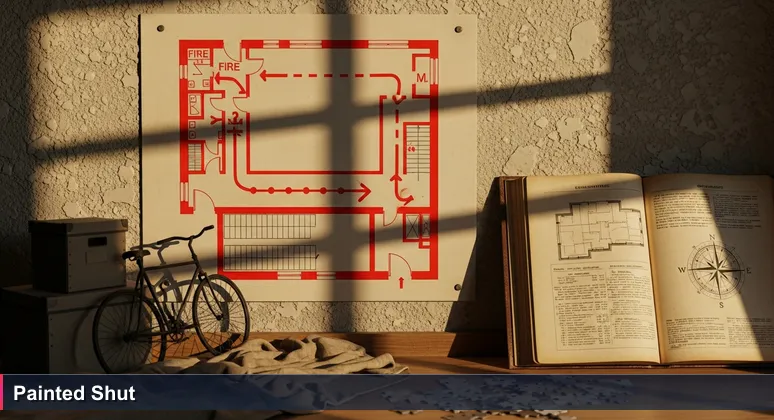
Every apartment in Montevideo has one pinned to the back of a door - a fire escape plan with clean red lines and a clear arrow pointing to safety. The path makes perfect sense on paper. You trace your finger along the route during that first week in your new Pocitos rental, running the numbers you prepared back home. Your remote senior developer salary with a US-based company clears $80,000 USD. The spreadsheets balance: rent at $1,400, food at $800, mutualista at $200, a little left over for weekend trips to Punta del Este. This is fine. This is safe. You believe the diagram because you designed it yourself.
When Winter Arrives
Then July comes to Montevideo, and the UTE bill slides under your door. UYU 8,700 for a single month - not rent, not groceries, just the electricity that keeps your space heater running through a damp winter evening. In January 2026, Montevideo was officially ranked the most expensive city in Latin America, sitting at a cost index of 55.58 relative to New York City. You start doing a different kind of math now. That window on the fire escape plan - the one marked "Exit" in neat red print? You walk over and try to open it. Someone painted the frame shut years ago, and nobody thought to mention it.
As one review on a Uruguay cost-of-living site warns: "Electricity can become a significant expense, especially during winter" - an understatement that hits like a splash of cold water at 6 AM in a Carrasco kitchen. The stability you moved here for is real. But the theoretical budget you drew up didn't account for the 22% VAT embedded in every purchase, the import duties making electronics cost 40% more than in Miami, or the quiet realization that the most expensive city in Latin America demands more than a spreadsheet designed in a cheaper country. The path to prosperity exists. You just have to find your way around the painted-shut windows.
In This Guide
- The Painted-Shut Window: A Reality Check
- What Tech Actually Pays in Uruguay (2026)
- The Real Cost of Living: Housing, Utilities, and Food
- The Tax Question: Why Uruguay Is Different
- Your Salary Tier: What Lifestyle Can You Afford?
- Navigating the Corridor: Strategies to Make It Work
- Upskilling Within Your Budget: The Nucamp Path
- The Verdict: Can You Actually Afford Uruguay?
- Frequently Asked Questions
For a comprehensive guide on starting an AI career in Uruguay in 2026, check out this complete guide.
What Tech Actually Pays in Uruguay (2026)
The Regional Premium
Uruguay stands alone in Latin America when it comes to tech compensation. The LATAM Software Engineer Salary Guide 2026 by Mismo classifies the country as a "premium tech market" - the highest echelon in the region. Senior developers here earn an average of $47,800 USD annually, topping every other Latin American market. But the range is wide, stretching from junior roles at $18,000 up to lead engineers commanding over $94,000, especially those working remotely for US companies through platforms like Howdy's 2026 cost comparison, which notes that developers earning $60,000-$80,000+ effectively bypass local salary ceilings.
| Role | Annual Salary (USD) | Source |
|---|---|---|
| Junior Developer | $18,000 - $47,000 | Mismo / Tecla |
| Senior Developer | $47,000 - $94,000 | Mismo / Tecla |
| Remote (US Company) | $60,000 - $80,000+ | Howdy / Mismo |
| Lead Engineer | ~UYU 1,580,136 (~$40k+) | ERI Economic Research Institute |
What this means in practice: If you are a mid-level Python developer at Globant or a data engineer at dLocal, you are looking at roughly UYU 3.2M per year. If you are a senior machine learning engineer contracting remotely for a US fintech, you could be pulling UYU 4.8M or more. For this guide, we use three annual salary tiers: Tier 1 (Entry) at UYU 1,500,000 (~$37,500 USD), Tier 2 (Mid) at UYU 3,200,000 (~$80,000 USD), and Tier 3 (Senior) at UYU 4,800,000+ (~$120,000+ USD). The Software Developer Salary Uruguay data from Tecla confirms this band, while the ERI Economic Research Institute pegs lead engineer roles at UYU 1.58M+ locally - and significantly more in USD-based contracts.
The Real Cost of Living: Housing, Utilities, and Food
Where the Spreadsheet Meets Reality
The numbers on paper look manageable until you map them onto Montevideo's neighborhoods. According to discussions in the r/uruguay subreddit about acceptable rent, locals and expats alike feel the squeeze. A 1BR in upscale Punta Carretas costs roughly the same as a 2BR in commuter-friendly Ciudad de la Costa - but you trade a 45-minute bus ride for that savings. Every apartment building also adds UYU 4,000-12,000 in monthly gastos comunes for maintenance and security, a cost that newcomers consistently underestimate.
| Neighborhood | Studio (UYU) | 1BR (UYU) | 2BR (UYU) |
|---|---|---|---|
| Punta Carretas / Pocitos | $25k-$32k | $33k-$45k | $55k-$85k |
| Centro / Cordón | $19k-$23k | $23k-$30k | $32k-$45k |
| Carrasco | N/A | $45k+ | $75k+ |
| Ciudad de la Costa | $17k-$22k | $22k-$28k | $35k+ |
Then come the utilities - the category that breaks the theoretical budget. Winter electricity from UTE can soar past UYU 8,000 per month when space heaters run constantly, while water (OSE) stays around UYU 1,200 and fiber internet (Antel) is a reliable UYU 1,750. A real-world review on Uruguay Smart Estate warns: "Electricity can become a significant expense, especially during winter." Groceries for one person run UYU 12,000-18,000 monthly, with high import duties driving up costs on everything from electronics to imported cheese. The daily menú del día lunch at UYU 500-700 offers some relief, but eating out regularly - a mid-range dinner for two at UYU 2,250 - quickly chips away at what looked like a comfortable salary buffer.
The Tax Question: Why Uruguay Is Different
The answer to why Uruguay feels expensive - and why it can also feel like a financial haven - lives in its tax code. On the employee side, the deductions are steep: 15% of your gross salary goes to BPS (pension), 3-6% to FONASA (health), and progressive IRPF (income tax) rates climb from 10% to 36%. According to PwC's Uruguay individual tax summary, the highest bracket kicks in at relatively modest income levels compared to US or European scales, meaning your effective tax rate climbs faster than you might expect. For a standard local employee, this creates a significant gap between gross and net. But here is the uniquely Uruguayan advantage that changes everything for tech professionals: software services exported abroad can be 100% exempt from Corporate Income Tax (IRAE), and potentially from individual IRPF under specific digital nomad or technical service regimes. As Russell Bedford International's gateway for the software industry report notes, this makes Uruguay a genuine tax haven for remote developers working for foreign clients - provided you structure your compensation correctly. Contractors paid in foreign currency who meet specific criteria may bypass certain local taxes entirely, significantly increasing take-home pay. This is the painted-shut window that, when correctly pried open with professional tax advice, leads to a massive financial corridor. The final piece is IVA (VAT), an embedded consumption tax you feel in every single transaction. The standard rate of 22% applies to most goods and services, with a reduced rate of 10% on basic foods and medicines. This is one of the primary reasons Uruguay feels expensive - you are paying a premium for stability, infrastructure, and a functioning state, and it shows up in every supermarket receipt. For tech workers, strategic tax planning isn't a luxury; it is the difference between a comfortable mid-level existence and a genuinely affluent senior lifestyle.Your Salary Tier: What Lifestyle Can You Afford?
Calculating What Your Tier Actually Buys
The numbers on a salary offer letter only matter when mapped against Montevideo's real costs. For a standard employee (not a remote contractor using the exemption), the deductions add up quickly. According to the updated BPC calculation from Telenoche, the non-taxable minimum for IRPF sits at UYU 6,864. After BPS (15%), FONASA (3-6%), and progressive IRPF (10-36%), a Tier 1 entry-level salary of UYU 1.5M/year nets roughly UYU 90,000/month. A Tier 2 mid-level of UYU 3.2M/year leaves about UYU 175,000/month net. A Tier 3 senior at UYU 4.8M+/year brings home UYU 250,000+/month - though remote contractors earning in foreign currency who qualify for the exported services exemption may see 15-25% more, potentially reaching UYU 300,000+ monthly.
| Tier | Net Monthly (UYU) | Frugal Lifestyle Savings | Balanced Lifestyle Savings | Comfortable Lifestyle Savings |
|---|---|---|---|---|
| Tier 1 (Entry) | ~90,000 | 40,000 | 22,000 | 0 |
| Tier 2 (Mid) | ~175,000 | 107,000 | 70,000 | 25,000 |
| Tier 3 (Senior) | ~250,000+ | 100,000+ | 155,000 | 155,000 |
Tier 1 reality check: The "Comfortable" scenario - living in a Pocitos 1BR with regular dinners out - leaves zero savings at UYU 90,000/month. To make this tier work, choose Centro or Cordón for a 1BR (UYU 28,000 including gastos comunes), eat the daily menú del día for UYU 500, and keep the UTE bill in check. Roommates or a partner's income unlock the "Balanced" path. The Global Citizen Solutions guide to living in Uruguay captures the paradox: the highest quality of life in Latin America requires intentional budgeting at entry level, but the skills gap between tiers is bridgeable.
Tier 2 and 3 tell a different story. At Tier 2, even the "Comfortable" scenario (house + car) still saves UYU 25,000/month. The "Frugal" path in Pocitos banks a staggering UYU 107,000 monthly - real wealth-building territory. At Tier 3, savings potential hits UYU 155,000/month, enabling Carrasco family living, private education at UYU 21,000-35,000 per child, and seasonal flexibility between Punta del Este and Montevideo. The key insight: if you are a remote contractor using the exported services exemption, add 15-25% to your net take-home. That UYU 175,000/month at Tier 2 becomes UYU 200,000-220,000, shifting the "Comfortable" scenario from modest savings to genuine financial acceleration.
Navigating the Corridor: Strategies to Make It Work
The corridor exists, but navigating it requires strategy rather than hope. These seven approaches separate developers who thrive in Montevideo from those who burn through their savings by July.- Tax-aware compensation. Work with a Uruguayan advisor to leverage the exported services exemption for software developers. The difference between UYU 175,000/month and UYU 210,000/month is entirely a function of how your contract is structured - a one-time advisory fee that pays for itself in months.
- Neighborhood arbitrage. A Pocitos 1BR costs roughly UYU 12,000/month more than Cordón. A Carrasco house costs UYU 30,000/month more than Ciudad de la Costa. Early-career professionals can bank UYU 144,000+ annually by choosing Cordón and redirecting savings toward upskilling.
- Seasonal utility budgeting. Winter UTE bills run 2-3x summer. Set aside UYU 7,000/month year-round - the surplus from summer covers July's spike. One Redditor on r/FiscalExpatUruguay called this the single most important adjustment after moving.
- Healthcare optimization. A mid-range mutualista at UYU 3,000-4,000/month covers routine needs for healthy adults under 40. The premium plan at UYU 8,500 adds UYU 54,000-66,000/year in costs - funds better spent on certifications or a Python bootcamp.
- Punta del Este seasonality. Winter rentals from May to November run 40-50% cheaper than summer peak. Remote workers with flexible schedules can enjoy the quiet coast at bargain rates, then sublet or travel during December-February.
- Mixed lifestyle geo-arbitrage. Keep Uruguay as your residency base for legal and banking stability, but spend months in Buenos Aires or Florianópolis where your dollars stretch further. The exported services exemption holds as long as your tax residency stays Uruguayan.
- Vehicle math. Living in Pocitos, Cordón, or Centro means you genuinely do not need a car. The UYU 11,000-15,000/month saved by skipping ownership funds your mutualista, internet, and a healthy grocery budget with money left over.
The developers who thrive here don't fight the system's friction points - they design around them. These strategies, applied consistently, transform Montevideo's high cost of living from a liability into a manageable cost of doing business in Latin America's most stable tech hub.
Upskilling Within Your Budget: The Nucamp Path
Bridging the Salary Gap Through Education
The difference between Tier 1 and Tier 2 represents roughly UYU 1.7M/year in additional income - enough to transform a tight Montevideo budget into one with meaningful savings. The developers who close this gap consistently are those who invest in practical, high-demand skills like Python backend development and cloud deployment. Nucamp's Back End, SQL and DevOps with Python program runs 16 weeks at approximately UYU 84,960 - less than one month of disciplined savings for a mid-level professional on the frugal path. Even for an entry-level developer banking UYU 40,000/month, this represents roughly two months of savings. The ROI becomes clear: the program costs about 5% of one year's salary increase from moving up a tier, with payback typically landing within 3-6 months of a new role.
Programs Aligned with Market Demand
For professionals aiming higher, the AI Essentials for Work bootcamp at UYU 143,280 (15 weeks) covers prompt engineering and AI-assisted productivity - skills increasingly demanded by Uruguay's growing AI ecosystem. The Solo AI Tech Entrepreneur program at UYU 159,200 (25 weeks) targets those who want to build and monetize AI products, addressing a gap in the local market where companies like dLocal, Globant, and Mercado Libre compete for talent with AI and ML capabilities. With an employment rate of ~78% and a Trustpilot rating of 4.5/5 from approximately 398 reviews, Nucamp's model of weekly live workshops and career coaching aligns with Uruguay's community-focused tech culture. The Complete Software Engineering Path at UYU 225,760 (11 months) represents the most comprehensive investment, still costing less than three months of mid-level savings.
The honest calculus: a Nucamp bootcamp is not tuition - it is a capital investment in closing the salary tier gap. In a market where senior developers earn Latin America's highest wages, the most reliable path to that salary band runs through structured, practical education that fits within a local budget.
The Verdict: Can You Actually Afford Uruguay?
The Honest Assessment for Each Tier
If you are earning an entry-level tech salary (UYU 1.5M/yr): yes, you can afford Uruguay, but only with strategic discipline. Live in Centro or Cordón, split costs with roommates or a partner, skip car ownership, and choose the mid-range mutualista at UYU 3,000-4,000/month. Budget your UTE bill seasonally - the winter spike of UYU 8,000+ is not optional. Most critically, invest in structured upskilling within 12-24 months to reach the next tier. The Worldly Tribe guide for digital nomad families calls Uruguay a "gentle landing" - but that gentleness only applies when your income matches the cost structure. At Tier 1, you are building runway, not cruising altitude.
If you earn a mid-level salary (UYU 3.2M/yr): you can live well, but "well" depends entirely on your choices. Live in Pocitos or Punta Carretas, own a car if you want one, eat out regularly, and save meaningfully. The danger is lifestyle creep - treating mid-level money like senior money. Keep total housing costs under UYU 50,000/month, and you will bank UYU 70,000+ monthly. If you are a remote contractor using the exported services exemption, your net jumps 15-25%, pushing you into genuine financial acceleration territory. The math works here - but only if you respect the numbers.
If you earn a senior salary (UYU 4.8M+/yr): you can afford the Uruguay that guidebooks describe - Carrasco houses, private schools at UYU 21,000-35,000 per child, Punta del Este summers, European travel. One financial analyst on YouTube captured the tension precisely: "Stability is not the same as value." At this tier, the question shifts from "Can I afford it?" to "Am I optimizing my tax structure?" A senior contractor earning $120,000+ USD for a US company, structured correctly, could see net monthly income exceeding UYU 350,000 - more than triple the average local net salary of roughly UYU 38,000-40,000 documented in the Citizen Remote digital nomad visa guide. That gap is the entire point.
The fire escape plan on the back of your apartment door shows a single, clear path. The painted-shut windows and blocked corridors are real. But for tech professionals who navigate intentionally - choosing the right neighborhood, structuring compensation correctly, budgeting seasonally, and continuously investing in skills - Uruguay is not just affordable. It remains one of Latin America's best places to build both a career and a life. The stability is genuine. The salaries lead the region. The question was never whether the path exists. It was whether you were prepared to pry open the window.
Frequently Asked Questions
I'm a senior developer earning $80k USD. Will that be enough to live comfortably in Montevideo?
Yes, comfortably. At the senior tier (UYU 4.8M+/yr net ~UYU 250k+/month), you can afford Carrasco or Punta Carretas, own a car, and save significantly. But optimize your tax structure - if you're a remote contractor, the exported services exemption can boost your take-home by 15-25%, making a huge difference.
What is the biggest hidden cost that people underestimate when moving to Uruguay?
Electricity bills in winter. UTE bills easily reach UYU 8,000-8,700 per month with space heaters, often 2-3 times summer costs. Budget around UYU 7,000/month year-round to smooth the seasonal spike and avoid surprises.
How much tax will I pay on my tech salary in Uruguay?
Social security (BPS) is 15%, health (FONASA) 3-6%, and income tax (IRPF) is progressive from 10% to 36%. For a mid-level salary (UYU 3.2M/yr), effective rate is ~35%; senior (UYU 4.8M+) ~38%. However, remote contractors exporting software services may qualify for exemptions that significantly lower taxes.
Is Montevideo really the most expensive city in Latin America? How does it compare to Buenos Aires or São Paulo?
Yes, according to Numbeo's January 2026 index, Montevideo's cost index is 55.58 relative to NYC - 44% cheaper than NY but higher than Buenos Aires, São Paulo, and Santiago. Housing and utilities are the main cost drivers, making it premium but still affordable on a senior tech salary.
As an entry-level developer, can I survive in Montevideo on a UYU 1.5M/year salary?
It's tight but possible with frugal choices. Net monthly is ~UYU 90,000. Live in Centro or Cordón with roommates, skip the car, and budget utilities carefully; you can save about UYU 40,000/month. Prioritize upskilling - a bootcamp like Nucamp costs about two months' savings - to reach mid-level income within 1-2 years.
This ranking of top AI job opportunities in Uruguay highlights hidden gems.
Get the insider's view of Uruguay's AI meetup scene with this comprehensive article on communities and events.
This Uruguay AI engineer salary overview covers base pay, equity, and tax strategies.
If you're considering a move, get understanding of Uruguay's tech ecosystem in 2026.
Find the easiest tech jobs to get in Uruguay without a degree, ranked by entry barrier and local training programs.

Irene Holden
Operations Manager
Former Microsoft Education and Learning Futures Group team member, Irene now oversees instructors at Nucamp while writing about everything tech - from careers to coding bootcamps.