









Cost of Living vs Tech Salaries in Singapore in 2026: Can You Actually Afford It?
By Irene Holden
Last Updated: April 23rd 2026
Key Takeaways
Yes, but only if you play strategically - senior AI/ML engineers earning S$16,000-S$25,000+ monthly can thrive thanks to zero capital gains tax and a top income tax rate of just 22%, but entry-level rents in the CBD can consume half your take-home. The real winners specialize in high-demand skills, live in Jurong or cross-border via the RTS Link, and bank the surplus from Singapore's unique tax advantage.
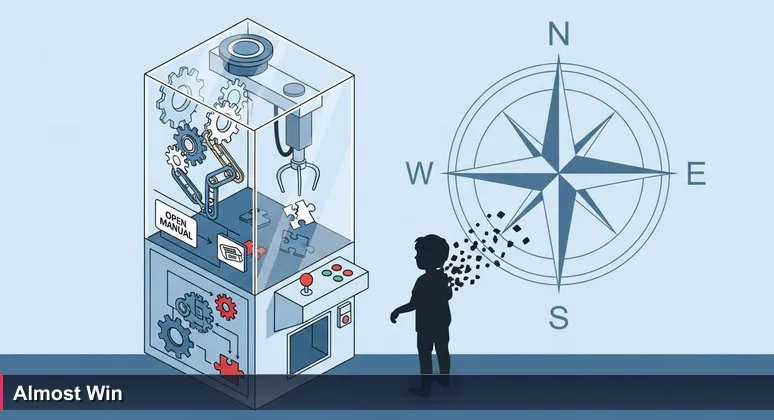
The claw closes around the prize. For a split second, it holds. Then, like clockwork, it opens too early - and you watch the plush toy tumble back onto the pile. You’ve spent S$2 to learn what you already knew: the game is calibrated for the machine, not for you. Every Singaporean has felt this - the calibrated disappointment of a game engineered to make you almost win.
That claw is your 2026 tech salary. On paper, the numbers are world-class. A senior AI/ML engineer can command S$16,000 to S$25,000+ per month. The city-state offers zero capital gains tax and a top marginal personal income tax rate of just 22% - a fraction of what you’d pay in San Francisco or London. But the machine is programmed to let go. Rent in a CBD condo swallows S$4,500-S$7,500 monthly. A plate of chicken rice has crept from S$4 to S$8. GST now sits at 10%. The question becomes: is your grip wrong, or is the machine rigged?
Neither. The machine is graded - and the players who walk away with the prize don’t feed coins hoping for luck. According to the Robert Walters Salary Survey 2026, the role you choose and the skills you build determine whether the claw even bothers to close. Meanwhile, local sentiment captured on r/askSingapore confirms that basic costs have risen so sharply that even a S$5,000 monthly salary now requires careful budgeting. The secret isn’t earning more - it’s learning the physics of the claw.
In This Guide
- The Claw Machine Economy: Why Your Salary Feels Rigged
- 2026 Tech Salary Benchmarks: Where the Coins Are
- The Real Cost of Living: Housing, Food, Transport
- Three Budget Simulations for Single EP Holders
- Strategic Levers: Specialise, Arbitrage, Save Tax
- Family Considerations: The Childcare Cost Wall
- Should You Play This Machine? Regional Comparisons
- The Actionable Playbook: Win at Any Income Level
- Final Verdict: Can You Actually Afford Singapore?
- Frequently Asked Questions
Discover the Singapore AI job market in 2026 and how to land a role.
2026 Tech Salary Benchmarks: Where the Coins Are
Singapore's technology sector remains the highest-paying industry in 2026, but the gap between high-demand specialists and generalists continues to widen. According to the Robert Walters Salary Survey 2026, professionals with AI, data, and cloud skills are seeing 6-18% salary increases, while traditional roles face stagnant growth. The table below captures monthly gross salary benchmarks for Singapore's most critical tech roles.
| Role | Junior (0-2 YOE) | Mid-Level (2-5 YOE) | Senior (5+ YOE) |
|---|---|---|---|
| Software Engineer | S$4,000 - S$6,500 | S$6,500 - S$9,500 | S$10,000 - S$15,000+ |
| AI / ML Engineer | S$5,200 - S$7,000 | S$7,000 - S$14,000 | S$16,000 - S$25,000+ |
| Cloud / DevOps | S$5,500 - S$7,500 | S$8,000 - S$12,000 | S$12,000 - S$18,000+ |
| Cybersecurity | S$5,000 - S$7,000 | S$7,500 - S$12,500 | S$15,000 - S$20,000+ |
The premium for AI and cybersecurity skills is undeniable. Kirsty Poltock of Robert Walters Plc highlights that those with AI, data, and cloud skills are seeing wage bumps of 6-18%, while generalist roles barely move. Eugene Chong from Mercer LLC confirms that firms are concentrating pay increases on "critical talent and key roles that drive business resilience" - meaning your specialization determines the game you’re playing. For the full breakdown by industry, consult the Mavenside Singapore Salary Guide 2026 and the Robert Half 2026 IT Salary Guide.
The Real Cost of Living: Housing, Food, Transport
Rent is the single biggest lever in your budget, and your neighbourhood choice determines whether you’re playing a fair game or feeding a rigged machine. A CBD condo for 1-2 bedrooms runs S$4,500-S$7,500+ monthly - you’re paying for proximity and a pool you’ll rarely use. In contrast, a whole HDB unit in Tanjong Pagar costs S$3,400-S$3,600, while Jurong condos hover around S$2,500-S$3,500. The most aggressive play is the Johor Bahru cross-border option: high-end condos there rent for S$600-S$1,200, and the new RTS Link opening in late 2026 offers a 5-minute commute for ~S$5-S$7 per trip - unlocking roughly 70% cheaper housing according to 2026 cost of living budgets.
Food remains Singapore’s great equaliser. Hawker centre meals cost S$4-S$7, and monthly groceries for a single person average S$300. For a small family, groceries run S$600-S$900. That plate of chicken rice may have crept from S$4 to S$8, but the hawker system still delivers remarkable value compared to dining in any other global tech hub. Public transport is equally efficient - monthly MRT and bus spend typically runs S$120-S$150. Car ownership, by contrast, is deliberately prohibitive: the Certificate of Entitlement remains over S$100,000 for a 10-year permit in 2026, and monthly running costs average S$2,000+. As detailed in the upGrad cost of living guide, the system effectively forces you onto public transport - which, for tech workers watching their savings rate, is a blessing in disguise.
Three Budget Simulations for Single EP Holders
Let’s put the numbers together. These simulations assume a single EP holder with no CPF contributions, renting a 1-bedroom or studio, and maintaining a moderate dining lifestyle. Data adapted from the SGVital 2026 cost of living budget. Each scenario reveals a different relationship between gross income and what you actually keep.
| Income Level | Gross Annual | Monthly Take-Home | Est. Monthly Tax | Housing | Food & Transport | Savings / Discretionary |
|---|---|---|---|---|---|---|
| Entry-Level | S$75,000 | S$6,020 | ~S$230 | S$2,800 (HDB) | S$1,000 | S$2,220 |
| Mid-Level | S$140,000 | S$10,840 | ~S$830 | S$4,000 (Condo) | S$1,500 | S$5,340 |
| Senior | S$240,000 | S$17,800 | ~S$2,200 | S$6,500 (CBD) | S$2,500 | S$8,800 |
At entry-level, a studio consuming S$3,000 of your S$6,020 take-home leaves only S$3,020 for everything else - a thin margin that demands a room in Jurong or Tampines. Mid-level earners reach real breathing room: a Tanjong Pagar HDB or Jurong condo keeps housing at S$4,000, unlocking 49% of take-home for savings and discretionary spending. At senior level, the S$17,800 monthly take-home highlights Singapore’s low-tax advantage - that ~S$2,200 monthly tax is a fraction of what you’d pay in New York or London. The trap at every level is lifestyle inflation: a car, an Orchard Road apartment, or daily fine dining can turn a winning machine into a losing one. As noted in analysis on r/singaporefi, compensation is not keeping pace with GST hikes and record HDB prices - making disciplined budgeting non-negotiable.
Strategic Levers: Specialise, Arbitrage, Save Tax
The tech workers who thrive in Singapore aren't those with the highest nominal salary - they're the ones who stack the game in their favour. Three strategic levers consistently separate the players who walk away with the prize from those still feeding coins: specialisation, location arbitrage, and tax optimisation. Each lever compounds the others, and using all three at once is how you beat the machine.
Specialisation is the most direct path out of the generalist trap. According to People Matters Global, AI deployment and ESG specialists now command a 10-40% premium over generalist roles. Investing 6-12 months in upskilling to AI/ML deployment or cloud architecture unlocks the fastest wage growth in Singapore's tech sector. Programs like the Solo AI Tech Entrepreneur Bootcamp (S$5,370) or the Back End, SQL and DevOps with Python program (S$2,870) offer a low-friction entry point compared to the S$13,500+ charged by many competitors.
Location arbitrage is the second lever, and the most transformative structural shift in 2026 is the RTS Link connecting Johor Bahru to Singapore's Woodlands North station. At 5 minutes and ~S$5-S$7 per trip, it unlocks a 70% housing cost reduction - a high-end JB condo costs S$600-S$1,200 monthly versus S$4,500+ in Marina Bay. For a dual-income tech couple earning S$180,000 combined, moving to JB could unlock annual savings of S$30,000+ on rent alone. The middle ground for those unwilling to cross borders: living in Jurong near the Innovation District, where condos run S$2,500-S$3,500 and put you within walking distance of Google, Grab, and Sea's R&D centres.
The tax advantage is your largest "rent" - and you must actively collect it. Singapore's progressive personal income tax tops out at 22%, and only on income above S$320,000 annually. For most tech workers, the effective rate is far lower: an S$140,000 earner pays roughly 7% effective tax. As confirmed by PwC's Singapore tax summaries, there is zero capital gains tax, meaning your investment returns - from index funds to real estate - stay entirely in your pocket. This advantage only matters if you save rather than spend. The S$17,800 monthly take-home of a senior engineer means little if S$7,500 goes to a Marina Bay condo. Bank the difference, invest it tax-free, and let the system work for you.
Family Considerations: The Childcare Cost Wall
For tech parents in Singapore, the real claw machine isn't the housing market - it's the childcare cost wall that can collapse your savings rate overnight. International school fees for expats average S$3,000-S$4,000 per month per child, making this the single biggest potential trap for families. A mid-level AI engineer earning S$140,000 annually and supporting two children could see education costs consume up to 55-74% of their monthly take-home, leaving virtually no room for savings or investment. This is the machine calibrated to make you almost win - then let go at the last moment.
If you're earning S$140,000 gross (S$10,840 monthly take-home) with a family of four, the math shifts dramatically when childcare enters the equation. Housing in a 3-bedroom HDB or condo runs S$4,000-S$5,500, food and groceries add S$1,200-S$1,800, and international school fees for two children hit S$6,000-S$8,000. The total monthly burn of S$11,900-S$16,400 means you're either burning savings or going into debt. As highlighted by Expatica's 2026 cost of living guide, international school fees are a major differentiator between family budgets in Singapore and other Asian hubs.
The winning play is to negotiate before you sign. Many major tech employers with regional headquarters in Singapore - including DBS, Singtel, and Google - offer education allowances as a retention tool for senior technical hires. If you're interviewing, make international school subsidies a non-negotiable part of your compensation package. Alternatively, consider local schools, which cost a fraction of international options, or leverage employer-provided education benefits already embedded in your contract. As noted in discussions on raising children in Singapore, strategic families combine local schooling with enrichment programs to keep costs manageable while maximising the city's educational advantages.
Should You Play This Machine? Regional Comparisons
Every arcade has multiple machines, and Singapore is just one row in the global tech arcade. Before you keep feeding coins, it's worth walking past the other cabinets to see which ones offer better odds. The regional landscape reveals that Singapore's machine rewards strategic players but punishes those who ignore the physics of the claw.
- Bengaluru: Over 70% cheaper than Singapore across services and domestic help, but infrastructure and safety rankings trail significantly. For remote AI/ML workers, Bengaluru offers higher raw savings potential at the cost of regulatory stability and global connectivity.
- Hong Kong: Comparable total cost, though Singapore's rent is now often steeper for similar quality. Hong Kong's top tax rate is lower at 17%, but its political and regulatory environment has become less predictable.
- Sydney: Housing is similarly expensive, yet Singapore's public transport and hawker dining deliver far more value. Australian tech salaries are broadly comparable, but taxes run 32-45% at top marginal rates for residents - the higher tax claw means less net take-home.
- Kuala Lumpur: Approximately 70% cheaper than Singapore, making the JB cross-border play via the new RTS Link an aggressive but viable arbitrage for disciplined tech workers earning Singapore salaries.
"While Singapore is a top global hub, the relatively high cost of living can influence decision-making for some candidates, particularly when weighing offers across multiple global hubs." - Sarelius, KPMG
The choice isn't about which city is cheapest - it's about which machine's calibration matches your play style. For tech workers who thrive on regulatory stability, zero capital gains tax, and proximity to Southeast Asia's 700M+ consumer market, Singapore's advantages over Sydney remain compelling. But for those willing to trade some stability for lower costs, the regional alternatives are worth serious consideration. The question isn't "Can I afford Singapore?" but "Am I playing the right machine for my goals?"
The Actionable Playbook: Win at Any Income Level
The playbook changes at every income level, but the principle remains the same: play the right machine. Entry-level, mid-level, and senior tech workers each face different constraints - and different opportunities to stack the odds in their favour.
Entry-level (S$4,000-S$7,000/month): Do not rent a private condo alone. Target a room in an HDB flat in Jurong, Tampines, or Geylang for S$1,000-S$1,800. Invest 10% of take-home in upskilling - programs starting at S$2,870 offer high-ROI entry into AI or cloud roles that unlock higher salary bands. Avoid car ownership completely; the S$100,000+ COE is a lifetime subscription to financial pain. Maximise hawker food at S$4-S$7 per meal to keep food costs below S$600 monthly.
Mid-level (S$8,000-S$12,000/month): Upgrade to a whole HDB unit or a condo in Jurong or Tanjong Pagar, capping housing at S$3,000-S$4,000. Start investing the surplus with zero capital gains tax - dollar-cost average into an index fund targeting 20% of take-home. Negotiate employer benefits as hard as you negotiate salary, particularly healthcare coverage and flexible work arrangements. Consider the cross-border option: a JB condo at S$800 plus the 2026 Budget's cost-of-living support can unlock annual savings of S$34,800 on housing alone.
Senior (S$15,000+/month): You can afford the CBD condo - but ask whether you should. Living at S$5,000-S$6,000 instead of S$7,500-S$10,000 puts an extra S$18,000-S$30,000 annually in your pocket tax-free. Build a portfolio through real estate, index funds, and angel investing - Singapore's tax regime rewards capital deployment. Consider entrepreneurship: the Solo AI Tech Entrepreneur Bootcamp at S$5,370 is designed for senior engineers ready to ship AI products for Southeast Asia's 700M+ market. Plan for family by negotiating international school fees into your compensation package - DBS, Google, and Microsoft have offered education allowances for senior technical staff.
Final Verdict: Can You Actually Afford Singapore?
The honest answer is that affording Singapore depends entirely on which machine you're playing. If you're an entry-level developer renting a S$3,000 studio in the CBD, the claw opens before the prize reaches the chute - you'll survive, but you won't thrive. If you're a mid-level AI/ML engineer living in Jurong, eating hawker food, and investing the surplus, you're building wealth at a pace nearly impossible in any other global tech hub, thanks to the combination of high tech salaries and zero capital gains tax.
- Entry-level (S$4,000-S$7,000/month): Live lean in a Jurong HDB room, skip the car, upskill into AI or cloud roles. Your margin is thin, but the path to mid-level is 6-12 months of focused investment away.
- Mid-level (S$8,000-S$12,000/month): This is the sweet spot. With housing capped at S$4,000 and an effective tax rate around 7%, 49% of take-home becomes savings or investments. The RTS Link and Jurong Innovation District make this level genuinely comfortable.
- Senior (S$15,000+/month): You can afford luxury - but the winners live at S$5,000-S$6,000 housing and bank the rest. The S$240,000 earner nets S$17,800 monthly after only S$2,200 in tax; a disciplined lifestyle unlocks capital for investments or a regional startup.
The system isn't rigged - it's graded. As confirmed by the Robert Walters Salary Survey 2026, the skills divide means your specialisation determines whether the claw even closes. The RTS Link opens in late 2026, the AI skills premium is at an all-time high, and a bootcamp investment of S$2,870 can unlock a career path to S$16,000/month. The pieces are all on the board.
The question isn't "Can I afford Singapore?" - it's whether you're willing to stop feeding coins and start playing the game right. The players who study the drop rates, target the right machines, and know when to walk away are the ones who don't leave empty-handed. Your move.
Frequently Asked Questions
What net salary do I need to live comfortably in Singapore as a tech professional in 2026?
A mid-level tech role earning around S$140,000 annually (S$10,840 monthly take-home) allows for comfortable living with savings. For a single EP holder, targeting S$12,000+ take-home enables a condo in city-fringe areas and still saves nearly half your income.
Is the high cost of housing in Singapore worth the higher tech salaries?
It depends on location. Renting an HDB in Jurong or Tampines for S$2,800 keeps housing manageable, while a CBD condo at S$4,500+ can overwhelm a mid-level salary. The key is to avoid lifestyle inflation and leverage Singapore's low taxes to bank the difference.
How do Singapore tech salaries compare to other global hubs after tax?
Singapore's effective tax rate of about 7% for a S$140,000 earner is far lower than 22-35% in the US or UK. That S$140,000 salary nets roughly S$130,000 annually versus ~S$95,000 in San Francisco, giving you significantly more purchasing power.
What are the biggest hidden expenses for tech workers in Singapore?
International school fees can exceed S$3,000 per child monthly, potentially derailing your budget. Car ownership is also prohibitive with COE over S$100,000, and private health insurance is essential for EP holders.
Can I save money by living in Johor Bahru and commuting via the RTS Link?
Yes, the RTS Link opening in late 2026 makes JB viable. Rent is up to 70% cheaper (S$600-S$1,200 for high-end condos), and commuting costs S$5-7 per trip. This could save you over S$30,000 annually in housing, but requires discipline with border crossings.
Our guide to Singapore's best women in tech groups ranks them by real impact.
Get insights into the top AI and machine learning bootcamps in Singapore from our detailed ranking.
If you're looking for top tech apprenticeships Singapore, this article compares compensation and return-offer rates.
Explore Singapore's hidden free tech training at NLB and Community Clubs.
For a detailed guide on the AI engineer path in Singapore, learn to become one with this resource.

Irene Holden
Operations Manager
Former Microsoft Education and Learning Futures Group team member, Irene now oversees instructors at Nucamp while writing about everything tech - from careers to coding bootcamps.