









Top 10 Companies Hiring AI Engineers in Yakima, WA in 2026
By Irene Holden
Last Updated: April 2nd 2026
Too Long; Didn't Read
Yakima Chief Hops and Carbon Robotics top the list for hiring AI engineers in Yakima in 2026, with YCH offering senior roles around $165k and Carbon Robotics paying up to $220k for specialized robotics work. These salaries are enhanced by Washington's no state income tax and Yakima's lower cost of living, providing compelling roles in the region's thriving agribusiness and agtech sectors.
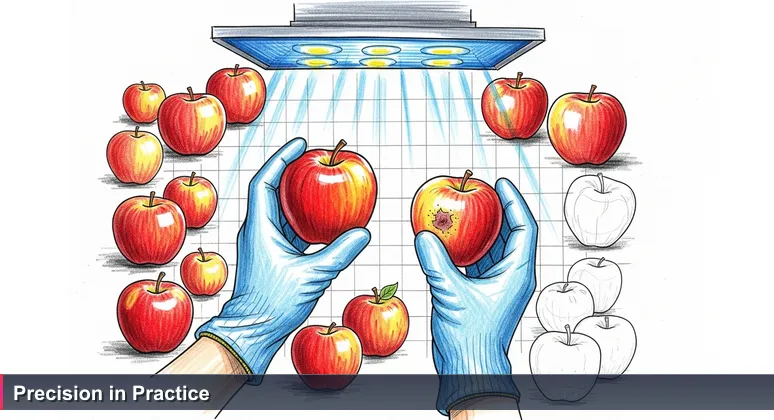
In a Yakima packing house, the future of an AI career is being decided not by a recruiter, but by a worker sorting apples under the hum of an optical scanner. This scene captures the region's practical AI market: intelligence embedded directly into the engines of agriculture, healthcare, and logistics. The demand has shifted decisively toward engineers who can operationalize models into reliable systems, a trend underscored by a CNBC survey finding 89% of HR leaders say AI will impact jobs.
The "gold rush" for pure research has evolved into a need for durable, production-grade AI. As noted in industry analysis, hiring is now tied directly to the pace of operationalizing AI, rewarding those who can maintain data pipelines and ensure system reliability. For engineers with these skills, Yakima offers a compelling proposition: salaries that compete with coastal tech hubs, amplified by Washington's no state income tax and a significantly lower cost of living.
This list isn't about coastal-style tech campuses. It's a guide to where your skill in "sorting" data - making critical, real-world distinctions - solves tangible problems. From the Ag-Tech Revolution in hop fields and orchards to clinical systems at regional hospitals, the top AI roles here are defined by impact, offering senior salaries that can reach $170,000-$220,000 at innovative ag-tech firms. Your most valuable career move is finding which company's specific problem you're driven to solve.
Table of Contents
- Introduction
- Avista Utilities
- Nutrien Ag Solutions
- Walmart
- Inland Imaging
- Lamb Weston
- Pacific Northwest National Laboratory
- MultiCare Health System
- Stemilt Growers
- Carbon Robotics
- Yakima Chief Hops
- Frequently Asked Questions
Discover the strategies for starting an AI career in Yakima in this comprehensive article.
Avista Utilities
While not headquartered in Yakima, Avista Utilities is a cornerstone infrastructure employer for Central and Eastern Washington. Their AI work is a prime example of how machine learning is becoming critical to modernizing essential services, a trend highlighted in analysis showing AI is becoming an infrastructure story. Engineers here tackle pressing regional challenges like predictive maintenance for the electric grid and sophisticated computer vision models that analyze satellite imagery to assess wildfire risk near power lines.
The core tech stack is built for reliability and temporal data, heavily utilizing Python, SQL, Azure, and specialized time-series frameworks. Teams within enterprise analytics or grid innovation departments collaborate directly with operations and environmental scientists, focusing on projects from demand forecasting to energy trading optimizations. This reflects a broader hiring shift toward practical, production-focused skills.
Salaries are competitive for the region, with mid-level AI roles estimated at $100,000-$135,000 and senior positions reaching $135,000-$170,000. The interview process mirrors this practical focus, assessing candidates with SQL and Python screens, deep dives into time-series forecasting, and system design for robust data pipelines. As noted in 2026 hiring predictions, the market increasingly values the ability to build and maintain durable systems over theoretical knowledge, a perfect fit for Avista's mission-critical work.
Nutrien Ag Solutions
As a global agricultural retail giant with a massive footprint across Central Washington's farmlands, Nutrien Ag Solutions employs AI at the critical intersection of data science and hands-on agronomy. Their teams build the hyper-local predictive models that directly advise Yakima Valley growers on everything from variable-rate fertilizer application to harvest timing, offering engineers a direct line from code to crop yield. This work is part of a broader movement, as Washington state bets on AI to help secure the future of farming.
Engineers develop systems for weather-integrated yield forecasting, build recommendation engines for crop protection, and optimize complex agricultural supply chains. The tech stack leverages Python, R, AWS, and geospatial ML libraries to process field data, drone imagery, and soil samples. The team structure follows a hub-and-spoke model, where central digital agronomy teams support regional field agronomists who work directly with local farms, embodying the Yakima County initiative to connect farms with cutting-edge technology.
Salaries for these domain-specific roles are strong, with mid-level AI engineers estimated at $110,000-$140,000 and senior roles reaching up to $180,000. The interview process is designed to find those who can thrive in this collaborative, field-oriented culture, featuring a practical case study on processing real agronomic datasets, Python coding challenges, and behavioral interviews. This focus on applied problem-solving ensures engineers can deliver the tangible, operational impact that defines AI's value in Central Washington's core industry.
Walmart
's vast supply chain and fulfillment network, which services the entire Pacific Northwest including rural areas like Yakima, is powered by one of the world's most sophisticated AI infrastructures. While corporate engineering roles may be remote or based in larger hubs, AI engineers working on these systems directly support the logistics that stock local stores and enable next-day delivery to Yakima residents, integrating the kind of AI solutions revolutionizing logistics operations on a massive scale.
Engineers tackle planet-scale problems in demand forecasting, inventory stocking predictions, and the computer vision systems that guide automated robotics in regional fulfillment centers. The tech stack is enterprise-grade, utilizing Java, Python, Scala, Spark, and cloud platforms like GCP and Azure. Teams are large and matrixed, organized around specific supply chain domains such as perishable goods logistics - highly relevant to moving Yakima's agricultural exports efficiently. Professionals in these roles, like a Senior Data Scientist in Applied AI at Walmart, focus on turning data into operational intelligence.
Salary bands reflect the monumental scale of the problems, with mid-level engineers earning an estimated $120,000-$160,000 and senior engineers reaching $160,000-$210,000. The interview process mirrors that of other Big Tech companies, with a strong emphasis on LeetCode-style data structure questions, large-scale system design, and ML scalability problems. This rigorous process tests an engineer's ability to think and build at a global operational level, ensuring they can contribute to systems that must be both innovative and unwaveringly reliable.
Inland Imaging
Headquartered in Spokane but providing critical radiology services to medical centers across Central Washington, including facilities in Yakima, Inland Imaging represents a specialized and growing niche for AI engineers: clinical machine learning. Their dedicated AI team focuses exclusively on deploying and integrating diagnostic AI into real-world healthcare workflows, a field where precision carries immense consequence. This aligns with the growing number of specialized roles in clinical AI emerging across Washington state.
The projects are at the cutting edge of medical AI, including developing triage systems to flag critical findings in scans, refining computer vision algorithms for detection tasks, and optimizing practice management software. Engineers work with a tech stack centered on Python, PyTorch, and Linux, with deep integration into medical imaging protocols like DICOM. The team is agile and focused, often led by an AI Solutions Engineer who manages small squads dedicated to turning research into reliable clinical tools.
Salaries for these highly specialized roles are substantial, with listings for a Staff/Senior AI Solutions Engineer ranging from $88,880 to $170,000. The interview process is telling of the field's exacting demands: it involves rigorous code reviews emphasizing clean, maintainable code, discussions on DevOps and MLOps practices, and a thorough understanding of healthcare data privacy and compliance standards like HIPAA. This ensures engineers can build not just intelligent systems, but trustworthy and compliant ones that meet the rigorous standards of patient care.
Lamb Weston
One of the world's largest potato processors, Lamb Weston operates enormous production facilities in the nearby Columbia Basin and Tri-Cities, where their AI and IoT initiatives are central to industrial optimization. This represents a core trend in modern engineering, as noted in industry analysis showing AI is becoming an infrastructure story with engineering firms at its center. For engineers, this offers a compelling environment where machine learning directly controls high-speed physical manufacturing, from raw potato intake to the final frozen fry.
AI projects are deeply integrated with the production floor. Teams work on sensor-driven anomaly detection to predict equipment failures, computer vision systems for automated quality sorting on fast-moving lines, and ML models for supply chain and yield forecasting. The tech stack is built to handle industrial data streams, employing Python, Spark, Azure IoT Hub, and Databricks. Engineers are typically part of a global Advanced Analytics team but work closely with plant engineers and automation specialists in Central Washington facilities, ensuring models deliver tangible operational efficiency.
Estimated salaries are strong for the region, with mid-level roles at $110,000-$145,000 and senior positions reaching $145,000-$185,000. The interview process tests both foundational knowledge and applied skill, featuring live coding in Python/SQL, system design questions tailored to manufacturing environments, and discussions on core ML theory. This approach identifies engineers who can contribute to the kind of real-world machine learning use cases that are transforming traditional industries, building durable intelligence directly into the region's food processing backbone.
Pacific Northwest National Laboratory
Located in Richland in the Tri-Cities, just southeast of Yakima, the Pacific Northwest National Laboratory (PNNL) represents the pinnacle of research-oriented AI engineering in the region. As a U.S. Department of Energy national lab, it offers an academic-like environment with world-class resources for engineers passionate about tackling grand scientific challenges, from national security to climate science. Its work is a cornerstone of the sophisticated artificial intelligence landscape developing across Washington state.
The AI work here is both diverse and profound. Projects span advanced NLP for analyzing massive scientific document corpora, developing graph neural networks for cybersecurity, and creating high-fidelity models for power grid and environmental optimization. Engineers utilize a powerful tech stack including PyTorch, TensorFlow, C++, and have access to specialized high-performance computing (HPC) clusters, conducting research within domain-focused divisions that promote deep collaboration with PhD scientists.
Government lab salary ranges are clearly defined and competitive, with Level 2 (mid-career) roles paying $100,000-$140,000 and Level 3/4 (senior/staff) roles reaching $135,000 to over $200,000. The interview process is uniquely rigorous and academic, designed to identify those who can thrive in a mission-driven research environment. It involves a research presentation, panel interviews with deep ML theory questions, and a comprehensive background check due to the sensitive nature of some projects, ensuring candidates can contribute to science that serves the national interest.
MultiCare Health System
As the parent organization of Yakima Valley Memorial Hospital, MultiCare Health System is a major regional healthcare provider leveraging AI to improve patient outcomes and streamline hospital operations. For AI engineers, this offers a unique opportunity to build systems with immediate, human impact in a community setting, applying the kind of digital healthcare opportunities that advances in AI and machine learning can provide. This work is part of a fundamental shift, as AI literacy has become a baseline requirement for nearly 90% of jobs, especially in critical fields like healthcare.
The AI initiatives are clinically focused and operationally critical. Teams work on natural language processing (NLP) to automate and enhance clinical documentation, predictive modeling to forecast patient readmissions and optimize staffing, and computer vision for assisting in medical imaging analysis. The tech stack integrates with healthcare-specific systems, using Python, SQL, the Epic Cognitive Computing platform, and Azure.
Engineers are typically part of centralized data science or clinical informatics teams that serve the broader MultiCare network across Washington. Salaries reflect the specialized and impactful nature of the work, with estimates for mid-level engineers at $115,000-$150,000 and senior engineers at $150,000-$190,000. The interview process emphasizes both technical skill and deep domain understanding, involving behavioral interviews, thorough checks on knowledge of medical data privacy laws like HIPAA, and detailed case studies on healthcare-specific ML challenges, ensuring engineers can navigate the complex intersection of technology and patient care.
Stemilt Growers
A world leader in tree fruit production headquartered in nearby Wenatchee, Stemilt Growers operates massive packing facilities throughout the Yakima Valley and is at the forefront of precision agriculture. Their use of AI-driven optical sorting technology exemplifies how computer vision is revolutionizing the region's core industry, making it a prime destination for engineers who want to build tangible, scalable systems that make millions of split-second decisions daily. This work is part of Yakima County's broader Ag-Tech Revolution, connecting cutting-edge technology directly to the farm and packing house.
Every piece of fruit passing through a Stemilt facility is analyzed by AI-powered cameras that assess quality, color, and defects with incredible speed. Engineers work directly on these mission-critical computer vision systems, as well as on harvest volume forecasting models and logistics routing algorithms to optimize the movement of perishable goods. The tech stack is modern and cloud-based, utilizing Python, TensorFlow/PyTorch, SQL, and AWS. AI talent is embedded within continuous improvement and industrial automation teams, working alongside engineers who manage the physical packing lines, ensuring the intelligence they build integrates seamlessly into the mechanical process.
Salaries are highly competitive, reflecting the direct business value of this work. Mid-level engineers are estimated to earn $105,000-$140,000, with senior engineers reaching $140,000-$175,000. The interview process is designed to identify practical problem-solvers who thrive in a hands-on environment, featuring technical screens, system design questions focused on building robust computer vision pipelines, and culture-fit panels. As highlighted in coverage of Yakima County's agricultural future, this blend of technical skill and operational understanding is precisely what drives innovation in the valley's most important industry.
Carbon Robotics
While its corporate engineering headquarters are in Seattle, Carbon Robotics builds its revolutionary AI-powered "LaserWeeder" robots that are extensively tested and deployed in the fields of the Yakima Valley and Columbia Basin. The company maintains a significant manufacturing and operational hub in Richland, placing it at the heart of the region's ag-tech innovation, which is part of a national trend where farmers are increasingly using AI and robotics instead of traditional methods. For engineers, this represents one of the most extreme real-time AI challenges: developing systems that identify individual weeds among crops and control a laser to eliminate them with millimeter precision, all on a moving vehicle.
The work spans the full stack of embedded intelligence, from core computer vision research in PyTorch and C++ to CUDA-accelerated edge computing on specialized hardware. The team is highly multidisciplinary, requiring seamless collaboration between AI researchers, robotics engineers, and hardware specialists to solve problems that exist at the intersection of algorithms and physical machinery. This practical, systems-level focus is exactly what defines the cutting edge of Washington state's strategic bet on AI to secure the future of farming.
Due to the exceptional complexity and innovation required, salary estimates are among the highest in the region. Mid-level roles command $130,000-$170,000, with senior positions reaching $170,000-$220,000. The interview process is famously rigorous, designed to identify engineers who can thrive in this demanding environment. It involves challenging live coding sessions, deep theoretical dives into computer vision, and practical questions on embedded systems architecture, testing a candidate's ability to reason about AI performance not just in a cloud server, but on a machine rolling through the dirt of a Central Washington hop yard.
Yakima Chief Hops
Topping our list is Yakima Chief Hops (YCH), a 100% grower-owned global hop supplier headquartered right in Yakima. YCH exemplifies how a traditional agricultural business can transform into a sophisticated, AI-driven enterprise, offering a unique opportunity to work on impactful projects within the community for a company that is a pillar of the local economy. This represents the ultimate evolution of the "sort" from the packing house floor to predictive algorithms, turning agronomic data into competitive advantage through platforms like Oxrow.ai's profit optimization platform for agribusinesses.
YCH uses machine learning to turn sensory, environmental, and supply chain data into precise business and agricultural insights. AI engineers work on projects like predicting hop quality and yield, optimizing complex global logistics, and employing computer vision for quality control in processing. They operate within a centralized Data & Analytics team, collaborating directly with agronomists and lab researchers at the forefront of agricultural automation in Yakima County. The tech stack is practical and powerful, including Python, R, SQL, Azure ML, and Power BI.
Salary ranges are excellent for the Yakima area, with mid-level engineers estimated at $100,000-$135,000 and senior engineers at $135,000-$165,000 - a compelling package amplified by Washington's no state income tax. The interview process focuses squarely on applied skills: general coding assessments, a domain-specific take-home data challenge involving real hop cultivation data, and in-depth discussions on how to implement ML solutions to concrete business problems in agriculture. This practical emphasis ensures engineers can deliver the durable, operational intelligence that keeps Yakima's signature crop at the center of the global craft beer revolution.
Frequently Asked Questions
How did you rank the top 10 companies for AI engineers in Yakima?
We ranked companies based on salary competitiveness, practical AI projects in local industries like agriculture and healthcare, and their presence in the Yakima area. For instance, Yakima Chief Hops tops the list due to its community-focused AI work and salaries up to $165,000 for senior roles.
Which company offers the highest AI engineering salary in the Yakima region?
Carbon Robotics pays the highest, with senior AI engineers earning up to $220,000 for roles in ag-tech robotics. Other top payers include Walmart and PNNL, where senior positions can reach over $200,000, reflecting the demand for specialized skills.
How does Yakima's cost of living and no state income tax impact AI engineering jobs?
Yakima's lower cost of living means salaries like the $100,000-$135,000 range at Avista Utilities go further here than in coastal metros. With Washington's no state income tax, take-home pay is higher, making competitive offers from companies like Yakima Chief Hops even more attractive.
Are these AI engineering roles based in Yakima, or are they remote?
Many companies have local operations in Yakima, such as MultiCare Health System at Yakima Valley Memorial Hospital, while others like Walmart offer remote roles supporting the region's logistics. For example, Inland Imaging provides services to Yakima from Spokane, with roles focused on healthcare AI.
What industries in Yakima are most active in hiring AI engineers?
Agriculture is a major driver, with companies like Stemilt Growers and Nutrien Ag Solutions using AI for precision farming and supply chain optimization. Healthcare through MultiCare and logistics with employers like Walmart also show strong demand, as highlighted by projects in predictive modeling and computer vision.
For a review of AI and tech bootcamp rankings in Central Washington for 2026, see this article.
Learn about 2026 funding options for tech careers in Yakima, Washington through this guide.
For a deep dive into Yakima, WA AI job market salaries in 2026, check this guide.
Check out the best industries for AI careers in Yakima beyond Silicon Valley in 2026.
Get an introduction to Yakima's tech career prospects in 2026, explained with local data and job market insights.

Irene Holden
Operations Manager
Former Microsoft Education and Learning Futures Group team member, Irene now oversees instructors at Nucamp while writing about everything tech - from careers to coding bootcamps.