









Top 10 AI Startups to Watch in Winston-Salem, NC in 2026
By Irene Holden
Last Updated: April 2nd 2026
Too Long; Didn't Read
Fluree and Javara lead the top AI startups to watch in Winston-Salem for 2026, with Fluree's trust-based platform securing a $4.73 million seed round for reliable AI data and Javara ranked #1 for its AI-driven clinical trial solutions. These companies showcase how the region's AI ecosystem, centered in the Innovation Quarter, is thriving by addressing high-stakes challenges in local industries like healthcare and insurance, offering promising career opportunities in a lower-cost metro with access to major employers.
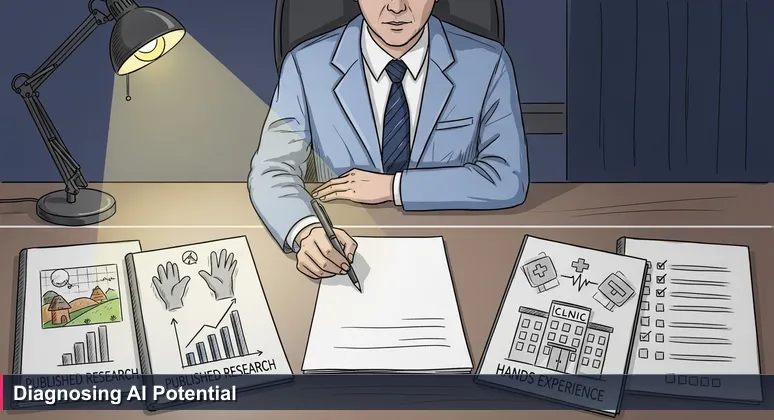
The most important decisions aren't made by algorithm. They happen in quiet rooms where seasoned experts weigh evidence, searching for the right kind of promise. As we examine Winston-Salem's tech landscape, we're witnessing a similar, city-wide selection process. The hype cycle has cooled, and the real work has begun.
The startups rising here aren't just using AI; they are being vetted and validated by the city's legacy industries - healthcare, insurance, and advanced manufacturing - demanding robust, auditable solutions that work under immense pressure. This shift aligns with the global trend noted by the World Economic Forum, which has labeled this the "proof" year, where AI must demonstrate tangible business value beyond experimentation.
This specialized ecosystem is nurtured by localized capital and collaboration. The Winston-Salem Partners Roundtable (WSPR) Fund has invested over $4.3 million in 23 early-stage companies, providing critical fuel for homegrown innovation. Furthermore, data shows that AI-native teams are now shipping products 4.7x faster and burning 62% less cash than traditional teams, a efficiency gain that resonates in a pragmatic business environment like the Piedmont Triad.
This list, therefore, is a diagnosis of that thriving ecosystem. It ranks companies not by hype, but by their potential to solve high-stakes problems with the structural integrity required for durable success. For professionals, it signals where the high-value careers in applied, vertical AI are being built - right here.
Table of Contents
- Winston-Salem's AI Ecosystem in 2026
- Fluree
- Javara
- Solvrays
- Patient Ready
- Genstrata
- Tracevox
- Elemance
- Fastbreak AI
- Troodie
- Nclusive Scan
- Blueprint for Durable AI
- Frequently Asked Questions
For those targeting AI career opportunities in Winston-Salem for 2026, this guide is essential reading.
Fluree
At the core of enterprise AI's biggest challenge - unreliable, "hallucinating" models - is messy, unverified data. For regulated industries like healthcare and finance, this isn't just an annoyance; it's a non-starter. Fluree, based in the Innovation Quarter, provides the essential "trust layer" to solve this.
Its platform combines a semantic graph database with blockchain principles to create a "zero-trust" data fabric. This ensures every piece of data feeding a large language model is verified, traceable, and properly connected. Their proprietary GraphRAG technology grounds AI responses in this structured knowledge graph, dramatically improving accuracy for mission-critical applications. The company has secured a $4.73 million Seed round and a strategic partnership with Wake Forest School of Medicine, tackling data integrity in clinical research head-on.
Fluree's trajectory points toward becoming essential enterprise infrastructure. As local giants like Novant Health and Truist Financial scale their AI deployments, Fluree is poised to become the default data platform for "vertical AI" across the Piedmont Triad, ensuring that the region's AI solutions are built on a foundation of trust.
Javara
Clinical trials are notoriously slow, expensive, and fail to reach diverse patient populations, particularly in rural areas. This bottleneck slows medical innovation and limits access to cutting-edge therapies. Javara, ranked the #1 startup in Winston-Salem for 2026 by StartupBlink, tackles this with a vertical AI approach in life sciences.
As an integrated clinical research organization, Javara uses predictive analytics and AI for intelligent patient-trial matching. Its key innovation is integrating research directly into standard healthcare delivery through community physicians, allowing them to identify eligible patients within existing workflows. This removes the traditional friction of recruitment by meeting patients where they already receive care.
The company's recent launch of its first oncology trial in partnership with rural health centers is a critical indicator of its model's viability. Success here could redefine how clinical research is conducted nationally, making Javara a prime candidate for strategic acquisition by a global pharmaceutical giant or a major healthcare system seeking to build a robust, integrated research arm within the Piedmont Triad's dense medical network.
Solvrays
The trillion-dollar insurance industry remains paralyzed by fragmented legacy software systems. Manually processing unstructured data from claims forms, medical records, and emails is slow, error-prone, and prevents the automation that could unlock massive efficiency. Solvrays addresses this core pain point as a pure-play "InsurTech AI" startup.
Its differentiation lies in a "no-rip, no-replace" automation layer. The company has built 12 proprietary AI "Genes" - modules for natural language processing, data extraction, summarization, and knowledge-graph search - that sit on top of an insurer's existing systems. This allows for the automation of underwriting and claims workflows without requiring a catastrophic, multi-year IT overhaul, making it perfectly suited for the risk-averse nature of the industry.
Solvrays is perfectly positioned to capture a massive market within the Piedmont Triad, a region dense with traditional, non-tech Fortune 500 companies. Its growth will be a bellwether for AI's practical adoption in these legacy sectors. As noted by regional business observers, its success hinges on securing partnerships with major carriers as proof of its scalable, pragmatic solution.
Patient Ready
A global nursing shortage is colliding with an increased demand for highly skilled clinicians, creating a critical gap in healthcare delivery. Traditional training methods, often reliant on textbooks and limited clinical hours, struggle to scale or adequately simulate the split-second decision-making required in real-world settings. Patient Ready tackles this by merging healthcare EdTech with immersive simulation.
Led by nursing experts and technologists, the startup uses AI-driven computer vision and generative AI to create competency-based clinical simulations in Virtual Reality. This approach moves far beyond simple quiz software, providing what industry observers call "the closest thing to real-life clinical environments" for developing crucial clinical judgment in a risk-free setting.
For major regional health systems like Novant Health and Wake Forest Baptist, which are constant pipelines for nursing talent, Patient Ready's platform offers a compelling, scalable solution for staff training and continuing education. Its success could catalyze a new sub-sector of AI-powered professional training within the Piedmont Triad, with significant potential for enterprise-wide licensing deals that address a fundamental industry challenge.
Genstrata
In high-stakes domains like legal review, financial auditing, or compliance, a single AI "hallucination" can lead to catastrophic financial loss or legal liability. Blind trust in any single model is an untenable risk. Genstrata, founded by a team including Ernie Hobbs, provides the essential "trust infrastructure" for these critical AI decisions.
Its core product, The Gauntlet™ API, doesn't generate answers - it validates them. The system submits a query to seven different AI "personas" programmed to debate the analysis competitively. It then returns a calibrated confidence score and highlights areas of disagreement, creating a clear audit trail and risk assessment. This adversarial approach is precisely the kind of guardrail that regulated industries require.
Genstrata represents a strategic bet on the future of AI governance. As federal and state regulations mature, its validation technology could transition from a competitive advantage to a compliance necessity. Watch for early adoption by the legal and financial services firms concentrated in North Carolina's urban centers, serving as a critical proof point for the entire enterprise AI sector.
Tracevox
As companies deploy large language models into production, they often operate blindly, lacking visibility into performance decay, rising "hallucination risk," or unexpected cost overruns. This makes AI applications unreliable and financially unpredictable. Tracevox, founded by Olanrewaju Muili and recognized among the top AI companies in North Carolina, addresses this gap as an AI observability and reliability platform.
Acting as a control panel for AI operations (MLOps), Tracevox provides engineering teams with real-time dashboards that track vital signs like cost-per-request, token usage, latency, and system health. This enables immediate intervention and long-term optimization, moving AI deployment from a black box to a managed, accountable system.
Tracevox is building the essential tools for the AI engineering teams of tomorrow. As the trend noted on LinkedIn continues - where every company becomes an AI company - the demand for robust observability will explode. Its growth is a direct proxy for the maturation of serious, scalable enterprise AI deployments.
Elemance
Predicting and preventing human injury - whether in car crashes, sports, or combat - has long relied on costly physical testing and simplified computer models that often fail to capture biological complexity. Elemance is a premier example of Winston-Salem's potent academic-commercial pipeline, offering a sophisticated solution to this challenge.
A biomedical AI spin-off from the Wake Forest University School of Medicine and led by Chair of Biomedical Engineering Joel Stitzel, Elemance uses advanced finite element analysis and AI-driven computer modeling to create hyper-realistic simulations of human anatomy and injury mechanics. This allows for virtual testing and prediction that is both more accurate and more cost-effective than traditional methods.
The company has already proven its value in the most demanding environments, holding contracts with the Department of Defense for advanced safety modeling. This traction underscores its potential for broader applications in automotive safety, athletic equipment design, and orthopedic medicine, making it a likely and valuable target for acquisition by a major defense or medical device contractor seeking cutting-edge simulation technology.
Fastbreak AI
Scheduling professional or collegiate sports leagues is a nightmare of combinatorial optimization, requiring the balancing of hundreds of constraints around travel, venue availability, television broadcasts, and competitive fairness. What traditionally takes human administrators weeks of painstaking work can now be accomplished in minutes. Fastbreak AI, based in the Winston-Salem-Greensboro corridor, automates this immensely complex logistics puzzle.
Recognized as one of the top 60 AI companies in North Carolina, Fastbreak AI’s algorithms specialize in predictive scheduling, generating and optimizing entire season schedules almost instantly. This represents a pure application of vertical AI to a specific, high-friction operational problem within a massive industry.
Sports is a multi-billion dollar industry with a clear and expensive pain point. Fastbreak's success in this niche could see it become the de facto scheduling software for leagues nationwide - a focused, sticky, and highly profitable business. Its growth demonstrates how AI is maturing: not as a vague disruptor, but as a precision tool for operational excellence.
Troodie
For local restaurants, generic digital marketing through search ads is often ineffective and hard to measure. For consumers, finding authentic dining recommendations is drowned out by paid placements and unreliable reviews. Troodie tackles this disconnect with an AI-powered social commerce platform that creates a new kind of local commerce loop.
Founded by Taylor Davis, Troodie uses natural language processing and recommendation engines to connect diners, content creators, and restaurants. It surfaces authentic, creator-verified suggestions and directly ties a restaurant's marketing spend to measurable ROI like actual table bookings. This moves beyond brand awareness to performance-based marketing built on trusted networks.
If Troodie can successfully crack the code on revitalizing local commerce within the Triad's vibrant dining scene, it presents a scalable model for other mid-sized metropolitan areas. It offers a compelling, community-focused alternative to the dominance of large, impersonal delivery and review platforms, demonstrating how AI can empower rather than displace local business ecosystems.
Nclusive Scan
In healthcare, the bottleneck for diagnosis is often not the scanning technology itself, but the speed and consistency of human radiologist analysis. Backlogs of medical images like MRIs or X-rays can lead to dangerous treatment delays. Nclusive Scan, a Greensboro-based startup, deploys computer vision AI to act as a crucial first-pass diagnostic aid within this workflow.
The company's AI automatically scans medical images for anomalies, prioritizes urgent cases for radiologist review, and provides quantitative measurements. This "augmented intelligence" approach aims to improve both diagnostic throughput and accuracy, assisting rather than replacing specialist clinicians. It's a prime example of the practical, assistive role AI is taking in specialist fields across the Piedmont Triad.
With a reported goal of securing seven major health system clients and reaching $2 million in revenue by 2026, Nclusive Scan's traction will be a key indicator of the healthcare industry's appetite for such tools. Its path to adoption within the region's dense network of providers like Novant Health and Wake Forest Baptist mirrors the broader maturation of AI from experimental project to essential, value-driven utility.
Blueprint for Durable AI
The story of Winston-Salem's AI scene isn't about a lone unicorn. It's about a cohort of specialists, each developing deep expertise in a vertical critical to the region's economy. They represent a blueprint for how AI matures: not as a generic disruptor, but as a set of precision tools built with the guardrails, observability, and domain-specific knowledge required to earn trust in high-stakes industries.
For professionals watching this space, it signals where the durable, high-value careers in applied AI are being built. The path to these roles is becoming more accessible through targeted, affordable education. For example, an aspiring AI entrepreneur in the Triad could build foundational skills through a 25-week bootcamp focused on shipping AI products, while a professional seeking to leverage AI in their current role at a company like Truist or Novant might opt for a 15-week essentials program.
This ecosystem thrives on the Piedmont Triad's unique advantages: a lower cost of living compared to major tech hubs, proximity to anchor employers and the Research Triangle Park, and a collaborative environment nurtured in spaces like the Innovation Quarter. Here, AI isn't abstract hype; it's a tangible set of solutions being stress-tested and scaled to solve real problems, creating a robust and sustainable hub for the next generation of tech talent.
Frequently Asked Questions
How were these AI startups selected and ranked for 2026?
Startups are ranked based on their potential to solve high-stakes problems with robust, auditable solutions, validated by Winston-Salem's legacy industries like healthcare and finance. Criteria include innovation, strategic partnerships such as Fluree with Wake Forest School of Medicine, and growth prospects in specialized verticals, ensuring they align with the region's economic strengths.
What makes Winston-Salem a good place for AI startups compared to bigger cities?
Winston-Salem offers a lower cost of living than tech metros, proximity to major employers like Novant Health and Truist Financial, and access to the Innovation Quarter's collaborative ecosystem. With initiatives like the Winston-Salem Partners Roundtable Fund investing over $4.3 million, it supports specialized AI growth without the high expenses of larger hubs.
Which industries are these AI startups targeting in the Piedmont Triad?
Startups focus on verticals critical to the region, such as healthcare with Javara's clinical trials and insurance with Solvrays' automation tools. This specialization leverages local expertise from employers like Wake Forest University and Hanesbrands, driving innovation in high-demand sectors across North Carolina.
Are there job opportunities in AI at these startups for professionals in Winston-Salem?
Yes, growing startups like Tracevox in AI observability and Genstrata in AI governance are creating roles in MLOps and compliance. With healthcare and insurance sectors expanding AI deployments, professionals can find diverse careers in the Piedmont Triad, benefiting from lower living costs and regional employer networks.
How can investors or entrepreneurs get involved with these AI startups?
Local funding sources like the Winston-Salem Partners Roundtable Fund support early-stage companies, while partnerships with entities like Wake Forest University provide research opportunities. Entrepreneurs can tap into the Innovation Quarter's resources, connecting with startups such as Fluree or Elemance for collaborative ventures in AI.
For a detailed analysis, read about the Cost of Living vs Tech Salaries in Winston-Salem, NC in 2026.
For insights on the top AI tech bootcamps in Winston-Salem for 2026, refer to this guide.
Discover Winston-Salem's tech training funding opportunities for aspiring AI and data science professionals.
If you're looking for top tech salaries in Winston-Salem for 2026, this article has the answers.
Discover tech internships and entry-level jobs in Winston-Salem ranked by their career potential.

Irene Holden
Operations Manager
Former Microsoft Education and Learning Futures Group team member, Irene now oversees instructors at Nucamp while writing about everything tech - from careers to coding bootcamps.