









AI Meetups, Communities, and Networking Events in the United Kingdom in 2026
By Irene Holden
Last Updated: April 14th 2026
Key Takeaways
In 2026, the UK's AI networking landscape is a mature ecosystem of events, from London's mega-meetups like Data & AI London drawing over 400 attendees to practitioner-led communities in hubs like Cambridge and Manchester, all focused on moving from vision to value in AI deployment. With the UK holding the third-largest VC capital for AI globally, these gatherings provide essential access to networks at major employers such as DeepMind and forums for tackling execution challenges in sectors like finance and healthcare, making them invaluable for career growth.
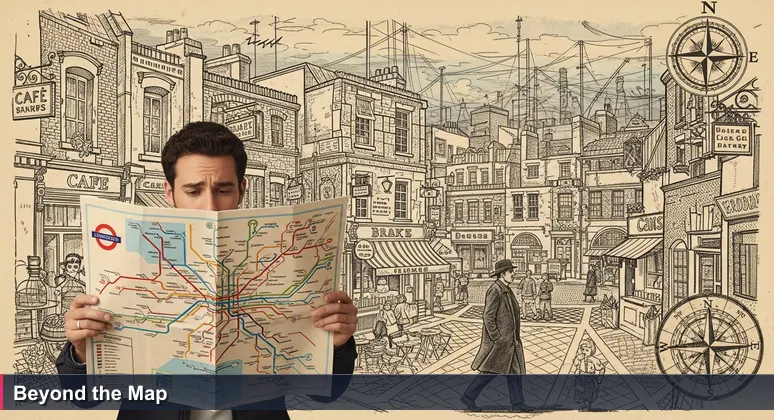
We've all been that person in a new city, clutching a map that shows the major stations but completely misses the vibrant network of backstreets, independent cafes, and local shortcuts just around the corner. For AI professionals navigating the UK scene, a similar gap exists between knowing event names and understanding the ecosystem's true connective tissue.
The stakes are higher than ever. The UK sector is in a pivotal "moment of truth," shifting decisively from visionary hype to the hard graft of operationalisation. As Julian David of techUK has urged, the focus must move from "vision to value," with the industry needing to avoid complacency in a fast-moving global race. This isn't just about attending talks; it's about plugging into the networks scaling AI in mission-critical environments across finance, healthcare, and government.
The UK holds a unique advantage with the third-largest amount of VC capital for AI globally, creating a "Goldilocks position" of significant opportunity. However, accessing that capital and building a meaningful career requires more than just showing up at the largest conferences; it demands learning to read the landscape like a local, discerning which gatherings are productive and which are merely theatre.
True mastery means understanding the unspoken hierarchies, the hidden gems, and the communities where the future is actually being built. This is your insider’s map to the living, breathing network of UK AI in 2026, where the journey through research pubs, builder’s huddles, and policy forums is where careers - and the future of UK AI - are forged.
In This Guide
- The UK AI Networking Landscape in 2026
- Key Trends Shaping AI Networking in 2026
- Mega-Meetups: London's Premier AI Gatherings
- Practitioner-Led Communities for Active Builders
- Flagship Conferences and National AI Summits
- Academic and Public Sector AI Networks
- Regional AI Hubs: Beyond London to Cambridge and Manchester
- The 2026 UK AI Networking Calendar: A Seasonal Guide
- Practical Networking Tips for AI Professionals in 2026
- From Tourist to Local: Your Path into the UK AI Ecosystem
- Frequently Asked Questions
Explore educational pathways for AI in the United Kingdom, from bootcamps to universities.
Key Trends Shaping AI Networking in 2026
The Execution Gap & Infrastructure Priority
The conversation has matured from "what is AI?" to "how do we make it work at scale?" Across retail and enterprise, the prevailing challenge is finding "AI that works" and successfully bridging the gap between pilot projects and production. This has made events focusing on MLOps, AI infrastructure, and data pipelines more valuable than ever. Industry panels at events like the AI Vision to Value Conference have emphasised this as the critical year for delivering the robust data and compute infrastructure needed for widespread adoption across the UK economy.
Agentic AI and Practical Realities
Reflecting global trends, there's a surge of interest in agentic systems - AI that can autonomously execute complex tasks. However, UK meetups are distinguished by tackling the practical security, governance, and integration challenges these systems pose in regulated sectors. Practitioners are driving a focus on deployment realities over theoretical potential.
"The 2026 trajectory is focused on the 'practical realities' of deploying such advanced AI in high-stakes, regulated sectors like finance." - Srimanth Rudraraju, London Stock Exchange Group
The Community-Led Surge
Alongside large commercial conferences, there’s a palpable resurgence of grassroots, practitioner-led communities that prioritise building and sharing over passive listening. This shift means the most valuable connections are increasingly made in rooms where code is discussed and problems are workshopped. A review of the Forum for AI London encapsulates this ethos: it’s described as a place of "Not networking theater... we build reality".
Mega-Meetups: London's Premier AI Gatherings
London Machine Learning Meetup
A cornerstone of the community, this remains one of the UK’s largest regular gatherings, frequently drawing 150-200+ attendees to venues like Riverbank House. Its consistent value lies in high-quality talks on frontier topics and unparalleled networking, with a famously strong attendance from senior researchers at Google DeepMind and Google UK.
Data & AI London
This quarterly behemoth serves as a major pulse-check for the industry, consistently drawing 400+ attendees per session. It blends technical depth with strategic business insights and is a prime venue for connecting with professionals driving enterprise adoption, often with strong sponsorship from major cloud providers.
AI Signals
This London-based community has solidified its reputation, having hosted more than 20 events since its 2022 revival and now boasting over 3,500 members. It focuses on enterprise-grade AI and deep learning, providing a vital forum for sharing real-world implementation stories and challenges faced by practitioners.
These mega-meetups are the central stations on the map - ideal for surveying the broad scene, staying on top of cutting-edge research, and making a high volume of initial contacts in the dense London ecosystem. Success here requires coming prepared with a succinct personal pitch and the confidence to engage with top-tier talent.
Practitioner-Led Communities for Active Builders
AI Tinkerers London
This represents the gold standard for exclusive, hands-on collaboration. It's a specialised group strictly for active builders - engineers, developers, and product folks who are shipping AI products. The discussion is unflinchingly tactical, centred on tools, failures, and architectures rather than theory. As highlighted by their events on their community platform, it's a space where practitioners build reality, not just discuss it.
Forum for AI London
Similar in spirit, this meetup has carved out a vital space for deep-dive technical discussions and collaborative problem-solving. The ethos here, as captured in member reviews, is fundamentally anti-spectacle: "Not networking theater... we build reality." This makes it a prime destination for those wanting to move beyond passive learning into active participation with peers facing similar technical hurdles.
If mega-meetups are London's main stations, these builder communities are the beloved local cafes - smaller, focused, and where regulars go to do real work. Your goal here must be contribution, not consumption. Success means asking detailed questions, sharing your own hard-won experiences, and following up on collaborative possibilities. These are where you find your true technical tribe and form the connections that accelerate real-world projects.
Flagship Conferences and National AI Summits
AI UK (March)
Organised by The Alan Turing Institute, the UK’s national institute for data science and AI, this flagship academic and policy showcase is held at the QEII Centre in Westminster. It focuses on grand challenges in defence, health, and the environment, attracting thousands of researchers, policymakers, and industry leaders to absorb the national strategy and frontier research.
The AI Summit London (June)
The premier large-scale commercial event, typically held at Tobacco Dock, is aimed squarely at enterprise deployment and ROI. Reviews from the 2026 event underscore its impact, with one attendee stating they were "literally blown away by the content, interest, and breadth... not to mention the size".
CogX Festival & World Summit AI
CogX is a leadership summit with a societal lens, exploring AI's impact on every sector. Events like the World Summit AI and the AI Innovation Forum are recognized for their commercial credibility, focusing on operationalising AI "beyond experimentation".
These flagship events require a strategic approach. Identify your top must-see speakers, but budget equal time for networking lounges and roundtables. The real value often happens in the corridors, where serendipitous conversations with fellow professionals from across the UK and beyond can spark crucial collaborations.
Academic and Public Sector AI Networks
University Access: Gateways to Cutting-Edge Research
The UK’s world-class university ecosystem offers remarkably open access through public seminars, providing a unique vantage point on foundational research. At the University of Cambridge, the Cambridge Centre for Data-Driven Discovery (C2D3) regularly hosts symposia, while the Computer Laboratory’s Artificial Intelligence Research Group Talks are a renowned series. Similarly, the University of Manchester’s Centre for AI Fundamentals hosts talks that actively link cutting-edge research with regional industry.
Public Sector and Policy Networks
A dedicated networking stream has emerged around the UK government's push for public sector AI adoption. The Civil Service AI Community, as celebrated in its one-year anniversary, now holds four in-person events across the UK annually. Additionally, bodies like Innovate UK Business Connect facilitate "Deep-Tech Horizon Scanning" sessions, connecting researchers, startups, and government funding bodies.
These networks are essential for professionals interested in the unique challenges of ethical, scalable AI in the public realm, from NHS Digital to defence and justice. Engaging here provides crucial insight into procurement, policy, and the practicalities of delivering AI for public good.
Regional AI Hubs: Beyond London to Cambridge and Manchester
Cambridge (Silicon Fen)
The ecosystem here orbits around the university and the semiconductor giant Arm, creating a vibe that is deeply technical, research-led, and connected to hardware-software co-design. Networking often happens organically in pubs after seminars at the Cavendish Lab or within the growing number of spin-out incubators, reflecting a culture built on long-term research relationships.
Manchester
The undisputed capital of the North’s AI scene, Manchester blends industrial heritage with digital innovation. The primary hub is the Manchester AI User Group, hosting 70-130+ attendees for talks on ethics, LLMs, and career development. The city has a strong focus on creative tech (CreaTech) and applied AI, with community spirit so strong it even spawned a 2026 story where a party for 50 practitioners was organised by an AI bot named "Gaskell".
Edinburgh & Oxford
Edinburgh is a powerhouse in robotics, natural language processing, and fintech, bolstered by the University of Edinburgh’s world-leading informatics department, resulting in a tight-knit and intellectually rigorous community. Oxford’s scene is similarly university-anchored, with a particular strength in biomedical AI and foundational model research, where events often connect pure research from the labs with commercial application in the surrounding science parks.
The 2026 UK AI Networking Calendar: A Seasonal Guide
Use this seasonal guide as a rhythmic tool to strategically plan your year, ensuring you're present at the anchor events that define the UK's AI agenda while leaving space for the perpetual cycle of weekly and monthly meetups.
The year begins with community re-starts; groups like AI Tinkerers London kick off January with focused "ship-it" energy. Spring brings the national agenda into view with AI UK in March, setting the tone for policy and research. The commercial conference season accelerates through April and May, with quarterly giants like Data & AI London drawing hundreds.
June represents the peak, dominated by the enterprise-scale The AI Summit London. After a slight summer slowdown perfect for workshops, the autumn surge arrives with leadership festivals like the CogX Festival in September/October and the restart of university seminar series. The year closes with community retrospectives in November and informal socials in December, where relationships are cemented.
Practical Networking Tips for AI Professionals in 2026
For Introverts & Strategic Newcomers
Effective networking in 2026's pragmatic climate is about quality, not just quantity. For those who find large events daunting, adopt The Two-Question Rule: set a modest goal of having one meaningful exchange where you ask two thoughtful questions, shifting focus from performing to learning. Tactics like arriving early, when rooms are half-full, or volunteering to help check people in can provide structure and immediate social credit with organisers.
Extracting Maximum Value: Before, During, and After
Preparation separates the tourist from the local. Before an event, check attendee lists on platforms like Meetup to identify 2-3 people you’d like to meet and review speakers' recent work. During the event, listen more than you talk; your goal is to be interested, not interesting. Frame conversations around execution - "I’m working on reducing LLM hallucination rates for a retail bank" invites deeper collaboration than "I work in AI."
The Non-Negotiable Follow-Up
The most critical step happens within 24 hours: the personalised follow-up. A generic "nice to meet you" is forgotten; reference your specific conversation. For example: "Great chatting about the challenges of fine-tuning models for regulatory documents. The paper you mentioned sounded fascinating." Suggest a concrete next step, like sharing a relevant article or a brief virtual coffee. This transforms a casual meetup chat into a professional connection, which is how even an AI-organised party in Manchester can lead to lasting collaborations.
From Tourist to Local: Your Path into the UK AI Ecosystem
Your journey from clutching the basic map to moving effortlessly through the ecosystem's backstreets follows a clear, phased path. The first step is to start as a tourist (Months 1-3). Attend one or two mega-meetups in your city and a large conference like The AI Summit. Your goal here is observation - absorb the scale, themes, and dynamics of the broad scene without pressure.
Next, you must find your neighbourhood (Months 4-6). Identify one practitioner-led community, such as AI Tinkerers or a specialised workshop series, and commit to attending consistently. Become a recognised face in a smaller, focused group where real work is discussed, moving from the expo floor to the builder's huddle.
True integration begins when you become a regular (Months 6-12). This phase is defined by contribution. Share a key learning from your work during a meetup discussion, answer questions in the community's online Slack, or introduce two peers who should know each other. You transition from consumer to participant.
The final stage is to build your own landmark (Year 2+). Consider speaking at an event, co-organising a workshop, or authoring a blog post that synthesises community insights. This is how you evolve from a member into a pillar of the community, helping to shape the very ecosystem you once navigated as a newcomer. You stop collecting event names and start strengthening the network itself.
Frequently Asked Questions
What are the best AI networking events in the UK for 2026?
In 2026, top events include the London Machine Learning Meetup, which draws 150-200+ attendees and features insights from Google DeepMind researchers, and the AI Summit London in June, focusing on enterprise deployment. Regional options like Manchester's AI User Group, with 70-130+ attendees, offer vibrant local scenes beyond the capital.
How can I find AI communities in regions like Cambridge or Edinburgh?
Cambridge's ecosystem centres on the university and Arm, with public seminars like those from C2D3, while Edinburgh has a tight-knit community in robotics and NLP, supported by the University of Edinburgh. Both regions host events that welcome outsiders for deep technical discussions and research connections.
As a newcomer to AI networking, how can I make the most of these events?
Start by setting a modest goal, such as asking two thoughtful questions at mega-meetups like Data & AI London, which attracts 400+ attendees. Volunteering to help with check-ins can ease you into conversations, and always follow up within 24 hours with personalised references to your discussions.
What are the key trends in UK AI networking for 2026?
The focus has shifted to execution, with events emphasising MLOps and AI infrastructure, as highlighted at the AI Vision to Value Conference. There's also growing interest in agentic AI, with meetups addressing practical challenges in regulated sectors like finance, reflecting the UK's push from vision to value.
Are there events specifically for AI practitioners and builders?
Yes, groups like AI Tinkerers London are exclusive to active builders, focusing on hands-on problem-solving and tool discussions. Similarly, the Forum for AI London hosts deep-dive technical sessions, often with workshops from partners like AWS, ideal for those shipping AI products in the UK's tech hubs.
Learn where to find junior developer roles at UK tech startups next year from this insightful resource.
Learn about AI career opportunities at companies like DeepMind and Arm in the UK.
This guide covers the highest paying tech jobs in the UK at companies like Meta and OpenAI.
This review covers the best places for tech entrepreneurs to work in the UK next year.
The 2026 outlook for tech salaries versus cost of living in the UK offers key insights for developers and engineers.

Irene Holden
Operations Manager
Former Microsoft Education and Learning Futures Group team member, Irene now oversees instructors at Nucamp while writing about everything tech - from careers to coding bootcamps.