









Top 10 AI Startups to Watch in Surprise, AZ in 2026
By Irene Holden
Last Updated: March 28th 2026
Too Long; Didn't Read
Nuclearn and Persefoni AI top the list of AI startups to watch in Surprise, AZ in 2026, with Nuclearn's Vertical AI for nuclear safety backed by a $115 million fund and serving over 70 plants, while Persefoni AI leads in carbon accounting with Series C funding. These startups excel by tackling real-world problems in aerospace and healthcare, thriving in Surprise's growing ecosystem fueled by local talent and proximity to major employers like Banner Health and Honeywell.
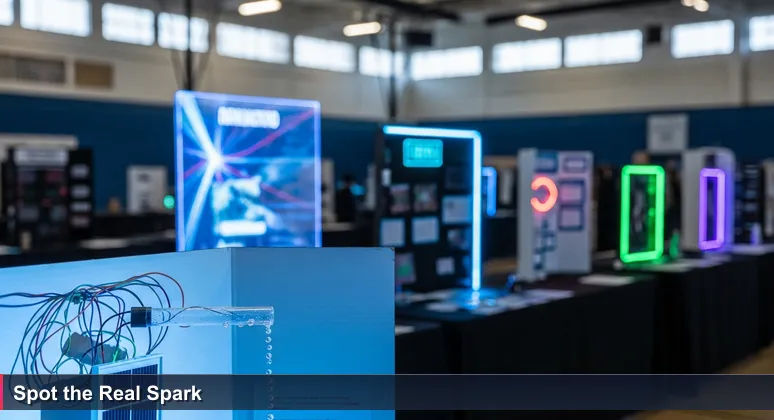
Evaluating a bustling science fair requires looking past the polished presentations to find the projects rooted in genuine problem-solving. This same principle defines the artificial intelligence landscape emerging in Surprise, Arizona. While coastal hubs chase novelty, Surprise is becoming a crucible for applied intelligence, where startups build AI out of necessity, solving gritty, real-world issues specific to the West Valley and beyond.
The growth is fueled by a powerful local formula: a significantly lower cost of living compared to coastal tech cities, immediate proximity to major employers like Luke Air Force Base, Banner Health, and Honeywell, and the foundational infrastructure of massive data centers built to power AI computation. As noted by the Arizona Technology Council, states with strong digital infrastructure and pro-innovation policies are poised to win the AI era.
This foundation is being activated by visionary projects. The opening of Spark Surprise, the city's dedicated innovation hub, alongside the potential of SoftBank's proposed $1 trillion AI & robotics hub for the region, is creating a fertile ground for practical innovation. Industry leaders recognize the shift, with AZ Big Media noting, "It is a very exciting time in Arizona for the development of AI... we expect Arizona to become a global hub."
The result is a quiet revolution. The AI future being built here isn't about the next viral chatbot; it's about applying focused intelligence to hard problems in healthcare, advanced energy, manufacturing, and logistics. It's the spark of true, impactful innovation, taking root where it's needed most.
Table of Contents
- The Spark of Applied AI in Surprise
- NeuralNet BioTech Inc.
- Intelligent Clinical Systems Inc.
- qBotica
- Stax.ai
- RadiusAI
- Koantek
- Peerlogic
- Lotus Labs
- Persefoni AI
- Nuclearn
- The Future of West Valley Innovation
- Frequently Asked Questions
This detailed guide to AI employment in Surprise for 2026 provides key strategies and data.
NeuralNet BioTech Inc.
NeuralNet BioTech Inc. exemplifies the deep-tech frontier of Surprise's AI ecosystem, moving beyond traditional biotech approaches. The company specializes in AI-native biology, developing high-speed neural network models specifically designed to analyze complex biological datasets. This allows for rapid interpretation of genetic, proteomic, and clinical information, directly accelerating the development of new diagnostic tools.
Their traction is evidenced by their recognition as a finalist in the competitive 2026 IdeaFunding pitch competition, where they are tackling pressing regional health challenges. This aligns with Arizona's broader momentum, as the state is building a significant future in applied intelligence across sectors like life sciences.
A key success factor is their strategic leverage of local assets. The company cites direct access to Arizona’s "deep bench of engineering talent" and the growing life sciences corridor as fundamental to their development. This localized talent pool, combined with the region's lower operational costs, allows for focused R&D.
For aspiring AI professionals, their progress is a case study in specialized, vertical application. The critical metric to watch is their progression through Arizona’s startup accelerators and the formation of potential partnerships with major West Valley healthcare providers like Banner Health, which would validate their technology in real-world clinical settings.
Intelligent Clinical Systems Inc.
Intelligent Clinical Systems Inc. targets a critical pressure point in healthcare: diagnostic errors stemming from cognitive overload in fast-paced clinical environments. Their solution builds real-time decision support layers that integrate directly into existing clinical workflows, providing clinicians with actionable insights to improve patient outcomes and safety.
Like its peer NeuralNet BioTech, the company gained significant validation as a finalist in the tech track of the 2026 IdeaFunding competition. Their unique advantage, however, is hyper-local. Their proximity to one of the nation's largest senior populations in nearby Sun City provides a rich, localized dataset for developing and refining geriatric care AI, a sector with immense need.
This focus on solving for the region's specific demographic aligns with the broader trend of AI flourishing in Arizona's tech sector by addressing tangible local challenges. Their model is inherently scalable, and success in the complex senior care market could make them an attractive asset.
The key indicator for their trajectory will be pilot deployments within West Valley clinical networks. Success here would not only prove their efficacy but could position them as a prime acquisition target for larger healthcare IT systems seeking to enhance patient safety protocols and tap into the growing silver tech market.
qBotica
In a region dense with manufacturing, logistics, and defense suppliers, qBotica addresses the pervasive challenge of modernizing entrenched business processes. The company’s hyper-automation platform, Doqument, combines Robotic Process Automation (RPA) with AI to intelligently process both structured and unstructured document workflows, tackling the "last mile" of enterprise automation.
Their key differentiation is a practical focus on integration. qBotica offers an "Automation Ecosystem" specifically designed to bridge legacy systems still prevalent in West Valley industrial businesses, turning manual and error-prone operations into streamlined, AI-driven processes. This practical, hybrid approach is highlighted among other innovators on Built In’s list of Arizona Machine Learning Startups.
Their solution is perfectly attuned to local economic drivers. As companies supplying entities like Luke Air Force Base or regional logistics hubs seek greater efficiency and accuracy, qBotica’s technology delivers immediate operational value. This aligns with Arizona's broader advantage in building applied intelligence for core industries.
The growth indicator to watch is their expansion within the West Valley’s robust supply chain and manufacturing sectors. Success in this embedded, practical domain would solidify their position as a critical tool for the region's industrial base, enabling smarter and more efficient desert manufacturing.
Stax.ai
Stax.ai attacks a universal business inefficiency: the manual drudgery and error-prone nature of processing invoices, contracts, and forms. The company uses advanced NLP and machine learning for high-speed extraction of structured data from messy, unstructured documents, automating a critical back-office bottleneck for enterprises.
As a portfolio company of the Arizona-focused AZ-VC, which launched its second fund to scale local startups, Stax.ai is strategically capitalized for growth. This backing underscores its position within a cohort of companies recognized among the top Arizona AI startups solving practical business problems.
Their expansion is tightly focused on the Phoenix metro's economic fabric, specifically targeting the region's growing logistics and financial services firms that drown in paperwork. This aligns with the expert insight for 2026 that valuable companies are those building "specialized tools" rather than chasing generic models - a perfect description of Stax.ai's focused document intelligence platform.
The critical metric for their ascent will be their client acquisition rate within Phoenix's banking and logistics sectors. A successful Series B round would signal their transition from a promising productivity tool to an essential piece of enterprise infrastructure, potentially making them a cornerstone of the region's fintech and supply chain evolution.
RadiusAI
RadiusAI solves a common form of operational blindness in retail and healthcare, where valuable insights remain trapped in passive video feeds. Their technology provides real-time computer vision analytics using proprietary "Always-On" software, transforming existing security camera infrastructure into intelligent sensors that track customer behavior, inventory levels, and safety events autonomously.
Their solution is notably hardware-agnostic, allowing businesses to unlock new data layers without costly equipment upgrades. This practical, software-first approach has already secured them a significant footprint in West Valley retail centers and clinical environments, as noted among other innovators on Built In’s list of Arizona machine learning startups.
The timing aligns perfectly with sector-wide transformation. As Arizona's retail sector increasingly relies on data-driven strategy for inventory and customer engagement - a trend detailed in reports on how AI agents are reshaping retail - RadiusAI’s platform is positioned for rapid scaling.
The key indicator for their growth will be the expansion of deployments within major retail chains and healthcare facilities across the Valley. Success in these venues would validate their system as essential infrastructure for operational intelligence, moving computer vision from a security tool to a core business analytics platform.
Koantek
Koantek addresses a critical stumbling block in the AI adoption journey: the notorious "pilot to production" gap. Many businesses experiment with AI but struggle to deploy reliable, scalable systems. Koantek provides cloud-native AI and data engineering solutions, specializing in the crucial MLOps and Generative AI implementation phase that bridges this divide.
Following a venture round in late 2024, the company is fueling expansion into these specialized services. Their focus aligns directly with an expert shift noted for 2026, where the most valuable companies are those building the essential "guardrails, orchestration layers, and specialized tools" that enable AI to work reliably in enterprise settings, rather than just building new models.
Their success is a bellwether for the maturity of Arizona's applied AI services layer. As detailed in analysis of Arizona’s tech investments, the state's growth is increasingly about specialized applications and the infrastructure to support them, moving beyond hardware into sophisticated software and services.
The critical trajectory to watch involves their partnerships with West Valley businesses in aerospace, like Honeywell, and advanced manufacturing firms seeking to integrate GenAI. Koantek's growth will signal how effectively local industries are transitioning from AI experimentation to operational transformation, solidifying the region's status as a practical innovation hub.
Peerlogic
Peerlogic targets a specific and costly inefficiency in healthcare operations: missed opportunities and friction in patient communication for dental and medical practices. The company uses conversational AI to analyze patient phone calls in real-time, providing immediate insights to front-office staff to improve scheduling, case acceptance, and overall practice revenue.
Backed by the Arizona-focused venture firm AZ-VC, Peerlogic operates with a highly scalable software-as-a-service (SaaS) model. This model is perfectly suited for the fragmented but dense market of private practices across the West Valley and the senior-focused community of Sun City, where efficient patient interaction is paramount.
Their focus on a niche vertical aligns with the expert insight that 2026's winning AI companies are those providing specialized solutions, a trend highlighted in discussions about AI startups to watch. By embedding AI directly into the communication workflow, they turn routine calls into data-driven opportunities for growth.
The critical indicator for their trajectory will be their market saturation within local healthcare provider networks. Success in becoming an essential revenue intelligence platform for small and mid-sized practices could lead to rapid organic growth or position them as an attractive acquisition target for larger healthcare communications or practice management software companies.
Lotus Labs
Lotus Labs takes a distinctly human-centric approach to clinical AI, developing its Padmé AI platform to enhance workflows with a primary focus on reducing nurse burnout and enhancing patient safety. Under CEO Anjali Nennelli, the company prioritizes human-AI collaboration over pure automation, a philosophy that resonates deeply in care environments.
This commitment to the frontline experience has earned them recognition, as they were ranked a top AI company in Arizona by Clutch. Their differentiation lies in steadfastly prioritizing the well-being of clinicians and patients, addressing a critical pain point in the healthcare system that purely efficiency-driven tools often overlook.
The company’s location is strategically significant. The West Valley is home to a massive healthcare infrastructure catering to the large senior communities of Sun City, providing a real-world proving ground for assistive technologies that must balance efficacy with empathy. This aligns with the broader trend of AI flourishing in Arizona by solving tangible, local challenges.
The key metric for their impact will be the deepening of integrations with major West Valley hospital systems. Success in these deployments would position Lotus Labs not just as a tool vendor, but as a prime candidate to define the future of assistive, safety-first AI in nursing and clinical support.
Persefoni AI
Persefoni AI tackles one of the most complex and rapidly growing corporate challenges: the daunting regulatory and operational burden of carbon accounting. The company provides an AI-driven climate management platform, positioning itself as the essential "ERP of Carbon" for global enterprises. Their technology automates the ingestion and calculation of massive carbon footprints, delivering audit-ready data to comply with tightening climate disclosure rules.
Their momentum is substantial, having secured a Series C round in early 2025. This positions them as a clear category leader in the Vertical AI/ESG space, a sector gaining immense traction as sustainability shifts from voluntary reporting to a mandatory business imperative. Their growth is part of the broader wave of tech investment flowing into Arizona, particularly into applied, sector-specific intelligence.
As a venture-scale success story, Persefoni demonstrates the high-growth potential that the Arizona tech ecosystem can produce. Their presence contributes to the state's rising profile, underscored by reports that Phoenix now ranks as the No. 1 large city for startups nationally.
The critical indicators for their future are the expansion of their client list among Arizona’s major corporations and their clear path toward an eventual IPO. As regulatory pressures mount globally, Persefoni’s AI-powered platform is poised to become indispensable infrastructure for corporate sustainability, marking a significant win for the region's capacity to foster unicorn-caliber companies.
Nuclearn
Sitting at the top of the rankings, Nuclearn embodies the pinnacle of Surprise's specialized AI ecosystem. The company applies Vertical AI and LLMs to automate extraordinarily complex and safety-critical workflows within nuclear power plants, a domain where error is not an option. Founded by nuclear operations veteran Brad Fox and backed by the inaugural fund from AZ-VC, their technology is built with non-negotiable "trust and traceability" to prevent AI hallucination.
Their traction is unparalleled, with software already supporting operational teams at over 70 nuclear plants across North America. This first-mover advantage in a high-barrier, specialized industry perfectly aligns with the expert insight that 2026's winners are those with purpose-built technology for specific, high-stakes verticals, a trend noted in analyses of Arizona’s tech investments.
Nuclearn’s success is strategically significant for the region. As Arizona positions itself as a leader in both semiconductors and advanced energy, Nuclearn operates at the convergence, providing the intelligent operating system for next-generation nuclear facilities. Their work exemplifies the deep, applied innovation that defines the local scene.
As the de facto platform for an industry undergoing a modern renaissance, Nuclearn is not just a startup to watch but a crown jewel. Their growth solidifies the West Valley's capacity to produce world-class, mission-critical technology, contributing powerfully to the narrative of Phoenix emerging as a global innovation hub built on solving fundamental challenges.
The Future of West Valley Innovation
The trajectory of these startups brings the science fair metaphor full circle. The most promising innovations were never the glittering generic demos, but those solving tangible problems - like the solar-powered irrigation rig for the desert. Similarly, the AI future being built in Surprise is defined by applied intelligence tackling the hard, specialized challenges in its own backyard: nuclear safety, senior healthcare, desert manufacturing, and carbon accountability.
This collective focus on vertical, mission-critical solutions underscores a broader strategic advantage for the West Valley. The region’s lower costs, proximity to defense and health tech anchors, and expanding data center infrastructure create a unique crucible where necessity drives invention. This environment is attracting attention and capital, including from Silicon Valley investors looking beyond traditional hubs for grounded innovation.
The opening of Spark Surprise and the vision for a massive AI and robotics hub signal that this is just the beginning. As explored in discussions on Arizona's digital transformation, the state is moving "from desert to digital" by leveraging its industrial strengths as a foundation for technological leadership.
The spark of true innovation, therefore, isn't about chasing the next hype cycle. It's about the steady, focused work of building the guardrails, orchestration layers, and specialized tools that allow AI to function reliably in the real world. In the West Valley, that spark has found fertile ground, promising a future where technology is measured not by its novelty, but by its durable impact on the world it serves.
Frequently Asked Questions
Why is Surprise, AZ becoming a hotspot for AI startups in 2026?
Surprise offers a lower cost of living than coastal tech hubs, attracting talent and reducing overhead for startups. Proximity to major employers like Intel and Banner Health, plus the new Spark Surprise innovation hub, creates a fertile ground for applied AI focused on real-world problems in aerospace, healthcare, and manufacturing.
How did you rank these top 10 AI startups?
We ranked them based on specialized impact, traction, and integration into Surprise's local economy. For instance, Nuclearn topped the list due to its critical role in nuclear energy with software used in over 70 plants, while others like NeuralNet BioTech gained recognition through Arizona's 2026 IdeaFunding competition.
What industries are these AI startups targeting in the West Valley?
They focus on high-impact sectors like healthcare, manufacturing, and logistics, leveraging local strengths. Examples include Lotus Labs addressing nurse burnout for senior care near Sun City, and qBotica automating workflows for businesses supplying Luke Air Force Base, tapping into the region's industrial base.
Are there any funding success stories among these startups?
Yes, several have secured significant investment, reflecting Surprise's growing ecosystem. Persefoni AI raised a Series C round in 2025, and Nuclearn is backed by AZ-VC's $115M fund, showcasing how local ventures are attracting capital to scale in specialized vertical AI.
What advantages does the Phoenix-Surprise area offer for someone pursuing an AI career?
The region provides a vibrant job market with roles at companies like Honeywell and startups, plus a lower cost of living in Surprise, AZ, compared to coastal hubs. With university-linked talent in the Phoenix-Tempe corridor and projects like SoftBank's proposed AI hub, it's an emerging destination for AI professionals.
Get a breakdown of Surprise's AI tech bootcamps in 2026 with insights into financing and ROI.
This resource explains how to negotiate AI salaries using 2026 market data from Surprise, AZ.
For a complete guide on how to become an AI engineer in Surprise, AZ in 2026, check out this detailed article.
Learn which Surprise tech jobs offer high salaries without a college degree in 2026.
For 2026 AI job market trends in Surprise, AZ, check out this analysis.

Irene Holden
Operations Manager
Former Microsoft Education and Learning Futures Group team member, Irene now oversees instructors at Nucamp while writing about everything tech - from careers to coding bootcamps.