









How to Become an AI Engineer in Stockton, CA in 2026
By Irene Holden
Last Updated: March 27th 2026
Quick Summary
To become an AI engineer in Stockton by 2026, commit to a 12-month journey mastering Python, PyTorch, and Azure deployment, tailored to the Central Valley's key industries like healthcare and logistics. Dedicate 10 to 15 hours weekly to build a portfolio with local projects that impress employers such as Sutter Health and the Port of Stockton, all while benefiting from Stockton's lower cost of living compared to the Bay Area.
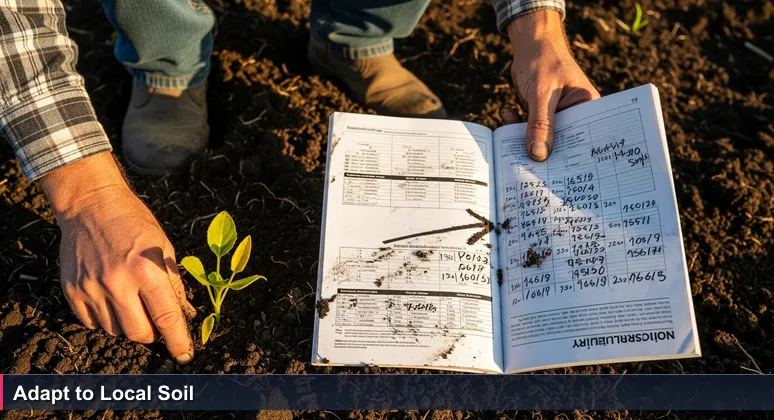
Every instruction manual has a moment of truth, where generic steps meet stubborn, local reality. For a farmer in the Delta, it's when the textbook planting date yields a stunted crop. Similarly, a generic AI roadmap will fail to take root in Stockton without adaptation to our specific terrain of healthcare, logistics, and agribusiness. Your success begins not with advanced algorithms, but with the right local conditions: time, tools, and mindset.
You must commit 10-15 hours weekly to consistent learning. This foundational investment is non-negotiable, mirroring the patience required to cultivate Central Valley crops. Equip yourself with a reliable computer (8GB+ RAM recommended) capable of running data science environments. While a strong mathematical foundation in algebra and statistics is beneficial, the core prerequisite is a shift in perspective.
The role in 2026 is less about inventing new algorithms and more about becoming an AI Operator. As industry analysis notes, the market now values professionals who can deploy, integrate, monitor, and continuously improve AI systems within real products. This is precisely what local employers like Sutter Health need.
This roadmap is designed for career-changers and professionals in the Stockton area. Its effectiveness hinges on applying every skill to the "soil" of our key industries. With Andrei Kurtuy, CMO of Novorésumé, noting that 39% of hiring managers are increasing interviews to verify "candidate authenticity," your genuine, locally-applied proof of work will be your greatest asset.
Steps Overview
- Your AI Journey Starts Here: Prerequisites
- Planting Seeds: Master Programming & Data Skills
- Tilling the Soil: Grasp Math & ML Fundamentals
- Cultivating the Crop: Advanced Deep Learning & AI Frameworks
- Local Grafting: Deploy AI on the Cloud for Stockton Industries
- Preparing for Harvest: Build Your Hybrid Engineer Portfolio
- How to Know You've Succeeded: Your AI Readiness Checklist
- Common Questions
Learn about Stockton's AI job market and education pathways in 2026 from this comprehensive guide.
Planting Seeds: Master Programming & Data Skills
Just as a farmer prepares the Delta's unique soil, you must first cultivate the universal language of AI and its fuel: data. Python is that language, and you cannot build or understand models without mastering how to manipulate and analyze data programmatically. This initial cultivation is where many stumble by rushing toward "cool AI" tools, but a shaky foundation here will cause everything that follows to crumble.
Your first task is to achieve genuine Python proficiency, focusing on data structures, control flow, and functions. Immediately apply this by mastering key libraries: NumPy for numerical operations and Pandas for data cleaning and aggregation. A practical Stockton exercise is to download a public San Joaquin County crop yields dataset and use Pandas to find the top three crops by acreage.
Concurrently, establish your SQL foundation. Data in enterprises lives in databases, and the ability to query it is non-negotiable. Local employers like Sutter Health explicitly list SQL as a requirement for AI roles. Interactive platforms like DataCamp are excellent for building this muscle memory through hands-on practice.
Verification: You know you've succeeded when you can ingest a CSV of Stockton housing prices, clean missing values with Pandas, and write a SQL query to find the average price by zip code. Joining a structured program, such as Nucamp’s Back End, SQL and DevOps with Python bootcamp, can provide the guided environment needed to firmly plant these essential seeds.
Tilling the Soil: Grasp Math & ML Fundamentals
With the soil of programming turned, you now till the conceptual bedrock: mathematics and machine learning fundamentals. This is where you move from merely using tools to understanding the "why" behind algorithms, preventing you from being just a script-runner and enabling you to debug and explain your models. It's easy to feel overwhelmed here, but the goal is a functional understanding, not theoretical mastery.
Focus on applied math in three key areas, as outlined in comprehensive AI roadmaps:
- Linear Algebra: Understand vectors and matrices - the core structures of neural network data.
- Calculus: Grasp derivatives and gradients, which drive the optimization of every model.
- Statistics & Probability: Learn distributions, mean, variance, and evaluation metrics like precision and recall.
Immediately apply these concepts by learning core machine learning with Scikit-learn. Implement classic algorithms like linear regression and decision trees, mastering the workflow from train/test split to evaluating for overfitting. Then, complete your first end-to-end project with local relevance. For instance, use historical water usage data to build a regression model predicting monthly demand in Stockton.
Warning: Persistence is key. As discussions on learning AI development note, the initial conceptual hurdle is significant but surmountable with consistent, project-based practice.
Cultivating the Crop: Advanced Deep Learning & AI Frameworks
This is where you transition from fundamentals to the state-of-the-art tools used to build modern AI applications, cultivating specialized skills that separate an AI engineer from a general data analyst. Proficiency here means moving beyond tutorials to creating solutions for the Central Valley's unique challenges.
Choose and master one deep learning framework deeply. PyTorch has become the preferred framework for new research and development due to its flexibility and is the first to receive new techniques. Learn to build, train, and evaluate neural networks by constructing specialized models. For computer vision, build a Convolutional Neural Network (CNN) to identify common crop diseases in San Joaquin Valley tomatoes - a project that demonstrates immediate local value.
Architecting Generative AI systems is now essential. This means learning to work with Large Language Models via APIs and mastering prompt engineering and Retrieval-Augmented Generation (RAG) architectures, which ground AI responses in specific data. As highlighted in guides on portfolio projects that get you hired, building a RAG chatbot that answers questions using a PDF of California agricultural regulations is perfect proof of skill.
Common Mistake: Trying to learn TensorFlow and PyTorch simultaneously. Achieve depth in one first. Specialized, project-focused training, like a dedicated AI bootcamp, is ideal for navigating this complex phase and building deployable expertise.
Local Grafting: Deploy AI on the Cloud for Stockton Industries
An AI model trapped in a Jupyter notebook provides zero business value. True cultivation requires grafting your skills onto the robust rootstock of industry systems by deploying models into scalable, secure cloud environments. For Stockton, this means mastering the platforms our major employers use daily.
Microsoft Azure is a strategic choice. Major local employers like Sutter Health and San Joaquin County utilize Azure and Azure Databricks for their data infrastructure. You must learn to package a trained model, deploy it as a scalable API endpoint, and set up monitoring for performance and data drift. A tangible step is obtaining the Microsoft Certified: Azure AI Fundamentals (AI-900) certification, a credible and affordable credential that validates your cloud-AI knowledge.
Your proof is a "systems-first" portfolio project that mirrors a real local need. Build one end-to-end, fully operational project rather than several partial attempts. For example:
- For Healthcare: A diagnostic support tool using a CNN to analyze medical images, deployed on Azure with a HIPAA-compliant data pipeline.
- For Logistics: A predictive maintenance model for Port of Stockton equipment, ingesting real-time sensor data via a cloud pipeline.
- For Public Sector: A RAG-powered chatbot for county websites that answers resident questions using official documents.
Warning: Deployment and MLOps are complex. Focus on depth. As emphasized in analyses of projects that get you hired, a single, well-documented deployed project is far more valuable than multiple theoretical notebooks.
Preparing for Harvest: Build Your Hybrid Engineer Portfolio
The final preparation for harvest is assembling your proof of work. In 2026, the job market values authentic, demonstrated skill over credentials alone. Your portfolio is that authentic proof, showcasing your ability to graft advanced AI onto the rootstock of Stockton's core industries, making you a resilient "hybrid" candidate.
Refine 2-3 "killer" portfolio projects from your deployment phase. Polish the code, document everything on GitHub, and create detailed write-ups explaining the business problem, your technical approach, and the results. Structure it like a product showcase, not an academic thesis. Include live demos where possible, like a web app where users upload a plant leaf image for a health prediction served from your cloud endpoint.
Develop hybrid industry knowledge alongside your technical depth. Research your target companies: understand healthcare data standards (FHIR/HL7) for Sutter Health, or supply chain logistics for the Port of Stockton or Amazon fulfillment centers. Resources like the UC Davis AI Center highlight the importance of applied, sector-specific AI. This combination is your competitive advantage.
Engage actively with the tech community. Share your projects on LinkedIn, contribute to open-source AI projects, and attend local meetups in Stockton or online groups connected to Bay Area and Sacramento hubs. As noted in discussions on AI engineer skills, building this network is often what leads to opportunities, helping you bypass the cold-application process and successfully bring your cultivated skills to market.
How to Know You've Succeeded: Your AI Readiness Checklist
You'll know you're ready to pursue an AI Engineer role in Stockton when you can confidently check the boxes on this practical checklist. These are not theoretical ideals but tangible benchmarks that hiring managers, weary of AI-generated resumes, will look for as proof of authentic skill.
First, you must have technical proof: a public portfolio with 2-3 deployed projects that solve problems relevant to the Central Valley's healthcare, agricultural, or logistics sectors. Generic tutorial projects won't suffice; yours must demonstrate local acumen. Second, possess framework proficiency, meaning you can build and modify neural network architectures using PyTorch and integrate third-party LLMs into applications.
Your checklist continues with deployment competence. You need hands-on experience taking a model from a notebook to a scalable cloud endpoint on Azure or AWS. Finally, demonstrate local industry insight. Can you knowledgeably discuss the business drivers of key employers like Sutter Health or the Port of Stockton and articulate how AI addresses their specific challenges?
As reporting in The Stockton Record notes, the emphasis is on verifying real capability. Your journey mirrors that of a skilled farmer: you've learned universal principles, but your success depends on how well you've adapted them to Stockton's unique soil. By meeting these criteria, you transition from a passive learner to an active cultivator, perfectly positioned to grow your career where it matters most.
Common Questions
How long does it typically take to become an AI engineer in Stockton, CA?
With a dedicated 10-15 hours per week, you can follow a structured 12-month roadmap tailored to Stockton's industries. This timeline covers everything from Python basics to deploying AI models on cloud platforms like Azure, preparing you for roles by 2026.
Can I break into AI engineering in Stockton without a traditional degree?
Yes, many Stockton employers, such as Sutter Health and the Port of Stockton, prioritize practical skills over degrees. Affordable bootcamps like Nucamp's programs can help you build the needed expertise in SQL, PyTorch, and cloud deployment, making a career change feasible.
What are the best AI job opportunities in Stockton for someone starting out?
Look into healthcare, agriculture, and logistics sectors, where employers like St. Joseph's Medical Center and Amazon fulfillment centers are integrating AI. For example, roles might involve building predictive models for crop yields or optimizing supply chains, leveraging Stockton's central location in the Central Valley.
Is Stockton affordable for someone transitioning into AI engineering?
Absolutely, Stockton offers a lower cost of living compared to the Bay Area, allowing you to focus on learning without high expenses. This affordability, combined with access to tech hubs in Sacramento and the Bay Area, makes it a strategic base for building your AI career.
What's the most critical skill to learn first for AI engineering in Stockton?
Start with Python and data fluency using libraries like Pandas and NumPy. A practical project, such as analyzing local data on San Joaquin County crop yields, will build the foundational skills needed for AI work in Stockton's key industries like agriculture and logistics.
Discover the best startups for junior developers in Stockton based on mentorship and community roots.
This guide highlights AI networking and community events in Stockton for practical skill-building.
Find details on healthcare and logistics AI jobs in Stockton for 2026.
This complete guide to machine learning salaries by experience level in Stockton, CA offers valuable data.
This guide covers the best AI startups to monitor in Stockton, California in 2026 based on practical innovations.

Irene Holden
Operations Manager
Former Microsoft Education and Learning Futures Group team member, Irene now oversees instructors at Nucamp while writing about everything tech - from careers to coding bootcamps.