









Top 10 AI Startups to Watch in Seattle, WA in 2026
By Irene Holden
Last Updated: March 25th 2026
Too Long; Didn't Read
Union.ai and Supio are the top AI startups to watch in Seattle for 2026, leading a vibrant ecosystem of specialized players. Union.ai's robust infrastructure for AI workflows grew revenue 3x in 2025, while Supio's legal tech platform secured a $60M Series B, reflecting Seattle's strengths in foundational tech and vertical AI applications.
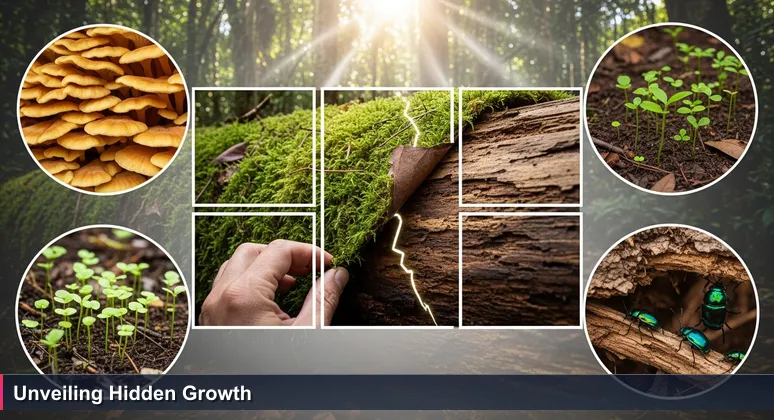
The most important story in Seattle's Hoh Rainforest isn't about the tallest cedar. It’s happening in the damp, unseen spaces of the nurse log, where entire worlds of fungi, insects, and saplings thrive on the foundational decay of what came before. By 2026, the region's AI startup scene is a direct parallel: a vibrant, layered ecosystem feeding on the immense talent and infrastructure of its cloud-era predecessors like Amazon and Microsoft.
This is not a loud disruption but a "quiet boom" of specialized players, solidifying Seattle’s status as what Ascend.vc’s Kirby Winfield calls the "second-most important city in the United States for AI." The shift is away from foundational models and toward vertical "killer applications" that solve deep industry problems, a maturation fueled by spinouts from the University of Washington and the AI2 Incubator’s $80M fund.
"Seattle is now the second-most important city in the United States for AI." - Kirby Winfield, General Partner, Ascend.vc
As detailed in analysis of the region's AI moment, this ecosystem is characterized by interdependent niches. The following map of ten companies isn't a simple ranking of saplings; it’s a guide to a mature, second-wave biome where infrastructure providers, vertical specialists, and automation engines all draw strength from Seattle's unique soil of research, talent, and capital.
Table of Contents
- Seattle's AI Ecosystem: The Quiet Boom
- Union.ai
- Supio
- Statsig
- Phaidra
- Overland AI
- Dropzone AI
- Carbon Robotics
- Sift AI
- Avante AI
- Color42
- Frequently Asked Questions
A comprehensive guide for AI professionals in Seattle covers everything from roles to networking.
Union.ai
In the race to deploy AI, the most critical bottleneck isn't the model itself, but moving from a brittle prototype to reliable, scaled production. Seattle’s Union.ai is building the essential, unglamorous orchestration layer that makes dynamic AI workflows durable. Founded by Ketan Umare (ex-Lyft, Amazon) and Haytham Abuelfutuh, the company commercializes the open-source Flyte technology originally developed at Lyft.
"Moving AI from prototype to production is the single biggest bottleneck for enterprises today." - Ketan Umare, Co-founder & CEO, Union.ai
Its core product, Flyte 2, allows for "pure Python" authoring of crash-resilient workflows, effectively turning fragile AI pipelines into dependable products. This traction proves the acute market need: the company grew revenue 3x in 2025, serves notable customers like Spotify and Hopper, and secured a $19M Series A in early 2026 to scale operations. As detailed in coverage of their funding round, this investment fuels their mission to be the foundational infrastructure for the next generation of AI applications.
Positioned as the robust root system of the local AI biome, Union.ai’s rise is a foundational bet on Seattle’s strength in developer tools and enterprise software. As the industry matures, demand for this behind-the-scenes plumbing only intensifies, cementing its role as a critical piece of the region's enterprise AI stack.
Supio
While many chase horizontal AI applications, the most lucrative opportunities often lie deep within a single industry's workflows. Seattle’s Supio is a masterclass in vertical AI, specifically revolutionizing legal research for personal injury and mass tort attorneys. Its platform helps lawyers surface critical case information from massive, unstructured datasets orders of magnitude faster than traditional methods.
This speed-to-insight directly translates to winning cases and securing larger settlements, creating immense value and client "stickiness." This clear, high-impact value proposition propelled Supio to the top of Seattle’s 2025 legal tech funding leaderboard, where it closed a massive $60M Series B round. The funding surge underscores the legal industry's accelerated digital transformation and the premium placed on tools that deliver a decisive edge in litigation.
Supio exemplifies the "quiet boom" of specialized, vertical applications thriving beneath Seattle's tech canopy. As noted in mapping of the region's enterprise AI landscape, such focused solutions are a hallmark of the ecosystem's maturity. Watch for Supio to expand from its litigation-heavy core into adjacent legal verticals, potentially becoming a dominant, Seattle-based force in a multi-billion dollar industry.
Statsig
How do product teams know if their new AI feature genuinely improves the user experience or merely adds complexity? In an era of rapid iteration, this question becomes existential. Statsig provides the definitive answer by bringing sophisticated, "Facebook-scale" experimentation and feature flagging tools to companies of all sizes.
Founded by former Facebook engineers, Statsig automates the statistical analysis of feature rollouts, empowering teams to ship with confidence and avoid costly guesswork. This critical need has fueled explosive growth: the company reported 61% year-over-year growth in 2025 and secured a $100M Series C led by Sequoia Capital, growing its team to over 150 employees. As covered in analyses of top Series C startups, this level of funding signals strong market validation for its data-driven approach to product development.
"You can't improve what you don't measure. In the AI era, rigorous experimentation isn't a luxury - it's the core of product development." - Statsig Founding Team
Statsig’s platform has become the essential dashboard for decision-making as every company evolves into an AI-powered product company. Its prominence was further recognized by its inclusion in Madrona Venture Group’s 2025 "Intelligent Applications 40" list. The continued rise of this Seattle startup is a direct indicator of the broader market's maturation, representing the analytical engine that allows the entire ecosystem to innovate with precision.
Phaidra
The computational hunger of the AI era is creating an unprecedented strain on global energy infrastructure, a problem as vast and systemic as climate change itself. Seattle’s Phaidra applies cutting-edge reinforcement learning - technology born in AI research labs - to autonomously optimize energy-hungry industrial systems like data center cooling and power grids.
Founded by ex-Google DeepMind engineers Jim Gao and Vedavyas Panneershelvam, Phaidra’s AI models make real-time adjustments that reduce energy consumption by 20-40%. This directly addresses the sustainability and operational cost crisis facing tech giants and infrastructure providers. As noted when they launched, the founders specifically chose Seattle for its confluence of cloud infrastructure expertise and talent.
Backed by notable investors like Helion and Felicis Ventures, Phaidra is recognized as a top-funded clean-tech AI player. Its success demonstrates Seattle’s unique strength in marrying fundamental AI research with hard, physical-world problems. As detailed in analysis of the region's AI moment, this "hard tech" application is a key differentiator. As energy constraints escalate, Phaidra’s technology transitions from valuable to mission-critical, embodying the ecosystem's ability to grow solutions for foundational global challenges.
Overland AI
The final frontier for robotics and autonomy isn't on well-mapped highways, but in the rugged, unmapped terrain of forests, disaster sites, and remote operational zones. Seattle’s Overland AI is pioneering this space, developing autonomous navigation systems purpose-built for environments where GPS fails and traditional self-driving technology, reliant on clear lane markings, is useless.
Instead, Overland’s systems use advanced computer vision and AI to perceive and navigate complex, changing landscapes without human guidance. This capability has secured active applications in defense and disaster response, supported by millions in venture funding as part of Seattle's 2025 AI investment wave. The startup was highlighted among the "big ideas" pitching to local VCs, demonstrating its compelling vision for applied autonomy.
The Pacific Northwest, with its diverse geography from mountains to coastline, provides the perfect real-world testing ground. Overland AI exemplifies Seattle's growing cluster of applied AI in robotics and physical systems - a sector poised for significant expansion. As part of the broader funding surge for specialized AI, the company represents a critical niche: solving the "last mile" of autonomy where it is most challenging and most needed, solidifying another layer of expertise within the region's tech biome.
Dropzone AI
The global shortage of cybersecurity analysts has reached critical levels, leaving organizations vulnerable as alert backlogs grow faster than human teams can manage. Dropzone AI, founded by security veteran Edward Wu (ex-ExtraHop), directly tackles this by automating the most tedious and time-consuming part of the job: the investigation phase. Its generative AI platform doesn't just scan for threats; it mimics the reasoning of a human Security Operations Center (SOC) analyst.
"The cybersecurity skills gap isn't closing; we need AI to augment human analysts, not replace them, by taking over the rote work." - Edward Wu, Founder & CEO, Dropzone AI
The platform autonomously verifies alerts, correlates disparate data points, and summarizes incidents, shifting precious human talent to higher-value strategic work. This innovative approach earned Dropzone AI a prestigious spot on Madrona Venture Group’s 2025 "Intelligent Applications 40" list, recognizing it as a leading private AI company. The startup’s traction is a clear bellwether for the adoption of generative AI in high-stakes enterprise functions.
As cyber threats grow in volume and sophistication, tools that dramatically amplify analyst effectiveness become paramount. Dropzone AI’s emergence, as noted in analysis of Seattle's key AI players, represents a vital niche in the local ecosystem: applying advanced NLP to solve acute operational crises, making the entire digital landscape more secure.
Carbon Robotics
Some of the most impactful AI applications aren't purely digital; they exist where sophisticated software meets the physical world to solve foundational human problems. Carbon Robotics, led by serial entrepreneur Paul Mikesell (founder of Isilon Systems), epitomizes this "hard tech AI" strength in Seattle. The company deploys deep learning computer vision and high-power lasers to autonomously eliminate weeds without chemicals.
Its flagship product, the LaserWeeder™, traverses fields, precisely identifying crops versus weeds in real-time and zapping invaders with millimeter accuracy. This solves a massive, global agricultural pain point by significantly reducing chemical herbicide use, labor costs, and soil degradation. The commercial traction is substantial, with over 100 deployments across North America and Europe and a 41% growth rate in 2025, as tracked by Built In Seattle's AI company rankings.
Carbon Robotics exemplifies the depth and diversity of Seattle's startup ecosystem, moving beyond software into tangible, world-changing hardware. The company’s success, highlighted among Seattle-area founders using AI for innovation, demonstrates the region's unique capacity to foster ventures that blend advanced AI with mechanical engineering to reshape legacy industries from the ground up.
Sift AI
For modern software companies, community platforms like Discord, Slack, and GitHub have become the primary channels for feedback, support, and innovation - essentially the new front door. Managing this torrent of unstructured conversation, however, is a monumental and often overwhelming challenge. Seattle’s Sift AI, founded in 2022 by Anir Agarwal, provides the enterprise-grade AI tools to make sense of it all.
Using GPT-powered Q&A, sentiment analysis, and summarization, Sift transforms scattered community chatter into structured, actionable product insights and automates tier-one support. After raising a $5M Seed round, the startup is strategically positioned at the convergence of two booming trends: the rise of community-led growth and the democratization of powerful NLP tools. As noted in coverage of top Seattle startups, this focus taps into a critical operational need for scaling companies.
As businesses increasingly rely on their user communities for competitive advantage and product direction, Sift AI provides the crucial layer of intelligence to harness that resource effectively. This places Sift within the fertile network of Seattle's B2B SaaS ecosystem, building the connective tissue that turns community noise into coherent signal, a vital function for any company aiming to grow with its users.
Avante AI
The next frontier of enterprise AI moves beyond conversational chatbots to the actual execution of core business tasks and complex operational workflows. Seattle’s Avante AI is targeting this high-value "operational AI" space, building automation platforms for business analytics and backend processes in large organizations.
The startup boasts a formidable founding team with deep roots in the Seattle enterprise software scene: Kabir Shahani (ex-CEO of customer data platform Amperity) and Rohan D’Souza (ex-Olive AI). This experience in building and scaling B2B software in the region provides a significant advantage in understanding enterprise needs and sales cycles. As highlighted in lists of Seattle startups to watch, this operator-led pedigree is a key differentiator.
With a $10M Seed round, Avante is tackling the often-overlooked yet critical operational processes that drive business efficiency and cost savings. This focus aligns with the broader trend in Seattle's ecosystem, identified in mapping of enterprise AI startups, toward applications that deliver tangible ROI beyond experimentation. Led by a team with a proven track record of successful exits, Avante AI is positioned to land and expand within large, established enterprises, embodying the region's strength in creating the next generation of essential business software.
Color42
In a crowded field of general-purpose image generators, Color42 has carved out a compelling, high-value niche: turning songs into shareable, high-fidelity AI-generated music videos. Founded by Prince Bajracharya and Silviu Andrei, who bring experience from Google and Amazon, the company targets a clear audience with budget and need - musicians, labels, and marketing agencies.
This focus on a specific, "sticky use case" in the creative economy provides a clearer path to monetization than broader platforms. As noted in a 2026 analysis of Seattle's AI players, the startup has "a nice wedge" but is advised to double down on specific buyer personas like indie artists for long-term retention. Early traction was promising, with the platform reaching over 1,000 users shortly after its soft launch.
"Generative AI tools are crowded; find one high-value, sticky use case to dominate." - Analysis from Mean VC on Color42's strategy
Leveraging Seattle’s unique intersection of tech innovation and a vibrant arts scene, Color42 exemplifies the emerging "vibe startup" trend. As covered in GeekWire's startup radar, these companies use AI to rapidly validate and serve a specific, passionate market. Color42’s trajectory will signal the viability of specialized creative AI tools, demonstrating how a fertile ecosystem can nurture even its most artistic offshoots.
Frequently Asked Questions
What criteria did you use to rank these AI startups?
We ranked them based on their potential to reshape niches and fuel Seattle's tech ecosystem, considering factors like funding success, growth rates, and innovative impact. For example, Supio secured a $60M Series B, reflecting strong market traction in legal tech.
Why is Seattle considered a hotspot for AI startups?
Seattle offers unique benefits like no state income tax, proximity to tech giants like Amazon and Microsoft for talent and partnerships, and a thriving ecosystem. Analysts rank it as the second-most important U.S. city for AI, with a quiet boom in specialized ventures.
Are these startups hiring in the Seattle area?
Yes, many are rapidly expanding and hiring for roles in AI engineering, data science, and product management. Statsig, for instance, grew to over 150 employees, highlighting the demand for skilled professionals in Seattle's growing AI scene.
What industries are these AI startups disrupting?
They span diverse sectors including legal tech, cybersecurity, agriculture, and creative arts. This reflects Seattle's strength in vertical AI and hard tech, such as Carbon Robotics targeting sustainable farming with 41% growth in 2025.
How can I get involved with Seattle's AI startup ecosystem?
Explore job openings at these startups, attend local tech events, or engage with incubators and VC firms. Seattle's proximity to major employers and a supportive network, like Ascend.vc's investments, make it accessible for career growth in AI.
This resource highlights Seattle tech startups hiring junior devs in 2026 for career growth.
If you want to become an AI engineer in Seattle, this step-by-step tutorial is invaluable.
Learn about the Washington College Grant and other financial aid for Seattle tech education in 2026.
The top 10 tech internships offered in Seattle are detailed here with application tips.
This guide covers the tech workspaces and accelerators in Seattle in 2026 for career advancement.

Irene Holden
Operations Manager
Former Microsoft Education and Learning Futures Group team member, Irene now oversees instructors at Nucamp while writing about everything tech - from careers to coding bootcamps.