









Is Santa Maria, CA a Good City for a Tech Career in 2026?
By Irene Holden
Last Updated: March 26th 2026
Quick Explanation
Yes, Santa Maria is an excellent city for a tech career in 2026, thanks to its booming aerospace sector at Vandenberg Space Force Base and competitive average salaries for software engineers around $141,000. It offers a lower cost of living than California's major hubs, making it ideal for professionals in applied fields like ag-tech or remote workers seeking a balanced lifestyle on the Central Coast.
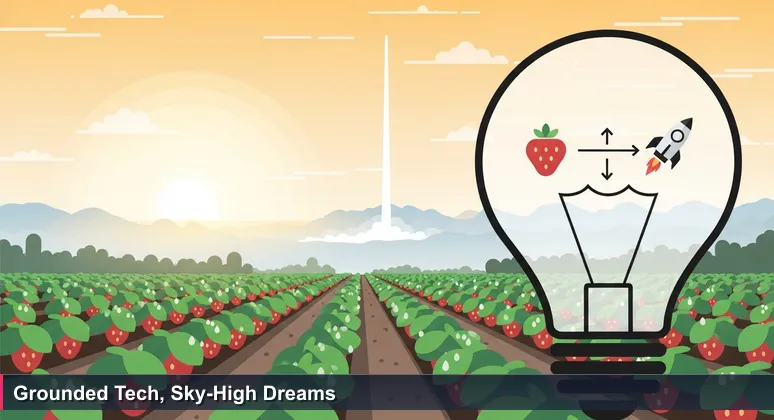
Stand in a Santa Maria strawberry field at dawn, where the damp, earthy scent of soil mingles with the sweet perfume of ripening fruit. As the morning's coastal fog burns away, your attention is drawn to a silent, pencil-thin line of vapor etching the sky to the west - a rocket lifting off from Vandenberg Space Force Base. This is the defining juxtaposition of the Central Coast in 2026: the most advanced machinery was once a tractor, and now you can watch a Falcon 9 climb through the same airspace.
This scene creates a pressing question for tech professionals: is Santa Maria a genuine career destination or just a farm town with a spectacular rocket show? The answer lies not in choosing between the launchpad and the tractor, but in understanding how they are becoming part of the same, integrated ecosystem. The region is undergoing a profound transformation, fueled by what the Los Angeles Times describes as a modern-day space race taking over Central California.
Vandenberg is the engine, with an annual economic impact of approximately $4.5 billion and support for around 20,000 regional jobs. Yet, this high-tech ascent isn't displacing the valley's agricultural roots; instead, the practical, problem-solving ethos of farming provides a stable foundation for applied innovation. The quiet fog that blankets the fields is an apt metaphor - to some, it obscures potential, but to those who stay, it's a nourishing blanket that allows for steady, substantial growth where a career can literally reach for the stars.
What We Cover
- Santa Maria's Dual-Tech Destiny
- The Space Coast Takes Flight
- Ag-Tech Innovation from the Ground Up
- The Remote Work Haven Advantage
- Tech Work in Action: Applied Innovation
- Salary vs Cost of Living: The 2026 Equation
- Santa Maria vs Central Coast Neighbors
- Is Santa Maria Right for You?
- The 2026 Verdict: A Grounded Tech Career
- Common Questions
This guide to beginning an AI career in Santa Maria covers all essential aspects for Central Coast residents.
The Space Coast Takes Flight
The single largest driver of Santa Maria's tech ascent is Vandenberg Space Force Base, transforming the coastline into California's own "Space Coast." Far more than a military installation, Vandenberg is the epicenter of a multi-billion-dollar commercial and defense space economy, aggressively expanding toward becoming a "Spaceport of the Future."
Its scale is staggering: a REACH Central Coast study reports an annual economic impact of approximately $4.5 billion, supporting around 20,000 jobs in the region. This activity is accelerating, with a goal of hosting over 100 annual launches by 2027. As noted by Air & Space Forces Magazine, this surge is driving exploration of additional launch pads to meet demand, creating a constant need for new talent.
This explosive growth fuels direct demand for a wide spectrum of tech roles. Major players like SpaceX, Firefly Aerospace, and Relativity Space have a growing local presence, joined by established defense contractors like Lockheed Martin and L3Harris. They need software engineers for launch and satellite systems, data analysts for mission control, cybersecurity specialists to protect critical infrastructure, and DevOps engineers to manage immense data flows from space.
"Let's champion Vandenberg's growth together," urges an editorial in the Santa Maria Sun, highlighting the community-wide recognition of this transformative opportunity.
For Santa Marians, this represents a direct pathway into high-tech careers. Institutions like Allan Hancock College have forged partnerships with space entities to create targeted talent pipelines, while affordable upskilling through programs like Nucamp's Back End with Python bootcamp can provide the foundational coding and DevOps skills this sector craves.
Ag-Tech Innovation from the Ground Up
While rockets ascend from the coast, a parallel technological revolution is taking root in the soil of the Santa Maria Valley. One of the nation's most productive agricultural regions is now a living laboratory for ag-tech, where the legacy of farming merges with artificial intelligence, robotics, and data science to solve tangible problems of yield, sustainability, and labor.
This transformation is recognized as a key pillar of regional innovation, supported by initiatives like the REACH Agtech program. Local agricultural giants such as Babé Farms and J&G Berry Farms are integrating precision farming, AI-driven irrigation systems, and robotics for harvesting. For a tech professional, this means building applications that use drone imagery and machine learning to detect crop stress or creating data pipelines that aggregate soil sensor information across thousands of acres.
The work is the definition of applied innovation. A developer in Santa Maria might create a computer vision system to sort strawberries by ripeness at a local packing plant or engineer software to optimize water usage for an entire vineyard. This hands-on, problem-solving ethos attracts professionals who want to see their code have a direct, measurable impact on the local economy and food supply.
Building a career in this sector increasingly requires skills in data analysis, automation, and AI integration. Accessible education pathways are critical, which is where focused bootcamp training becomes relevant. Programs like Nucamp's AI Essentials for Work or Back End with Python can provide the practical skills in prompt engineering, data pipelining, and DevOps needed to contribute to Santa Maria's ag-tech evolution, turning agricultural challenges into coding opportunities.
The Remote Work Haven Advantage
For a growing cohort of tech professionals, Santa Maria represents the ultimate lifestyle arbitrage. It offers a compelling escape from the congested freeways and stratospheric housing costs of traditional coastal metros, trading urban density for a quieter, family-oriented community with a mild, smog-free Central Coast climate. This migration of remote workers - who maintain salaries from Los Angeles, the Bay Area, or Seattle while living here - brings capital, expertise, and demand for local services, further diversifying the economic base.
The financial equation is particularly compelling within California. While earning a coastal tech salary, remote workers encounter a cost of living roughly 9% lower than the state average. Housing is the key differentiator; Santa Maria acts as the affordable residential anchor of the Central Coast, offering significantly more accessible entry points for homeownership and renting than neighboring Santa Barbara or San Luis Obispo. The REACH Central Coast coalition highlights the area's assets, including access to 12 miles of pristine coastline and world-class wine country, which enhance this quality-of-life calculus.
This environment supports a focused, productive lifestyle. As one resident noted on Niche, "it's quiet enough that you can focus on school and work without too many distractions." The practical infrastructure for this demographic is growing, with co-working spaces and business hubs evolving to support the remote-first workforce. For those with a stable, high-paying role that doesn't require daily in-person presence, Santa Maria allows them to maximize their earning power against a lower cost of living, achieving a balanced, grounded Californian lifestyle that feels increasingly rare.
Tech Work in Action: Applied Innovation
Forget building the next viral social media app. In Santa Maria, technology is fundamentally applied innovation - hands-on, mission-critical, and deeply integrated with physical industries. The work here offers the profound satisfaction of seeing your code or data model have a direct, measurable impact on the world, whether that world is in orbit or in the soil.
In aerospace, this might mean writing flight software for a CubeSat built at nearby Cal Poly San Luis Obispo, developing simulation models for rocket re-entry trajectories at a major defense contractor, or securing the networks that handle classified launch data at Vandenberg. In ag-tech, it's creating the computer vision system that sorts strawberries or the data pipeline that optimizes water usage across a thousand-acre farm.
This focus on tangible outcomes attracts a distinct type of professional. It's for those who value substance over hype, who find motivation in solving concrete problems with technology. The lifestyle supports this deep work. As noted in community discussions, the environment is "quiet enough that you can focus," reducing distractions and enabling concentration on complex technical challenges.
Entering this field often requires practical, industry-relevant skills. For Santa Marians looking to pivot, targeted training in Python, data management, and AI application - like that offered in a Back End or AI Essentials bootcamp - provides the exact toolkit needed to contribute to projects that launch satellites and sustain harvests, grounding a tech career in tangible reality.
Salary vs Cost of Living: The 2026 Equation
The Salary Landscape
Tech wages in Santa Maria are competitive, reflecting the high-skill demands of the aerospace sector and the influence of remote workers earning coastal salaries. According to SalaryExpert data, the average salary for a software engineer is approximately $141,311, with senior roles comfortably reaching $160,000+. For the wider Central Coast region, average tech wages hover around $151,000, indicating a strong, high-quality job market.
The Cost of Living Reality
While expensive compared to the national average, Santa Maria is a relative bargain within California. Data from the ERI Economic Research Institute confirms its overall cost of living is roughly 9% lower than the state average. The most significant advantage is housing, where Santa Maria provides a more accessible entry point compared to the pricier hubs of Santa Barbara and San Luis Obispo.
The final verdict is one of relative value. You likely won't save as much as with a Bay Area salary in a low-cost state, but you can achieve a substantially higher quality of life - including realistic home ownership, shorter commutes, and immediate access to nature - on a Santa Maria tech salary than you ever could in San Francisco or Los Angeles. This balance makes it a compelling choice for professionals seeking both career opportunity and California living without the extreme financial pressure.
Santa Maria vs Central Coast Neighbors
Where you live on the Central Coast often depends on your career stage and priorities, with Santa Maria playing a specific, crucial role in the regional ecosystem. The area is part of a growing innovation network projected to add nearly 10,000 jobs, but each city offers a distinct value proposition.
vs. Santa Barbara & San Luis Obispo
Santa Barbara and SLO are the established, picturesque university towns with vibrant downtowns and higher concentrations of tech startups and incubators. Santa Barbara, for instance, is quietly building expertise in AI and cybersecurity. However, they are also significantly more expensive. Santa Maria serves as the practical, affordable residential anchor and "industrial heart" for the region. It's the strategic choice for professionals working at Vandenberg or in north county agribusiness who prioritize space, affordability, and a more suburban family life, with easy driving access to the amenities of its pricier neighbors.
vs. Los Angeles & The Bay Area
This is a fundamental lifestyle and financial trade-off. You sacrifice the dense networking events, the sheer volume of job-hopping opportunities, and the urban cultural scene. In return, you gain a substantial cost-of-living advantage, a slower pace, minimal traffic, and immediate access to outdoor recreation. For remote workers or those focused on deep, applied technical work, this quieter environment is a feature that enables concentration and a balanced life, not a drawback.
Is Santa Maria Right for You?
Santa Maria is a polarizing choice that demands honest self-assessment. Its unique blend of aerospace, ag-tech, and remote-work appeal creates clear winners and misfits in its evolving tech landscape. Success here depends on aligning your career priorities with the city's specialized, applied-tech reality.
Your Ideal Launchpad If...
You could thrive here if you are an early-career engineer seeking a foothold in aerospace via Vandenberg's expanding contractor network, or a mid-career professional tired of abstract tech who craves seeing their work impact a rocket launch or harvest. Santa Maria is also perfect for remote-first senior ICs or managers who can leverage coastal salaries against the area's lower living costs to achieve an enviable work-life balance.
For career changers or upskillers, the demand for new talent in applied tech creates opportunity. Accessible pathways are key, which is where affordable, flexible bootcamps like Nucamp's AI Essentials for Work ($3,582) or Back End with Python ($2,124) become highly relevant. They provide the practical skills in Python, data pipelining, and AI application needed to pivot into the local market, acting as a critical on-ramp for Santa Marians into the city's tech transformation.
You Might Look Elsewhere If...
The city is less ideal if you need a massive, volatile job market for frequent job-hopping. The local market is specialized and, as noted in 2026 community discussions, can be selective. As one Reddit user cautioned, "Market here is crappy right now. If you have a signed offer, take it, otherwise I'd consider other areas with less competition." You should also look elsewhere if you're an aspiring founder seeking dense venture capital, prioritize vibrant urban nightlife, or - most critically - are moving without a secured remote role or local job offer, as the affordability advantage depends on it.
The 2026 Verdict: A Grounded Tech Career
In 2026, Santa Maria is not a substitute for Silicon Valley. It is something arguably more rare and substantive: a community where high technology is deeply enmeshed with the land and a grand national purpose. It offers a compelling blueprint for a different kind of tech career - one that grows steadily from the ground up while literally reaching for the stars, all without the stratospheric costs and frenzy of traditional hubs.
The region's strength lies in its integrated ecosystem. The $4.5 billion economic engine of Vandenberg Space Force Base and its supporting 20,000 jobs exist alongside a thriving ag-tech sector that applies AI and robotics to the earth itself. This creates a market for applied innovation, where professionals see their work directly impact a rocket's trajectory or a harvest's yield. As highlighted by regional advocates, the community is actively working to champion this growth together, recognizing the transformative opportunity.
For the right professional - one who values tangible results over hype, who seeks a meaningful career with a fantastic quality of life, and who understands that a front-row seat to the new space age doesn't require a Bay Area salary - Santa Maria presents a uniquely Californian answer. The morning fog that blankets the valley remains the perfect metaphor. To some, it obscures; to those who choose to stay and build, it’s the nourishing condition for a grounded tech career with a view of the infinite.
Common Questions
Is Santa Maria, CA really a good place for a tech career in 2026?
Yes, if you're interested in applied tech fields like aerospace and ag-tech. With Vandenberg Space Force Base driving job growth and an average software engineer salary around $141,311, Santa Maria offers competitive opportunities in a more affordable Central Coast setting compared to major California hubs.
What tech industries are booming in Santa Maria right now?
Aerospace is the biggest, with Vandenberg's $4.5 billion economic impact and plans for over 100 annual launches by 2027. Ag-tech is also thriving, using AI and robotics in local agriculture, creating roles in software development, data analysis, and cybersecurity.
How does the cost of living in Santa Maria compare to tech salaries?
Tech salaries in Santa Maria are competitive, with senior roles reaching $160,000+, while the cost of living is about 9% lower than California's average. This makes home ownership and a quality lifestyle more achievable here than in pricier areas like the Bay Area.
Can I use Santa Maria as a base for remote work in tech?
Definitely. Santa Maria's mild climate and relative affordability make it a popular remote work haven. You can earn salaries from larger hubs like Los Angeles while enjoying the Central Coast's outdoor amenities and access to local upskilling options like Nucamp bootcamps.
Who would benefit most from moving to Santa Maria for a tech job?
Early-career aerospace engineers, mid-career professionals seeking tangible impact, and remote senior workers find it ideal. However, if you need a volatile job market or vibrant startup scene, you might prefer larger hubs due to Santa Maria's specialized but smaller tech ecosystem.
Find out about AI meetups and conferences in Santa Maria, CA for career advancement.
Find out which AI bootcamps are best suited for Santa Maria's aerospace and agriculture sectors in this detailed analysis.
Discover the top AI startups in Santa Maria for 2026 in this comprehensive ranking.
For insights into highest paying tech roles in Santa Maria, check out this guide.
For a comprehensive list of top 10 tech coworking spaces and incubators in Santa Maria, CA in 2026, this article is essential.

Irene Holden
Operations Manager
Former Microsoft Education and Learning Futures Group team member, Irene now oversees instructors at Nucamp while writing about everything tech - from careers to coding bootcamps.