









How to Become an AI Engineer in Salinas, CA in 2026
By Irene Holden
Last Updated: March 23rd 2026
Quick Summary
To become an AI engineer in Salinas, CA by 2026, follow a structured 18-month roadmap focused on the region's AgTech ecosystem, mastering skills like computer vision for employers such as Taylor Farms. Accelerate your learning with local resources like Nucamp's bootcamps costing around $4,000, and build portfolio projects solving real agricultural problems. This cultivates a unique hybrid expertise that leverages Salinas's proximity to Silicon Valley and its growing tech community.
Becoming an AI engineer now means entering a field that has matured into a distinct discipline focused on production systems, not just academic models. As experts discuss on forums like Reddit, the role has crystallized around end-to-end implementation, where the ability to deploy, maintain, and connect AI to business problems trumps theoretical knowledge alone. The competition reflects this shift, with some in-demand roles receiving 300-500 resumes within days of posting.
Your foundation requires the right tools and tenacity. You'll need a computer with at least 16GB of RAM and a multi-core processor, with Python 3.9+, a code editor like VS Code, and Git installed. Crucially, cultivate a problem-solving mindset and the discipline for continuous learning; this field evolves weekly. As noted in industry analyses, success increasingly belongs to professionals who can "stack" skills and integrate AI into tangible workflows.
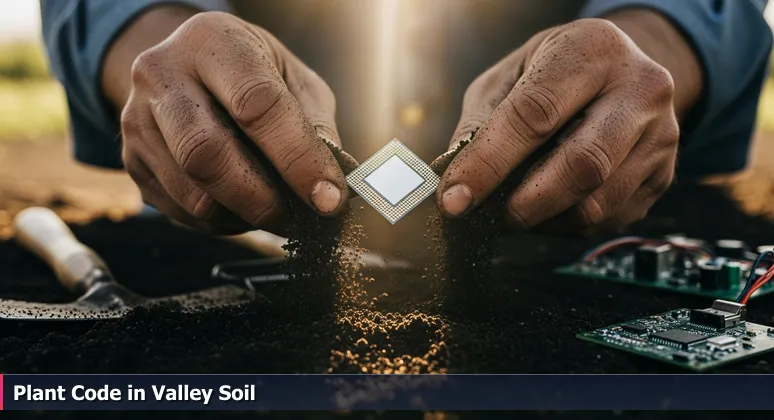
In Salinas, this groundwork has a specific texture. Your ultimate goal isn't just to build AI, but to build AI that understands the language of agriculture, logistics, and local healthcare. The region's identity as a global AgTech hub, exemplified by initiatives like the THRIVE innovation ecosystem, means your unique advantage will be speaking both "tech" and "ag." Skipping this local context is like a farmer planting without testing the soil - your skills won't take root where they're needed most.
Steps Overview
- Lay the Groundwork for Your AI Career in Salinas
- Master Core Python Programming
- Conquer Data Manipulation with Pandas & NumPy
- Learn Machine Learning Fundamentals with Scikit-learn
- Dive into Deep Learning with TensorFlow or PyTorch
- Specialize in Computer Vision or Time-Series Analytics
- Develop Software Engineering & MLOps Skills
- Master Generative AI and LLM Integration
- Build High-Signal Portfolio Projects
- Engage with the Local Tech & AgTech Community
- Commit to Lifelong Learning and Ethical Practice
- Verify Your Success Before the Job Offer
- Common Questions
The 2026 AI career guide for Salinas provides everything you need to launch your path.
Master Core Python Programming
Every AI system in the Salinas Valley, whether predicting strawberry yields or optimizing irrigation, begins with a single, universal language: Python. It's the undisputed standard because its simplicity and vast ecosystem power everything from data cleaning to deploying complex neural networks, including the major frameworks like TensorFlow and PyTorch. Your first task is to become fluent in its syntax and logic.
Focus on mastering variables, data types, functions, loops, and conditionals. Then, advance to object-oriented programming (OOP) and file handling. The key is consistent, daily practice - don't just read tutorials. Build small scripts that could, for instance, calculate water usage from a simple dataset. A local, structured option to build this foundation is the Online Data Analytics Course from Monterey Peninsula College, which covers Python for Data Science.
The most common and costly mistake is rushing ahead. Jumping into advanced AI libraries before solidifying your core Python skills means you’ll waste hours debugging simple syntax errors instead of solving meaningful AI problems. Resources like the project-based roadmaps from Internet Made Coder can provide excellent guided practice. Remember, a sturdy foundation here supports everything you will build on it, from a simple data parser to a full-stack AgTech application.
Conquer Data Manipulation with Pandas & NumPy
In the world of AI, data is the raw material, and in Salinas, that material is agricultural: weather patterns, soil sensor readings, and harvest weights. Pandas and NumPy are your essential tools for preparing this data, functioning as the digital plows and tractors that till and shape the information before you plant your AI models. Mastering them means learning to load CSV files, handle missing values, filter and group data, and perform critical calculations.
A practical project is the fastest way to learn. Find a public dataset, like historical California crop reports or Central Coast weather data. Use Pandas to calculate the average yield per acre in Monterey County over the last decade or correlate precipitation levels with harvest volumes for lettuce. This hands-on work mirrors the exact data challenges faced by local giants like Taylor Farms and Driscoll's as they optimize their operations.
For visual learners, project-based tutorials can accelerate understanding. Channels like Internet Made Coder on YouTube offer excellent roadmaps that contextualize these libraries within larger projects. The goal is to move beyond abstract exercises and manipulate datasets that feel real and relevant to the Salinas Valley, building the foundational skill of turning messy, real-world information into clean, structured insights ready for an algorithm.
Learn Machine Learning Fundamentals with Scikit-learn
Before tackling the complexity of deep learning, you must understand how machines learn from data. This is where traditional machine learning with Scikit-learn becomes essential. It teaches you the core principles of how models identify patterns, make predictions, and - most importantly - how to rigorously evaluate if they are accurate or merely guessing based on your data.
Focus on mastering the complete ML workflow: preparing data, training models, generating predictions, and evaluating performance using metrics like accuracy, precision, and recall. Dive into supervised learning (classification and regression) and unsupervised learning (clustering). For the theoretical depth behind these practical tools, you can explore the computer science curriculum at CSU Monterey Bay, which integrates core machine learning courses into its degree programs.
A common pitfall is getting lost in endless online tutorials without building momentum. Choose one structured course or path and commit to it. For example, a curated certificate like the Machine Learning certificate from eCornell can provide a coherent learning journey. Apply each concept to a local scenario, such as building a model to classify different crop types from basic features or predicting produce pricing trends, making the abstract immediately relevant to the Salinas Valley.
Dive into Deep Learning with TensorFlow or PyTorch
When tasks grow beyond traditional machine learning - like identifying a specific lettuce fungus from a drone image or forecasting complex, seasonal water usage - you need deep learning. Frameworks like TensorFlow and PyTorch are the engines for building these sophisticated neural networks, which learn from data with many layers of abstraction.
Start by choosing one framework to avoid confusion; PyTorch is often praised for its beginner-friendly, Pythonic style. Learn the fundamental components: layers, activation functions, loss functions, and optimizers. A great first project is building a simple image classifier using a pre-trained model. For a Salinas-relevant application, try curating a small dataset of images to classify "healthy strawberry leaves" versus "diseased strawberry leaves."
A significant danger in this phase is what learners call "tutorial hell" - watching endless videos without building anything. To build real momentum, follow a single, high-quality curriculum. For example, the structured step-by-step roadmap from Chris Sean on YouTube can provide clear direction. This hands-on practice is what transforms theoretical knowledge into the skills needed for the computer vision and predictive analytics driving innovation at places like Salinas's own Reservoir Farms.
Specialize in Computer Vision or Time-Series Analytics
This is where you transition from a generalist to a specialist with skills that directly match Salinas employer demand. Your choice should be guided by the valley's needs: computer vision for automated quality sorting and harvesting, or time-series analytics for forecasting water usage, crop yields, and logistical planning.
The Computer Vision Path
For roles involving robotics and automated inspection, dive deep into Convolutional Neural Networks (CNNs). Learn object detection, image segmentation, and transfer learning using established architectures like ResNet. Your projects should mirror real-world applications, such as developing a system to grade produce quality or identify pest damage, exactly the kind of innovation happening at local hubs like Salinas's Reservoir Farms.
The Time-Series Analytics Path
For forecasting and resource management, master models like ARIMA, Facebook's Prophet, and Long Short-Term Memory networks (LSTMs). These are critical for predicting seasonal trends, optimizing irrigation schedules, or managing supply chain inventory. This specialization aligns with the data-driven decision-making needed by local water districts and logistics companies supporting the agriculture industry.
Choosing a specialization isn't about limiting yourself, but about deepening your value in a specific, high-demand channel of the local tech ecosystem. It allows you to build a portfolio with clear, compelling relevance to the business challenges discussed at forums like the Forbes AgTech Summit held right here in the region.
Develop Software Engineering & MLOps Skills
The field has matured: by now, an AI engineer is defined less by model training and more by deployment and maintenance. A sophisticated model trapped on your laptop is useless to a farm manager or a clinic. Your value lies in building robust, scalable systems, which requires core software engineering and MLOps (Machine Learning Operations) skills.
Master Production Engineering
Learn to build a REST API with FastAPI or Flask so your model can be integrated into other software, like a farm management dashboard. Master Docker to containerize your application, ensuring it runs reliably anywhere. Use Git thoroughly for version control and collaboration. As highlighted in industry discussions, the role now centers on "designing robust data pipelines and evaluation frameworks" for live environments.
Accelerate with Structured Learning
This complex skill set is where a targeted bootcamp can compress years of learning. For example, Nucamp's 25-week Solo AI Tech Entrepreneur Bootcamp is designed specifically to teach how to build, integrate, and deploy AI-powered products - the exact production engineering skills the market demands. At $3,980 with flexible payments, it represents a focused and affordable alternative for career-changers in our region compared to traditional degrees.
These skills transform you from an experimenter into a builder. They allow you to deliver the reliable, integrated AI tools that Salinas Valley Memorial Healthcare System or a Taylor Farms logistics team would actually use daily, moving your work from a personal project to a professional solution.
Master Generative AI and LLM Integration
Generative AI and Large Language Models (LLMs) are transforming workflows across industries, and in Salinas, this means creating intelligent tools that understand the unique language of agriculture and compliance. This could involve building a chatbot that answers complex questions about organic farming regulations for field workers or an agent that automatically writes summary reports from daily sensor data logs.
To master this, focus on three practical skills: prompt engineering to reliably guide model outputs, retrieval-augmented generation (RAG) using vector databases to ground responses in specific documents, and fine-tuning open-source models from platforms like Hugging Face for specialized tasks. These skills move generative AI from a novelty to a reliable component of business processes, much like the integration discussed by leaders at the Forbes AgTech Summit in our region.
For professionals seeking to quickly apply these skills, focused training can accelerate the journey. A program like Nucamp's AI Essentials for Work is a 15-week, $3,582 course designed specifically for practical integration, teaching prompt engineering and how to leverage tools like ChatGPT within real business environments. This makes you immediately valuable to local employers who need to harness this transforming technology, as highlighted in analyses of AI engineering trends.
Build High-Signal Portfolio Projects
Your portfolio is your ultimate proof of capability. For Salinas employers, it must demonstrate that you don't just understand AI theoretically, but can apply it to solve their specific problems with a complete, professional solution. This means building end-to-end applications that go far beyond a Jupyter notebook.
Follow this blueprint for each project: develop a working model, build a functional web interface around it using a framework like Streamlit or Flask, containerize it with Docker, deploy it to a cloud service, and write comprehensive documentation. According to expert roadmaps, a strong portfolio requires deploying to a cloud environment, including an architecture diagram, and documenting failure cases and lessons learned.
Salinas-Specific Project Ideas
- AgTech Computer Vision: A web app that lets a farmer upload a field photo to identify weed species and recommend treatment, using a fine-tuned CNN model.
- Predictive Analytics for Healthcare: A time-series model analyzing anonymized local health data to forecast seasonal clinic resource needs.
- RAG-Powered Ag Assistant: A chatbot using retrieval-augmented generation to answer questions from a knowledge base of California farming regulations.
Your GitHub repository for each project should be a showcase. The README must include a clear problem statement, a system architecture diagram, step-by-step instructions to run the code, and a thoughtful discussion of challenges and future improvements. This level of polish shows you can deliver production-ready work, similar to the innovations developed at places like Salinas's Reservoir Farms. For more on structuring a compelling AI portfolio, review guidance from resources like Interview Query's AI engineer roadmap.
Engage with the Local Tech & AgTech Community
In a tight-knit region like the Central Coast, opportunities are often discovered through people, not just job boards. Engaging with the local tech and AgTech community is how you learn about unadvertised roles at startups, special projects at major employers, and the real-world challenges that should guide your portfolio work. It transforms you from an outsider into a known entity within the ecosystem.
Make it a habit to attend events hosted by organizations driving innovation here. The Monterey Bay Economic Partnership, for instance, has been instrumental in securing millions in funding for AgTech innovation. Participate in hackathons, meetups, and seminars. Connect professionally with faculty, researchers, and alumni from Hartnell College, CSUMB, and the Monterey Bay Aquarium Research Institute (MBARI) on LinkedIn.
This engagement cultivates your unique advantage as a translator. As leaders from farming, investment, and technology converge at events like the Forbes AgTech Summit in Salinas, your goal is to become someone who can speak credibly to all three groups. Building these relationships ensures your growing technical expertise is rooted in the rich, collaborative soil of the Salinas Valley.
Commit to Lifelong Learning and Ethical Practice
The journey to becoming an AI engineer doesn't end with your first job; it simply enters a new phase of continuous evolution. The technology advances weekly, and in fields as impactful as Salinas's agriculture and healthcare, the ethical implications of your work carry significant weight. Understanding bias, ensuring data privacy, and making models explainable are not academic concerns - they are professional responsibilities.
Maintain a Learning Rhythm
Dedicate regular time to stay current. Follow key researchers and engineers on platforms like X (formerly Twitter) or LinkedIn. Commit to reading papers on arXiv or technical blogs from leading labs. As highlighted in discussions about the field's maturation, the most successful engineers are those who view themselves as perpetual students, adapting as the role focuses more on system design and evaluation frameworks.
Anchor in Ethical Practice
For applications that affect food safety, water resources, or patient care, ethical diligence is paramount. This means proactively auditing for bias in your training data, implementing privacy-preserving techniques, and designing systems whose decisions can be understood and questioned. As experts emphasize, beyond coding, critical skills now include AI safety and ethics to ensure technology serves the community responsibly.
Consider formal training in AI ethics or specialized certifications to deepen this understanding. Your commitment to principled development, combined with relentless learning, ensures that your career grows as wisely and sustainably as the crops in the Salinas Valley, grounded in the trust of those who use your technology. For insights into how these trends are shaping the profession, review analyses like those from Refonte Learning on AI engineering in 2026.
Verify Your Success Before the Job Offer
You don't need a formal job title to know you're ready for an AI engineering role in Salinas. True readiness manifests in tangible signs that you've successfully bridged the technical and the local. Look for these indicators that you've cultivated the hybrid vigor the market seeks.
First, your portfolio tells a compelling story. You have 2-3 deployed projects that solve identifiable problems for Salinas Valley industries. A hiring manager at an AgTech startup can immediately see the relevance, whether it's your computer vision model for crop health or your RAG chatbot for farming regulations. According to expert roadmaps, this means your projects are deployed in a cloud environment with proper documentation on cost, latency, and architecture.
Second, you can explain complexity with clarity. You can describe how your model works to a fifth-grader, a farmer, and a senior software engineer, tailoring the explanation to each audience. This translation skill proves you understand the technology deeply enough to make it accessible, a critical trait for roles that connect AI to business outcomes.
Finally, you're a contributor, not just a consumer. You're answering questions on forums like Stack Overflow, sharing your learning journey to help others in the Salinas community, or even giving a short talk at a local meetup. This engagement means the local tech ecosystem knows your name and your value, turning your skills into a reputation. When these elements align, you're not just another candidate - you're the local solution they've been looking for.
Common Questions
How long does it take to become an AI engineer in Salinas by 2026?
With a structured roadmap, it typically takes around 18 months of focused learning, from Python basics to deploying AI projects. Local bootcamps like Nucamp's Solo AI Tech Entrepreneur Bootcamp can compress this to 25 weeks, making it feasible for career-changers in Salinas.
What job opportunities exist for AI engineers in Salinas, CA?
Opportunities are growing with local AgTech leaders like Taylor Farms and Driscoll's using AI for automation, plus remote roles with Silicon Valley firms. Salinas' innovation hubs, such as Reservoir Farms, drive demand for skills in computer vision and time-series analytics.
Do I need a degree to break into AI engineering in Salinas?
No, a degree isn't required; many succeed through bootcamps or self-study. For example, Nucamp's programs, costing around $3,980, teach practical deployment skills, and local resources like CSUMB courses provide theoretical depth without a full degree.
How much should I expect to invest in AI training in Salinas?
Costs can be manageable, with bootcamps like Nucamp's AI Essentials for Work at $3,582 and local college courses under $1,000. You'll also need a reliable computer with 16GB RAM, which can be a one-time investment of $800-$1,500.
What makes Salinas a unique place to start an AI career?
Salinas offers direct access to AgTech innovation with companies like Dole and research at MBARI, allowing you to apply AI to real problems. Plus, proximity to Silicon Valley enables collaborations, and community events like the Forbes AgTech Summit foster local networking.
This article details coworking spaces for startups in Salinas Valley and their advantages.
This article explains whether Salinas is good for tech careers in 2026 with data and examples.
For the latest on top 10 women in tech groups and resources in Salinas, CA in 2026, this listicle is essential reading.
Explore the comparison of cost of living and tech incomes in Salinas for future career planning.
If you're a junior developer, check out these leading tech startups hiring in Salinas in 2026 for career insights.

Irene Holden
Operations Manager
Former Microsoft Education and Learning Futures Group team member, Irene now oversees instructors at Nucamp while writing about everything tech - from careers to coding bootcamps.