









Who's Hiring Cybersecurity Professionals in Rochester, MN in 2026?
By Irene Holden
Last Updated: March 22nd 2026
Key Takeaways
In 2026, Rochester's cybersecurity hiring is led by healthcare employers like Mayo Clinic, medical device manufacturers, and public utilities such as Rochester Public Utilities, all securing critical systems. Salaries range from around $70,000 for entry-level to over $160,000 for specialized roles, with job growth projected at 35% due to the city's unique healthcare and infrastructure demands. This robust market offers professionals a chance to build careers in a lower-cost, mission-driven hub with strong ties to local education and tech ecosystems.
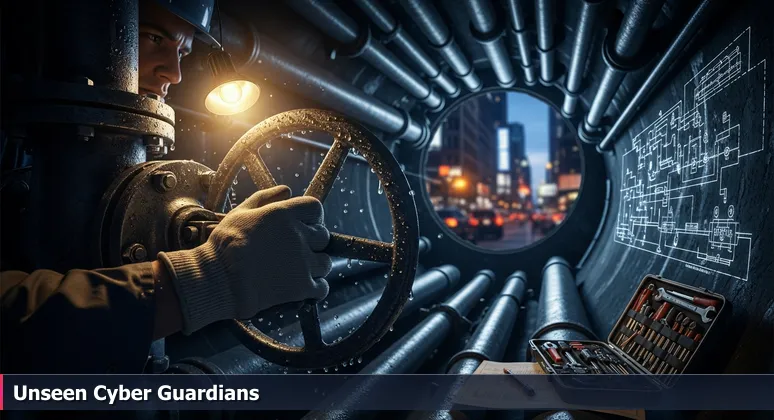
Beneath the streets of Rochester, where most people only see pavement, there's a network of valves and pipes that keep the city alive. Few ever see it, but everything depends on it. This hidden physical infrastructure now has a direct digital counterpart: the relentless flow of sensitive patient data, the operational integrity of life-saving medical devices, and the silent vigilance required to protect a modern city. The professionals managing this digital pressure are the new essential tradespeople.
The hiring landscape for cybersecurity specialists is robust and extends far beyond the obvious, anchored by a unique ecosystem of healthcare, medtech, and critical infrastructure. This demand is fueled by a global shortage of roughly 4.5 million cybersecurity professionals, making local talent a high-value commodity. As the Google Cloud Cybersecurity Forecast 2026 report notes, this era requires defenders to leverage AI to counter AI-escalated threats, a shift critical for large-scale operations in Rochester.
Experts forecast 33-35% growth for information security analyst roles through the mid-2020s in regions with strong healthcare and tech sectors, a projection Rochester is poised to exceed. These aren't generic IT jobs; they are specialized roles in securing clinical networks, medical device firmware, and public utility grids. Each position acts as a critical valve in the city's unseen digital network, maintaining the pressure that allows a world-class healthcare city to thrive.
In This Guide
- The Hidden Infrastructure Driving Rochester's Cyber Jobs
- Why Rochester's Cybersecurity Demand is Uniquely Pressured
- Securing Healthcare: Jobs at Mayo Clinic and Beyond
- Embedded Security in Rochester's Medtech Sector
- Protecting Public Infrastructure: Utilities and Government Roles
- Local Pathways to a Cybersecurity Career in Rochester
- Your 2026 Cybersecurity Job Search Strategy in Rochester
- Becoming Rochester's Next Cyber Valve-Turner
- Frequently Asked Questions
Learn about starting an AI career in Rochester's healthcare tech hub in 2026 with this resource.
Why Rochester's Cybersecurity Demand is Uniquely Pressured
Rochester's cybersecurity job market is not a mirror of Silicon Valley or even Minneapolis. Its unique character is forged by specific, high-stakes pressures from its dominant industries. The "pressure" comes from multiple, simultaneous vectors that create a hiring environment valuing specialized knowledge over generic skills.
The first vector is the absolute necessity to protect patient health information (PHI) and maintain 24/7 clinical system uptime at institutions like the Mayo Clinic. The second is the stringent FDA regulatory environment governing medical device safety and firmware. The third involves securing legacy industrial control systems that manage the city’s essential water and power networks through entities like Rochester Public Utilities.
For job seekers, this means the path to a Rochester cybersecurity career is about aligning your skills with the specific type of pressure you want to manage. Are you driven by the mission-critical nature of healthcare, the engineering challenge of embedded systems in medtech, or the community-focused work of public utilities? This focus will direct your learning path, certifications, and job search strategy from the outset.
Securing Healthcare: Jobs at Mayo Clinic and Beyond
This sector is the primary driver and defining characteristic of Rochester's cyber demand, with a dual mission: protect vast quantities of sensitive patient data while ensuring the uninterrupted operation of clinical environments. It's a high-stakes field where a security incident has immediate real-world consequences.
As the area's largest employer, Mayo Clinic is a constant source of specialized openings, from Information Security Engineers to Technology Resilience Systems Engineers. For those at the intersection of medical equipment and IT, unique roles like Healthcare Technology Management (HTM) Information Security specialists exist, with internships serving as a direct pipeline. Organizations like Olmsted Medical Center also require robust security within clinical informatics teams managing systems like Epic.
Salaries reflect this high-stakes environment. Mid-level Security Analysts can expect $70,000 - $95,000, while senior engineering and cloud specialist roles command $102,000 - $158,000+. Credentials are paramount, with employers consistently requesting certifications like CISSP, CISM, and CompTIA Security+.
The Rochester advantage is significant. As noted by industry professionals, having Mayo Clinic on your resume is "a name basically everyone recognizes," providing immense career currency. Furthermore, these roles offer a compelling blend of mission-driven work protecting patient health information and the stability of major institutional employers.
Embedded Security in Rochester's Medtech Sector
Rochester's strong medtech ecosystem presents a cybersecurity frontier focused not on networks, but on the devices themselves. This is the world of embedded systems and product security, where engineers must secure the firmware inside everything from glucose monitors to surgical robots, navigating the rigorous quality and compliance framework of the FDA.
Major employers include large players like Johnson & Johnson and a network of specialized engineering firms and OEMs. They hire for highly technical positions like Embedded Cybersecurity Engineer and Principal Product Security Engineer. These roles demand deep knowledge of programming languages like C/C++, real-time operating systems, and ARM processor architectures to build security directly into device firmware, as seen in postings for an Embedded Cybersecurity Engineer for Medical Devices which highlight skills in threat modeling and vulnerability assessment for hardware.
This specialization commands a premium. Salaries for embedded and product security engineers in the Rochester area range from $103,000 to $165,000. The certification path diverges from corporate IT, leaning towards offensive and hardware-focused credentials like the Offensive Security Certified Professional (OSCP) or Certified Ethical Hacker (CEH).
This sector offers a pure engineering challenge for those who want to work at the intersection of software, hardware, and regulatory science, securing products that directly impact patient health.
Protecting Public Infrastructure: Utilities and Government Roles
This sector manages the foundational infrastructure of the community, where the pressure is about resilience and public safety. Cybersecurity here protects systems where a cyber-physical attack could disrupt water, electricity, or essential government services, requiring a unique blend of IT and engineering knowledge to secure legacy operational technology (OT) environments.
Major employers include Rochester Public Utilities (RPU), actively hiring for roles like SCADA Engineer and IT Compliance Coordinator to secure the electric grid and water treatment plants. Local government, such as Olmsted County and the City of Rochester, seeks IT System Administrators and Security Analysts to protect citizen data and manage risk, as detailed in job bulletins for an IT System Administrator where security is a core responsibility.
Public sector and utility salaries are competitive and often coupled with strong benefits. Starting salaries for coordinators and analysts range from $82,000 - $108,000, with specialized, senior roles like SCADA Engineer reaching $135,000+. Certifications like CISM, Security+, and specific NERC compliance training are highly valued for these critical infrastructure roles.
The Rochester advantage in this sector is deep community impact and greater stability. The work involves securing the silent, essential systems that the city depends on every day, offering a career path defined by tangible public trust.
Local Pathways to a Cybersecurity Career in Rochester
Rochester's talent pipeline is strengthened by accessible local educational institutions and unique transitional programs, creating multiple on-ramps into the field. This ecosystem makes launching a cybersecurity career more attainable here than in larger, more competitive metros.
Rochester Community and Technical College (RCTC) provides foundational degrees and certificates in IT and cybersecurity, offering the practical, hands-on skills that local employers seek for entry-level roles. The University of Minnesota Rochester (UMR) contributes with programs in health informatics and data sciences, creating graduates who understand both the technical and domain-specific aspects of healthcare security. For those seeking accelerated, career-focused training, bootcamps like Nucamp's 15-week Cybersecurity program offer an affordable and flexible alternative to build core defensive skills.
Minnesota also has strong programs supporting National Guard members and veterans transitioning into tech careers. Their disciplined, security-focused backgrounds are highly sought after, particularly for roles in operational security and compliance at local employers. The strength of the local hiring market is underscored by firms like Entre Computer Services, which expanded its IT staffing division in 2026, estimating that 70 to 75 percent of the positions it fills will be in the Rochester region.
Your 2026 Cybersecurity Job Search Strategy in Rochester
A successful cybersecurity job search in Rochester requires a targeted, informed approach that aligns with the unique pressures of the local market. In 2026, professional consensus suggests employers prioritize foundational, "AI-proof" operational skills like cloud security, networking, and hands-on defensive capabilities, even as understanding AI tools becomes increasingly critical.
One significant advantage is the hybrid/remote reality. Many roles with large organizations offer flexible arrangements, allowing you to live in Rochester's lower-cost environment while competing for positions based in the Twin Cities or nationally. This effectively expands your market reach while leveraging local living benefits.
Choosing Rochester involves strategic tradeoffs. You'll find less direct competition, a significantly lower cost of living, and a focus on stable, mission-driven industries like healthcare and public infrastructure. The tradeoff is potentially fewer pure-play tech companies and a more structured hiring process at large institutions. For entry-level candidates, aggression is key: secure foundational certifications like the CompTIA Security+ gold standard, build a home lab to demonstrate practical skills, and actively monitor portals like the Mayo Clinic careers site for internship and entry-level postings to get your foot in the door.
Becoming Rochester's Next Cyber Valve-Turner
The transformed perspective is this: look at every hospital complex, manufacturing plant, and municipal building in Rochester and see not just bricks and mortar, but the dedicated cybersecurity professionals inside. They are the modern-day valve-turners, maintaining the precise digital pressure that allows a world-class healthcare city to thrive, its industries to innovate, and its community to live securely.
In 2026, this unseen network offers a career built on essential, tangible purpose. Whether you are drawn to the life-critical systems of healthcare, the engineering rigor of medical devices, or the public trust of utilities, Rochester provides a landscape where your skills defend something real. The path is accessible through local colleges, specialized bootcamps building foundational tech skills, and transitional programs that value diverse backgrounds.
With strong local demand forecast to grow and the unique advantage of working within globally recognized institutions, the opportunity is to build more than a job - it’s to become part of the critical infrastructure that keeps Rochester, and the people who depend on its services, safe and resilient every day.
Frequently Asked Questions
Who are the top employers hiring cybersecurity professionals in Rochester, MN in 2026?
Major employers include the Mayo Clinic, which consistently posts roles like Information Security Engineers and Healthcare Technology Management specialists, and Rochester Public Utilities for operational technology security. Local medtech firms, Olmsted Medical Center, and government entities like the City of Rochester also have active openings, driven by the region's strong healthcare and infrastructure ecosystem.
Why is Rochester's cybersecurity job market different from other cities like Minneapolis?
Rochester's demand is uniquely shaped by its healthcare and medtech dominance, focusing on protecting patient data and securing medical devices under strict FDA regulations. With a forecasted 33-35% growth for security roles through the mid-2020s, the pressure here comes from legacy systems and critical infrastructure, requiring specialized skills over generic ones.
What salaries can cybersecurity professionals expect in Rochester in 2026?
Salaries vary by sector; in healthcare, mid-level Security Analysts earn $70,000 to $95,000, while senior engineering roles in medtech command $103,000 to $165,000+. Public sector jobs, like those at Rochester Public Utilities, offer competitive pay starting around $82,000 for analysts, with benefits and stability.
What certifications or skills are most valued by Rochester employers for cybersecurity roles?
Employers prioritize certifications like CISSP and CISM for management, and CompTIA Security+ for entry-level positions. For medtech, offensive certs like OSCP are key, while cloud skills in Azure (common in healthcare) and knowledge of HIPAA compliance are highly sought after in Rochester's specialized job market.
What are the advantages of pursuing a cybersecurity career in Rochester over the Twin Cities?
Rochester offers a lower cost of living, less job competition, and a focus on stable, mission-driven industries like healthcare and public utilities. While the pace may be slower than in Minneapolis-Saint Paul, the proximity to major employers like Mayo Clinic and ties to local institutions provide unique career growth and community impact.
For best tech apprenticeships in Rochester, check out this curated list of opportunities.
Get a comprehensive look at cost of living for Rochester tech professionals.
To learn how to fund your tech training in Rochester, follow this step-by-step guide.
Discover the roadmap to AI engineering careers in Rochester, MN tailored for the city's unique ecosystem and job opportunities.
For insights on hiring AI talent in Rochester's diverse industries, read more.

Irene Holden
Operations Manager
Former Microsoft Education and Learning Futures Group team member, Irene now oversees instructors at Nucamp while writing about everything tech - from careers to coding bootcamps.