









How to Become an AI Engineer in Raleigh, NC in 2026
By Irene Holden
Last Updated: March 21st 2026
Quick Summary
To become an AI engineer in Raleigh by 2026, follow a 12-month roadmap that blends foundational AI skills with the Research Triangle's local tech ecosystem, from Python basics to advanced MLOps. Raleigh's STEM job growth ranks 14th in the U.S., and with employers like IBM and SAS driving demand, focusing on Generative AI and scalable deployment can lead to strong opportunities in this affordable region. Leverage resources from NC State and RTP's startup scene to build a portfolio that meets local industry benchmarks.
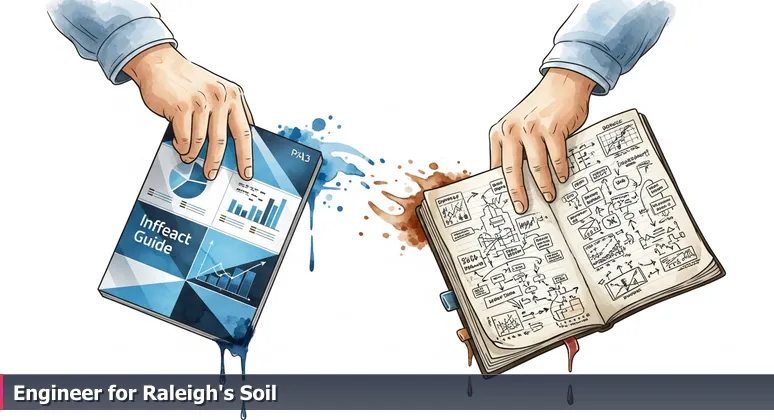
Following a pristine, generic skills roadmap can leave you with the right pieces but no sense of how they fit into the landscape of Raleigh and Research Triangle Park. The real engineering challenge isn't just learning Python or transformers - it's contextual integration.
This blueprint is engineered for the soil you're standing on. It weaves the global technical canon through the unique fabric of the Triangle's ecosystem: the direct talent pipeline from NC State's Applied AI initiative, the specific deployment needs of employers like Red Hat and Qualcomm in RTP, and the full-stack agility demanded by local startups. Raleigh saw a 26.8% increase in STEM opportunities in recent years, ranking 14th nationally for growth, but capitalizing on this boom requires local fluency.
The Unwritten Addendum
Success here means understanding the "coffee-stained notes" that supplement any official guide. It's knowing that while SAS values statistical rigor, an RTP startup might prize your ability to build an entire generative AI app solo. As noted in an industry outlook, leaders must "retrain workers whose jobs may be displaced," creating a dynamic market for those who can build practical, user-centric systems.
Your unique path isn't about checking distant boxes. It's about becoming a builder who can take the universal roadmap and engineer it for the ground beneath your feet, transforming theoretical knowledge into systems that thrive in the Triangle's specific tech climate.
Steps Overview
- Your Unique Path in Raleigh's AI Boom
- Start with the Right AI Mindset and Toolkit
- Master Data Manipulation and Python Basics
- Advance with Deep Learning and Specialization
- Integrate AI into Production Systems
- Benchmark Your Success in Raleigh
- Common Questions
Discover how to launch an AI career in Raleigh, NC in 2026 with step-by-step advice from industry experts.
Start with the Right AI Mindset and Toolkit
The first tool isn't software; it's a mindset. As Dr. Helen Huang, an engineering professor at NC State, emphasizes, successful AI engineering requires direct user feedback: "Engineers often think they have great solutions, but they may not meet actual user needs." This problem-solver's orientation is your most critical prerequisite for building systems that work in the real world.
Your foundational toolkit blends technical readiness with local awareness. You'll need consistent computer access, a GitHub account, and the discipline for 15-20 hours of weekly study. Comfort with high-school algebra and statistics provides the necessary mathematical substrate, while a logical mindset prepares you for programming.
Your Local Compass
Immediately bookmark the NC State AI Academy for structured workforce development and Built In Raleigh-Durham's AI job board to track the evolving market you're building for. This local lens transforms abstract learning into targeted preparation.
This foundation is your launchpad. With the global demand for AI roles projected to hit 14.1 million by 2031 and Raleigh's STEM job growth at 26.8%, your investment in the right mindset and locally-attuned toolkit positions you at the start of a deliberate, contextual journey.
Master Data Manipulation and Python Basics
The initial trimester transforms you from a beginner to someone who can manipulate local data and automate insights. As industry roadmaps note, Python proficiency is the non-negotiable baseline expected by every RTP employer, from IBM to agile startups. This phase builds that fluency.
Month 1: Python & The Terminal
Your goal is to write scripts that clean and analyze a local dataset. Start with Python syntax, data structures, and basic file I/O. A structured local resource like Wake Tech's CSC-114 Artificial Intelligence I provides a semester-based foundation. A practical project involves scraping the City of Raleigh's open data portal to find trends in public works requests using pandas.
Month 2: The Art of Data Wrangling
Here, you master turning messy, real-world data into structured analysis. Skills focus on NumPy for numerical operations and Pandas for filtering, grouping, and merging. Short courses from the NC State Data Science Academy can accelerate this. A strong project cleans a complex dataset, like North Carolina housing prices, performing statistical summaries to mimic the rigorous analysis valued at institutions like SAS.
Month 3: Your First ML Pipeline
The goal shifts to training a predictive model and serving it through a simple API. Use Scikit-learn for algorithms like random forests and Flask/FastAPI for deployment. Build an end-to-end pipeline, such as predicting Raleigh traffic congestion based on time and weather. Your verification is a GitHub repo with documented code for a data project and a web app, proving you can explain the model's logic clearly - a core skill for local tech roles.
Advance with Deep Learning and Specialization
This phase marks your transition from using machine learning libraries to understanding and building the neural networks powering modern AI. This depth separates a data scientist from an AI engineer, a distinction valued by advanced Triangle employers like Qualcomm for on-device AI or firms leveraging generative models.
Months 4-5: Neural Networks & Specialization
Start by coding a neural network from scratch with NumPy to grasp gradients and backpropagation, then adopt a framework like TensorFlow or PyTorch. Structured local training, such as the AI+ Engineer Certification available in Raleigh, can guide this. Then, specialize: choose Computer Vision (CNNs, transfer learning) relevant to RTP's biotech sector, or Natural Language Processing (Transformers, Hugging Face) critical for analytics firms.
Months 6-8: MLOps & Generative AI Integration
Shift from notebooks to production pipelines. Learn version control for data with DVC, containerization with Docker, and cloud services. A course like Wake Tech's Microsoft Azure AI Fundamentals (AI-900) provides a cloud entry point. Finally, integrate generative AI by building a Retrieval-Augmented Generation (RAG) system. A compelling local project creates a "Policy Assistant" that answers questions by querying documents from Research Triangle Park's own website.
By month eight, your portfolio should demonstrate this progression: a traditional ML pipeline, a deep learning model, and a generative AI application. You'll be equipped to discuss the engineering trade-offs behind each, aligning with the practical system-building focus demanded here.
Integrate AI into Production Systems
The final trimester is where you transition from experimental code to delivering reliable systems. Raleigh companies, especially in RTP, need engineers who can ensure AI is "correct, secure, fast, scalable, and cost-efficient" in production - a shift from being a learner to being a builder.
Months 9-10: Scalable Deployment & Full-Stack Build
Focus on deploying a model as a monitored microservice using tools like TensorFlow Serving or Kubernetes on a cloud platform. A common mistake is underestimating this complexity; use free-tier credits to gain the hands-on experience valued by employers like IBM and Red Hat. Then, integrate your model into a "full-stack" application, combining a frontend like Streamlit with a database. Building an "AI Home Price Estimator for the Triangle" demonstrates the end-to-end capability prized by the RTP startup ecosystem.
Months 11-12: Specialization & Local Polish
Dive into one area of local relevance, such as model optimization for on-device AI (key for Qualcomm) or contributing to open-source projects. Guidance from initiatives like NC State's Applied AI in Engineering can shape a complex capstone. Your final sprint is about curation: polish GitHub repos, write technical blogs, and actively network at local meetups like AI Raleigh. This engagement is crucial, as AI talent in the Research Triangle commands rates of $125-$160 per hour, reflecting the high value placed on production-ready, locally-aware engineers.
An engineer on a small AI-powered team noted the mental pressure is high, but the "creativity and ownership" gained are "incredibly rewarding." Your portfolio should now reflect that ownership - a comprehensive system demonstrating the entire AI lifecycle, hosted and documented for the Triangle market.
Benchmark Your Success in Raleigh
Success isn't a vague feeling; it's a set of verifiable benchmarks tailored to the Raleigh market. You're ready when your skills meet these four concrete tests, moving beyond theory to proven, local capability.
Technical & Portfolio Verification
First, prove you can build reproducible systems. You should be able to clone your own GitHub repo and, in a fresh environment, run a script to train and deploy a model without manual steps. Your portfolio must include at least one project using Generative AI/RAG and another focused on scalable deployment (MLOps), demonstrating you build production systems, not just prototypes.
Market & Community Verification
Next, articulate how your skills map to major local employers. You understand SAS values statistical rigor, Red Hat prioritizes open-source and containers, and RTP startups need full-stack agility. Finally, you've engaged with the local ecosystem - through a course, a meetup, or networking. You’re not just an AI engineer; you’re building for the Triangle's future. Track active roles on platforms like Built In Raleigh-Durham to ground your understanding in real opportunities.
Meeting these benchmarks means you've successfully integrated global skills with local context. With senior software engineer salaries in Raleigh reaching up to $223,000 and global demand for AI roles projected at 14.1 million by 2031, your structured journey positions you at the heart of an expanding field, right here in one of the country's most dynamic tech corridors.
Common Questions
Is it realistic for someone with no background to become an AI engineer in Raleigh by 2026?
Yes, with a dedicated 15-20 hours per week over 12 months, starting from foundational skills like Python. Raleigh's STEM job growth ranks 14th nationally, and the local tech ecosystem, including RTP employers like IBM and SAS, is actively hiring for AI roles.
What do I need to get started on this AI engineering journey?
You'll need basic computer access, a GitHub account, and a problem-solver's mindset, as highlighted by NC State's Dr. Helen Huang. Foundational math and logical thinking are essential, with local resources like Wake Tech courses to support your learning.
Why focus on Raleigh specifically for becoming an AI engineer?
Raleigh-Durham offers a strong talent pipeline from universities like NC State and Duke, plus proximity to Research Triangle Park with major employers such as Red Hat and SAS. The lower cost of living compared to coastal hubs makes it an attractive and growing tech corridor.
How much time per week should I commit to this roadmap?
Plan for 15-20 hours per week over 12 months, as outlined in the phased approach. This ensures you progress from data basics to advanced AI systems, preparing you for local job demands in 2026.
What kind of portfolio projects will help me get hired in Raleigh's AI job market?
Build projects demonstrating end-to-end systems, like a Generative AI app using RAG or a scalable MLOps pipeline. Local employers, such as biotech firms in RTP, value practical skills in computer vision or NLP tailored to the region's needs.
For a curated list of entry-level tech jobs in the Research Triangle, check out this article.
Explore the leading startups for new developers in Raleigh, NC.
Learn about the resilience of Raleigh's tech ecosystem for 2026 careers from this post.
Find insights on Raleigh's tech coworking spaces and incubators in 2026 to boost your venture.
Explore Raleigh's cost of living versus tech incomes for 2026.

Irene Holden
Operations Manager
Former Microsoft Education and Learning Futures Group team member, Irene now oversees instructors at Nucamp while writing about everything tech - from careers to coding bootcamps.