









The Complete Guide to Using AI in the Education Industry in Papua New Guinea in 2025
Last Updated: September 13th 2025
Too Long; Didn't Read:
AI in education in Papua New Guinea (2025) has shifted from “if” to “how”: the AI Summit drew 200+ participants; Department of ICT is finalising a National AI Adoption Framework; PNG faces 800 languages; teacher‑led pilots should track retention, admin‑time savings and learning gains. Note SevisPass stalled by K7 million.
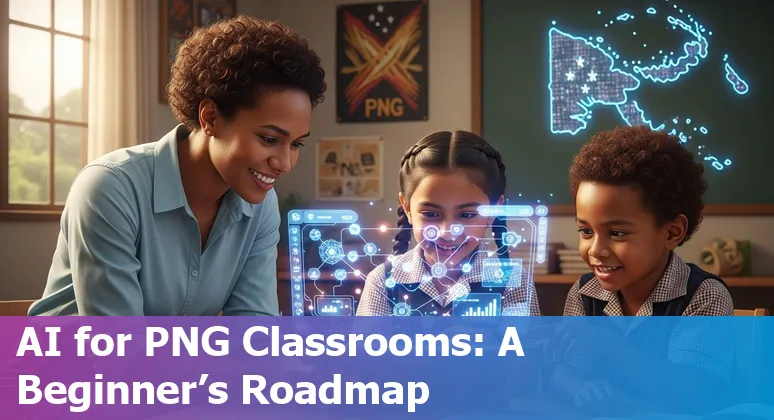
AI matters for education in Papua New Guinea because the conversation has shifted from “if” to “how”: the Artificial Intelligence Summit 2025 in Port Moresby brought together more than 200 local and international participants to map practical uses like generative tutors and automated student support, while CQUniversity's shared toolkit demonstrated classroom-ready approaches to using AI as a learning assistant.
Minister Timothy Masiu urged schools and universities to embed AI and digital ethics into curricula and the Department of ICT is finalising a National AI Adoption Framework to guide responsible rollout; balancing big gains in personalised learning with real risks - bias, privacy and job disruption - means pilots must include clear KPIs and community-led safeguards.
Find summit details at the AI Summit site and the Department of ICT briefing for the latest policy direction.
| Bootcamp | Length | Early-bird Cost |
|---|---|---|
| AI Essentials for Work bootcamp | 15 Weeks | $3,582 |
| Solo AI Tech Entrepreneur bootcamp | 30 Weeks | $4,776 |
| Cybersecurity Fundamentals bootcamp | 15 Weeks | $2,124 |
“Artificial Intelligence is not the future - it is the now. But whether it becomes a tool for liberation or a driver of division depends on the choices we make today.” - Minister Timothy Masiu
Table of Contents
- National policy context and timeline for Papua New Guinea
- What problem does Papua New Guinea face in learning the English language?
- Which country is leading AI and introducing it to education? Insights for Papua New Guinea
- What is the AI regulation in Papua New Guinea in 2025?
- Is learning AI worth it in 2025 for Papua New Guinea learners and educators?
- Practical steps for Papua New Guinea schools and universities to start with AI
- Training and curriculum guidance (learning pathway) for Papua New Guinea
- Technology, risks, mitigations, pilot use-cases and KPIs for Papua New Guinea
- Conclusion: Next steps and resources for Papua New Guinea
- Frequently Asked Questions
Join the next generation of AI-powered professionals in Nucamp's Papua New Guinea bootcamp.
National policy context and timeline for Papua New Guinea
(Up)Papua New Guinea's national policy landscape for AI is taking shape fast: the Department of ICT is finalising a National AI Adoption Framework to steer ethical, inclusive deployment across government and schools, anchored in an existing stack of reforms - from the Digital Transformation Policy (2020) and Digital Government Act (2022) to the Government Cloud Policy (2023), Data Governance and Protection Policy (2024) and the Digital Government Plan 2023–2027 that maps practical rollouts like SevisPass (the country's first Digital ID) and biometric voting ambitions through 2027; readers can see the government's roadmap on the Papua New Guinea Department of ICT roadmap.
Progress sits alongside clear constraints - AI development in PNG is still in its early stages, concentrated around Port Moresby and dependent on stronger connectivity - and legal safeguards lag: as of May 2025 there is no single dedicated national AI law, so the new framework must bridge policy gaps while addressing real risks such as data protection and misuse.
One vivid reminder: SevisPass itself stalled on a K7 million shortfall, showing that policy timelines will only succeed with matched funding and cross-sector buy‑in.
“Artificial Intelligence is not the future - it is the now. But whether it becomes a tool for liberation or a driver of division depends on the choices we make today.” - Minister Timothy Masiu
What problem does Papua New Guinea face in learning the English language?
(Up)Learning English in Papua New Guinea is tangled up in a remarkable multilingual reality: with roughly 800 local languages and many children speaking a different tongue at home, students often face an extra layer of difficulty when English is the classroom language, making them more likely to struggle or drop out unless carefully supported.
Research shows that mismatch between home language and the language of instruction creates real barriers - students may lack the mother‑tongue reading skills needed to transfer comprehension into English, and short “early exit” transitions without sustained mother‑tongue support rarely deliver lasting gains; properly resourced “late exit” bilingual pathways and long‑term funding are what evidence suggests work best (see ACER's analysis of language‑of‑instruction challenges).
Policy shifts - like the 2013 move back toward English medium instruction documented in UNESCO's history of the controversy - have been complicated by weak teacher training, scarce locally‑relevant materials, and social pressures that sometimes prize English over local tongues.
The result is both a learning problem and a cultural one: when teachers and communities rediscover the complexity of languages such as Nungon (teachers were surprised to find Nungon has five distinct tenses), that clarity can flip from deficit to advantage - but only if policy, training and resources align to bridge home and school languages rather than erase them (background at the Lowy Institute).
“When our children go to school, they go to an alien place, they leave their parents, they leave their gardens, they leave everything that is their way of life. They sit in a classroom and they learn things that have nothing to do with their own place. Later, because they have learned only other things, they reject their own.”
Which country is leading AI and introducing it to education? Insights for Papua New Guinea
(Up)There isn't a single country to copy wholesale, but AI-in-education momentum is strongest in well‑resourced, tech‑savvy urban centres - with examples from the United States (Khan Academy's work on tutoring tools) showing what's possible - so the practical insight for Papua New Guinea is to adapt, not import: start with focused pilots that prioritise teacher professional development, clear KPIs and equity safeguards rather than whole‑system rollouts.
Global providers already offer school‑ready support - see specialist AI literacy and policy training for educators - while research shows teachers expect AI to help most with administrative tasks and personalised supplemental materials but will adopt only with serious PD and governance in place.
For PNG that means partnering on training, limiting features that shortcut productive struggle, and measuring outcomes like retention and reduced admin time in each pilot; leaning on external expertise for initial frameworks can speed safe rollout while local communities set the guardrails for data privacy and fairness.
Practical, bite‑sized pilots that hand off to radio or SMS where connectivity is thin can turn an abstract promise into classroom change that parents and teachers actually trust.
“We're at the cusp of using AI for the biggest positive transformation education has ever seen. And we will do that by giving every student on the planet an artificially intelligent but amazing personal tutor. And we will give every teacher on the planet an amazing artificially intelligent teaching assistant.” - Sal Khan, founder and CEO of Khan Academy
What is the AI regulation in Papua New Guinea in 2025?
(Up)What is the AI regulation in Papua New Guinea in 2025? PNG does not yet have a dedicated national AI law; instead the government is building policy capacity around a suite of existing reforms and a soon-to-be-finalised National AI Adoption Framework that will steer how AI is used across government, schools and public services.
The Framework - announced at the Artificial Intelligence Summit and described in the Department of ICT's briefing - will sit on top of the Digital Transformation Policy (2020), the Digital Government Act (2022), the Government Cloud Policy (2023) and the Data Governance and Protection Policy (2024), and aims to embed digital ethics, data safeguards and practical KPIs for pilots in education (read the Department of ICT announcement).
Ministers have been clear that risks such as AI bias, data privacy and job displacement must be front‑of‑mind, and the finance reality is stark: the SevisPass Digital ID stalled after a K7 million shortfall, a reminder that policy timelines need matched funding to deliver.
For now PNG's path looks like a regional pattern - use a national framework, strengthen data governance, run targeted pilots and only later decide if hard legislation is needed (see the Law Gratis summary on PNG's AI law status).
“Artificial Intelligence is not the future - it is the now. But whether it becomes a tool for liberation or a driver of division depends on the choices we make today.” - Minister Timothy Masiu
Is learning AI worth it in 2025 for Papua New Guinea learners and educators?
(Up)Is learning AI worth it in 2025 for Papua New Guinea learners and educators? Yes - but only if it's practical, locally designed and measured: global evidence shows AI skills are fast becoming a source of higher pay and stronger job growth (PwC's 2025 Global AI Jobs Barometer finds AI‑skill roles rose 7.5% and carry a large wage premium), and labour forecasts from the World Economic Forum make clear that AI and big‑data literacy will be among the fastest‑growing core skills through the decade.
For PNG that means prioritising short, skills‑focused pathways and teacher professional development rather than lofty degrees alone: start small with pilots that focus on measurable KPIs (retention, reduced admin time, learning gains), use AI to automate routine tasks and personalise supplemental practice, and design fallbacks that hand off to SMS or radio where internet is thin - for example, an automated student support chatbot that routes answers and lesson nudges to low‑bandwidth channels.
Learning AI pays off when governments, schools and training providers pair technical upskilling with human‑centred skills (prompt literacy, critical thinking, assessment design) so communities keep control and benefits reach classrooms, not just urban hubs.
“AI is optimally deployed as a transformative “enhancer” that pushes boundaries and amplifies capabilities to drive greater efficiency and productivity across industries.” - Wilson Chow, PwC Global TMT Industry Leader
Practical steps for Papua New Guinea schools and universities to start with AI
(Up)Practical steps for Papua New Guinea schools and universities begin with small, teacher‑led pilots that pair focused professional development and digital‑ethics training with measurable KPIs - retention, reduced administrative time and demonstrable learning gains - rather than system‑wide rollouts; the Department of ICT's AI Summit briefing and the soon‑to‑be‑finalised National AI Adoption Framework should guide those pilots so they align with national safeguards and funding realities.
Prioritise teacher upskilling and curriculum modules on prompt literacy and assessment design, build simple, low‑bandwidth fallbacks (for example, an automated student support chatbot that hands off to SMS or radio in rural areas), and lock in cybersecurity protocols from day one.
Measure cost savings and learning impact with clear metrics, plan for realistic budgets (a vivid reminder: SevisPass stalled on a K7 million shortfall), and embed community governance so cultural values and data privacy lead decision‑making.
Partner with local universities, telecoms and trusted NGOs to pilot in one province, iterate quickly, and publish transparent results so successes can be scaled responsibly across PNG.
“We must not allow AI to deepen inequalities or threaten our cultural values. Instead, we must guide its adoption to serve the public good.”
Training and curriculum guidance (learning pathway) for Papua New Guinea
(Up)Training and curriculum guidance for Papua New Guinea should start with a clear, staged learning pathway that ties national aspirations to classroom realities: align teacher professional development and student modules with the long‑range PNG Education Transformation Vision 2075 (PNG Education Transformation Vision 2075 roadmap) while using the Department of Education's e‑Learning and FODE channels to reach remote schools; practical steps include pre‑service and in‑service ICT training built into the National Teachers' Competency goals, short competency‑based AI micro‑credentials for educators (prompt literacy, assessment design, digital ethics), and modular student units that can be delivered online or via radio/SMS when connectivity is thin.
Follow an adoption cadence like the four‑phase AI roadmap - establish foundation, develop staff, educate students and community, then assess and progress (AI adoption roadmap for education institutions) - and use the technology profile for PNG to plan realistic infrastructure and pedagogical targets (device sharing, broadcast lessons, and staged broadband upgrades) so training is inclusive and scalable (Papua New Guinea education technology and teacher training profile).
The most memorable test: a curriculum pathway that turns a radio lesson into a measurable learning gain by pairing broadcast content with teacher prompts, SMS nudges for students, and classroom tasks that help transfer local language strengths into English literacy and digital skills.
"The Papua New Guinea Education Transformation Vision 2075 (PNGETV 2075) is a 50-year (2025-2075) strategic plan that charts a roadmap for the general ..."
Technology, risks, mitigations, pilot use-cases and KPIs for Papua New Guinea
(Up)Technology choices for Papua New Guinea pilots should be pragmatic: favour lightweight APIs and “wrapper” tools that add AI to existing systems, keep heavy models off the device when bandwidth is scarce, and pair any cloud models with low‑bandwidth fallbacks (SMS/radio) for rural schools - an example is an automated student support chatbot that hands off to SMS when connectivity drops.
Procurement must treat AI differently from ordinary software: expect vendor opacity on model use, ask whether institutional data will train external models, and push for short, flexible contracts and clear data protections; practical due‑diligence questions and procurement pathways are usefully laid out in EDUCAUSE's AI procurement guidance and Jisc's AI due‑diligence checklist.
Pilot use‑cases that balance impact and risk include automating routine admin tasks to free teachers, personalised homework nudges delivered via broadcast or SMS, and procurement wrappers that speed RFP drafting while tracking compliance; measure each pilot against tight KPIs such as reduced administrative hours, demonstrable learning gains, clear data‑use terms, and transparent vendor obligations on IP and model updates.
Smaller PNG institutions should pool demand or negotiate API access rather than expensive enterprise licences, include teaching-and‑learning staff in procurement decisions, and use community governance to audit bias and privacy so pilots build trust as they scale - because without governance the benefits can evaporate as quickly as a promise.
| Pilot use-case | Primary KPI |
|---|---|
| Automated student support chatbot for Papua New Guinea education | Reduced admin time / response coverage with SMS fallback |
| Teacher admin automation (wrappers) | Hours saved per week; cost savings vs licence fees |
| Curriculum personalization | Measurable learning gains and retention |
“AI is an accelerant. It's like gasoline in terms of growth, but it's also gasoline in terms of some of these risks.”
Conclusion: Next steps and resources for Papua New Guinea
(Up)Next steps for Papua New Guinea are straightforward and urgent: finalise and operationalise the National AI Adoption Framework while funding the backbone that makes it work - digital ID and reliable connectivity - and start visible, teacher‑led pilots with tight KPIs so communities can judge results for themselves (the Department of ICT's announcement outlines the Framework's goals and priorities).
Prioritise short, skills‑focused training for educators and managers so pilots aren't technology stunts but practical classroom tools - one scalable option is the AI Essentials for Work bootcamp, which teaches prompt literacy and workplace AI skills in 15 weeks - and support local entrepreneurs who can adapt solutions for low‑bandwidth delivery via programs like the Solo AI Tech Entrepreneur bootcamp.
Build community governance into every pilot, require vendors to be explicit about data use, and lock budgets to prevent the familiar trap: SevisPass stalled on a K7 million shortfall, a vivid reminder that policy without matched funding stalls progress.
Start small, measure everything (retention, admin time saved, learning gains), publish results and scale what works - this keeps AI accountable, culturally grounded and genuinely useful for PNG schools and students.
| Bootcamp | Length | Early-bird Cost |
|---|---|---|
| AI Essentials for Work bootcamp - 15-week prompt literacy course | 15 Weeks | $3,582 |
| Solo AI Tech Entrepreneur bootcamp - 30-week solo founder program | 30 Weeks | $4,776 |
| Cybersecurity Fundamentals bootcamp - 15-week cybersecurity certificates | 15 Weeks | $2,124 |
“Artificial Intelligence is not the future - it is the now. But whether it becomes a tool for liberation or a driver of division depends on the choices we make today.” - Minister Timothy Masiu
Frequently Asked Questions
(Up)Why does AI matter for education in Papua New Guinea in 2025?
AI matters because the conversation in PNG has moved from “if” to “how.” The Artificial Intelligence Summit 2025 in Port Moresby (over 200 participants) and classroom toolkits such as CQUniversity's shared materials have shown practical uses - generative tutors, automated student support and teacher assistants - that can boost personalised learning and reduce administrative burden. Success depends on teacher professional development, community governance and measurable KPIs (for example, retention, reduced admin time and demonstrable learning gains).
What is the policy and regulatory status of AI in Papua New Guinea in 2025?
As of mid‑2025 PNG does not have a dedicated national AI law. The government is finalising a National AI Adoption Framework (announced at the AI Summit) that will sit on top of existing instruments - Digital Transformation Policy (2020), Digital Government Act (2022), Government Cloud Policy (2023) and Data Governance and Protection Policy (2024) - to steer ethical, inclusive rollout in schools and public services. The Framework emphasises digital ethics, data safeguards and pilot KPIs, but timelines require matched funding (the SevisPass Digital ID project stalled on a K7 million shortfall).
How should PNG schools and universities start using AI safely and effectively?
Start with small, teacher‑led pilots that combine focused PD (prompt literacy, assessment design, digital ethics) and clear KPIs (retention, learning gains, hours saved). Use pragmatic technology choices - lightweight APIs, wrappers, cloud models with SMS/radio fallbacks - and require procurement due diligence (data-use terms, whether vendor models will be trained on institutional data, short flexible contracts). Include community governance, measure cost and learning impact, and partner with local universities, telecoms or NGOs to pilot in one province and publish results for scaling.
Is learning AI worth it for PNG learners and educators in 2025?
Yes - if training is practical, locally designed and measured. Global evidence (PwC 2025 and WEF forecasts) shows AI skills are growing fast and carry a wage premium; PNG should prioritise short competency‑based pathways and micro‑credentials for educators (example: 15‑week bootcamps) and combine technical upskilling with human‑centred skills (critical thinking, prompt literacy). Benefits are greatest when paired with inclusive delivery (radio/SMS fallbacks) and community oversight so gains reach rural as well as urban learners.
What learning problems can AI help solve in PNG and what limits should be considered?
AI can help address English‑learning barriers caused by PNG's multilingual reality (≈800 local languages) by providing personalised practice, bilingual resources and low‑bandwidth nudges (SMS/radio). Effective interventions must respect mother‑tongue pathways (late‑exit bilingual models), avoid shortcuts that undermine productive struggle, and plan for risks - bias, privacy, data misuse and job disruption - through KPIs, bias audits and community‑led safeguards. Technology alone won't work without aligned teacher training, funding and culturally relevant materials.
Get a clear timeline for EdTech upskilling pathways that take PNG education workers from routine tasks to higher‑value roles in 3–24 months.
See how Adaptive lesson-plan generation creates differentiated 40-minute lessons for mixed-ability PNG classrooms with low-resource adaptations.
Understand how automated grading systems speed feedback cycles and reduce instructor hours without sacrificing quality.

Ludo Fourrage
Founder and CEO
Ludovic (Ludo) Fourrage is an education industry veteran, named in 2017 as a Learning Technology Leader by Training Magazine. Before founding Nucamp, Ludo spent 18 years at Microsoft where he led innovation in the learning space. As the Senior Director of Digital Learning at this same company, Ludo led the development of the first of its kind 'YouTube for the Enterprise'. More recently, he delivered one of the most successful Corporate MOOC programs in partnership with top business schools and consulting organizations, i.e. INSEAD, Wharton, London Business School, and Accenture, to name a few. With the belief that the right education for everyone is an achievable goal, Ludo leads the nucamp team in the quest to make quality education accessible