









Top 10 Companies Hiring AI Engineers in Nauru in 2026
By Irene Holden
Last Updated: April 21st 2026
Too Long; Didn't Read
The Government of Nauru's Digital Transformation Unit and RONPHOS are the top companies hiring AI engineers in Nauru in 2026, focusing on critical national projects like digital sovereignty and economic modernization. Engineers can earn competitive salaries, with RONPHOS roles offering up to $155,000 AUD for high-stakes AI work in phosphate operations, while government positions provide impactful digital transformation projects with pay around $100,000 AUD.
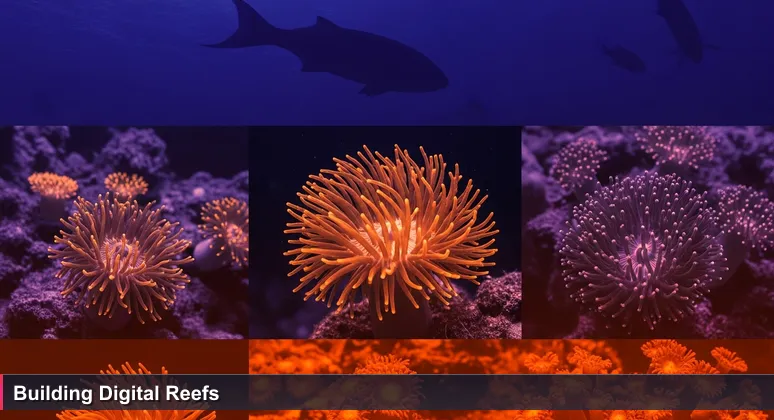
The most critical engineering on a coral reef doesn't happen in the open water where the big fish swim. It happens in the quiet dark, where a single polyp lays down its skeleton, building the foundation for everything to come. Similarly, Nauru's 2026 AI landscape is defined not by flashy startups but by strategic, foundational projects that are constructing the island's digital sovereignty.
This work is mission-critical and often overlooked by global tech headlines focused on scale. For a nation of just over 10,000 people, the focus is on precise integration: deploying AI to modernize public services, secure economic longevity, and ensure utility resilience. Each project, like a coral polyp, is a small, essential piece of a larger, interdependent structure supporting the entire community's future.
The investment is serious, with entry-level government AI roles starting at $85,000 AUD as outlined in the nation's own 2025-26 Budget. The driving force is a strategic need to prove ROI and build lasting infrastructure, a shift reflected in Pacific hiring trends where proof of work and practical integration are prioritized over hype. This is a market for builders who understand that in Nauru, an AI model that predicts a mining equipment failure or optimizes a solar grid isn't just software - it's a matter of national stability and economic security.
Table of Contents
- Introduction to Nauru's Strategic AI Landscape
- Government of Nauru Digital Transformation Unit
- RONPHOS
- Microsoft Cloud APAC Public Sector
- Digicel Pacific
- Nauru Utilities Corporation
- Asian Development Bank ICT Projects
- Databricks APAC Operations
- Commonwealth Secretariat Digital AI Branch
- United Nations Development Programme
- Pacific Community
- Conclusion: Building Nauru's Digital Future
- Frequently Asked Questions
If you're interested in getting into AI in Nauru in 2026, check this detailed guide.
Government of Nauru Digital Transformation Unit
Acting as the primary architect of Nauru's digital future, the Government's Digital Transformation Unit is where AI engineering meets direct national impact. This team builds the foundational systems for the Smart Nation initiative, focusing on pragmatic solutions that serve every citizen. Projects include developing NLP-powered chatbots in Nauruan and English to automate access to citizen services and creating predictive analytics for critical areas like healthcare resource allocation.
The tech stack is enterprise-focused, prioritizing reliability and integration with existing government systems. Engineers primarily work with Python, Microsoft Azure AI, and Power BI, as detailed in the government's strategic planning documents. This approach ensures new AI tools work seamlessly within the public service framework, a necessity for a small, integrated nation.
Compensation reflects the high stakes of this mission-critical work, with salaries ranging from $85,000 to $130,000 AUD. The role demands a unique blend of skills: deep technical expertise in building production-grade systems combined with the cultural acuity to design for a close-knit community. It is a career for those who want to see their code directly improve the efficiency and accessibility of an entire nation's public services, a challenge akin to the foundational digital sovereignty projects pursued by other small states.
RONPHOS
As the steward of Nauru's primary industry, the Republic of Nauru Phosphate Corporation (RONPHOS) deploys AI for operational survival and economic longevity. Here, engineering is directly tied to the nation's financial backbone, focusing on high-stakes industrial applications like predictive maintenance for heavy mining machinery and geospatial analytics for resource mapping.
The work involves deploying AIoT (AI-enabled Industrial IoT) systems and utilizes a specialized stack including MATLAB/Simulink for control systems and Python for custom model development. This isn't speculative technology; it's applied engineering where, according to industry analysis, effective predictive maintenance can slash unplanned equipment downtime by 30-50%, a critical efficiency gain for a remote operation. This aligns with global trends where AI is proving its ROI in industrial settings by preventing costly failures.
The team structure is a pragmatic hybrid: on-island engineers handle sensor deployment and edge computing, while data modeling is often supported by regional engineering partners in Brisbane. Reflecting the specialized skill set and economic importance of the work, salaries are competitive, ranging from $110,000 to $155,000 AUD, frequently supplemented with expatriate allowances. This role is for engineers who want their ML expertise to have a direct, measurable impact on sustaining a core national industry.
Microsoft Cloud APAC Public Sector
Microsoft Cloud's Public Sector team operates as the essential provider of foundational intelligence, building the core cloud and AI infrastructure upon which Nauru's digital transformation depends. While not a traditional local employer, Solutions Architects and AI Specialists based in regional hubs like Sydney or Singapore work directly with Nauruan entities to implement critical platforms such as Azure OpenAI Service and Azure Machine Learning.
Projects are strategically significant, ranging from localizing Large Language Models for government administrative tasks to designing robust cloud-to-edge architectures for utilities. These are senior roles demanding expertise in high-level technical strategy and hands-on deployment in challenging, remote environments. Compensation reflects this seniority and specialized skill set, with salaries for these regional positions commanding $150,000 to $220,000 AUD, as noted in industry guides like the one from igmGuru on high-paying AI jobs.
The work involves frequent travel to Nauru for intensive implementation phases, offering a unique career path that blends global-scale technology with hyper-local impact. This role is designed for engineers who want to architect the "autonomous intelligence" layer for an entire nation's public and economic infrastructure.
Digicel Pacific
In an island nation, connectivity is the essential lifeline for all other digital services. Following its acquisition by Telstra, Digicel Pacific leverages AI to optimize and secure the telecommunications backbone across the region, with Nauru as a critical node. AI engineers here tackle projects like building churn prediction models for small, unique customer bases and designing automated network traffic routing to manage limited satellite and cable bandwidth efficiently.
The tech stack is modern and built for scalable impact, utilizing frameworks like PyTorch and platforms such as Google Cloud Vertex AI. The team is typically based at the regional operational hub in Suva, Fiji, but engineers gain deep, practical experience with Nauru-specific network constraints and challenges. This focus on applied problem-solving in resource-constrained environments is a defining feature of Pacific tech roles.
Salaries are standardized across the company's Pacific hubs, offering a competitive range of $90,000 to $150,000 AUD. The hiring process often tests a candidate's ability to innovate under pressure, including system design components for low-bandwidth environments. This makes it an ideal pathway for engineers who want to work on regional infrastructure, with opportunities often listed on platforms like remote job boards serving the Pacific.
Nauru Utilities Corporation
For a remote island nation, utility management transcends operational efficiency - it is a fundamental matter of national security. The Nauru Utilities Corporation (NUC) stands at the forefront of this challenge, integrating AI to ensure the reliability of its hybrid energy grid and water desalination systems. Engineers here work on intensely practical applications, such as developing time-series forecasting models to balance solar and diesel power loads and deploying computer vision systems to detect leaks in critical water pipelines.
The technical environment requires a blend of modern AI and legacy industrial systems. Projects involve integrating TensorFlow models on edge devices at the power plant or desalination facility and ensuring they communicate seamlessly with existing SCADA control systems. This work, as emphasized in the corporation's own strategic planning, is vital for maintaining the island's stability. According to the Nauru Utilities Corporation Statement of Corporate Intent, these AI-driven initiatives are core to their mission of providing secure and sustainable services.
With a compact, integrated on-island team, engineers enjoy high autonomy and immediate impact. Salaries for these specialized roles, which demand the unique skill of applying AI to critical physical infrastructure, range from $95,000 to $140,000 AUD. This position is designed for pragmatic builders who want their code to directly safeguard a nation's energy and water security.
Asian Development Bank ICT Projects
The Asian Development Bank serves as a strategic investor in the Pacific's digital future, funding and overseeing large-scale infrastructure that defines Nauru's long-term connectivity and data capabilities. AI roles here are contract-based, typically spanning 2-3 years, and involve working as an international expert alongside local government counterparts on projects of regional significance.
Projects are macro-scale and strategic, such as employing computer vision and GIS tools to monitor coastal erosion or building sophisticated fiscal data analytics platforms for the Ministry of Finance. The tech stack favors robust, open-source tools like Python and R, chosen for their versatility and alignment with the development goals of building sustainable, sovereign systems. These initiatives are part of a broader effort, as highlighted in ADB discussions on Asia's technological revolution, to lay a foundational digital groundwork for resilient economies.
These positions offer high compensation, between $120,000 and $180,000 AUD, with the added benefit of often being tax-free for international contractors. This career path is ideal for engineers seeking a high-level, strategic view of Pacific development, providing a unique opportunity to influence how major investments in digital sovereignty are implemented on the ground in Nauru and across the region.
Databricks APAC Operations
As Nauru's government and major enterprises generate increasing volumes of data, the fundamental challenge shifts from simple collection to creating coherent, production-ready analytics systems. Databricks, through its regional Solutions Engineers based in Australia, addresses this by working directly with entities like the Government of Nauru and RONPHOS to implement the Databricks Lakehouse Platform, moving from isolated experimental notebooks to governed, reliable AI pipelines.
The goal is to establish a unified data governance framework that connects disparate government departments and enables real-time analytics for critical sectors like telecommunications and utilities. The technical work demands deep expertise in Apache Spark and MLflow to architect systems that become a nation's central data nervous system. This focus on "platform coherence" is identified as essential for scaling AI effectively, a trend highlighted in industry analysis of data trends.
These are senior, strategic roles that command premium compensation, with salaries ranging from $160,000 to $230,000 AUD. The position is designed for engineers who excel at building the foundational data architecture upon which a nation's future AI-driven decisions and services will depend.
Commonwealth Secretariat Digital AI Branch
For a small nation embarking on rapid technological adoption, establishing ethical and effective governance frameworks is as crucial as the underlying technology. The Commonwealth Secretariat's Digital & AI Branch works directly with member states like Nauru to build this essential capacity, ensuring the island's AI journey is both innovative and responsible.
Roles here focus less on hands-on coding and more on strategy, policy, and the implementation of "AI for Good" projects. The practical work often involves leveraging low-code/no-code platforms like the Microsoft Power Platform to empower local civil servants, developing national AI ethics guidelines, and designing pilot projects for transparent public service delivery. This strategic support is part of a broader effort to provide member states with the tools for sovereign digital development, as highlighted in regional opportunities for global engagement.
Based primarily in London with regional advisors, these positions involve significant travel to the Pacific and offer a unique career path at the intersection of technology, international policy, and development. Salaries for these specialized roles range from $100,000 to $145,000 AUD, reflecting their strategic importance in shaping a trustworthy digital future for nations like Nauru.
United Nations Development Programme
In Nauru, AI is increasingly deployed as a tool for literal survival against existential environmental threats. The United Nations Development Programme employs AI within its "Tech for Development" (T4D) initiatives to tackle frontline challenges like sea-level rise and food security, making its work uniquely mission-critical for the island's future.
AI engineers in these roles work in multi-disciplinary teams, often from regional bases in Fiji or Samoa, and travel to Nauru for essential field data collection. Projects are highly tangible and impactful, such as building predictive models for coastal inundation or developing AI-assisted agricultural models to optimize crop yields in Nauru’s rehabilitated mining lands. The technical stack is geared toward scientific problem-solving, heavily utilizing Python, GIS, and open-source ML frameworks.
These positions attract engineers driven by purpose, offering the chance to see their skills directly contribute to climate resilience in a vulnerable community. Compensation is competitive for the international development sector, with salaries ranging from $95,000 to $140,000 AUD, plus the comprehensive benefits package typical of UN roles. This path is for those who want to apply cutting-edge technology to some of the world's most pressing human and environmental challenges.
Pacific Community
Nauru's vast Exclusive Economic Zone represents both a vital economic resource and an environmental responsibility. The Pacific Community (SPC), as the region's lead scientific and technical organization, employs AI-driven research to steward this "blue economy," directly supporting Nauru's fisheries management and long-term environmental security.
The work is deeply research-focused and conservation-oriented. Engineers and data scientists, often headquartered in regional centers like New Caledonia or Fiji, develop specialized computer vision models using TensorFlow for automated fish species identification from underwater camera footage. They also apply satellite imagery analysis to monitor for illegal fishing activity within Nauru's waters, providing data crucial for sustainable management.
These roles offer a competitive salary for the research sector, ranging from $80,000 to $125,000 AUD. The hiring process typically emphasizes a candidate's portfolio of scientific machine learning projects over traditional credentials alone. This career path is ideal for AI engineers with a passion for environmental science, offering a meaningful opportunity to apply technical skills to protect the natural marine resources that are central to Pacific livelihoods and ecological health, as part of the broader innovative efforts across the region.
Conclusion: Building Nauru's Digital Future
The landscape of AI engineering in Nauru represents a fundamental shift from chasing hype to executing foundational, nation-building work. Like the interconnected coral polyps that construct a resilient reef, each organization - from the Government's Digital Transformation Unit to the Pacific Community's marine scientists - is laying down a critical piece of the island's digital skeleton. This work trades the anonymity of a large tech conglomerate for the tangible impact of seeing your model stabilize the national power grid or your algorithm help conserve maritime sovereignty.
The compensation is competitively structured for the region, with salaries reaching up to $230,000 AUD for senior architects, and the professional growth demands a rare combination of technical depth, cultural acuity, and systems thinking. For those in Nauru looking to enter this field, accessible upskilling through foundational programs in Python and data engineering provides a practical pathway to these strategic roles.
This is the strategic calculus of a sovereign nation: investing in intelligence not for novelty, but for resilience. For engineers who want to build not just software, but the digital future of a close-knit community, Nauru's ecosystem offers a career of unparalleled meaning and foundational impact, proving that the most critical engineering often happens where the spotlight doesn't immediately shine.
Frequently Asked Questions
How did you rank the top companies hiring AI engineers in Nauru?
The ranking is based on strategic impact, compensation, and the opportunity to build production-grade AI systems for Nauru's infrastructure. For instance, the Government of Nauru tops the list for national digital sovereignty, while RONPHOS offers high-stakes roles with salaries up to $155,000 AUD for economic longevity projects.
What salary can I expect as an AI engineer working in Nauru in 2026?
Salaries range from $80,000 to $230,000 AUD, depending on the employer and role. For example, Databricks offers up to $230,000 AUD for senior solutions engineers, while local roles at Nauru Utilities Corporation pay between $95,000 and $140,000 AUD for critical infrastructure work.
Can AI engineers in Nauru work remotely for international companies?
Yes, many roles are hybrid or remote-friendly, with companies like Microsoft Cloud and Digicel Pacific basing teams in regional hubs like Sydney or Suva. This leverages Nauru's time-zone alignment with Asia-Pacific markets for efficient collaboration on projects supporting Nauru's digital services.
What are the unique benefits of building an AI career in Nauru?
Nauru offers a close-knit community where you can directly impact national projects, from digital public services with the Government to industrial optimization with RONPHOS. Plus, proximity to tech hubs in Australia and the Pacific enables remote work and small-scale entrepreneurship, enhancing career flexibility.
Which employers in Nauru focus on AI for social and environmental impact?
Organizations like the United Nations Development Programme and Pacific Community use AI for climate resilience and conservation, with salaries from $80,000 to $140,000 AUD. These roles involve projects such as predictive modeling for coastal threats or monitoring fisheries in Nauru's Exclusive Economic Zone.
This review covers the top technology hubs in Nauru for startups and remote workers in the upcoming year.
Learn about 2026 tech job opportunities in Nauru without a college degree in this insightful piece.
Find out about tech training at community centres in Nauru for free.
This guide ranks the top-paying tech companies in Nauru, offering a comparison between reef and big fish careers.
This resource lists tech career starters in Nauru for 2026, including apprenticeships and remote roles.

Irene Holden
Operations Manager
Former Microsoft Education and Learning Futures Group team member, Irene now oversees instructors at Nucamp while writing about everything tech - from careers to coding bootcamps.