









AI Meetups, Communities, and Networking Events in Minneapolis, MN in 2026
By Irene Holden
Last Updated: March 16th 2026
Key Takeaways
Minneapolis in 2026 offers a vibrant AI networking scene with communities tailored for builders, strategists, and learners, directly linking professionals to Fortune 500 companies like Target and university research at the University of Minnesota. Key events such as the Wild AI Meetup with its fire talks and the AI Tinkerers Minneapolis-Saint Paul for technical deep dives provide practical skills and connections that enhance career opportunities in the region's strong corporate and healthcare sectors.
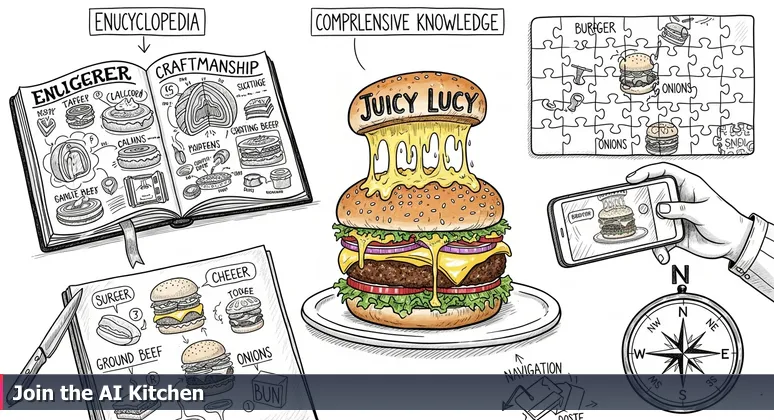
At Minneapolis institutions like Matt's Bar, the spectacle of the Juicy Lucy's cheese-pull can overshadow the craft behind it. A similar dynamic now challenges the local AI professional: an abundance of meetups and connections risks prioritizing collection over the deep, practical understanding required for mastery.
The scene has matured beyond general hype. The market, driven by corporate anchors like Target and UnitedHealth Group, demands professionals who can navigate the complex journey from pilot to governed, ethical deployment. This shift makes the specialized "kitchens" of the community more valuable than ever.
"The challenge isn’t AI capability, it’s execution," noted an enterprise AI consultant at a February 2026 meetup, highlighting the local focus on integration and governance over pure technology [0].
This environment rewards those who move beyond passive attendance. Groups like the builder-only AI Tinkerers MSP (40-80 practitioners per session) or the highly-rated Wild AI Meetup (4.8/5) are designed for active participation. Findings from the Gensler 2026 Global Workplace Survey support this, showing that "AI Power Users" report stronger team relationships - a direct outcome of engaged community building.
Unlocking career growth in the Twin Cities means shifting from tasting ideas at large conferences to working the recipe in the focused environments where local experts are solving today's execution challenges.
In This Guide
- Unlocking AI Career Growth in the Twin Cities
- Why Minneapolis? The 2026 AI Professional Landscape
- Builder's Kitchens: Hands-On Technical Communities
- Strategy Sessions: Business and Leadership Forums
- Community Hubs: Accessible Learning and Networking
- Your 2026 Twin Cities AI Networking Calendar
- From Attendee to Insider: Tactics for Meaningful Engagement
- The Career Flywheel: How Community Fuels Opportunity
- Your Invitation to the AI Kitchen
- Frequently Asked Questions
Get insights into the 2026 AI job market in Minneapolis with this comprehensive guide.
Why Minneapolis? The 2026 AI Professional Landscape
The Minneapolis-Saint Paul metro offers a distinct and powerful ecosystem for AI careers, blending the stability of corporate giants with the agility of a research-driven innovation hub. Unlike coastal tech centers, the Twin Cities' strength lies in its deep-rooted Fortune 500 presence and world-leading healthcare sector, industries now demanding professionals who can deliver on AI's promise at scale.
Corporate Demand for Execution
Local enterprises like Target, UnitedHealth Group, and 3M are beyond the pilot phase. They seek talent skilled in the practical challenges of retrieval-augmented generation (RAG) for customer service, HIPAA-compliant model deployment, and integrating AI into legacy supply chains. This creates a market that values execution over experimentation, where a proven ability to drive measurable ROI is paramount. The average salary for AI specialists here remains highly competitive, often coupled with a lower cost of living than major coastal cities.
The Academic Engine
This corporate demand is fueled by the University of Minnesota's Data Science Initiative, a constant feeder of cutting-edge research and talent. Public forums like the monthly GenAI+ Community of Practice act as a crucial bridge, allowing professionals to engage directly with academic frontiers and the researchers who will join local R&D teams.
Community as Proof Point
The thriving meetup scene is direct evidence of this landscape. From the enterprise-focused Twin Cities AI for Business Community (130-160+ attendees quarterly) to emerging niche groups like the Claude Code Meetups for specific toolchains, the community's growth mirrors the market's maturation. Major annual gatherings like the Applied AI Conference attract 500+ professionals, focusing squarely on the human-centered and ethical implementation prized by local employers.
Builder's Kitchens: Hands-On Technical Communities
For developers and engineers who learn by doing, the Twin Cities offers specialized "kitchens" where the focus is on code, infrastructure, and peer-to-peer problem-solving. These communities maintain a high barrier to entry not through elitism, but through a shared commitment to hands-on work.
AI Tinkerers Minneapolis-Saint Paul
This is the premier builder-only group, requiring an application via their portal to ensure a high signal-to-noise ratio. Meetings every two months draw 40-80 active practitioners for hands-on demos of foundation models and generative AI projects, creating an environment dedicated to technical exchange on tools like vector databases and custom notebooks.
Minneapolis AI Engineer Meetup
A stalwart of the technical scene, this monthly meetup consistently attracts 60-90 attendees to venues in the Riverplace area. It's favored for deep dives into AI engineering stacks, MLOps, and tooling comparisons, serving as a key venue for exchanging the "practitioner secrets" needed to implement systems at scale in local enterprises.
Niche Toolchain Groups
For those specializing in specific ecosystems, emerging series like the global Claude Code Meetups connect developers actively using the Claude CLI and Model Context Protocol (MCP). While local attendance is growing, these meetups represent the trend toward highly focused, toolchain-specific collaboration.
Takeaway for Newcomers
The barrier to entry here is curiosity and a willingness to engage on technical details, not pre-existing expertise. Come with a specific problem or project in mind. The value is in the collaborative troubleshooting and shared code, not passive observation.
Strategy Sessions: Business and Leadership Forums
While builders work in the code kitchen, another vital community segment focuses on the "why" and "how" of AI integration, governance, and strategy. These forums are essential for managers, entrepreneurs, and cross-functional leads navigating the organizational complexities of AI adoption in the Twin Cities' corporate-heavy market.
Twin Cities AI for Business Community
This group directly addresses the core local challenge of moving from capability to execution. It hosts quarterly large-scale bootcamps or half-day summits attracting 130-160+ executives and technical leads. The focus is on securing business wins, human-centered design, and ethical adoption, reviewed as a practical roadmap for leaders. It exemplifies the shift in expert discussion from technology to implementation.
"The challenge isn’t AI capability, it’s execution," - Enterprise AI Consultant, noting the focus at a 2026 Minneapolis meetup [10].
Regular Networking and Executive Circles
For consistent, cross-industry connection, events like the monthly AppliedAI Mixer provide accessible forums. For senior leadership, the Minneapolis CDAO Community offers peer-driven discussions on critical data and analytics issues several times a year, connecting top-level decision-makers.
Takeaway for Introverts
Business-focused events often have clearer agendas and speaker sessions, which can lower the barrier to entry. Use the presented content as a natural conversation starter; asking a thoughtful question after a talk is a low-pressure way to begin a valuable dialogue with both presenters and fellow attendees.
Community Hubs: Accessible Learning and Networking
Beyond intensive builder sessions and executive strategy rooms, the Twin Cities hosts several welcoming community hubs designed for consistent connection and accessible learning. These groups offer regular, lower-pressure environments that prioritize curiosity and relationship-building.
Wild AI Meetup
A community favorite with a 4.8/5 member rating, Wild AI meets every third Monday at locales like HeadFlyer Brewing. Its signature is "fire talks" - concise, five-minute, slide-free intros on what members are building. This format is engineered to spark curiosity and fuel the subsequent hour of dedicated open networking, creating a uniquely welcoming atmosphere for sharing local insights [1].
Academic-Industry Bridges
Hosted by the University of Minnesota's Data Science Initiative, the monthly GenAI+ Community of Practice is open to the public and deliberately blends academic research with industry application. It serves as a vital pipeline connecting professionals to the university's research powerhouse and the R&D talent emerging from it.
Foundational Learning Groups
For those solidifying their core knowledge, groups like the Machine Learning & AI Learning Group focus on "learning by doing" through collaborative projects and discussions of online courses. Similarly, the informal AI Makerspace Hours at the U provide a venue for casual, collaborative tinkering without the pressure of formal presentations.
Your 2026 Twin Cities AI Networking Calendar
To build momentum in your AI career, treat community involvement as a consistent practice. Curate your annual plan by layering these recurring local events, moving from sporadic attendance to strategic engagement.
Monthly Touchpoints
Establish a regular rhythm with these groups:
- Early Month: Minneapolis AI Engineer Meetup for technical deep dives.
- Third Monday: Wild AI Meetup for "fire talks" and networking (rated 4.8/5 by members).
- Monthly: UMN's GenAI+ Community of Practice for academic-industry crossover.
- Monthly: AppliedAI Mixer for general networking.
Quarterly & Bimonthly Deep Dives
Schedule these for more intensive learning:
- Every 2 Months: AI Tinkerers MSP builder-only sessions.
- Quarterly: Twin Cities AI for Business Community bootcamps, attracting 130-160+ professionals.
Annual Anchor Events
Plan ahead for these major conferences that define the regional discourse:
- Spring: AI Spring Summit at the UMN Humphrey School, focusing on governance and healthcare AI.
- Fall: Applied AI Conference at the University of St. Thomas, drawing 500+ professionals.
- Fall: Women in AI & Data Science (WiADS) Conference at UMN.
- Early Winter: DevFestMN, featuring significant AI/ML tracks.
- March: MN Entrepreneur Kick-off, connecting founders with mentors to scale using AI.
From Attendee to Insider: Tactics for Meaningful Engagement
Moving from a face in the crowd to a connected community member requires shifting from passive consumption to active contribution. Here are actionable tactics to transform your event attendance into career capital.
- Have a "Learning Goal," Not Just a Calendar Invite. Before any event, ask a specific question: "What one technical concept do I want to understand?" or "Who is one type of practitioner I aim to meet?" This focus turns attendance into a targeted mission.
- Embrace the "Back of House." The most valuable exchanges happen after formal talks. Attend the happy hour, stay for the unstructured networking, or join a study group project. As noted in the Gensler 2026 Global Workplace Survey, AI Power Users cultivate stronger team relationships - prioritize building yours.
- Give Before You Ask. Share a useful tool, an insightful article, or a piece of hard-won advice. Contributing to the community's knowledge pool is the fastest way to build credibility and foster reciprocal relationships.
- Follow Up, But Don't Pitch. Connect on LinkedIn with a personalized note referencing your conversation. The goal is to plant a seed for a professional relationship, not to make an immediate ask.
- Leverage the Corporate-Academic Bridge. Attend a public Machine Learning Seminar Series talk at Keller Hall. You’ll gain advanced knowledge and meet researchers and R&D professionals from local corporations who are plugged into the university's frontier work.
The Career Flywheel: How Community Fuels Opportunity
In the Twin Cities' execution-focused market, active community involvement creates a powerful career flywheel where demonstrated engagement translates directly into professional opportunity. Here, being a recognized contributor can carry as much weight as a formal credential.
The "Who" Opens Doors
Hiring managers from local powerhouses like Target, Optum, and 3M frequently participate in or sponsor community events. Being a positive, knowledgeable contributor in forums like the Twin Cities AI for Business Community (attracting 130-160+ leaders) or the technical AI Tinkerers group can get your resume seen by the right people before a job is even posted.
Solve Real Local Problems
Hands-on events like hackathons and the OpenClaw Global Unhackathon often tackle actual infrastructure or business challenges posed by local organizations. Success in these arenas provides a portfolio piece with immediate local relevance, proving you can deliver on the execution challenges that companies here face daily.
Learn the Unwritten Rules
Community dialogue reveals what enterprises are really struggling with - whether it's model governance at a healthcare giant or legacy system integration in retail. This intelligence allows you to tailor your skill development and interview responses to the market's precise needs, moving beyond generic technical answers to solutions that resonate with local hiring managers.
Find Advocates, Not Just Contacts
The relatively tight-knit nature of the Twin Cities tech scene means professional reputations are built in these rooms. A recommendation from a respected senior community member carries significant weight, often serving as the critical differentiator in a competitive hiring process and providing mentorship that guides long-term career navigation.
Your Invitation to the AI Kitchen
The Minneapolis-Saint Paul AI scene in 2026 is no longer about simply showcasing flashy results. True growth happens in the kitchens - the breweries, university halls, and corporate innovation centers - where the ingredients of research, code, and business strategy are combined by practitioners invested in real-world outcomes.
The essential perspective shift is this: curate your calendar not for the breadth of events you attend, but for the depth of involvement you seek. Prioritize the builder sessions where you can share code, the strategy roundtables where you debate governance frameworks for human-centered AI, and the community hubs where professional bonds are forged over a local brew.
Your career trajectory in the Midwest's AI landscape will be defined by the community you build and the practical execution problems you learn to solve within it. The local experts - from Fortune 500 leaders to university researchers - are already at the table, collaborating on the next wave of innovation that meets this market's unique demand for governed, ethical, and scalable AI.
Your invitation is clear. Move from tasting the menu to joining the kitchen crew. Pull up a chair, share what you're building, and start contributing to the work that defines the future of AI in the Twin Cities.
Frequently Asked Questions
What AI meetups are happening in Minneapolis in 2026?
In 2026, Minneapolis offers a vibrant AI scene with events like the Wild AI Meetup every third Monday, known for its 4.8/5 rating and fire talks, and the AI Tinkerers MSP for hands-on sessions. You can also join the UMN GenAI+ Community of Practice for academic-industry insights or the Minneapolis AI Engineer Meetup for technical deep dives.
How do I pick the right AI community for my career goals in the Twin Cities?
The Twin Cities AI communities are categorized into builders' kitchens for technical deep dives, strategy sessions for business leaders, and community hubs for regular networking. For instance, if you're a developer, AI Tinkerers MSP is ideal, while the Twin Cities AI for Business Community focuses on execution challenges faced by local giants like Target and UnitedHealth Group.
Are Minneapolis AI meetups beginner-friendly?
Yes, many events welcome beginners. The Machine Learning & AI Learning Group is designed for foundational learning, and Wild AI Meetup is praised for its welcoming atmosphere with concise talks to spark curiosity. Don't be intimidated; these groups encourage participation regardless of expertise level.
Why should I network in Minneapolis for AI instead of other tech hubs?
Minneapolis offers a unique blend of Fortune 500 companies like Target and UnitedHealth Group driving AI adoption, competitive salaries with a lower cost of living, and a strong research ecosystem anchored by the University of Minnesota. This creates direct career paths in practical AI execution, which is highly valued in the local market.
Do I need to pay to attend AI networking events in Minneapolis?
Most AI meetups in Minneapolis are free or low-cost, such as the Wild AI Meetup or UMN GenAI+ Community. However, larger events like the Applied AI Conference may have fees, so it's best to check individual event pages for details, as some quarterly summits attract 130-160+ attendees with structured networking.
For a curated overview of top women in tech networks in Minneapolis, visit this link.
Master the skills to become an AI engineer in Minneapolis by 2026 through hands-on projects and local resources.
For a breakdown of top industries for AI careers in Minneapolis in 2026, refer to this article.
This article ranks tech programs by mentorship and salary in Minneapolis to help you choose wisely.
In the Twin Cities, several startups are hiring; find the top 10 for junior developers in Minneapolis in 2026 here.

Irene Holden
Operations Manager
Former Microsoft Education and Learning Futures Group team member, Irene now oversees instructors at Nucamp while writing about everything tech - from careers to coding bootcamps.