









Top 10 AI Prompts and Use Cases and in the Education Industry in Marshall Islands
Last Updated: September 11th 2025
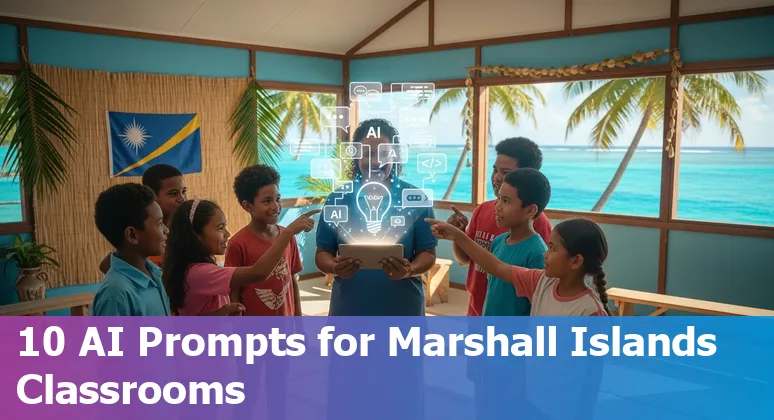
Too Long; Didn't Read:
Top 10 AI prompts and use cases for education in the Marshall Islands prioritize personalized tutoring, automated assessment, admin automation, teacher training and pilots. Key data: 21 solar laptop sets, 60% of K–12 teachers used AI in 2024–25 (weekly users save ~6 hours), no national data‑protection law.
AI matters for education in the Marshall Islands because it can amplify existing plans and patch real gaps: the 2010 Comprehensive Technology Plan already set K–12 digital standards and the Public School System has moved internet access to all Majuro schools while solar laptop learning systems (21 sets) were distributed to Outer Island schools, but many islands still lack reliable power and a national data‑protection law, leaving questions about privacy and safe use.
Smart, local uses of AI - from personalized tutoring and automated assessment to outreach that reduces manual work - can help teachers reclaim time and focus on culturally relevant instruction; research shows 60% of K–12 teachers used AI in 2024–25 and weekly users reclaim nearly six hours per week (Walton Family Foundation–Gallup K–12 teacher research).
Policies and teacher training are vital, so pilot projects should link the Ministry's tech goals with workforce development - learn practical staff training like Nucamp's Nucamp AI Essentials for Work bootcamp to build prompt and tool fluency that respects local priorities (Marshall Islands technology in education profile).
| Bootcamp | Length | Early bird cost | Registration |
|---|---|---|---|
| AI Essentials for Work | 15 Weeks | $3,582 | Register for Nucamp AI Essentials for Work bootcamp |
“It's not so much about learning a specific tool, but being open to learning what's available to you and using what you have available to you to try to improve the learning experience.”
Table of Contents
- Methodology: How we selected the top 10 AI prompts and use cases
- Personalized Tutoring & Adaptive Learning (example prompt and scaffold)
- Lesson Planning & Curriculum Alignment (unit templates and standards)
- Intervention Plans, Progress Monitoring & IEP Support (structured templates)
- Automated Assessment Creation & Grading Assistance (rubrics & feedback)
- Attendance, Behavior Analytics & Parent Communications (data summaries & outreach)
- Career Guidance, Counseling & Higher‑Education Advising (scholarships & recommendations)
- Professional Development & Prompt‑Engineering Training for Staff (PD agendas)
- Content Creation: Multimedia, Visuals & Instructional Materials (bilingual assets)
- Mental Health & Wellbeing Support (triage scripts and referral templates)
- Administrative Automation & Data Analysis for Decision Making (risk factors & action plans)
- Conclusion: Getting started - pilot checklist and next steps for Marshall Islands schools
- Frequently Asked Questions
Understand the essential steps for Privacy and student data protection in the Marshall Islands before you buy any AI tool.
Methodology: How we selected the top 10 AI prompts and use cases
(Up)Methodology rested on practical pedagogy and local realities: prompts and use cases were chosen by prioritizing classroom techniques Marshall University promotes (problem‑based learning, critical evaluation of LLM output, and student metacognition) alongside institutional safeguards such as mandatory generative‑AI syllabus policies and training pathways; sources like Marshall's Generative AI hub informed the requirement that any prompt be teachable, auditable, and aligned with course expectations (Marshall University Generative AI Hub - policies and resources).
Selection criteria emphasized (1) pedagogical value - activities that ask students to analyze ChatGPT outputs for fabrication, bias, or missing context; (2) ethical guardrails - use cases that map to Marshall's syllabus guidance and faculty resources; and (3) local feasibility - prompts that scale in low‑bandwidth or solar laptop settings and reduce manual work (advising/re‑engagement pilots shown to cut outreach burden).
To capture best practices and bias awareness, Marshall's Design Center resources and Faculty CTL guides were mined for example prompts, assessment rubrics, and bias‑spotting exercises that teachers can adapt immediately (Marshall University Design Center AI resources and teaching guides).
“We are committed to fostering an environment where AI-driven solutions can thrive, providing opportunities for academic excellence and technological advancement.”
Personalized Tutoring & Adaptive Learning (example prompt and scaffold)
(Up)Personalized tutoring through adaptive learning can make instruction in the Marshall Islands feel less like a one‑size‑fits‑all lecture and more like a tailor‑made path that catches students before they fall behind: adaptive systems use data‑driven algorithms to adjust pacing, offer extra practice, and gamify small wins so struggling learners stay motivated rather than frustrated (Adaptive learning problem sets and quizzes overview).
A practical teacher scaffold for a solar‑powered classroom might follow four steps - baseline diagnostic, targeted adaptive practice, teacher intervention triggers, and a simple progress dashboard - so educators retain control while the system handles routine differentiation; this mirrors best practices in modern adaptive pedagogy that emphasize real‑time adjustments and analytics (Data‑driven adaptive learning guide).
Pilot projects in the Marshall Islands can pair low‑bandwidth modules with AI advising to cut manual outreach and keep learners engaged on outer islands, ensuring tools serve local priorities rather than replace them (AI advising and re‑engagement pilots).
Imagine a classroom where a student's missed concept is met instantly with three step‑by‑step problems and a short cultural example - small, timely fixes that add up to big gains in retention and confidence.
| Benefit | Description |
|---|---|
| Personalized Pacing | Lessons adapt to each student's readiness, reducing frustration. |
| Immediate Feedback | Students get real‑time correction and targeted practice. |
| Data‑Driven Paths | Analytics identify gaps so teachers can intervene strategically. |
Lesson Planning & Curriculum Alignment (unit templates and standards)
(Up)Lesson planning in the Marshall Islands can leap from paperwork to practice when AI is used to generate unit templates that map directly to curriculum goals: AI lesson‑plan generators rapidly translate standards into clear objectives, formative checks, and assessment tasks so each lesson flows from objective to evidence, mirroring backward‑design best practices described by Teaching Channel and Education World.
In low‑bandwidth or solar‑powered classrooms, teachers can still use compact, standards‑aligned drafts as a scaffold - then localize examples, seasonal content, and community stories so lessons feel unmistakably Marshallese rather than generic.
These tools act as thinking partners, not replacements: they suggest hooks, differentiation for English learners and IEPs, and formative checkpoints so teachers reclaim hours for student interaction while keeping ownership of pedagogy (see the Structural Learning overview on AI in lesson planning and PopAi's guide to standards alignment).
For schools piloting AI, prioritize unit templates that export to your LMS, embed UDL options, and include simple rubrics and exit tickets; one clear, locally relevant example in a unit - like analyzing sea‑level change through a neighborhood oral history - turns alignment theory into a classroom moment students remember.
| Feature | Classroom Benefit |
|---|---|
| AI as thinking partner | Drafts engaging hooks, objectives, and differentiated tasks |
| Standards alignment | Ensures unit plans map to required standards and assessments |
| Localized curriculum & UDL | Adapts lessons for culture, language, and diverse learners |
"The ability to customize lessons for IEP students and English learners, while embedding cultural responsiveness, is incredibly powerful. This tool gives teachers a head start in creating inclusive learning environments."
Intervention Plans, Progress Monitoring & IEP Support (structured templates)
(Up)Intervention plans for Marshall Islands classrooms should pair clear, research-backed small‑group routines with simple progress‑monitoring templates so teachers can move a student from guessing at words to confident decoding in weeks, not months; use NCII's literacy lessons to target the five components of reading (phonemic awareness, phonics, fluency, vocabulary, comprehension) and design short, explicit routines, Reading Rockets' Tier 2/3 guidance to set intensity (Tier 2: ~20–40 minutes small groups; Tier 3: daily, highly individualized support), and Panorama's intervention planning forms to log goals, baselines, and monitoring frequency so sparse connectivity or solar laptops don't stall documentation (NCII sample literacy lessons for evidence-based literacy instruction, Reading Rockets Tier 2 and Tier 3 intervention guidance, Panorama small-group intervention planning templates and forms).
Pairing targeted phonics, blended decoding practice, and comprehension groups with IEP‑aligned, measurable reading goals and weekly progress checks creates a low‑bandwidth workflow that keeps teachers in control and students on track.
| Intervention Group | Best Fit | Typical Group Size | Tier |
|---|---|---|---|
| Targeted Phonics | Foundational decoding & phonemic awareness | 3–6 | Tier 2 / Tier 3 |
| Blended Reading | Bridge decoding to fluency in decodable text | 3–6 | Tier 2 |
| Targeted Comprehension | Students who decode but struggle with meaning | 3–6 | Tier 2 |
“In schools all across the country, we often see teachers implementing targeted comprehension groups. We focus on that so much. However, that's only one type of group. If we're only focusing on that and skipping the targeted foundational skills and the phonics-controlled text group, we're really not meeting students where their needs are.”
Automated Assessment Creation & Grading Assistance (rubrics & feedback)
(Up)Automated assessment tools can turn slow, inconsistent grading into a predictable, teachable rhythm for Marshall Islands classrooms: AI rubric generators such as Monsha AI Rubric Generator and MagicSchool's rubric tool produce exportable, Google Classroom–compatible rubrics aligned to grade levels and frameworks, while platforms like CoGrader AI Grading Platform promise instant first‑pass feedback, class analytics, and claims of helping teachers save up to 80% of grading time - features that matter when teachers juggle many roles and scarce hours.
For richer, scalable feedback workflows, products like FeedbackFruits Assignment Review tool add AI‑suggested comments, reusable feedback banks, and learning analytics so formative checks become actionable rather than burdensome; integration with Turnitin and LMS syncs keep integrity and workflow aligned.
These tools work best as hybrid systems - AI drafts consistent rubrics and highlights trends, and educators retain final judgment - so technology amplifies equity and clarity without replacing professional insight; imagine a single dashboard that turns a stack of essays into a clear map of class strengths and gaps, ready for targeted instruction.
“With a lovely tool like FeedbackFruits, you can have things like feedback banks and audio feedback. We can really kind of scale up our approach.”
Attendance, Behavior Analytics & Parent Communications (data summaries & outreach)
(Up)Attendance systems powered by AI can turn a stack of paper roll calls into an early‑warning hub for Marshall Islands schools - automating check‑ins, sending real‑time alerts to staff, and sparking family outreach across atolls so teachers spend less time chasing absences and more time teaching.
Solutions like an AI-powered attendance tracking for schools offer facial recognition, cloud storage, SMS/WhatsApp integration, and analytics that flag patterns; pairing those capabilities with predictive dashboards (attendance + behavior + grades) helps identify at‑risk students before gaps widen.
For outreach at scale, platforms modeled on Edia's approach can launch personalized, multilingual conversations within minutes of an unexplained absence and link responses to MTSS workflows so follow‑up is targeted, not generic (Edia multilingual family outreach AI platform).
In the Marshall Islands context, prioritize low‑bandwidth workflows, clear data governance, and parent‑facing notifications that respect privacy while making every absence an opportunity for connection rather than a paperwork headache.
| AI Capability | Classroom/Family Benefit |
|---|---|
| AI facial recognition & automated check‑in | Faster, more accurate attendance that reduces proxy marking and saves teacher time (Vidyalaya) |
| Predictive analytics & trends dashboards | Early identification of at‑risk students and smarter resource allocation (SchoolAI/renewator) |
| Multilingual, automated family outreach | Timely, culturally appropriate follow‑up that reduces unexplained absences and enables MTSS actions (Edia) |
“Today, nearly three‑quarters of absences are unexplained, meaning no one called in ahead of time and districts don't know where those children are.”
Career Guidance, Counseling & Higher‑Education Advising (scholarships & recommendations)
(Up)AI-driven advising can make higher‑education planning in the Marshall Islands far more practical and personal: platforms like Flamingo AI college and career planner build holistic, long‑term student plans (academics, activities, testing and essays), offer an AI Essay Lab and matching tools, while campus portals such as Unifyed Engage student engagement platform - now adopted by the College of the Marshall Islands - bring personalized, mobile student engagement that helps counselors manage outreach across atolls; meanwhile tools like Kollegio scholarship finder and essay feedback surface scholarships with a “personalised financial aid” layer and provide 24/7 essay feedback so a student on an outer island can get instant, usable suggestions outside school hours.
Together these systems speed up matching, streamline application tracking and document collection, and make scholarship opportunities easier to find - turning a scattered list of islands into a navigable pathway to study and funding without adding administrative burden.
| Tool | Key Feature | Benefit for Marshall Islands |
|---|---|---|
| Flamingo AI college and career planner | Holistic planning, AI recommendations, Essay Lab, application tracker | Personalized roadmaps and stronger essays for college admissions |
| Kollegio scholarship finder and essay feedback | Scholarship finder, 24/7 essay support, personalized matching | Improves access to financial aid and around‑the‑clock essay help |
| Unifyed Engage student engagement platform | AI‑backed mobile/portal student engagement | Scales counseling and retention efforts across dispersed islands |
“We are delighted with this opportunity to invest in such advanced learning technologies. We are confident these will provide CMI students with higher levels of engagement and transcend the distances faced in our small island state.”
Professional Development & Prompt‑Engineering Training for Staff (PD agendas)
(Up)Professional Development for the Marshall Islands should pair fast, practical upskilling with sustained coaching so staff gain prompt‑engineering skills they can use the next day: short, hands‑on modules (like the free, 2‑hour ChatGPT course that teaches prompt design, lesson‑planning shortcuts, and a ready prompt library) sit alongside full‑day workshops and year‑long hybrid cohorts that build confidence and policy awareness; lean on free educator resources and ongoing support to scaffold learning for teachers with limited connectivity.
Build PD agendas from three parts - introductory prompt literacy and ethics, classroom‑ready prompt templates for standards‑aligned units, and a school‑level track on governance and low‑bandwidth workflows - and schedule peer coaching so every teacher leaves with at least three tested prompts they can adapt for bilingual or culturally grounded lessons.
For program partners, choose vendors who offer online/blended options and custom workshops that respect local schedules and solar‑powered classrooms so PD becomes a tool for empowerment, not extra paperwork; integrate a prompt library, sample rubrics, and follow‑up coaching into any rollout to make gains stick.
“We can get faculty up and running in a matter of a couple of hours with, say, generative AI. For instance, courses that are taught by the Center for Teaching and Technology include a course called the AI prompt. It's designed to look like a cooking show, but they teach you how to use AI prompts. It even comes with a cookbook that teaches step-by-step generative AI prompts.”
Content Creation: Multimedia, Visuals & Instructional Materials (bilingual assets)
(Up)Content creation for Marshall Islands classrooms should favor images and multimedia that teach, not distract, and AI can make bilingual, culturally grounded assets fast - if tools and prompts are chosen carefully.
Research shows visuals help learning when they're instructive and aligned to outcomes, so prefer clear diagrams, labeled maps, and step-by-step visuals (for example, an illustrated Marshallese canoe with labeled parts) over flashy, irrelevant artwork; see the MIT Sloan research-backed guide to AI-generated images for learning (MIT Sloan research-backed guide to AI-generated images for learning).
For practical tooling, DALL·E 3 is a strong classroom fit thanks to conversational prompts, integration with ChatGPT/Bing, and API-friendly workflows for batch asset export, while Midjourney shines when highly stylized, artistic work is desired but requires more prompt skill and Discord setup (see guide: Which AI image generator to choose (DALL·E 3 vs Adobe Firefly vs Midjourney vs Leonardo AI), and a focused DALL·E 3 vs Midjourney AI image generator comparison).
Always vet outputs for cultural accuracy, add concise alt text for accessibility, and design prompts that produce simple, instructive bilingual captions so visuals reinforce learning rather than compete with it.
| Tool | Primary Strength | Classroom fit (Marshall Islands) |
|---|---|---|
| DALL·E 3 | High prompt accuracy, ChatGPT/Bing integration, API access | Fast, realistic bilingual illustrations and exportable assets for low-bandwidth sync |
| Midjourney | Artistic, highly stylized visuals | Best for high-concept posters or storytelling art where style outweighs speed |
Mental Health & Wellbeing Support (triage scripts and referral templates)
(Up)AI can extend scarce mental‑health capacity in the Marshall Islands by handling low‑level triage, surfacing early warning signs, and producing clear referral scripts and templates that let limited counsellor time focus on the highest‑risk students; a triage study of GPT‑4 models found substantial agreement with clinicians and no missed admissions, suggesting LLMs can reliably organize risk information for human review (GPT‑4 triage study showing clinician agreement).
Real‑world chat data show these tools help students open up - about 2% of AI‑chat conversations are high risk, and many students who use bots later share their summaries with counselors - so school‑level scripts that escalate “critical” flags into immediate human follow‑up can be lifesaving while conserving scarce staff time (EdSurge: students' AI chats reveal largest stressors (2025)).
Practical next steps for Marshall Islands pilots include clinician‑written chatbot prompts, low‑bandwidth logging templates, clear privacy and consent language, and a single‑page referral workflow (who calls, when, and which community resource) so the technology functions as a trusted on‑ramp to care - not a replacement for local professionals (EDU‑AI: clinician‑designed chatbot model for school mental health); imagine an AI that flags a student as “critical” like a lighthouse flashing on a dark atoll - then routes a real person to respond.
| Metric | Value | Source |
|---|---|---|
| High‑risk AI chats | 2% | EdSurge: students' AI chats reveal largest stressors (2025) |
| Of high‑risk chats reporting suicidal ideation | ~38% | EdSurGe: students' AI chats reveal largest stressors (2025) |
| Students sharing chat summaries with counselor | ~41% | EdSurge: students' AI chats reveal largest stressors (2025) |
“AI bots are tools in a toolbox to help young people, not replacements for human practitioners.”
Administrative Automation & Data Analysis for Decision Making (risk factors & action plans)
(Up)Administrative automation in Marshall Islands schools starts with clean data: enforce consistent headers, UTF‑8 encoding, and remove sparse or duplicate records before importing - simple habits that prevent weeks of cleanup later (see CSV import best practices for education data for tips on headers, testing small sample files, and splitting large datasets into manageable batches).
Once files are tidy, automate quality checks and reporting so leaders get actionable risk flags instead of raw spreadsheets - open workflows like the four‑node n8n template can fetch a CSV URL and produce a professional data‑quality report in under a minute, making it easy to schedule recurring audits and prioritize fixes (n8n data-quality automation tutorial).
Follow platform rules for schema validation and run cadence - School Data Sync, for example, validates structure and limits runs per day - so imports don't accidentally mark records inactive (School Data Sync manual CSV upload and schema validation).
The payoff is practical: a teacher on a solar laptop can convert attendance roll calls into a color‑coded risk dashboard before morning assembly, letting schools turn raw data into timely intervention plans that respect local bandwidth and governance priorities.
Conclusion: Getting started - pilot checklist and next steps for Marshall Islands schools
(Up)Begin small, measure, and center local realities: pilot one tight use case (for example, AI-assisted attendance or an adaptive tutoring module) on Majuro where internet exists, then phase the same low‑bandwidth workflow to outer islands that already have solar laptop learning systems; align every pilot to the 2010 Comprehensive Technology Plan and PSS priorities, secure clear data‑governance rules (there's no national data‑protection law yet), and sign formal roles with Ministry ICT, MINTA, and local teacher‑prep partners so ownership stays local.
Prioritize teacher PD and prompt‑engineering practice - research shows educators want training to feel confident - so pair short cohort workshops with on‑the‑job coaching and a simple KPI dashboard (engagement, unexplained absences, time saved on admin, and learning gains).
Use pilots to test escalation paths (mental‑health triage, IEP interventions, family outreach) and vendor contracts that lock features that would replace “productive struggle.” A practical next step is to enroll instructional leaders in a focused program like Nucamp's AI Essentials for Work to build prompt fluency, then run a 6–8 week classroom pilot, iterate, and scale; imagine a single solar laptop on an outer atoll booting up before dawn to deliver the day's adaptive lesson - small, repeatable wins that build trust and capacity.
| Bootcamp | Length | Early bird cost | Registration |
|---|---|---|---|
| AI Essentials for Work | 15 Weeks | $3,582 | Register for AI Essentials for Work |
“...in helping with some of the administrative duties, I can focus more time on actual lesson planning and devoting time to each student.”
Frequently Asked Questions
(Up)Why does AI matter for education in the Marshall Islands and what local challenges must be addressed?
AI can amplify existing education plans and fill operational gaps by enabling personalized tutoring, automated assessment, outreach automation, and administrative data analysis so teachers reclaim time for culturally relevant instruction. Local challenges include uneven power and connectivity (some outer islands rely on solar laptop systems, 21 sets distributed), no national data‑protection law yet, and the need for culturally appropriate vetting and privacy protections. Research cited in the article found about 60% of K–12 teachers used AI in 2024–25 and frequent users reclaim nearly six hours per week, underscoring potential time savings if pilots are well governed and supported.
What are the top AI use cases and prompts recommended for Marshall Islands classrooms?
The article highlights ten practical use cases: (1) Personalized tutoring and adaptive learning (diagnostic → targeted practice → teacher triggers → progress dashboard); (2) Lesson planning and curriculum alignment (standards→unit templates→UDL options); (3) Intervention plans, progress monitoring & IEP support (tiered small‑group templates); (4) Automated assessment creation and grading assistance (rubrics, feedback banks); (5) Attendance, behavior analytics & parent communications (predictive dashboards + multilingual outreach); (6) Career guidance and higher‑education advising (essay labs, scholarship matching); (7) Professional development and prompt‑engineering training for staff; (8) Content creation for bilingual/multimedia assets (DALL·E 3 and Midjourney examples); (9) Mental health triage and referral scripting (bot triage with human escalation); and (10) Administrative automation and data analysis (clean data, scheduled audits, risk dashboards). Each prompt/use case was chosen for pedagogical value, ethical guardrails, and low‑bandwidth feasibility.
How should schools pilot AI projects and what practical steps or KPIs should they use?
Start small and measurable: run a tight 6–8 week pilot on Majuro (where internet is available) for one use case (e.g., AI‑assisted attendance or an adaptive tutoring module), then phase to outer islands with solar laptops. Align pilots to the 2010 Comprehensive Technology Plan and PSS priorities; secure clear data‑governance rules; define formal roles with Ministry ICT, MINTA and teacher‑prep partners; and require vendor commitments that preserve productive struggle. Recommended KPIs include student engagement, unexplained absences, time saved on administrative tasks, and learning gains. Pair pilots with teacher PD, a prompt library, and an escalation path for mental‑health and IEP interventions.
What safeguards, policies and training are essential to deploy AI responsibly in Marshall Islands schools?
Essential safeguards include explicit consent and privacy practices (especially given the absence of a national data‑protection law), mandatory generative‑AI syllabus policies, human‑in‑the‑loop review for assessments and mental‑health triage, cultural accuracy checks for content, auditable prompts and outputs, and clear escalation protocols for high‑risk cases. Training must cover prompt literacy, ethics, bias spotting, low‑bandwidth workflows, and school‑level governance. Pilot contracts should lock vendor features that protect student data and prevent automated replacement of essential teaching work.
What professional development options are recommended and how can teachers gain prompt‑engineering fluency quickly?
Combine short, hands‑on modules (2‑hour prompt literacy workshops) with full‑day sessions and year‑long hybrid cohorts that include on‑the‑job coaching and peer practice. A practical PD agenda has three parts: introductory prompt literacy and ethics, classroom‑ready prompt templates aligned to standards, and a school‑level track on governance and low‑bandwidth workflows. Teachers should leave each PD with at least three tested prompts for bilingual or culturally grounded lessons. For instructional leaders, the article recommends enrolling in focused programs such as Nucamp's AI Essentials for Work (15 weeks; early bird cost listed at $3,582 in the article) to build sustained prompt fluency before scaling pilots.
Learn how AI advising and re-engagement pilots reduce manual outreach and increase retention for institutions in the Marshall Islands.
Understand the threat and opportunity of AI-assisted pedagogy and lesson automation for routine classroom tasks in RMI.

Ludo Fourrage
Founder and CEO
Ludovic (Ludo) Fourrage is an education industry veteran, named in 2017 as a Learning Technology Leader by Training Magazine. Before founding Nucamp, Ludo spent 18 years at Microsoft where he led innovation in the learning space. As the Senior Director of Digital Learning at this same company, Ludo led the development of the first of its kind 'YouTube for the Enterprise'. More recently, he delivered one of the most successful Corporate MOOC programs in partnership with top business schools and consulting organizations, i.e. INSEAD, Wharton, London Business School, and Accenture, to name a few. With the belief that the right education for everyone is an achievable goal, Ludo leads the nucamp team in the quest to make quality education accessible