









Is Louisville, KY a Good City for a Tech Career in 2026?
By Irene Holden
Last Updated: March 13th 2026
Quick Explanation
Yes, Louisville is an excellent city for a tech career in 2026, especially for those interested in distributed tech sectors like logistics and healthcare. With tech roles projected to grow 13% over the next decade and a cost of living 9% below the national average, professionals can live comfortably on salaries around $70,000 for a single adult, thanks to major employers like Humana and UPS Worldport. The city's growing AI startup scene and affordable lifestyle make it a pragmatic choice for impactful work.
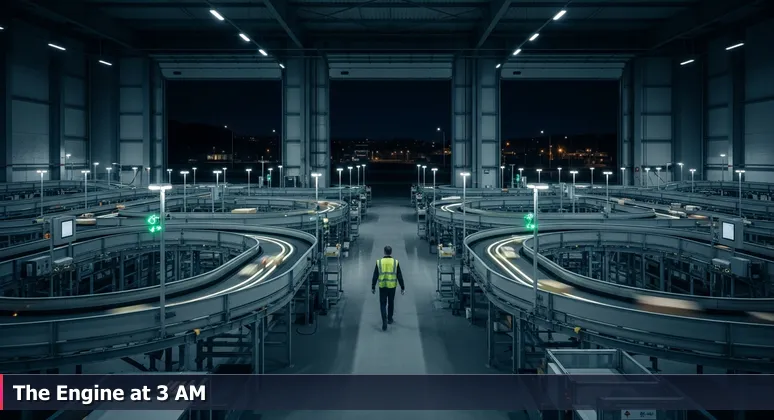
The real innovation isn't always born in a sun-drenched Silicon Valley garage. Sometimes, it’s engineered in the quiet hum of a 3 AM warehouse at UPS Worldport, where the pulse of the global economy is measured in blinking LEDs and perfectly routed packages. This is the foundational, often unseen, layer where code meets the physical world.
For the pragmatic technologist, this is the essence of the opportunity in Louisville: a career built on systems integration, not just software invention. Here, technology solves civilization's hard problems - moving goods, caring for health, building things - creating a robust and uniquely affordable career path that flies under the radar of the traditional tech hype cycle.
Louisville’s strength is in what analysts call distributed tech, where a vast workforce of IT professionals is embedded directly within massive, legacy industries. With over 18,000 IT professionals already here and a projected 13% growth in tech roles over the next decade - nearly triple the rate of other local occupations - the ecosystem is built on solving tangible, large-scale challenges.
This environment, supported by initiatives like Greater Louisville Inc.'s TechCity, offers a career path defined by quiet competence, where the impact of your work is visible in the efficient flow of logistics, the advancement of patient care, and the evolution of smart manufacturing right in your own community.
What We Cover
- Louisville's Quiet Tech Revolution
- The Advantage of Distributed Tech
- Affordability: Salary vs Cost of Living
- Ecosystem: Startups and Institutional Support
- Honest Challenges in 2026
- How Louisville Compares to Regional Hubs
- Is Louisville Right for You?
- Building Your Career with Bootcamps
- The Verdict for 2026
- Common Questions
This article serves as a complete guide for launching an AI career in Louisville, KY.
The Advantage of Distributed Tech
Louisville’s tech strength is not in pure-play software firms, but in a vast workforce of IT professionals embedded directly within massive legacy industries, driving digital transformation from the inside. This model of distributed tech creates a deep bench of talent focused on solving sector-specific challenges.
The ecosystem is anchored by three powerhouse pillars that account for the majority of local tech roles. Logistics & Supply Chain represents 24% of the tech sector, centered on the global automation of UPS Worldport. Digital Health & Healthcare IT is the largest domain at 38%, driven by giants like Humana and Norton Healthcare.
Kentucky has secured over $13 billion in EV-related investments, with Ford investing heavily in its Louisville Assembly Plant. Major employers like GE Appliances in smart home IoT and YUM! Brands in global digital commerce round out a market where tech is the engine for physical products and essential services.
Affordability: Salary vs Cost of Living
This is where Louisville’s proposition becomes compelling, especially for early-career professionals or families looking to build wealth without the financial strain of coastal hubs. The city remains one of the most affordable regional hubs, with a cost of living approximately 9% lower than the national average, according to Payscale's cost of living calculator.
In practical terms, a single adult needs roughly $70,000 annually to live comfortably in Louisville. For a family, a household income of $106,000 is considered the baseline - a significantly lower bar than in booming southern hubs like Nashville and Austin, as analyzed by local economic reports.
Tech salaries here are competitive with the Midwest, but the lower cost of entry for a fulfilling life is the true differentiator. This economic advantage translates directly into a higher quality of life: shorter commutes, attainable home ownership in vibrant neighborhoods like NuLu and the Highlands, and more disposable income to enjoy the city’s renowned parks and food scene.
Ecosystem: Startups and Institutional Support
Louisville's tech community is a tight-knit, collaborative ecosystem that is gaining significant momentum. While anchored by major employers, the city's startup scene and institutional support are creating a fertile ground for innovation, particularly in artificial intelligence.
As Summer Crenshaw, CEO of the Enterprise Technology Association, noted during Louisville AI Week, the city now boasts "one of the highest concentrations of AI-based startups in the country." This was underscored in late 2025 when AI firm Vsimple Inc. relocated its headquarters to Louisville, bringing nearly 200 high-tech jobs - a strong signal of external confidence in the local market.
The ecosystem is supported by key pillars:
- The University of Louisville acts as a critical talent funnel and research partner.
- Organizations like Greater Louisville Inc. actively promote the region's tech assets.
- Industry analysts predict Louisville will become an emerging market for large-scale data centers, leveraging available land and power infrastructure.
- Targeted training programs, like affordable bootcamps from Nucamp, provide accessible on-ramps for new talent.
This combination of growing startup activity, institutional support, and infrastructure development is stabilizing what industry observers sometimes call the "spike and stall" momentum of smaller tech markets, creating a more sustainable environment for long-term career growth.
Honest Challenges in 2026
A balanced view of Louisville's tech market requires acknowledging its growing pains and the symbolic shift marked by the closure of the long-running Code Louisville program in early 2026. Its directors cited a "dramatic change" in the entry-level job market, where automation and AI are subsuming the foundational coding tasks the program was designed to teach.
This signals a market that is maturing and now demands more specialized, higher-order skills in systems integration, data architecture, and AI implementation over basic web development. For new entrants, the path forward requires targeted, industry-aligned training that builds these advanced competencies.
Some seasoned professionals on forums describe the tech environment at large legacy employers as challenging, with significant legacy systems ("tech debt") and intense operational demands, which can prompt a search for remote roles with companies elsewhere for better balance. While the city is moving forward, it still competes with the more established venture capital networks and perceived "cool factor" of peer cities like Nashville.
How Louisville Compares to Regional Hubs
Evaluating Louisville's tech scene means looking at its Midwest and Southern peers through a clear, demographic lens. According to 2025 analyses, cities like Indianapolis and Cincinnati are larger, with 164-175% of Louisville's population, and have more established pure-play software company scenes. Nashville draws higher-profile headquarters with its larger population and brand, being roughly 156% the size of Louisville.
Louisville's distinct advantage is its leadership in industrial-integrated tech. If your passion is applying AI and software to revolutionize healthcare delivery, logistics automation, or advanced manufacturing, Louisville offers a density of opportunity in those legacy sectors that is hard to match in the region.
The metro area also spans into Southern Indiana, creating a unified cross-river labor market for these industries, as noted in the Indiana Business Research Center's regional outlook. For technologists seeking a lower cost of living while working on meaningful, large-scale physical-world problems, Louisville presents a compelling and focused alternative to its more crowded or expensive neighbors.
Is Louisville Right for You?
Louisville's tech market offers a distinct value proposition that aligns perfectly with certain career goals and lifestyles, while it may not satisfy others seeking different environments. Understanding this fit is key to evaluating the opportunity.
Louisville is Best For
Career-changers and early-career professionals seeking affordable upskilling and a lower barrier to a comfortable life, where a household income around $106,000 supports a family. It's ideal for software engineers, data scientists, and AI specialists interested in applying their skills to healthcare tech, logistics, IoT, or smart manufacturing at major employers. The city suits pragmatists who want to see their work directly affect tangible products, supply chains, or patient outcomes, and those prioritizing work-life balance and community in a city with accessible amenities and manageable scale.
Louisville May Not Be Ideal For
Those seeking the dense, startup-only ecosystems of San Francisco or Austin, or who thrive only in massive tech conglomerates. The market is shifting, so entry-level candidates expecting abundant low-code or basic web development roles may find fewer opportunities, as demand grows for advanced, specialized skills in systems integration. Professionals who place the highest priority on the "prestige" of a globally recognized tech hub might find the community-driven, industry-embedded scene, as discussed in local community forums, less aligned with that goal.
Building Your Career with Bootcamps
With the closure of programs like Code Louisville signaling a market shift toward advanced, specialized skills, the path into Louisville’s tech sector requires targeted, industry-aligned training. Bootcamps have become a critical bridge, offering focused curricula that build the systems integration and AI implementation expertise local employers demand.
Programs like Nucamp’s Back End, SQL and DevOps with Python bootcamp build the exact foundational skills in data management and automation needed for backend roles at companies like Humana or UPS. Their Solo AI Tech Entrepreneur Bootcamp and AI Essentials for Work program equip learners with the practical AI integration skills highlighted during Louisville’s AI Week, focusing on product building and workplace productivity.
These programs are designed for accessibility, with tuition starting at $2,124 and flexible payment plans, addressing the need for an affordable on-ramp. With career services tailored to connect graduates with regional employers and a community-based learning model that includes local workshops, they provide a structured pathway directly into the city’s distributed tech economy, helping to close the specific skills gap identified by the evolving market.
The Verdict for 2026
So, is Louisville, KY a good city for a tech career? The answer is a resounding yes - for the right technologist. It is a city of "quiet competence," where you can build a rewarding career applying technology to the fundamental systems of society: healthcare, logistics, and manufacturing.
The market is growing, especially in AI and data infrastructure, with local businesses aggressively investing in what The Lane Report's 2026 Economic Outlook calls "tech evolutions" to stay competitive. This creates a solid economic floor for tech professionals. The city is also poised to become an emerging market for large-scale data centers, adding to its infrastructure.
Louisville won't give you the flash of Silicon Valley, but it offers something potentially more valuable: the chance to do deeply impactful work, live well on a competitive salary, and see the real-world results of your code from your apartment window. In the distributed tech future, that's a powerful and sustainable proposition.
Common Questions
Is Louisville actually a good place for tech jobs in 2026?
Yes, Louisville offers robust opportunities with a projected 13% growth in tech roles over the next decade, nearly triple other local occupations. Its strengths lie in distributed tech within industries like logistics at UPS Worldport and healthcare IT at Humana, all while providing an affordable cost of living about 9% below the national average.
What tech salaries can I expect in Louisville compared to living costs?
In 2026, a single adult needs roughly $70,000 annually to live comfortably in Louisville, while a family requires about $106,000. Tech salaries here are competitive with the Midwest, and the lower cost of living means you can enjoy vibrant neighborhoods like NuLu and the Highlands without the financial strain of coastal metros.
What are the main tech employers in Louisville?
Major employers driving tech demand include Humana in digital health, UPS Worldport in logistics automation, and Ford for EV manufacturing roles. Other key players like GE Appliances, Norton Healthcare, and Brown-Forman offer opportunities in IoT, data analytics, and supply chain tech, making Louisville a hub for industrial-integrated tech.
How is the AI and startup scene in Louisville?
Louisville's AI ecosystem is growing rapidly, with one of the highest concentrations of AI-based startups in the country, as highlighted during Louisville AI Week 2026. Recent moves, like Vsimple Inc. relocating here with nearly 200 jobs, signal increasing external confidence and opportunities in AI integration and data infrastructure.
What challenges should I know about for tech careers in Louisville?
The market is shifting towards specialized skills, with the closure of Code Louisville indicating less demand for entry-level coding roles. Some professionals note tech debt at legacy employers, but for those with expertise in systems integration or AI, Louisville offers meaningful work with a lower barrier to a comfortable life compared to crowded hubs.
Find out about tech job opportunities in Louisville with companies like Humana in this article.
For detailed insights, check out this guide to AI salaries in Louisville, KY in 2026.
For a detailed list, see top 10 tech startups hiring junior developers in Louisville, KY in 2026.
For insights into the top 10 AI tech bootcamps in Louisville, KY in 2026, this article provides a thorough analysis.
This article covers Louisville's top AI-hiring industries for 2026, including healthcare and logistics.

Irene Holden
Operations Manager
Former Microsoft Education and Learning Futures Group team member, Irene now oversees instructors at Nucamp while writing about everything tech - from careers to coding bootcamps.