









Is Laredo, TX a Good City for a Tech Career in 2026?
By Irene Holden
Last Updated: March 11th 2026
Quick Explanation
Yes, Laredo, TX is a good city for a tech career in 2026, particularly for professionals drawn to logistics-tech where it serves as the nation's busiest inland port, handling over $350 billion in trade. Software engineers here earn competitive salaries averaging around $130,000, with a cost of living 14% below the national average and no state income tax, making it ideal for data and AI engineers seeking real-world impact in global commerce.
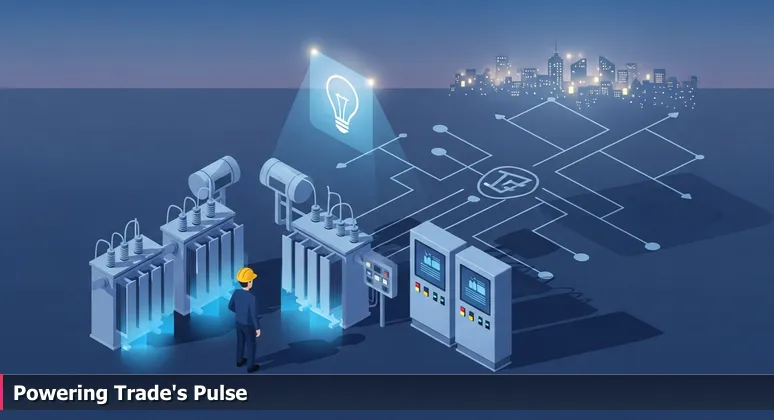
We rarely think about the electrical substation until the lights go out. But in that silent, humming nexus of wires and transformers lies the entire city's pulse. It’s not glamorous, but it is indispensable. This is the essence of Laredo’s tech career thesis for professionals in 2026.
While mainstream narratives fixate on venture capital and consumer apps, a powerful blind spot exists for the massive systems where software meets the physical world - where code manages the flow of billions in goods and secures international borders. For those seeking this high-stakes, foundational work, Laredo, Texas, is a premier niche destination.
It functions as the control room for North American trade, a strategic position fueled by its identity as the nation's busiest inland port. In 2025, Port Laredo moved $353.94 billion in trade, a volume that creates immense demand for the technologists who can optimize it. This isn't a backup plan; it's a form of powerful geographic and career leverage for the right builder.
The ecosystem is professionalizing rapidly, shifting from simple transit to a tech-driven "Distribution 2.0" model. This transformation is evidenced by a 247% increase in the local industrial construction pipeline since mid-2024, as nearshoring accelerates. As noted in local analysis, the port's continued growth hinges on its ability to "embrace technological advancements" in AI, blockchain, and automation.
For technologists, this means an opportunity to work on problems of continental scale while enjoying Texas's no state income tax and a cost of living significantly below the national average. Laredo is the substation: not the glittering skyline, but the essential, high-impact hub that powers the system.
What We Cover
- Laredo: The Hidden Tech Powerhouse
- What Tech Looks Like in Laredo's Inland Port
- 2026 Job Market: Salaries and Livability in Laredo
- Building Your Tech Career in Laredo: Education Pathways
- Who Thrives in Laredo's Tech Scene?
- Who Might Not Fit Laredo's Tech Niche?
- Should You Move to Laredo for Tech?
- The Verdict on Laredo's Tech Career Opportunity
- Common Questions
Plan your path with the Laredo AI career roadmap for 2026 outlined in this guide.
What Tech Looks Like in Laredo's Inland Port
Forget Silicon Valley's app campuses. In Laredo, technology is measured in containers crossed, shipments secured, and supply chains optimized. The tech ecosystem here is defined by its physical reality as the nation's #1 inland port, creating a specialized field often called "Logistics-Tech" or "Trade-Tech."
This isn't abstract innovation; it's applied problem-solving on a continental scale. The monumental trade flow - over $353 billion annually - demands sophisticated software to manage it. As noted in analyses of the region's evolution, success depends on integrating advanced systems, moving from simple transit to a tech-integrated "Distribution 2.0" model.
"[Port Laredo's] growth is expected due to technology, infrastructure" - Laredo Morning Times
The local tech landscape revolves around four critical, high-demand specialties:
- AI & Machine Learning: For predictive logistics, automated customs screening, and spend analytics.
- Data Engineering & Cloud Infrastructure: Building the pipelines and platforms that track global goods.
- Cybersecurity & Blockchain: Securing cross-border transactions and creating immutable shipment records.
- Enterprise Software (ERP/SCM): Customizing the complex systems that run warehouses and freight operations.
This demand is driven by major anchors like Webb County, U.S. Customs and Border Protection (CBP), and private sector players in logistics and banking like International Bank of Commerce. Supporting this, institutions like Texas A&M International University (TAMIU) lead research on integrating AI into cross-border trade, cementing the city's role as a living lab for logistics-tech.
2026 Job Market: Salaries and Livability in Laredo
The most compelling argument for Laredo in 2026 is a powerful form of "geographic arbitrage": competitive tech salaries combined with a significantly lower cost of living. This creates a financial advantage rare in major coastal hubs.
For software engineers, the average salary is approximately $129,496 per year, with top earners exceeding $180,000, according to current market data. The broader tech field shows a wide range, with median pay spanning from around $50,000 for support technicians to over $140,000 for IT managers, reflecting the depth of specialization needed in the local market.
These salaries stretch much further. The overall cost of living in Laredo is about 14% lower than the national average. A single person's monthly living costs are near $2,134, while a family of four's are around $4,700. When paired with Texas having no state income tax, take-home pay achieves notable leverage against expenses.
This financial equation is complemented by distinct quality-of-life factors. The city boasts short commutes and a dedicated professional culture, recently ranking #22 in the "Hardest-Working Cities in America." However, its niche is clearly defined. In a ranking of top tech cities, Laredo excelled in livability (#19) but ranked low (#99) for innovation and startup culture. This isn't a drawback but a clarification: Laredo is for executing and optimizing large-scale systems, not for chasing venture capital.
Building Your Tech Career in Laredo: Education Pathways
For those looking to enter or pivot into Laredo's specialized tech market, accessible and relevant education is the critical first step. Local institutions are actively building the talent pipeline to support the region's logistical backbone.
Texas A&M International University (TAMIU) serves as an academic anchor, home to the Texas Center for Border Economic and Enterprise Development. This center leads applied research on integrating AI and advanced technology into cross-border trade, directly feeding innovation into the local ecosystem. Meanwhile, Laredo College provides essential technical vocational training, with a curriculum increasingly focused on cybersecurity and data modernization to meet urgent state and local needs.
For career-changers or professionals seeking the specific, applied skills in immediate demand, coding bootcamps offer a targeted, accelerated path. Nucamp Coding Bootcamp is a strong fit, offering affordable, flexible online programs with a community-based learning model accessible to learners in the Laredo area. Their curriculum aligns directly with local logistics-tech opportunities:
- The Back End, SQL and DevOps with Python Bootcamp ($2,124) builds foundational data engineering and automation skills crucial for supply chain software.
- The AI Essentials for Work Bootcamp ($3,582) focuses on practical AI integration and prompt engineering, applicable to optimizing trade documentation and logistics operations.
- The Solo AI Tech Entrepreneur Bootcamp ($3,980) empowers developers to build and deploy AI-powered products within the local trade ecosystem.
This combination of traditional higher education and accelerated, practical training creates multiple on-ramps into Laredo's high-impact tech scene, ensuring the city can develop the specialized talent its unique economy requires.
Who Thrives in Laredo's Tech Scene?
Laredo's tech scene is a niche ecosystem, and its appeal is targeted and potent. It is ideal for specific professional profiles who seek impact over hype and applied solutions over theoretical innovation.
First are the Tech Generalists & Systems Integrators, professionals who thrive on making large-scale enterprise software (ERP, SCM) and complex IT infrastructure work in mission-critical environments for anchors like the City of Laredo, Webb County, and major freight carriers. Their work keeps the literal and digital lights on for continental trade.
Second are Data & AI Engineers with a Practical Bent. These individuals want to see their models directly impact the physical movement of goods and capital, working with data sets as vast as the $353 billion in annual trade flowing through the city. This could mean building AI for predictive logistics at the Port or optimizing customs clearance queues.
Third are Career Changers Seeking Leverage. Individuals using accelerated pathways like bootcamps to pivot into tech find a unique opportunity here. They can value a lower cost of living, no state income tax, and the chance to gain high-stakes experience in an emerging ecosystem where applied skills in Python, data engineering, and AI are immediately relevant to local employers.
Finally, Laredo is perfect for Professionals Prioritizing Financial Efficiency. Those who want a strong software salary relative to living costs, shorter commutes than Austin or Houston, and a community-focused lifestyle away from the hyper-competition of tier-1 hubs will find their calculus works exceptionally well here. For these profiles, Laredo isn't just a workplace; it's a strategic career and lifestyle accelerator.
Who Might Not Fit Laredo's Tech Niche?
Clarity about Laredo’s specific niche is just as important as understanding its strengths. The city’s tech ecosystem, focused relentlessly on enterprise logistics and trade infrastructure, is distinctly not the right environment for several types of tech professionals.
First, aspiring startup founders or VC-funded innovators will find the environment lacking. As highlighted in a recent analysis, Laredo ranked a stark #99 out of 100 for innovation and leadership in a major tech cities study. The ecosystem simply does not have the dense, ready network of angel investors, venture capital firms, or serial entrepreneurs that define hubs like Austin or San Francisco.
Second, professionals exclusively seeking roles in consumer-tech or social media will face a limited market. The overwhelming majority of tech demand is B2B, embedded within logistics, banking, healthcare, and government operations. You’re far more likely to optimize a customs clearance algorithm than design a new social feature.
Finally, those who thrive on a constant calendar of tech meetups, large conferences, and a pervasive "startup" culture may find the community pace different. While growing and supported by programs like Nucamp’s local workshops, the scene is smaller and more focused on practical problem-solving within established industries rather than speculative networking.
This isn't a deficiency but a definition. Laredo excels at execution within massive, real-world systems. For those whose passions lie elsewhere, other Texas cities offer more familiar tech horizons.
Should You Move to Laredo for Tech?
The decision to relocate for a tech career hinges on your current location and professional priorities. For those already in Texas, Laredo represents a strategic specialization; for others, it's a compelling entry point.
If you are in San Antonio or Austin, consider this: A move to Laredo could mean deeper specialization in logistics or enterprise software, potentially higher salary leverage due to the cost-of-living advantage, and significantly shorter commutes. If you're already in a logistics, defense, or government tech role in San Antonio, this is a logical, focused step. However, if you're deeply embedded in Austin's vibrant startup scene and crave that specific energy, you'll find Laredo's pace and focus on established systems to be a stark contrast.
For those considering a move from out of state, Laredo presents a lower-risk entry point to the strong Texas job market. The financial advantages are clear: a software engineer's salary goes much further when the cost of living is 14% below the national average and state income tax is zero. It’s a strategic choice for building a strong resume with high-impact experience in a crucial industry, all while establishing a solid financial foundation more quickly than might be possible in a coastal hub.
Ultimately, the move is a calculus of impact versus ecosystem. You trade the broad, innovation-focused network of a larger hub for the chance to have your work directly touch the flow of continental commerce, all while keeping more of your earnings. It's a trade that makes profound sense for the right builder.
The Verdict on Laredo's Tech Career Opportunity
Laredo, TX, in 2026 is a city of powerful contrasts and specific opportunity. It represents the ultimate validation of a career built on applied technology: your work directly manages the pulse of North American commerce. With Port Laredo ranking as the 3rd largest port of entry in the U.S., processing over $353 billion in annual trade, the scale of impact available to technologists here is continental.
The proposition is one of immense leverage. You gain the chance to work on foundational systems with data sets as vast as the trade flows, while enjoying a financial equation - competitive salaries against a cost of living 14% below average and no state income tax - that accelerates personal prosperity. For career-changers, this leverage is amplified by accessible education pathways that build the precise skills the market demands.
Ultimately, Laredo is the substation: not the glittering skyline, but the essential, high-impact hub that powers the system. For the technologist who wants their code to have tangible, large-scale consequence, who values financial smartness, and who is drawn to solving the intricate, real-world problems of global logistics, Laredo isn't just a good city for a tech career. It is a uniquely advantageous one. The current is flowing here, and for the right professional, it carries immense power.
Common Questions
Is Laredo, TX actually a good place for tech jobs in 2026?
Yes, but it's niche. Laredo excels for tech professionals focused on logistics and trade-tech, with average software engineer salaries around $129,496/year and a cost of living 14% lower than the national average. However, it ranks #99 in innovation, making it less ideal for startup culture but strong for applied roles.
What types of tech roles are in demand in Laredo?
Laredo's tech demand centers on logistics-tech, including AI for predictive logistics, data engineering for supply chains, and cybersecurity for cross-border trade. This is driven by major employers like Port Laredo, which handled $353.94 billion in trade in 2025, requiring advanced tech for efficiency.
How do tech salaries in Laredo compare to living costs?
Tech salaries in Laredo, such as $129,496/year for software engineers, pair well with a low cost of living - monthly costs are around $2,134 for a single person. With no state income tax, take-home pay goes further, offering strong financial leverage compared to pricier cities.
Can I transition into a tech career in Laredo through education?
Yes, local options like Nucamp bootcamps provide affordable paths, such as the AI Essentials for Work Bootcamp ($3,582) for skills relevant to trade-tech. Nucamp has an ~78% employment rate, making it a viable route for career changers in Laredo's growing ecosystem.
Who should consider moving to Laredo for a tech career?
Laredo is ideal for tech generalists, data engineers, and career changers who value practical work in logistics, lower living costs, and no state income tax. It's not for those seeking startup culture, as it focuses on enterprise and trade applications rather than consumer tech.
Explore the top 10 AI tech bootcamps in Laredo, TX in 2026 for career insights.
Discover if you can afford a tech career in Laredo in 2026 with our complete guide.
Read about the top 10 industries hiring AI talent in Laredo beyond big tech in 2026.
Get insights into the 2026 tech job market in Laredo for non-degree holders and salary ranges.
This ranking highlights AI startups optimizing Laredo's port operations.

Irene Holden
Operations Manager
Former Microsoft Education and Learning Futures Group team member, Irene now oversees instructors at Nucamp while writing about everything tech - from careers to coding bootcamps.