









Will AI Replace Customer Service Jobs in Kuwait? Here’s What to Do in 2025
Last Updated: September 10th 2025
Too Long; Didn't Read:
In 2025 Kuwait's customer service won't vanish but transform: AI enables ~30–40% cost cuts and handles up to 80% of routine tickets, while 99.4% home internet and ~97% 5G plus a 78.9% expatriate workforce demand bilingual reskilling and 72‑hour breach compliance.
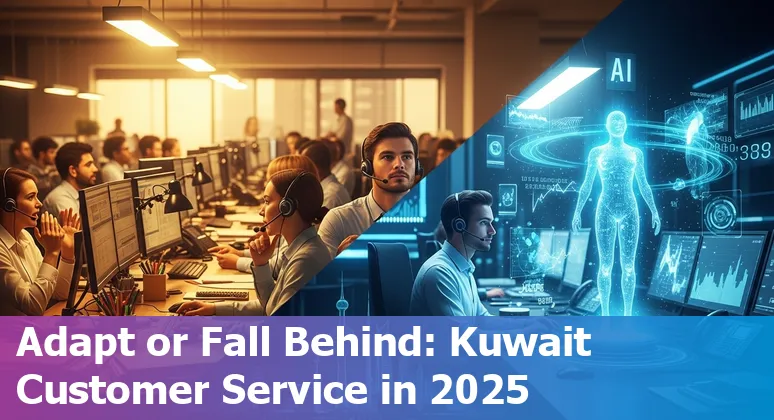
In 2025 Kuwait stands at an AI crossroads: Vision 2035 and the draft Kuwait National AI Strategy 2025–2028 draft push public and private sectors to adopt AI for efficiency and diversification, while businesses are already using automation to reshape customer interactions.
Global CX research warns the shift is fast - AI is set to touch nearly every customer interaction - and when done right it frees humans for complex, empathetic work (Zendesk AI customer service statistics for 2025).
That combination of opportunity, regulation, and a widening skills gap is exactly why Kuwaiti customer service workers and employers need a targeted playbook now; practical reskilling matters, and programs like Nucamp's Nucamp AI Essentials for Work bootcamp registration teach real prompts, tools, and job-based AI skills to make AI a productivity partner - imagine a bilingual AI resolving routine refunds in seconds while trained agents handle sensitive, human-first calls.
| Bootcamp | AI Essentials for Work |
|---|---|
| Length | 15 Weeks |
| Focus | AI tools, prompt writing, job-based practical AI skills |
| Cost | $3,582 early bird • $3,942 regular |
| Register / Syllabus | AI Essentials for Work registration • AI Essentials for Work syllabus |
Table of Contents
- How AI is changing customer service in Kuwait (data paradox explained)
- Current state of Kuwait's contact centers and ATS in 2025
- What AI can and cannot replace in Kuwait's customer service jobs by 2025
- Risks, failures and ethics for Kuwaiti employers and workers
- Practical steps for Kuwaiti customer service workers to adapt in 2025
- How Kuwaiti employers and BPOs should implement AI responsibly
- Case studies and metrics Kuwaiti readers should know
- Next steps and resources for Kuwaiti readers in 2025
- Conclusion: Will AI replace customer service jobs in Kuwait?
- Frequently Asked Questions
Learn why investing in AI chatbots for Arabic support is essential for Kuwaiti teams aiming to serve customers 24/7 with cultural accuracy.
How AI is changing customer service in Kuwait (data paradox explained)
(Up)AI is already reshaping customer service across the Gulf, and Kuwait sits squarely inside a data paradox: regional studies show AI could unlock vast value - about $150 billion across GCC economies, with roughly 62% of firms using AI in at least one area (GCC AI adoption could add $150 billion to regional economies) - yet contact‑center evidence cautions that efficiency gains don't erase human demand.
Industry reporting finds AI deployments cut operational costs by around 30% and are live in many centers, but three‑quarters of customers still want human interaction for complex or emotional issues (AI reduces contact center costs by 30% while 75% of customers still prefer human agents), while consumer research across APAC warns trust, security and transparency remain top concerns as convenience rises (APAC consumer study on AI trust, security, and transparency).
For Kuwaiti employers that means pilots focused solely on cost reduction risk backfiring: customers will reward fast, reliable automation for routine tasks but escalate anything needing empathy or cultural nuance, so the winning approach is a hybrid stack that automates volume and surfaces only the high‑value cases to bilingual, trained agents - picture an AI resolving a refund in seconds while a human steps in to calm an upset caller with local phrasing and context.
The metric to watch in Kuwait isn't how many bots are launched but how many customer satisfactions remain steady or improve after automation is added.
Current state of Kuwait's contact centers and ATS in 2025
(Up)Kuwait's contact centers in 2025 look less like rows of headsets and more like hybrid CX hubs: widespread mobile and high‑speed connectivity (home internet penetration at 99.4% and 5G coverage ~97%) is driving omnichannel service, while recruiters and HR teams are using AI‑powered ATS features - skills‑based matching, intelligent screening and mobile-friendly applications - to staff those hubs faster and smarter (Kuwait candidate search trends report - Elevatus).
The labour picture matters for contact center capacity: expatriates still make up roughly 78.9% of the workforce, and Kuwaitization plus public‑sector dominance (about 400,815 Kuwaitis in the public sector vs 70,756 in private) tighten the local talent pool, so centres increasingly prize bilingual agents and role‑specific upskilling (Hiring trends in Kuwait - Qureos analysis).
Practical tools are already appearing - e‑commerce AI for quick refunds and Kuwaiti‑phrased bilingual prompts help balance automation with cultural nuance - so the real test is not whether AI exists but whether ATS, workforce planning and training turn faster sourcing into steady CSAT and lower churn (Bilingual Kuwaiti customer service AI prompts and support guidance).
Picture a hot afternoon in Kuwait City where a routine refund is resolved instantly by automation while a trained, local agent handles the delicate escalation - that handoff is the current operational reality.
| Kuwait 2024–25 metric | Value |
|---|---|
| Home internet penetration | 99.4% |
| 5G coverage | ~97% |
| Expatriate share of workforce | 78.9% |
| Kuwaiti public sector employees | 400,815 |
| Kuwaiti private sector employees | 70,756 |
| ICT market (2023) | $22.48 billion (projected to $39.83B by 2028) |
What AI can and cannot replace in Kuwait's customer service jobs by 2025
(Up)By 2025 Kuwaiti contact centres will lean on AI to do the heavy lifting - automating review requests, routine refunds, scheduling and first‑level routing so agents spend far less time on repetitive work and more on high‑value moments; Autonoly's Kuwait City playbook shows automated, bilingual review requests can cut review‑management time by over 90% and triple response rates, while regional studies report automation can lower operating costs by roughly 30–40% within two years (Autonoly Kuwait City customer review request automation case study, Whizkey digital transformation guide for Kuwait businesses adopting AI and automation).
What AI cannot replace - even as NLP and sentiment tools get better - is culturally attuned empathy, complex problem‑solving, and the trust earned by a human who knows Kuwaiti phrasing and escalation context; Centrix Plus and Zendesk research underline that chatbots lift FCR and speed but customers still need real people for emotional or nuanced cases.
The practical takeaway for Kuwaiti CS teams: design hybrid flows where e‑commerce bots and workflow automations resolve the simple 80% fast, and bilingual, trained agents handle the rest - picture an AI closing a refund in seconds on a sweltering Kuwait City afternoon while a local agent soothes an upset caller with the exact phrase that calms them.
| AI can replace (by 2025) | AI cannot replace (by 2025) |
|---|---|
| Routine FAQs, review requests, refunds, scheduling | Empathy, cultural nuance, complex escalations |
| 24/7 basic support, automated tagging and QA | Governance, legal judgment, trust-building |
| Predictive routing and agent assistance | Bilingual cultural judgement and sensitive dispute handling |
“With AI purpose-built for customer service, you can resolve more issues through automation, enhance agent productivity, and provide support with confidence. It all adds up to exceptional service that's more accurate, personalized, and empathetic for every human that you touch.” - Tom Eggemeier, Zendesk
Risks, failures and ethics for Kuwaiti employers and workers
(Up)Kuwaiti employers and customer‑service workers face a concrete risk landscape where ethics, compliance and operational failures collide: the National AI Strategy and emerging rules demand human‑centred governance, transparency and local ML capability while CITRA's Data Privacy Protection Regulation (DPPR) already forces consent, bilingual privacy notices, Records of Processing (RoPA) and strict breach timelines - notify CITRA and affected users within 72 hours (and in some unauthorized‑disclosure cases within 24 hours) - so what looks like a quick automation pilot can become a legal and reputational crisis if data mapping, DPIAs and consent flows aren't in place.
Practical failures include poor data classification, untracked cross‑border transfers, undocumented model decisions and insufficient human oversight - each elevating risks of bias, privacy harm and heavy enforcement (penalties range from fines and license sanctions to imprisonment under existing rules).
Ethical safeguards therefore aren't optional: require documented impact assessments, clear human‑in‑the‑loop rules, secure consent management and fast breach playbooks that meet DPPR timelines; for a policy roadmap see Kuwait's AI regulatory pillars and guidance on compliance in the Kuwait National AI Strategy and related DPPR execution notes from CITRA and privacy practitioners (Kuwait National AI Strategy and Regulatory Pillars, Kuwait Data Privacy Protection Regulation (DPPR) Compliance and Breach Requirements).
| Risk / Requirement | What to do |
|---|---|
| Consent & bilingual notices | Collect explicit consent, publish Arabic/English privacy notices |
| Breach reporting | Notify CITRA and users: 72 hours (breach) / 24 hours (unauthorized disclosure) |
| Documentation & DPIAs | Maintain RoPA, conduct PIAs/DPIAs/TIAs before deployment |
| Enforcement & penalties | Fines, license penalties and potential imprisonment for violations |
Practical steps for Kuwaiti customer service workers to adapt in 2025
(Up)Kuwaiti customer service professionals should treat 2025 as a year for targeted, practical upskilling: start with short, applied courses that teach conversational AI and agent‑assist tactics (Bell Integration's Kuwait City offerings include Conversational AI and Amelia enablement training that map directly to contact‑centre tasks), pair that with hands‑on AI agents work or onsite options from providers like NobleProg Kuwait AI training (instructor-led AI courses), and practise bilingual, Kuwait‑phrased prompts and tools so automation hands off the right cases to people who can apply cultural nuance (see Nucamp's AI Essentials for Work syllabus: Nucamp AI Essentials for Work - Writing AI Prompts and AI at Work syllabus).
Learn to work with conversational‑AI consultants for PoCs and governance so pilots don't become compliance risks, and focus on human‑in‑the‑loop workflows where bots clear routine volume and trained agents manage escalations - picture an AI clearing a refund queue in seconds while a local agent calms a caller with the precise phrase that rebuilds trust on a sweltering Kuwait City afternoon.
| Practical step | Resource |
|---|---|
| Learn Conversational AI & deployment | Bell Integration AI training in Kuwait City (Conversational AI & Amelia enablement) |
| Get hands‑on with AI agents | NobleProg Kuwait AI training (instructor-led online & onsite) |
| Practice bilingual prompts & tools | Nucamp AI Essentials for Work syllabus - Writing AI Prompts and practical AI at work |
| Use consultants for PoCs & governance | Local conversational AI consultants and vendors |
“Bell has helped us tailor our AI ambitions to meet specific operational demands. The training delivered has helped us innovate internally while improving staff buy‑in across the company.” - Senior Project Manager, Global Travel and Leisure Company
How Kuwaiti employers and BPOs should implement AI responsibly
(Up)Kuwaiti employers and BPOs should treat AI rollouts as governance projects first and tech projects second: align pilots with the Kuwait National AI Strategy's human‑centred and privacy priorities, map data flows and comply with CITRA rules (including prompt breach reporting), and document models, decisions and risk mitigations before wide release (Kuwait AI Regulation - Kuwait National AI Strategy guidance).
Practical steps include mandatory impact assessments, clear human‑in‑the‑loop rules for high‑risk decisions, bilingual transparency notices for customers, and targeted upskilling programs so agents can take sensitive handoffs.
Use staged sandboxes and KPIs that measure CSAT and escalation quality - not just cost savings - and partner with experienced local consultants or integrators to manage data, compliance and change management; Kuwait has several firms listed as AI partners that specialise in customer‑facing deployments and risk‑managed PoCs (Top AI consulting companies in Kuwait for customer‑facing AI deployments and risk‑managed PoCs).
The goal is simple: safe, auditable automation that clears routine volume while a trained, bilingual agent steps in to restore trust on a sweltering Kuwait City afternoon.
Case studies and metrics Kuwaiti readers should know
(Up)Concrete, local proof beats theory: Kuwaiti and Gulf case studies show measurable gains and clear pitfalls to track - BBK's Bank of Bahrain and Kuwait example turned multilingual feedback workflows from days into minutes and boosted participation, proving automation plus branded, bilingual touchpoints raise data quality (BBK multilingual feedback case study (SmartSurvey)); Microsoft's global dossier shows major productivity wins (66% of CEOs report measurable benefits and a projected $22.3 trillion AI impact by 2030) and even Kuwait Finance House's RiskGPT cut risk‑rating time from days to under an hour, a model for in‑house copilots (Microsoft AI use cases and productivity metrics).
For vendors and partners, Kuwait already has an active local market - searches list about ten fitting AI customer‑service firms - so benchmark wins like faster CSAT recovery, branded bilingual flows and routine‑task clearance (chatbots can handle up to 80% of simple tickets) when planning pilots (Directory of AI customer service companies in Kuwait).
| Metric | Value / Source |
|---|---|
| Local AI vendors | ~10 manufacturers & 10 service providers (Ensun) |
| Survey turnaround | Days → minutes (BBK / SmartSurvey) |
| Chatbot routine handling | Up to 80% of routine tasks (SoluLab) |
| KFH RiskGPT impact | Risk rating: days → <1 hour (Microsoft) |
| CEO reported benefits | 66% report measurable gains (Microsoft) |
“SmartSurvey has simplified everything - it literally takes minutes to create a survey and analyse findings.” - Hasan, Head of Customer Experience, BBK
Next steps and resources for Kuwaiti readers in 2025
(Up)Next steps for Kuwaiti readers in 2025 are practical and site‑specific: map personal and organisational plans to Kuwait Vision 2035's upskilling and diversification goals, pilot small, governed AI projects that follow the Kuwait National AI Strategy's human‑centred guidance, and start workforce logistics early so talent and visas align with rapid project timelines.
Prioritise short, applied training for bilingual CX work tied to real pilot metrics (CSAT and escalation quality, not just cost), require documented impact assessments for any automation, and partner with local advisors to keep deployments lawful and auditable.
For employers, treat hiring and mobility as a planning exercise - Fragomen's guidance to
start early
on quotas, permits and stakeholder alignment is a direct reminder that workforce readiness matters as much as tech.
Picture a smart‑city kiosk in Madinat Al‑Hareer: the tech needs to be reliable, but the citizen who relieves a frustrated caller with the right Kuwaiti phrase remains indispensable.
Use the national roadmaps and legal advice to prioritise training, pilots, and compliant scale‑up now.
| Resource | Use |
|---|---|
| Kuwait Vision 2035 guide | Align skills development and job plans with national diversification projects (e.g., Madinat Al‑Hareer, South Saad) |
| Kuwait National AI Strategy (2025–2028 draft) | Follow human‑centred governance, impact assessments and staged AI rollouts |
| Fragomen - hiring & mobility advice | Plan visas, quotas and mobility early; coordinate HR, legal and operations for scaling teams |
Conclusion: Will AI replace customer service jobs in Kuwait?
(Up)Short answer: no - AI will reshape Kuwaiti customer service, not erase it. Global data show AI is set to touch nearly every interaction (59% of consumers expect big change in two years), but the smartest wins in Kuwait will be hybrid: bots and AI agents clear routine refunds, routing and 24/7 requests while bilingual, culturally fluent humans handle empathy, disputes and trust-building - exactly the blend Zendesk research on AI in customer service recommends (Zendesk AI customer service statistics and trends).
That means jobs will evolve, not vanish: demand will rise for prompt-writing, agent‑assist skills, governance and multilingual stewardship, so targeted reskilling matters now.
Practical options include short, applied courses - like Nucamp's 15‑week AI Essentials for Work bootcamp (15-week AI at Work program) - to learn prompt craft, agent assistance and workplace AI so agents become supervisors and editors of AI, not its casualties; picture automation resolving a refund in seconds while a trained Kuwaiti agent soothes an upset caller with the exact phrase that restores trust.
| Bootcamp | AI Essentials for Work |
|---|---|
| Length | 15 Weeks |
| Focus | AI tools, prompt writing, job‑based practical AI skills |
| Cost | $3,582 early bird • $3,942 regular |
| Register / Syllabus | AI Essentials for Work bootcamp registration • AI Essentials for Work syllabus |
“AI is reshaping every touchpoint of customer service, delivering faster resolutions, deeper personalisation, and scalable business impact.” - Ahmad Zureiki, Cisco
Frequently Asked Questions
(Up)Will AI replace customer service jobs in Kuwait?
Short answer: no. AI will reshape Kuwaiti customer service rather than erase it. By 2025 the likely model is hybrid: automation and bots will clear routine volume (refunds, FAQs, scheduling and 24/7 basic support) while bilingual, culturally fluent humans handle empathy, complex escalations and trust-building. That shift creates demand for new roles - prompt-writing, agent‑assist supervision, governance and multilingual stewardship - so targeted reskilling is key.
Which customer‑service tasks can AI do by 2025, and which tasks will still need humans?
AI can reliably handle routine FAQs, automated review requests, refunds, scheduling, tagging/QA and first‑level routing - chatbots can manage up to about 80% of simple tickets and automation has been shown to cut operating costs roughly 30–40% within two years. AI cannot replace culturally attuned empathy, complex problem‑solving, sensitive dispute handling, legal/judgement tasks or the bilingual cultural judgement required for high‑risk escalations; roughly three‑quarters of customers still prefer a human for emotional or complex issues.
What practical steps should Kuwaiti customer service workers take in 2025?
Focus on short, applied upskilling that teaches conversational AI, prompt craft and agent‑assist workflows. Practicals include: learn conversational AI deployment, get hands‑on with AI agents and bilingual prompts, practise job‑based prompt writing, and work with consultants on PoCs and governance. Example training: Nucamp's 'AI Essentials for Work' (15 weeks) covers AI tools, prompt writing and job‑based practical AI skills; early‑bird cost listed at $3,582 (regular $3,942).
How should Kuwaiti employers and BPOs implement AI responsibly?
Treat rollouts as governance projects first: align pilots with the Kuwait National AI Strategy, map data flows, perform DPIAs/PIAs and maintain RoPA, require human‑in‑the‑loop rules for high‑risk decisions, publish bilingual privacy notices and measure KPIs that include CSAT and escalation quality (not just cost). Comply with CITRA's DPPR (explicit consent, bilingual notices) and breach timelines (notify CITRA and affected users within 72 hours, or 24 hours for certain unauthorized disclosures). Use staged sandboxes, local consultants and documented model decisions to reduce legal and reputational risk.
What local metrics and risks should Kuwaiti readers monitor when planning AI in customer service?
Key metrics: home internet penetration ~99.4%, 5G coverage ~97%, expatriate share of the workforce ~78.9%, public‑sector Kuwaiti employees 400,815 vs private‑sector 70,756, and an ICT market valued at about $22.48B (projected to $39.83B by 2028). Local market signals include ~10 AI vendors/service providers. Main risks to monitor: poor data classification, untracked cross‑border transfers, undocumented model decisions and insufficient human oversight - failures that can trigger fines, license sanctions or even imprisonment under current enforcement rules if DPPR and other regulations are violated.
See how the Case Summarizer & Next-Step Generator can cut triage time and deliver clear owner-driven next steps for Kuwaiti support teams.
Teams prioritizing conversational, proactive experiences and real‑time multilingual chat should evaluate Intercom (Fin AI) for its live engagement strengths.

Ludo Fourrage
Founder and CEO
Ludovic (Ludo) Fourrage is an education industry veteran, named in 2017 as a Learning Technology Leader by Training Magazine. Before founding Nucamp, Ludo spent 18 years at Microsoft where he led innovation in the learning space. As the Senior Director of Digital Learning at this same company, Ludo led the development of the first of its kind 'YouTube for the Enterprise'. More recently, he delivered one of the most successful Corporate MOOC programs in partnership with top business schools and consulting organizations, i.e. INSEAD, Wharton, London Business School, and Accenture, to name a few. With the belief that the right education for everyone is an achievable goal, Ludo leads the nucamp team in the quest to make quality education accessible