









How to Become an AI Engineer in Killeen, TX in 2026
By Irene Holden
Last Updated: March 9th 2026
Quick Summary
To become an AI engineer in Killeen, TX in 2026, follow an 18-month plan mastering practical AI skills like prompt engineering and RAG systems, tailored to local sectors such as defense contractors near Fort Cavazos and healthcare systems like Baylor Scott & White. Boost your career by building a strong GitHub portfolio and considering Nucamp’s bootcamp, which leverages Killeen’s no-income-tax advantage and offers local networking with a 78% employment rate for graduates.
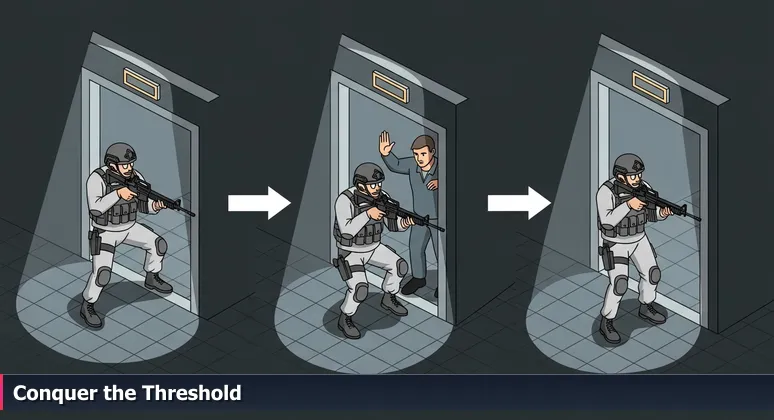
Every soldier at Fort Cavazos learns the perfect checklist, but the first time you cross that threshold with live rounds, the manual vanishes. Starting your AI career in Killeen is the same. Before you can deploy a single model, you need the right gear and the right mindset for this specific terrain.
Your Foundational Toolkit
Success is now defined by integrating powerful systems, not building them from scratch. As one expert notes, "Being an AI Engineer no longer requires training models from scratch. Instead, it’s about integrating foundation models into production systems" according to industry analysis. Your mathematical needs are practical: comfort with basic algebra, statistics, and logical problem-solving to break down complex tasks. Your technical setup is non-negotiable: a reliable computer with at least 8GB RAM (16GB recommended), a clean Python installation, Git for version control, and a code editor like VS Code.
Adopting the Central Texas Mindset
This groundwork must be paired with local awareness. Your curiosity and grit will be tested in "threshold moments" when your code meets a real-world bug in a system for Fort Cavazos or a local clinic. Your projects should immediately align with the unique Killeen-Temple ecosystem, solving problems for major employers like defense contractors, Killeen ISD, Central Texas College (CTC), and regional healthcare giants like Baylor Scott & White. Proximity to Austin is a bonus, but solving Central Texas problems first makes you a standout candidate here. You can build this context by attending local upskilling events like the hands-on AI ICON 2026 workshops in Killeen.
Steps Overview
- Kickstart Your AI Journey: Prerequisites for Killeen
- Build Your AI Foundation: Python and Math Mastery
- Master AI Tools: From Machine Learning to LLMs
- Specialize Locally: AI for Defense and Healthcare in Killeen
- Showcase Your Skills: Building a Local AI Portfolio
- Launch Your Career: Deployment and Networking in Central Texas
- Common Questions
Navigate the local tech scene with this comprehensive guide to launching an AI career in Killeen, Texas in 2026.
Build Your AI Foundation: Python and Math Mastery
Memorizing doctrine doesn't build muscle memory. The first four months are about building the foundational reflexes every AI engineer needs through daily, applied practice. This isn't about watching tutorials; it's about writing code until Python syntax and data transformations feel instinctive.
Master Python to Automaticity
Your primary language is Python, the undisputed lingua franca of AI. Fluency means manipulating data, writing functions, and using core libraries without hesitation. Dedicate the first two months to structured courses on fundamentals, followed by daily practice on platforms like LeetCode. The non-negotiable libraries are NumPy for numerical operations and Pandas for data wrangling. A common, crippling mistake is jumping into advanced machine learning before you can efficiently clean a dataset. For structured, local support, explore foundational courses like those in Central Texas College's AI and computer science programs.
Develop Applied Mathematical Intuition
Concurrently, build the mathematical intuition that separates engineers from technicians. Over months two through four, focus on applied understanding. Grasp vectors and matrices in linear algebra - the core of how data is represented. Understand distributions and evaluation metrics in probability and statistics to make informed model decisions. The key is immediate application: use NumPy to perform matrix multiplications as you learn the concepts. This applied approach ensures you understand why models work, not just how to call an API.
Master AI Tools: From Machine Learning to LLMs
With your foundation solid, you move from basic training to mastering the core toolkit. This is where you learn to solve actual business problems in Central Texas, starting with reliable, traditional algorithms before advancing to the AI systems defining the field.
Solve Local Problems with Traditional ML
Generative AI gets headlines, but regression, classification, and clustering solve most business problems. From inventory forecasting for local suppliers to analyzing student performance for Killeen ISD, these are the workhorse skills. Over two months, learn concepts behind algorithms like Linear Regression and implement them using the scikit-learn library. Build something tangible, like a model predicting housing price trends in the Killeen-Temple metro using public data.
Integrate Modern AI and LLMs
The 2026 role centers on orchestrating powerful foundation models. Over three months, master Prompt Engineering for models like GPT-4 and the critical skill of Retrieval-Augmented Generation (RAG) - connecting LLMs to external data. This is vital for defense contractors managing technical manuals or healthcare systems querying records. Get hands-on with frameworks like LangChain to build systems where AI takes actionable steps. Programs like the 25-week Nucamp Solo AI Tech Entrepreneur Bootcamp are built around this exact 2026 skill set.
Warning: Avoid building only simple chatbots. Focus on creating multi-step agents that process documents and update databases. Network and see these skills applied locally at events like the hands-on AI ICON 2026 workshops in Killeen.
Specialize Locally: AI for Defense and Healthcare in Killeen
Generic competency won't get you deployed. The final months are where you transition from knowing the tools to being "mission-ready" for the Killeen-Temple terrain. Your specialization signals to local employers that you understand their unique constraints and high-stakes problems.
Target the Defense & Secure AI Sector
If you're targeting the ecosystem of contractors supporting Fort Cavazos, prioritize Cybersecurity-AI integration and MLOps for secure, auditable environments. Many contracts require a formal degree or highly specialized training. A key local resource is Texas A&M University-Central Texas (TAMUCT), which offers a BS in Computer Science and houses a Center for Cybersecurity Innovation that incorporates AI research.
Focus on Healthcare AI Integration
For roles with regional giants like Baylor Scott & White or AdventHealth, your skills must align with strict operational needs. Focus on intelligent document processing to automate insurance forms, understand the basics of medical imaging analysis, and, most critically, master ethical AI and data privacy (HIPAA compliance). Projects here demonstrate you can handle sensitive data responsibly.
Commit to a Structured, Career-Focused Path
Self-study often leaves critical gaps in deployment and security practices. A structured program provides outcomes, career support, and a local network. For learners in Killeen seeking a practical route, bootcamps like Nucamp's Solo AI Tech Entrepreneur Bootcamp (25 weeks, $3,980) are aligned with the 2026 skill set, focusing on AI product building and LLM integration. Their community-based model includes local workshops, allowing you to network with aspiring tech professionals near Fort Cavazos. With flexible payment and a strong ~78% employment rate for graduates, it's a viable complement to more expensive degree programs.
Showcase Your Skills: Building a Local AI Portfolio
In 2026, hiring managers prioritize GitHub portfolios over certifications as proof of competency. Your portfolio must move beyond tutorial notebooks to demonstrate you can handle the full pipeline - from ingesting messy local data to deploying a usable solution. This is your evidence of crossing the threshold from theory to execution.
Build Three End-to-End Systems
Focus on quality over quantity. Construct three "serious" systems that take input, process it with AI, and produce a clear output. This end-to-end approach is what employers at defense contractors or Baylor Scott & White need to see. For project inspiration, review expert-curated AI portfolio projects that emphasize practical, deployable skills.
Your projects should be rooted in Central Texas:
- A Production-Grade RAG System: Don't build another chatbot. Create a document Q&A system for the Killeen City Code of Ordinances or Central Texas College course catalogs. Deploy it with a simple Flask or Streamlit interface.
- An AI Workflow Agent: Show automation skill with an agent that performs a multi-step task, like monitoring local housing rental listings, extracting details, and populating a structured spreadsheet.
- A Predictive Analytics Dashboard: Use traditional ML on a local dataset. For example, build a model predicting peak wait times at a local clinic (using anonymized public data) with an interactive dashboard.
Pro Tip: Document your process meticulously in each GitHub README. Explain the local business problem, your technical choices, and the specific challenges you overcame. This narrative turns code into a compelling story for hiring managers at Killeen ISD or regional healthcare providers.
Launch Your Career: Deployment and Networking in Central Texas
The final phase is about moving from personal projects to demonstrable professional readiness. This is where you prove you can operate under real-world conditions, handle failures gracefully, and connect with the community that will hire you.
Deploy to Conquer the Threshold
Deployment is the ultimate test. It forces you to handle logging, error management, and scalability - the real engineering work. Use free tiers of services like Hugging Face Spaces, Streamlit Cloud, or Google Cloud Run to host a portfolio project. This gives you a public URL, a tangible asset that proves you can ship a working system, not just code in a notebook.
Embed Yourself in the Central Texas Network
Your network will alert you to opportunities before they're posted. The Killeen-Austin corridor has a growing tech scene. Actively attend events like the hands-on AI ICON 2026 workshops in Killeen to connect with local business leaders applying AI. Participate in local Nucamp community workshops and join Austin-based tech meetups focused on AI and data science, blending local roots with regional reach.
You'll know you're job-ready when you can pass four verification checks: articulate a technical solution to a vague business problem; showcase at least two deployed, non-trivial projects on GitHub; explain how your skills map to two local employer sectors like defense or healthcare; and communicate your work effectively to both technical and non-technical managers at a place like Killeen ISD. This is the point where the checklist is internalized, and you are finally deployable in your local terrain.
Common Questions
How long will it take me to become job-ready as an AI engineer in Killeen?
You can expect to spend about 12-18 months following a structured learning path that includes core skills like Python and machine learning, plus specialization in local areas such as defense or healthcare AI. Building a portfolio of projects, like those suggested for Killeen's job market, is key to demonstrating your readiness for roles in 2026.
Do I need a strong math background to start learning AI in Killeen?
Not necessarily; basic algebra and statistics are sufficient, with an emphasis on logical problem-solving over advanced calculus for 2026 roles. Local resources like Central Texas College offer programs to build this foundation, making it accessible even if you're starting from scratch in the Killeen area.
What are the essential tools I should set up first for AI development?
Start with Python installation, Git for version control, and a code editor like VS Code, as these are standard in the industry. You'll quickly move to AI libraries like NumPy and scikit-learn, which are crucial for data work and machine learning tasks relevant to Killeen's tech jobs.
How can I network with other AI professionals in the Killeen area?
Attend local events like AI ICON 2026 workshops and participate in Nucamp community meetups to connect with peers. The growing defense-contractor ecosystem around Fort Cavazos and proximity to Austin provide networking opportunities that can lead to job openings in Central Texas.
Is enrolling in a bootcamp a good option for AI training in Killeen?
Yes, bootcamps like Nucamp's Solo AI Tech Entrepreneur program, priced at $3,980 with a ~78% employment rate, offer practical, career-focused training. This is a cost-effective way to gain skills aligned with Killeen's unique job market, especially with Texas' no state income tax boosting your earnings potential.
Discover the hidden AI job markets in Killeen beyond big tech.
Explore the top tech jobs in Killeen without a degree for career advancement in 2026.
Find the best AI bootcamps in Killeen based on curriculum and local job market alignment.
Discover why Killeen is good for tech in 2026 with this analysis.
Discover the top coworking spots for AI professionals in Killeen in 2026.

Irene Holden
Operations Manager
Former Microsoft Education and Learning Futures Group team member, Irene now oversees instructors at Nucamp while writing about everything tech - from careers to coding bootcamps.