









Top 5 Jobs in Healthcare That Are Most at Risk from AI in Japan - And How to Adapt
Last Updated: September 10th 2025
Too Long; Didn't Read:
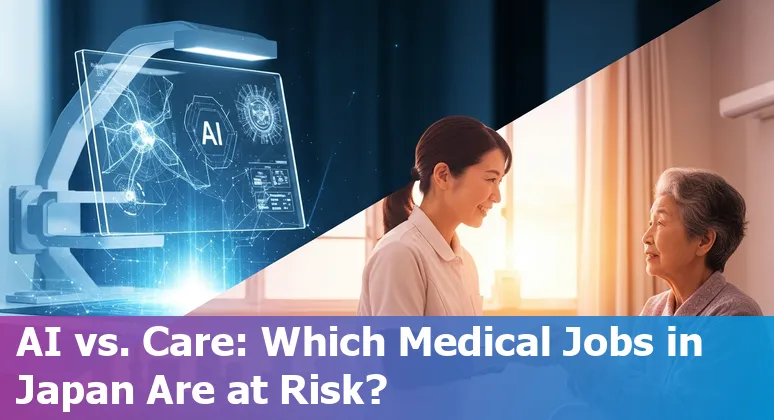
Japan's aging population (36.25 million aged 65+ in 2024) and a projected 370,000 caregiver shortfall (2025) place long‑term care aides, medical administrative staff, radiologists/pathologists, hospital porters, and pharmacy technicians most at risk from AI (robots, NLP, imaging, delivery, automated dispensing); adapt via AI fluency, oversight training, and retraining.
Japan's demographic crunch is rewriting the rules for healthcare jobs: with 36.25 million people aged 65+ in 2024 and rising care costs, policymakers and firms are pursuing both automation and worker augmentation as complementary strategies - a tension explored in detail by the Carnegie Endowment report on Japan's aging society and technological trajectories.
Robots and monitoring tech are already changing nursing-home workflows - the Stanford APARC study on robot use in nursing homes in Japan highlights subsidies and early adoption - and private firms like Sompo report using AI sleep sensors to cut paperwork and free caregiver time in a CNBC report on Sompo's use of AI sleep sensors in eldercare.
That mix of policy support, practical tools (from sleep sensors to Moxi deliveries and AIREC prototypes), and targeted upskilling - for example Nucamp's AI Essentials for Work bootcamp (practical AI skills for the workplace) - is the pragmatic path for Japanese healthcare workers to adapt and keep care human-centered.
| Indicator | Value |
|---|---|
| Population aged 65+ | 36.25 million (2024) |
| Projected caregiver shortage (2025) | 370,000 |
“Robots and humans working together to improve nursing care is a future I am hoping for.” - Takaki Ito
Table of Contents
- Methodology - How we picked the Top 5 and evaluated risk
- Long-term care aides / care workers - why jobs are exposed (AIREC and assistive robotics)
- Medical administrative staff - why jobs are exposed (NLP automation and AI triage)
- Radiologists and pathology image readers - why jobs are exposed (AI imaging diagnostics)
- Hospital porters and internal couriers - why jobs are exposed (delivery robots like Moxi)
- Pharmacy technicians - why jobs are exposed (automated dispensing and AI medication support)
- Conclusion - Cross-cutting strategies to adapt and thrive in Japan's healthcare AI transition
- Frequently Asked Questions
Align your projects with Standards: JIS X 22989 and AIST guidance to reduce technical and legal risk.
Methodology - How we picked the Top 5 and evaluated risk
(Up)Selection relied on Japan-specific signals and practical readiness: roles were ranked where documented AI use cases, regulatory and procurement pathways, and scaling/upskilling options overlap - examples include AI-powered radiology that helps hospitals spot disease faster and simulated-patient programs that scale clinical-reasoning training.
Key criteria were technical feasibility (is there a working tool in Japanese hospitals?), economic pressure (cost-cutting and efficiency gains), and regulatory/procurement readiness - covered in the AI implementation checklist for Japan: APPI, PMDA, and procurement considerations which details APPI, PMDA and buying considerations.
Practical evidence from use cases - like AI-powered radiology and cancer detection in Japan - was weighed alongside workforce adaptation paths such as simulated-patient medical education and clinical-reasoning training; risk scores favor jobs with routine, digitizable tasks and clear, near-term deployment routes, creating a shortlist focused on where disruption - visible in practice settings - meets concrete pathways for retraining.
Long-term care aides / care workers - why jobs are exposed (AIREC and assistive robotics)
(Up)Long-term care aides in Japan are exposed because the hardest, most routine parts of their jobs - lifting, turning, monitoring and repetitive errands - are precisely the tasks engineers are automating with assistive robotics: the 150‑kg AIREC humanoid caregiver prototype can already gently roll a patient to prevent bedsores and is being developed to help with dressing, transfers and simple household chores, while cheaper sleep sensors and mobility aids shrink the time spent on night rounds and heavy lifting; see the AIREC humanoid caregiver project profile for how these capabilities are being tested in Tokyo and why deployment is being framed as a policy priority.
At the same time, rigorous work like the Stanford APARC study finds robot adoption often complements care staff - reducing physical strain, lowering quit rates and freeing time for human touch - so exposure is not just straight replacement but a reshaping of roles (more monitoring, maintenance and part‑time hires).
The “so what” is stark: when a 330‑lb robot can do the heavy lift, aides risk seeing their work shift toward supervision and tech upkeep unless training and procurement intentionally protect and upgrade caregiving skills.
| Feature | Details |
|---|---|
| Name | AIREC (AI-driven Robot for Embrace and Care) |
| Developer | Waseda University (Prof. Shigeki Sugano) |
| Key capability | Patient repositioning, dressing help, simple meal prep |
| Specs & timeline | ~150 kg; projected facility use around 2030 |
| Estimated cost | Approx. ¥10 million (USD ~$67,000) |
“Robots and humans working together to improve nursing care is a future I am hoping for.” - Takaki Ito
Medical administrative staff - why jobs are exposed (NLP automation and AI triage)
(Up)Medical administrative roles in Japan are particularly exposed because the core tasks - charting, coding, referral triage and routine patient intake - are prime targets for natural language processing and ambient-scribe tools that already work in Japanese-language settings: a JMIR study shows a Medical Named Entity Recognition system for Japanese clinical text (JMIR; PubMed PMID 38833694) can automatically extract diseases and symptoms from pharmaceutical care records, while proposals for patient-centric EMR flows (QR-code–linked records) point to seamless data handoffs that shrink manual entry and phone calls; see the i‑JMR article on patient‑centric EMR workflows using QR codes (2024).
At the front line, speech‑to‑text and AI scribes (commercial examples such as the Sunoh.ai AI medical scribe and speech‑to‑text platform) transcribe and draft clinical notes in real time, with vendors and pilots reporting clinicians reclaiming up to two hours a day and finishing notes within minutes - transforming scheduling, billing and triage workflows into structured, searchable data.
Japan's regulatory environment (Ministry of Health and Japan Digital Agency oversight) and growing domestic spending on speech‑to‑text mean deployments will be shaped by local rules and procurement, so administrative staff face rapid role reshaping: routine entry and first‑line triage can be automated, leaving higher‑value work around patient communication, exception handling and system governance - imagine an intake desk that rarely types because the patient's QR, voice and NLP have already built the chart.
| Technology | Evidence / Source |
|---|---|
| Japanese medical NER (NLP) | JMIR study (PubMed PMID: 38833694) |
| Patient‑centric EMR via QR | i‑JMR viewpoint on QR code workflows |
| AI medical scribe / speech‑to‑text | Sunoh.ai product and testimonials |
| Regulatory context | Ministry of Health & Japan Digital Agency oversight (market reports) |
“Sunoh.ai eliminates the need for our providers to spend additional hours between appointments on administrative tasks and allow them to focus solely on their patients and face-to-face interactions.” - Bailey Borchers, Office manager at Springfield Family Physicians
Radiologists and pathology image readers - why jobs are exposed (AI imaging diagnostics)
(Up)Radiologists and pathology image readers in Japan face clear exposure because AI is already moving from lab to the bedside on tasks that were long the domain of expert pattern recognition: Japanese startups and vendors have trained endoscopy and imaging models on huge, locally sourced datasets - AI Medical Services' system was trained on more than 200,000 high‑resolution endoscopic videos from over 100 institutions and can analyze a single image in 0.02 seconds, flagging suspicious areas with roughly 94% accuracy - while research from the Cancer Institute Hospital reports models reaching up to 98.6% sensitivity for tumors over 6mm - so routine reads and screening triage are becoming automatable (see the FPT overview of Japan's AI imaging progress).
Successful entrants like PathAI and Aidoc illustrate how AI can speed diagnosis and reduce workload, creating big market and operational pressure on traditional readers (analysis by Biosector highlights these commercial pathways).
Japan's push - projected imaging market growth and plans to fund AI‑powered hospitals - means deployment is likely to accelerate, but regulatory and procurement hurdles remain a gating factor (see market and regulatory notes).
The “so what” is vivid: when software spots a tiny lesion in the blink of an endoscope feed, radiologists and pathologists risk a shift away from routine image screening toward oversight, complex interpretation and integrating AI outputs into patient care.
| Metric | Value / Source |
|---|---|
| Training data | ~200,000 endoscopic videos (FPT) |
| Per‑image analysis time | 0.02 seconds (FPT) |
| Reported detection accuracy | ~94% (FPT) |
| Sensitivity (gastric tumors >6mm) | Up to 98.6% (Cancer Institute Hospital via FPT) |
| Projected imaging market | $14.8B by 2033 (FPT) |
| Planned government investment | ~$100B over 5 years for AI hospitals (FPT) |
Hospital porters and internal couriers - why jobs are exposed (delivery robots like Moxi)
(Up)Hospital porters and internal couriers in Japan are squarely in the crosshairs because delivery robots built to handle repetitive logistics - think Diligent Robotics' 4‑foot Moxi that ferries meds, lab samples and even “poses for selfies” - are already reclaiming the same floor‑to‑floor trips and supply runs that porters do today, freeing clinical staff but shifting demand toward oversight and exception handling; international rollouts show Moxi carrying birthday‑cake deliveries and thousands of routine items, and Japan is testing its own fleet strategies through pilots like Toppan's TransBots VR for centrally managing multiple robots in hospitals, while national research from Stanford APARC traces how wider robot adoption, subsidies and procurement in Japanese care facilities change who does what on the wards.
The practical result is straightforward: short, predictable delivery routes and tube‑system replacements are easy to automate, but tight corridors, elevator buttons, cybersecurity and tricky handoffs mean human roles will evolve into coordination, maintenance and patient‑facing exceptions rather than disappear overnight - imagine a porter supervising a robot convoy and stepping in only when a corridor gets crowded or a sample needs human judgment.
| Metric | Value | Source |
|---|---|---|
| Completed deliveries / tasks | >500,000 deliveries across Moxi network | AIM Media House article on Diligent Robotics Moxi transforming healthcare |
| Staff time saved | >200,000 staff hours reclaimed | AIM Media House article on Diligent Robotics Moxi transforming healthcare |
| Autonomous elevator rides | >110,000 total; >20,000/month reported | Mike Kalil blog post on AI robots as healthcare workers |
“In 2018, any hospital that was thinking about working with us, it was a special project for the CFO or innovation project about the hospital of the future.” - Andrea Thomaz (Wired)
Pharmacy technicians - why jobs are exposed (automated dispensing and AI medication support)
(Up)Pharmacy technicians in Japan are increasingly exposed as automated dispensing and AI medication‑support tools move from pilot to practice: the Japan Software as a Medical Device (SaMD) market - already US$19.55M in 2024 and forecast to grow rapidly - is driving regulatory and commercial incentives for systems that check interactions, pre-fill doses and integrate with telemedicine platforms (Japan Software as a Medical Device (SaMD) market report 2024).
Policy shifts that expanded video‑based online medication guidance and new PMD Act amendments (2025) permitting certain OTC sales with remote pharmacist consultation make remote dispensing workflows and AI checkers more practical across clinics, pharmacies and even retail settings (Japan telemedicine and online medication guidance regulatory changes).
Commercialization pathways and reimbursement signals - covered in industry playbooks - mean SaMD vendors will push integration into pharmacy chains and hospital systems, so routine counting, label‑printing and simple verification are most at risk while roles shift toward clinical counseling, exception triage, software QA and data governance (SaMD commercialization and market entry insights for Japan).
The practical impact is tangible: when a certified AI flags a drug interaction in seconds, pharmacy technicians will either supervise machines or become the human voice that explains a complex change to an older patient on a tablet - work that demands new digital fluency, not just faster hands.
Conclusion - Cross-cutting strategies to adapt and thrive in Japan's healthcare AI transition
(Up)Japan's path through healthcare AI is neither inevitability nor threat but a set of choices: pair clear regulation and sovereign‑AI strategies with concrete workforce training, shared infrastructure for rural hospitals, and careful procurement that prizes human-centered outcomes.
Policymakers and hospitals should lock in safeguards (data privacy, explainability, SaMD rules) while funding pilots that prove clinical value - echoing calls for balanced rules in the Tokyo Foundation's policy proposals - and push for interoperable, locally trained systems so models reflect Japanese patients and workflows (FPT Software: Japan AI healthcare investments and clinical pilots).
Deployments that measurably free clinician time - Ubie's Gemini-powered tools cut nurses' documentation burden by ~42.5% at Keiju General Hospital and sped referral preparation by over 50% in trials - show the practical payoff of pairing tech with retraining (Google Blog case study on Gemini AI in Japanese hospitals).
For workers at risk - from aides to pharmacy technicians - the fastest route to resilience is practical AI fluency, cross-training in oversight and data governance, and short, applicable courses that teach promptcraft and tool use; for example, Nucamp's AI Essentials for Work bootcamp - Nucamp registration teaches workplace AI skills that help staff supervise, audit and collaborate with new systems instead of being sidelined.
The goal: systems that extend human care, not replace it, and a workforce ready to translate AI outputs into safer, more compassionate treatment.
| Bootcamp | Key details |
|---|---|
| AI Essentials for Work | 15 weeks; practical AI skills, prompt writing, job‑based applications; early bird $3,582; syllabus: AI Essentials for Work syllabus; register: AI Essentials for Work registration |
Frequently Asked Questions
(Up)Which healthcare jobs in Japan are most at risk from AI?
The article identifies five roles at highest near‑term risk: long‑term care aides/care workers, medical administrative staff, radiologists and pathology image readers, hospital porters/internal couriers, and pharmacy technicians. Risk is concentrated where tasks are routine, repetitive, or digitizable (lifting/transfers and monitoring, charting and triage, image screening, delivery logistics, and dispensing/verification).
What key data and technology examples illustrate the scale and immediacy of risk?
Relevant data points and examples from Japan and pilots cited include: population aged 65+ = 36.25 million (2024) and a projected caregiver shortage of ~370,000 (2025); AIREC humanoid caregiver prototype (~150 kg, projected facility use ~2030, estimated cost ≈ ¥10 million); AI imaging trained on ~200,000 endoscopic videos with per‑image analysis time ≈ 0.02 seconds and reported detection accuracy ~94%; Moxi delivery networks completing >500,000 deliveries and saving >200,000 staff hours in deployments; Japan SaMD market ≈ US$19.55M (2024). These show both demand pressures and working technologies that can scale.
Why are these roles particularly exposed to AI rather than others?
Exposure is highest where tasks are routine, physically repetitive, or structured and thus amenable to automation or NLP: lifting/turning and night monitoring (assistive robotics and sensors), routine charting and intake (speech‑to‑text and NLP), screening reads (AI imaging), predictable internal logistics (delivery robots), and standard dispensing/counting (automated dispensers and AI medication checks). Availability of local pilots, procurement pathways, and regulatory readiness in Japan further accelerates deployment in these areas.
How can healthcare workers and employers adapt to reduce risk and keep care human‑centered?
Adaptation strategies include: practical AI fluency (promptcraft, tool use, auditing AI outputs), cross‑training for oversight/maintenance and exception triage, data governance and software QA skills, and short applied courses tied to job tasks. Employers should implement procurement that prioritizes human‑centered outcomes and fund retraining. Example: trials where AI scribes reduced clinician documentation time and pilots (e.g., Ubie) cut nurse documentation by ~42.5%. Nucamp's recommended pathway in the article is a 15‑week 'AI Essentials for Work' program focused on workplace AI skills and prompt writing to help staff supervise and collaborate with new systems.
What policy and regulatory measures are important to manage AI deployment in Japanese healthcare?
Key measures include strong data‑privacy safeguards (APPI compliance), clear SaMD/medical device rules (PMDA oversight), coordinated procurement and interoperability standards (Japan Digital Agency and Ministry of Health engagement), funding pilots that demonstrate clinical value, and prioritizing locally trained models so AI reflects Japanese patients and workflows. The article stresses balanced rules, shared infrastructure for rural hospitals, and procurement that rewards human‑centered impact to ensure technology augments rather than replaces essential caregiving.
Understand how AI in drug discovery and clinical trials is accelerating candidate selection and cutting development costs for Japanese pharma.
Learn how medical education with simulated patients is helping Japanese schools train clinical reasoning and communication skills at scale.

Ludo Fourrage
Founder and CEO
Ludovic (Ludo) Fourrage is an education industry veteran, named in 2017 as a Learning Technology Leader by Training Magazine. Before founding Nucamp, Ludo spent 18 years at Microsoft where he led innovation in the learning space. As the Senior Director of Digital Learning at this same company, Ludo led the development of the first of its kind 'YouTube for the Enterprise'. More recently, he delivered one of the most successful Corporate MOOC programs in partnership with top business schools and consulting organizations, i.e. INSEAD, Wharton, London Business School, and Accenture, to name a few. With the belief that the right education for everyone is an achievable goal, Ludo leads the nucamp team in the quest to make quality education accessible