









The Complete Guide to Starting an AI Career in Houston, TX in 2026
By Irene Holden
Last Updated: March 7th 2026
Key Takeaways
To start an AI career in Houston in 2026, focus on applying your skills to diagnose and solve real-world problems in the city's booming energy, healthcare, and aerospace industries, where AI job growth is surging over 40%. Salaries are highly competitive, with AI specialists earning a 56% premium and entry-level roles starting around $148,740, all boosted by Texas's no state income tax. By mastering applied skills through resources like Nucamp bootcamps and immersing in Houston's employer-rich ecosystem, you can build a lucrative career in this dynamic field.
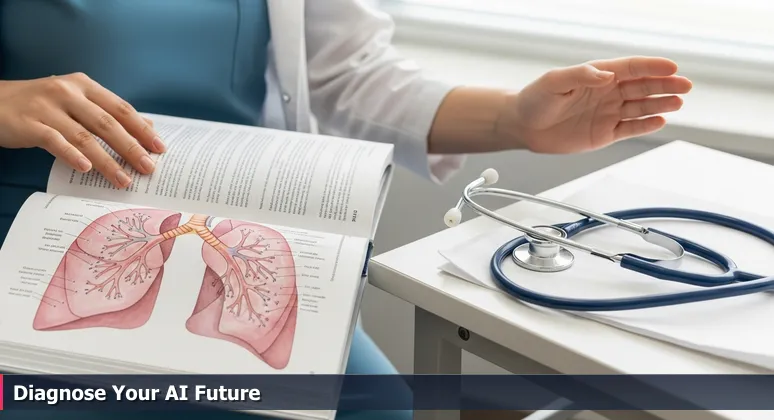
That pivotal moment where theory meets reality is universal. Every medical student must eventually set aside the diagram of the lungs to feel the cold weight of a stethoscope, learning to listen for the subtle, complex truth of a living patient. This is the exact transition facing today's aspiring AI professional. The elegant architecture of a neural network is merely the textbook diagram. The real patient - sprawling, complex, and vital - is Houston’s economy.
Your AI career isn't about memorizing algorithms; it's about learning to diagnose inefficiencies and prescribe intelligent solutions for the world's most consequential industries. As experts from the World Economic Forum have framed it, the true opportunity lies in "building augmented organizations where human judgment and creativity are amplified by AI." This human-AI synergy is the practice you will master here.
Houston provides the definitive clinical environment. The city’s evolution into a diversified hub of applied intelligence means your classroom is the global energy giants digitizing their fields, the largest medical center on earth seeking cures, and the space agency pushing autonomy to its limits. With no state income tax, the substantial salary gains in this field carry even greater weight, and the projected 40% job growth in AI-related fields through 2030 signals a landscape ripe for skilled practitioners.
This guide is your first step toward that applied expertise. It maps the journey from acquiring the core tools of the trade to becoming a trusted specialist who doesn't just listen to Houston's economic heartbeat but helps design a stronger one for the future.
In This Guide
- Your AI Career Starts Here in Houston
- Houston's 2026 AI Job Market Outlook
- Essential AI Skills for the Modern Professional
- Advanced AI Tools: Generative AI and Agentic Systems
- AI in Houston's Energy Sector
- Healthcare AI at the Texas Medical Center
- Aerospace and Defense AI Applications
- Your Path to an AI Career in Houston
- Learning AI: Bootcamps and Education Options
- Building a Portfolio and Networking in Houston
- Securing Your First AI Job in Houston
- Advancing from Practitioner to AI Leader
- Frequently Asked Questions
Many Houston-area professionals balance learning with full-time jobs through part-time programs in Houston's tech training community that run online in evenings and weekends.
Houston's 2026 AI Job Market Outlook
The global narrative has solidified: artificial intelligence is no longer speculative future tech but the essential operating system for modern industry. In Houston, this has catalyzed a powerful evolution beyond the energy capital into a diversified hub of applied intelligence, where job growth in AI-related fields continues a projected ascent of over 40% through 2030.
The nature of the work has matured. The boom is less about building models in isolation and more about their strategic integration into mission-critical workflows. Professionals who bridge technical fluency with practical human judgment command what industry reports call the "AI Premium," earning approximately 56% more than peers in similar roles without those specialized skills.
Houston’s market offers distinct structural advantages. The absence of a state income tax amplifies the purchasing power of strong salaries, which for roles like Machine Learning Engineer range from $140,000 to $185,000. More critically, the city provides front-row access to complex, real-world testing grounds. As analyzed in trends for 2026, expertise in production ML systems is in high demand across all sectors, from energy giants and biomedical research centers to aerospace pioneers.
This creates a unique clinical environment. Your career will be built on learning to diagnose the unique symptoms of global enterprises digitizing their operations. The shift in value is clear: success belongs to those who enable what industry outlooks describe as "augmented organizations," where AI amplifies human expertise within Houston’s foundational industries.
Essential AI Skills for the Modern Professional
Before you can diagnose an industry's ailment, you must master your tools. The essential skill set for an AI professional is a deliberate blend of immutable fundamentals and newly essential specializations that form your diagnostic instrument.
The Non-Negotiable Technical Core
Your stethoscope is built from code, data, and mathematical intuition. Every role, from Data Analyst to AI Research Scientist, rests on this unshakable foundation. High-demand careers in AI and machine learning consistently list roles like Machine Learning Engineer and Data Scientist, all requiring this core competency.
- Programming Proficiency: Python remains the unequivocal lingua franca, with expected mastery of libraries like NumPy, Pandas, and Scikit-learn.
- Machine Learning & Deep Learning Frameworks: TensorFlow and PyTorch are the standards; competency is measured by your ability to use them to build, train, and debug models for specific use cases.
- Data Engineering & MLOps: Skills in SQL, cloud platforms (AWS, Azure, GCP), and tools for model deployment and monitoring (MLOps) are what separate prototypes from products in production.
- Mathematics & Statistics: Linear algebra, calculus, probability, and statistical inference are the basic sciences of your practice, allowing you to understand why a model fails.
This technical core enables you to move from theoretical knowledge to the applied, tactile understanding required to listen to and interpret the complex data signals from Houston’s key industries.
Advanced AI Tools: Generative AI and Agentic Systems
Beyond the core fundamentals, your diagnostic power increases dramatically with specialized tools. In 2026, certain advanced capabilities have transitioned from niche to essential, forming the sophisticated instruments for interpreting complex industry data.
Generative AI as the New Baseline
Working with Large Language Models (LLMs) is now a baseline expectation, not a specialty. This means proficiency in prompt engineering, retrieval-augmented generation (RAG), and framework integration. Houston employers actively seek this skill set; for instance, engineers at Hewlett Packard Enterprise in Spring architect proof-of-concepts using LLM frameworks like LangChain and LlamaIndex. Similarly, IBM Houston hires for roles focused on "eval-driven development" and working with advanced "coding agents."
The Agentic AI Frontier
The next frontier involves creating systems where AI agents can autonomously perform multi-step tasks. This shift toward agentic AI frameworks represents a significant evolution from single-model outputs to coordinated, goal-oriented systems. Houston’s industrial complex is an ideal proving ground, with programs like Siemens’ Strategic Student Program acting as a pipeline for interns focusing on these very frameworks to solve tangible engineering problems.
Mastering these tools - generative AI for augmentation and agentic AI for automation - transforms you from a technician applying algorithms to a practitioner capable of designing intelligent systems that address Houston's most intricate operational challenges.
AI in Houston's Energy Sector
Your first major clinical rotation is with the sector that defines Houston’s global identity: energy and industrial operations. The patient here includes giants like ExxonMobil, Shell, and Chevron, alongside hundreds of energy-tech startups at innovation hubs like The Ion.
The symptoms demanding an AI diagnosis are complex and high-stakes. They include the need for predictive maintenance on remote, deep-water rigs; optimization of sprawling, multi-modal supply chains; simulation of reservoir yields under uncertain conditions; and the integration of renewable sources into legacy power grids.
The diagnostic tools are equally specialized. Success here requires mastery of time-series forecasting for equipment sensor data, reinforcement learning for dynamic optimization, computer vision for automated infrastructure inspection via drones, and digital twin technology to create virtual models of physical assets. For example, building a model to forecast refinery output based on market data, weather, and sensor feeds is a quintessential Houston AI project.
The prognosis for a career here is extremely strong. Salaries for ML Engineers in this sector align with Houston's robust median range, and the drive for efficiency and innovation continues to accelerate. As noted in analyses of AI and machine learning job trends, the ability to deliver tangible operational value commands a significant premium in this foundational industry.
Healthcare AI at the Texas Medical Center
Your second rotation places you at the epicenter of biomedical innovation: the Texas Medical Center. This campus represents the largest medical complex on Earth, with institutions like MD Anderson Cancer Center, Baylor College of Medicine, and Houston Methodist serving as patients with some of the most critical needs imaginable.
The symptoms are matters of life, death, and discovery. They encompass the urgent need to accelerate drug discovery from years to months, personalize oncology treatment plans based on genomic data, analyze medical imaging with super-human accuracy to detect diseases earlier, and manage vast, sensitive patient datasets to unlock new clinical insights.
The diagnostic tools are highly specialized. Success requires deep expertise in computer vision, particularly Convolutional Neural Networks for analyzing MRI and CT scans; natural language processing to extract meaning from millions of clinical notes; generative AI for novel molecular design; and a rigorous understanding of HIPAA-compliant infrastructure to ensure patient privacy. As highlighted in industry analysis, MD Anderson is a leading user of AI in oncology, applying it to everything from medical imaging to accelerating drug discovery.
The prognosis for an AI career here is one of immense growth and impact, fueled by constant innovation. The value of improving patient outcomes is incalculable, which is reflected in compensation. AI/ML Specialists in this sector can see salaries reaching up to $214,508 for experienced candidates who can translate technical prowess into clinical advancement.
Aerospace and Defense AI Applications
Your third clinical rotation takes you to the final frontier and the systems that defend it. Here, the patient is NASA Johnson Space Center and its ecosystem of allied defense contractors and advanced manufacturing hubs, where the margin for error approaches zero and the missions redefine possibility.
The symptoms are defined by extreme environments and absolute requirements: developing autonomous robotic systems for extravehicular activity or planetary exploration, simulating complex mission scenarios millions of times over, analyzing real-time torrents of sensor data for anomaly detection, and engineering fail-safe AI for applications where reliability is non-negotiable.
The diagnostic toolkit demands unparalleled rigor. It features robotics and reinforcement learning for autonomy, advanced computer vision for navigation and inspection, sophisticated simulation environments for training and validation, and software engineering practices that often require security clearances. Building an AI model that helps a rover navigate Martian terrain or one that predicts system failures in a spacecraft are quintessential projects for this rotation.
The prognosis is high-stakes and high-reward, attracting professionals who thrive on unique, consequential challenges. Roles here demand deep technical rigor and offer compensation to match; AI Solutions Leaders in these strategic roles can command between $175,300 and $322,900 annually. As emphasized in analyses of the 2026 job market, expertise in real-time systems and safety-critical software remains exceptionally valued in this sector.
Your Path to an AI Career in Houston
A diagnosis is only as valuable as the treatment plan it informs. Transforming from a novice to a practitioner requires a clear, actionable pathway tailored to Houston's unique clinical environment. Your journey unfolds in three deliberate phases: acquiring the fundamentals, gaining clinical practice, and securing your first residency.
Phase 1: Acquire the Fundamentals
You must first build core competency. While four-year degrees from institutions like Rice University are excellent, the accelerated demand of the market has made high-quality, practical bootcamps a powerful avenue. For Houston aspirants, Nucamp's bootcamps stand out, providing structured, community-oriented learning that mirrors the collaborative nature of the local AI workplace.
Their affordability - with programs like the 16-week Back End, SQL and DevOps with Python Bootcamp at $2,124 - and flexible schedules remove traditional barriers. For direct AI application, their 15-week AI Essentials for Work Bootcamp focuses on prompt engineering and integrating tools like ChatGPT. For aspiring builders, the 25-week Solo AI Tech Entrepreneur Bootcamp guides students through building AI products and mastering LLM integration, delivering the exact skill set Houston's innovation labs seek.
Phase 2 & 3: Clinical Practice to First Residency
Education is the theory; clinical hours come next. This means building a diagnostic portfolio with projects that solve Houston problems, immersing in the local ecosystem at places like The Ion, and seeking apprenticeships with firms like IBM or Siemens that pipeline emerging talent. With fundamentals and practice, you then target your first role, tailoring applications to industry-specific symptoms and demonstrating workflow integration in interviews. With an entry-level AI specialist role in Houston starting around $148,740, your path from learning to earning is clearly mapped.
Learning AI: Bootcamps and Education Options
Building your diagnostic toolkit requires choosing the right educational pathway. While traditional university degrees provide depth, the practical, accelerated nature of Houston's AI job market has elevated high-quality bootcamps as a powerful and accessible avenue for career-changers and upskillers.
For those in Houston, Nucamp's bootcamps are designed with the applied, collaborative nature of the local workplace in mind. Their model combines affordability - with programs costing a fraction of many competitors - with flexible schedules and live community workshops accessible in Houston, providing the network and accountability essential for success.
| Program | Focus & Ideal For | Duration | Tuition |
|---|---|---|---|
| Back End, SQL and DevOps with Python | Foundational programming, data management, and deployment skills; the absolute prerequisite for any AI/ML role. | 16 weeks | $2,124 |
| AI Essentials for Work | Practical AI integration, prompt engineering, and leveraging tools like ChatGPT to enhance productivity in your current role. | 15 weeks | $3,582 |
| Solo AI Tech Entrepreneur | Building AI-powered products, mastering LLM integration, developing AI agents, and SaaS monetization for aspiring builders. | 25 weeks | $3,980 |
With outcomes like a 78% employment rate and a 4.5/5 star rating on Trustpilot, such bootcamps represent a validated, efficient track to gain the applied credentials Houston employers respect, perfectly complementing the city's demand for immediately actionable skills.
Building a Portfolio and Networking in Houston
Education provides the theory, but true diagnostic skill is forged through clinical hours. To transition from learning to practice, you must build experience through tangible projects and immerse yourself in Houston's professional ecosystem, where real problems are discussed and solved.
Build a Diagnostic Portfolio
Move beyond generic tutorials. Your portfolio must prove you can listen to Houston's specific economic heartbeat. Instead of another MNIST digit classifier, build a project that diagnoses a local problem: use public datasets from the City of Houston to optimize a hypothetical logistics route, scrape and analyze local energy market data to predict trends, or create a prototype that summarizes complex medical research abstracts. This body of work is your proof of applied, contextual thinking.
Immerse in the Local Ecosystem
Networking here is about active listening. Attend meetups at The Ion, participate in hackathons hosted by the Texas Medical Center, or join the Houston Data Science Meetup. The goal is to hear the problems professionals are wrestling with firsthand. As attendees of Houston's AI Unleashed event noted, success comes from dedicated time for "immediate application" of learned strategies, not passive consumption. Exploring platforms like LinkedIn for AI consultant roles in Greater Houston can also reveal the in-demand skills and active companies in your backyard.
Seek Supervised Practice
Finally, translate your portfolio and connections into an apprenticeship. Apply for internships and contract roles with Houston firms actively creating talent pipelines, such as IBM, HPE, or Siemens. These positions provide the supervised practice needed to refine your diagnostic approach, offering direct experience with the workflows and challenges you've been studying from the outside.
Securing Your First AI Job in Houston
With your diagnostic portfolio and local network established, you are ready to secure your first official residency in Houston's AI field. This phase shifts from preparation to execution, requiring targeted strategy and a clear understanding of the local market's value proposition.
Target Your Applications with Precision
A generic AI resume will get lost. Use your understanding of Houston's industrial "rotations" to tailor every application. For an energy firm, highlight projects involving time-series data or optimization. For a medical center, emphasize any work with sensitive data or image analysis. This demonstrates you're not just a technician but a practitioner who understands their specific operational symptoms.
Demonstrate Workflow Integration
In interviews, the focus has shifted. While technical depth is expected, your primary value lies in bridging the gap between model and mission. Be prepared to discuss how you would integrate an AI solution into an existing team's workflow, manage the deployment lifecycle, and measure its business impact. This mirrors the trend highlighted in 2026 job market analyses where production ML systems expertise is paramount.
Negotiate with Houston in Mind
Enter negotiations informed by local data. An entry-level AI/ML specialist role can start around $148,740 in Houston. Remember the significant "AI Premium" - professionals with these advanced skills earn approximately 56% more than peers without them. Factor in Houston's lack of state income tax, which effectively raises your take-home pay compared to other tech hubs, strengthening your position to secure a compensation package that reflects your applied expertise.
Advancing from Practitioner to AI Leader
Your first AI role in Houston is the beginning of a compelling career arc, one that leads from executing tasks under supervision to owning strategic outcomes and, ultimately, to defining the vision for how intelligent systems transform entire organizations. This journey from practitioner to trusted specialist mirrors the progression of a medical resident to an attending physician.
In the mid-career stage (3-7 years), you evolve from a model-builder to a solutions owner. You might become an AI Solutions Architect at an energy firm, translating complex business pain points into technical blueprints, or a Senior ML Engineer at a hospital, responsible for the end-to-end lifecycle of clinical AI tools. Here, salaries comfortably sit in the $150,000 to $220,000 range, reflecting your deepened domain expertise and ability to drive tangible value.
At an advanced career level (8+ years), you become the trusted specialist who guides strategy. As an AI Research Scientist pushing boundaries at a corporate lab, a Principal Engineer defining technical vision, or an AI Solutions Leader, you move beyond diagnosing individual symptoms to designing stronger operational systems. These top-tier strategic roles command compensation reaching up to $322,900 annually, a testament to the immense value of your seasoned judgment.
This progression fulfills the core promise of the field in Houston: building the augmented organizations where human expertise is amplified by AI. Your long-term prognosis is one of increasing influence, where you won't just be listening to the patient's heartbeat - you'll be instrumental in designing a stronger, more resilient future for the industries that define the city.
Frequently Asked Questions
Why is Houston a good choice for starting an AI career in 2026?
Houston's AI job market is projected to grow over 40% by 2030, fueled by diverse industries like energy and healthcare. With no state income tax, salaries such as the entry-level $148,740 offer better take-home pay compared to many tech hubs.
What skills do I need most for AI jobs in Houston by 2026?
Beyond Python and frameworks like TensorFlow, focus on generative AI integration with LLMs and domain knowledge in sectors like energy or healthcare. Specializations in these areas can command an 'AI Premium' of about 56% higher earnings.
How much can I earn with an AI career in Houston?
Salaries range widely; for example, ML Engineers earn $140,000 to $185,000, while AI Solutions Leaders can make up to $322,900. The lack of state income tax boosts your effective income, making these figures more competitive.
What industries in Houston are hiring AI professionals?
Key employers include ExxonMobil in energy, the Texas Medical Center in healthcare, and NASA in aerospace. These sectors offer roles from predictive maintenance to clinical AI, with salaries often exceeding $200,000 for experienced specialists.
Are bootcamps like Nucamp effective for getting into AI in Houston?
Yes, Nucamp's bootcamps, such as the Solo AI Tech Entrepreneur Bootcamp, provide practical training with a 78% employment rate. They're tailored to Houston's market, teaching skills like LLM integration that local startups and corporations value.
In 2026, Houston's top industries for AI talent are hiring aggressively.
Explore the top AI companies to watch in Houston, Texas as highlighted in this list.
Discover the Top 10 Tech Startups Hiring Junior Developers in Houston, TX in 2026 for career opportunities.
This guide provides insights into Houston's AI ecosystem events for career advancement.
Uncover employer-sponsored tech training funding in Houston in this guide.

Irene Holden
Operations Manager
Former Microsoft Education and Learning Futures Group team member, Irene now oversees instructors at Nucamp while writing about everything tech - from careers to coding bootcamps.