









Is Fargo, ND a Good City for a Tech Career in 2026?
By Irene Holden
Last Updated: March 5th 2026
Quick Explanation
Yes, Fargo, ND is a strong choice for a tech career in 2026, especially for AI, agtech, and healthtech specialists. With median tech wages around $95,200 and living costs 14% below the national average, professionals gain financial leverage and work-life balance in a growing ecosystem anchored by Microsoft and Sanford Health.
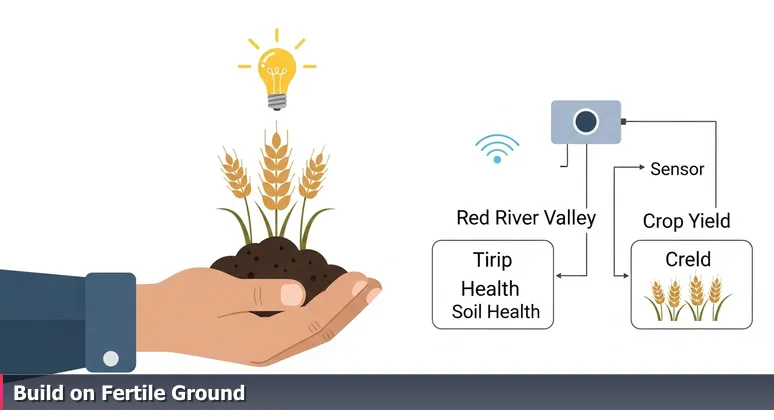
The most groundbreaking innovations often don't start in sleek glass towers. They start by evaluating the ground - its texture, its potential, its capacity to nurture growth. For tech professionals, that fertile ground in 2026 is increasingly found in the Red River Valley.
Fargo's transformation into the "Silicon Prairie" is a deliberate cultivation of unique strengths, not an attempt to replicate coastal hubs. As Forbes noted, the city has become an "unlikely gathering point for AI conversations," building specialized infrastructure where technology solves real-world problems in agriculture, health, and autonomous systems.
"Fargo, North Dakota, is a new AI hub in the Midwest tech scene." - John Werner, Forbes Contributor
The appeal is rooted in a powerful financial equation. With a median tech wage of approximately $95,200 and a cost of living 6-14% below the national average, professionals achieve a level of disposable income and savings potential that is often unattainable in saturated, high-cost markets. This balance is a key reason Fargo was ranked the #1 city in the U.S. for Gen Z workers by Checkr, highlighting its potent mix of opportunity and affordability.
This isn't a hidden secret anymore; it's a recognized strategy. Fortune has called Fargo "America's Most Undervalued Tech Hub," a place where career growth and quality of life are harvested together. For those looking to build where the soil is richest, the prairie is waiting.
What We Cover
- Why Fargo is Your Next Tech Hub
- A Cluster, Not a Crowd: Fargo's Industry Depth
- Earning Power Meets Livability in Fargo
- The Connected Community of Fargo's Tech Scene
- How Fargo Compares to Other Tech Hubs
- Is Fargo Ideal for Your Tech Career?
- When Fargo Might Not Be the Right Fit
- The Bottom Line: Should You Move to Fargo?
- Common Questions
Get insights into 2026 AI career opportunities in Fargo, ND with this complete guide.
A Cluster, Not a Crowd: Fargo's Industry Depth
Fargo's power comes from depth, not breadth. Unlike coastal hubs defined by sheer volume, the city thrives as a concentrated cluster where technology intersects with foundational regional industries. This creates a dynamic where your work has direct, tangible impact.
The Corporate Anchors
The ecosystem is stabilized by legacy giants with massive tech footprints. Microsoft operates one of its largest global campuses here, recently investing $1.5 million into local autonomous systems R&D. In healthtech, Sanford Health leverages AI for predictive rural care, earning a spot on Fortune's "Most Innovative" list. These are joined by Bell Bank in fintech, Aldevron in biotech, and John Deere in ag-robotics, providing a bedrock of stable, high-skill employment.
The Agtech & Startup Engine
This is Fargo's defining differentiator. The Grand Farm initiative acts as the nucleus, attracting global firms like robotics company Aigen. Local success isn't theoretical; companies like Bushel, which secured $47 million in funding, prove the model by solving concrete global problems in agricultural supply chains. This specialized focus makes Fargo, as identified by StartupBlink, a rising ecosystem where tech is fundamentally rooted in the land and economy it serves.
Earning Power Meets Livability in Fargo
Fargo’s most compelling advantage is a financial equation that reshapes career calculus. Here, a competitive salary isn't eroded by astronomical living costs; instead, it's amplified, creating what professionals on local forums often describe as a "hidden leverage" for building wealth and stability.
Salaries That Compete
The median tech wage in Fargo stands at approximately $95,200, with experienced specialists in high-demand fields like AI and healthtech reaching $150,000+. Entry-level software engineers can expect starting salaries around $65,000, providing a solid foundation right out of school or a bootcamp.
The Cost-of-Living Multiplier
The real power is unlocked when that income meets Fargo's affordability. Overall expenses are 6-14% below the national average. Data from PayScale indicates a single adult can live comfortably on roughly $77,000 annually. This means a median tech earner isn't just getting by - they are generating significant disposable income and savings potential each month.
Housing & Savings Reality
Affordable housing transforms from a dream into a market standard. This single factor accelerates financial milestones, allowing early and mid-career professionals to build equity years sooner than peers in coastal hubs. The result is a career path where professional growth and personal financial health are not in conflict, but are actively reinforcing each other.
The Connected Community of Fargo's Tech Scene
Beyond the job listings and salary data, a tech hub's true strength lies in its connective tissue - the events, networks, and collaborative spirit that turn a market into a community. Fargo excels here, offering a tightly-knit ecosystem where access is the norm.
Events That Drive Connection
The calendar is marked by high-impact gatherings that foster real collaboration. Professionals connect at Chipp Con and the Elevate: An AI in Agriculture Summit, which is central to the region's identity as what Forbes describes as a gathering point for AI conversations. These aren't just conferences; they're venues where you're likely to meet a future co-founder, investor, or mentor, supported by accelerators like gener8tor that actively fuel the startup pipeline.
A Culture of Balance & Support
This connectivity extends to daily life, creating a sustainable pace. Employees at Microsoft’s Fargo campus rate their work-life balance at 4.4/5, specifically noting it as superior to other company locations. This aligns with a broader quality of life that includes a high-performing K-12 system, extensive trails, and the manageable scale of a city where you can build a career without being defined by a brutal commute.
How Fargo Compares to Other Tech Hubs
Evaluating Fargo means understanding it not as a smaller version of a coastal hub, but as a strategic alternative with a distinct profile. Its advantages become clear when placed side-by-side with established regional players.
| Feature | Fargo, ND | Minneapolis/St. Paul | Denver, CO |
|---|---|---|---|
| Primary Tech Focus | Agtech, AI, Healthtech | Medtech, Retail, FinTech | Aerospace, SaaS, GreenTech |
| Cost of Living | Lowest (6-14% below avg) | Moderate | High |
| Market Dynamic | Fast-growing "Hidden Gem" | Mature, Diverse | Saturated, High-Competition |
The most telling comparison is with the Twin Cities, a common crossroads for Upper Midwest talent. While Minneapolis-St. Paul offers a larger, more diverse job market, Fargo provides specialization, agility, and leverage. You gain deeper access to a tight-knit ecosystem in your field, whether that's AI in agriculture or healthtech innovation. As highlighted in local analyses, the region outpaces national workforce growth, actively targeting high-demand fields.
This makes Fargo, as noted by community leaders, a "nimble alternative." You trade some volume for greater community access, a lack of extreme traffic, and a clear, accelerated path to homeownership and financial stability.
Is Fargo Ideal for Your Tech Career?
Fargo's ecosystem delivers exceptional opportunities, but its strengths are specialized. Your alignment with these core verticals determines whether it's your ideal career launchpad.
Specialists in Key Verticals
The city is ideal for professionals in Agtech, AI/ML, Healthtech, or Autonomous Systems. This is where investment is flowing and the network is deepest. An AI engineer here might optimize global food production algorithms, while a developer at Sanford Health could directly impact rural healthcare accessibility with predictive models.
Early & Mid-Career Accelerator
The combination of solid starting salaries (around $65,000 for entry-level roles), low living costs, and a community where you can quickly build a network is potent. It’s a place to accelerate both your career trajectory and financial health simultaneously, making it a prime destination for those looking to gain experience and build equity.
Builders & Balanced Seekers
For entrepreneurs and intrapreneurs, the startup scene is accessible with a lower burn rate and supportive networks like Emerging Prairie. It's equally compelling for those prioritizing financial stability and time. If your goals include homeownership, aggressive savings, and a life not dominated by a commute, Fargo's equation is strategically advantageous.
When Fargo Might Not Be the Right Fit
An honest assessment requires acknowledging where Fargo's specialized ecosystem may not align with every career path. Its focused strength is also its primary limitation for those outside its core verticals.
Beyond "Big Tech" Brand Names
While Microsoft is a giant presence, you won't find campuses for every FAANG company. The market is driven by applied technology in specific industries, not consumer-facing software or social media. If your career goal is strictly tied to the brand recognition of certain coastal tech giants, opportunities here will be limited.
Niche Software Fields
Professionals in hyper-specialized areas like entertainment tech, gaming, or consumer social apps may find fewer roles. As noted in discussions among local tech professionals, the scene has solid backing in AgTech and enterprise services, but isn't "cutting edge" in every conceivable domain. Your expertise needs a logical connection to Fargo's dominant industries of health, finance, and agriculture.
The Cultural Scale
Lifestyle preference matters. Fargo has a vibrant downtown, excellent restaurants, and arts, but it is not a 24/7 mega-city. For individuals who thrive on the constant cultural flux, dense public transit, and anonymity of metropolises like New York or San Francisco, the pace and scale of the prairie will feel different. It's a community, not a crowd.
The Bottom Line: Should You Move to Fargo?
The answer hinges on a single, powerful reframe: moving to Fargo for a tech career is not a consolation prize; it's a strategic choice. It's for the professional who sees more opportunity in a focused, fertile field than in an overcrowded, expensive one.
You build where the ground is most fertile for what you want to grow. For those whose skills align with AI in agriculture, healthtech innovation, or autonomous systems, Fargo's soil is rich and proven. The convergence of corporate anchors, a booming startup ecosystem, and institutions like NDSU has created an environment where technology solves profound, real-world problems.
The financial and personal harvest is substantial. The leverage provided by a strong salary against a cost of living 6-14% below average translates to real freedom - the freedom to own a home, to save aggressively, and to enjoy a work-life balance that professionals here rate among the best. You trade some volume of opportunity for greater depth, access, and quality of life.
The secret is out. Fortune has recognized Fargo as "America's Most Undervalued Tech Hub." In 2026, building a tech career here means planting your ambitions in ground that is productive, supportive, and ripe with potential. The decision isn't about following the crowd; it's about cultivating your future in the right place.
Common Questions
Should I really consider Fargo for a tech career in 2026?
Yes, Fargo has transformed into a specialized tech hub, particularly strong in agtech, AI, and healthtech, making it a strategic choice if your skills align. With a median tech wage of $95,200 and cost of living 6-14% below average, it offers a balanced path for career growth and financial stability, as highlighted by investments from companies like Microsoft and Sanford Health.
How does the salary and cost of living balance work in Fargo?
Tech salaries in Fargo, such as a median of $95,200, are competitive, and when combined with a cost of living 6-14% below the national average, your disposable income increases significantly. For example, a single adult can live comfortably on around $77,000, allowing for higher savings and affordable housing compared to coastal metros.
What types of tech jobs are most available in Fargo?
Fargo's tech market is deeply focused on agtech, AI, and healthtech, driven by anchors like Microsoft, Sanford Health, and startups in the Red River Valley. This creates high demand for roles in autonomous systems, predictive analytics, and ag-robotics, making it ideal for specialists in these fields.
How does Fargo compare to bigger tech hubs like Minneapolis or Denver?
Fargo stands out with its specialized focus on agtech and AI, lowest cost of living, and fast-growing 'hidden gem' status, unlike more saturated markets. While Minneapolis offers more diversity, Fargo provides greater agility and community access, making it a smart alternative for targeted career growth in the Upper Midwest.
Who would get the most out of moving to Fargo for tech work?
Fargo is ideal for early to mid-career professionals in agtech, AI, or healthtech, as well as entrepreneurs looking for a supportive startup ecosystem. It's also perfect for those valuing work-life balance and affordability, with low unemployment and high livability, as seen in rankings for Gen Z workers and Microsoft's Fargo campus ratings.
This article on top Fargo tech startups for entry-level roles is a must-read.
For insights into the Fargo tech ecosystem workspaces, refer to this article.
Find insights on the ranking of highest-paying tech firms in Fargo for the upcoming year.
Learn about AI engineering jobs in Fargo for the upcoming year.
This resource covers essential women in tech groups for Fargo professionals in 2026.

Irene Holden
Operations Manager
Former Microsoft Education and Learning Futures Group team member, Irene now oversees instructors at Nucamp while writing about everything tech - from careers to coding bootcamps.