









The Complete Guide to Starting an AI Career in Eugene, OR in 2026
By Irene Holden
Last Updated: March 3rd 2026
Key Takeaways
To start an AI career in Eugene in 2026, shift from entry-level tasks to solving system-level problems by leveraging local resources like Nucamp's affordable bootcamps starting at $2,124 with a 78% employment rate. AI roles such as AI/ML Engineers command median salaries around $132,400 in Oregon, and Eugene's lower cost of living, no sales tax, and collaborative ecosystem make it an ideal place to build a sustainable tech career.
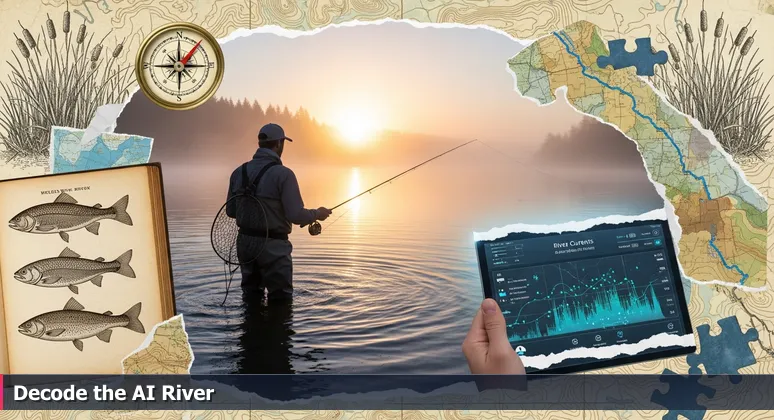
The most successful anglers on the Willamette River understand that the visible bobber is merely an endpoint indicator. True success depends on interpreting the subtle currents, temperature shifts, and submerged structures - the hidden logic of the river itself. In the same way, launching an AI career now requires a fundamental shift from performing visible, repetitive tasks to understanding and navigating the deeper systemic currents of data and business problems.
This evolution is driven by a market transformation where AI has automated the entry-level "bobber watching" - the data cleaning, simple report generation, and manual entry that once served as on-the-job training. A Stanford University study confirms this shift is most acute in "AI-exposed occupations" like software development and customer service. As recent University of Oregon graduate Andrew Busche notes, AI has "taken over the manual entry... which has given me more time to focus on other things," reflecting a new expectation for higher-level contribution from day one.
This challenge, however, reveals Eugene's distinct opportunity. The city's integrated ecosystem, with its collaborative spirit between academia, healthcare, and a growing startup scene, is the ideal environment to learn this deeper "reading." Your path is not about finding a single job listing but about becoming a guide who understands the entire data landscape - its hidden pools of industry-specific problems and the currents of regional innovation.
Actionable Takeaway: Your starting mindset must shift from "performing tasks" to "solving system-level problems." Begin by observing how local entities, from PeaceHealth clinics to downtown retailers, are currently using or struggling with data and automation. This foundational observation is your first step in learning to read the water.
In This Guide
- Shifting from Surface Signals to Deep Currents
- Understanding the 2026 AI Landscape in Eugene
- Educational Pathways and Skill Acquisition
- Building a Portfolio with a Local Focus
- Navigating the Eugene Job Market and Network
- Launching and Advancing Your Career
- Becoming a Guide on the River
- Frequently Asked Questions
Service members and military families in the region often choose Eugene-based coding bootcamps for their flexible, online-friendly formats paired with local community support.
Understanding the 2026 AI Landscape in Eugene
The global AI job market has matured from speculative investment to a focus on integration and measurable business outcomes, a trend reflected in 2026 hiring analyses. In Eugene, this manifests as a clear demand for professionals who can deliver practical solutions within the region's key industries.
The Transformation of Entry-Level Roles
The traditional tech apprenticeship is evolving. Employers now expect new hires to immediately contribute to high-level analysis and the design of AI-augmented workflows, as foundational tasks are increasingly automated. This elevates the need for arriving with a verifiable, applied skill set.
High-Demand Roles and Salary Benchmarks
The market crystallizes around specialized builders and strategic integrators. While roles like AI/ML Engineer command significant premiums, there's explosive growth in Applied AI or AI Integration positions focused on implementing solutions. This creates a persistent "AI Premium" in Oregon, with median salaries for AI/ML Engineers at approximately $132,400. For remote roles with companies outside Oregon, pay is increasingly anchored to higher national medians.
Eugene's Collaborative Ecosystem
Eugene's scale fosters a unique, integrated community. This collaborative ethos is formalized in initiatives like the University of Oregon’s "AI Teaching Triangles" and the regional Oregon AI Accelerator, which launched with support from Google and local universities to mentor top startups. As Vonnie Mikkelsen, CEO of the Springfield Chamber of Commerce, observes, while AI adoption is widespread, local businesses emphasize a "human element that is critical," focusing on augmentation over replacement.
Actionable Takeaway: Identify your alignment as a deep technical builder or a strategic integrator. Then, engage with local collaborative platforms, such as the Silicon Forest Tech Summit or UO’s "Profits & Pints" panels, to connect with this integrated ecosystem.
Educational Pathways and Skill Acquisition
In Eugene's 2026 AI job market, you must arrive with a verifiable skill set, as on-the-job training for fundamentals has largely vanished. The city offers a spectrum of pathways, from deep academic study to accelerated, applied bootcamps, allowing you to match your timeline and career goals.
| Pathway | Timeline | Cost | Best For |
|---|---|---|---|
| University of Oregon (SCDS) | 4+ years (degree) | University tuition | Deep theoretical & research foundation |
| Lane Community College | 1 term (course) | Community college rates | Accessible on-ramp & prompt engineering skills |
| Nucamp Bootcamps | 16-25 weeks | $2,124 - $3,980 | Accelerated career transition & applied skills |
For a fast, career-focused route, bootcamps like Nucamp are dominant, with programs like the 25-week Solo AI Tech Entrepreneur Bootcamp ($3,980) focusing on shipping products, and the 16-week Back End, SQL and DevOps with Python bootcamp ($2,124) building the non-negotiable foundation for technical roles. Their community-based model, with local study groups in the Eugene-Springfield area, creates essential support networks.
The 2026 core skill stack splits into two tracks. For builders: Python, ML frameworks, and LLM orchestration. For integrators: "prompt thinking" and workflow automation. Both require the strategic ability to design human-AI collaboration, a theme emphasized at local events like Eugene's Profits & Pints panel on "AI that supports people, not replaces them."
Actionable Takeaway: Audit your skills against the 2026 stack. If you lack coding fundamentals, start with a foundational bootcamp. If you need AI specialization, target a focused AI program. Leverage accessible courses like LCC's CS 123 for a low-cost introduction.
Building a Portfolio with a Local Focus
In 2026, a resume alone is insufficient. Hiring managers in Eugene's tight-knit ecosystem look for proof of applied problem-solving. Your portfolio must tell a compelling story, ideally one grounded in the local context of the Willamette Valley to demonstrate you understand regional data currents.
Move beyond online tutorials by building projects that solve micro-problems relevant to local industries. For healthcare, you might create a model predicting seasonal allergy trends using Lane County data. For the outdoor industry, a computer vision tool to identify trailhead parking capacity from public camera feeds. For civic tech, build a chatbot using LLM APIs to answer FAQs about Eugene's recycling rules, showcasing Retrieval-Augmented Generation (RAG). These projects prove you can translate technical skill into community-specific value.
Actively engage with Eugene's collaborative tech scene to gain real-world experience. Contribute to local open-source projects or approach early-stage companies in the Oregon AI Accelerator cohort with offers of targeted help. For applied AI roles, document case studies that showcase your "prompt thinking" - analyze a business process for a hypothetical local café and detail the precise prompts and workflow you designed to enhance it.
Actionable Takeaway: Choose one local industry - health, education, or sustainable retail - and commit to building one portfolio project focused on it. Attend a local meetup or Oregon Entrepreneurs Network (OEN) event to present your idea and gather feedback, turning a project into a conversation starter.
Navigating the Eugene Job Market and Network
Successfully landing a role requires understanding the unique topography of Eugene's job market, which operates through integrated local channels and benefits from regional connectivity along the I-5 corridor.
Key Employer Channels
Monitor career pages at major institutions like the University of Oregon and PeaceHealth for roles requiring AI literacy, from research software engineering to emerging positions like "AI Trainer" in community healthcare. Eugene's startup ecosystem, including companies in the Oregon AI Accelerator, offers early responsibility for passionate contributors. Crucially, expand your search to the broader "Silicon Forest." The Portland metro is home to over 359 tech establishments, and Eugene's lower cost of living and no sales tax become significant advantages when competing for remote or hybrid roles with these larger regional employers.
Mastering the Modern Interview
Interviews now test for strategic integration, not just technical recall. Technical screens may ask you to debug a prompt or design a data pipeline. The case study round presents a vague business problem - like improving patient intake at a clinic - where you're evaluated on your process to decompose it and propose an AI-augmented solution. Be prepared for a deep portfolio dive, focusing on your decision-making and how you'd scale a project.
Actionable Takeaway: Practice case-study interviews focused on local industries. Use your network from bootcamp cohorts or alumni associations to find professionals for mock interviews. Target companies discovered through regional events like the Your Future in Tech + Connect event at UO to build connections before you apply.
Launching and Advancing Your Career
Your first AI role in Eugene is a launchpad, not a destination. The initial 90 days are critical for transitioning from a guided learner to an independent contributor who identifies workflow inefficiencies and proposes AI-augmented improvements. This proactive, systems-thinking approach establishes your value as a problem-solver, not just a task-completer.
The field's rapid evolution demands intentional, continuous learning. Dedicate weekly time to emerging trends, such as the rise of AI-native development platforms and privacy-first local AI agents highlighted in strategic technology analyses. Consider deeper specializations aligned with Oregon's economy, like AI for precision agriculture or healthcare informatics, to become a regionally relevant expert.
Advance your career by contributing to the ecosystem that supports you. In Eugene's collaborative community, your reputation is a tangible asset. Mentor newcomers at local bootcamps, present a project at a Eugene Tech Meetup, or author a technical blog post analyzing an AI trend through a local business challenge. These actions build the visibility and credibility that lead to leadership roles and partnerships.
Remember the holistic, long-term advantage of building your career here. While salaries may be slightly below coastal tech hubs, your quality of life and purchasing power in the Willamette Valley are often superior. Oregon’s lack of sales tax, combined with Eugene’s lower cost of living, allows you to build a meaningful career at the forefront of technology while enjoying immediate access to world-class outdoor recreation and a vibrant, integrated community.
Actionable Takeaway: Create a personal "learning roadmap" for your first two years, identifying one core technical specialty and one applied industry domain (e.g., "MLOps for Healthcare Data"). Seek projects and professional development that serve this dual-track mastery, positioning you for sustained impact.
Becoming a Guide on the River
Starting an AI career now is not about casting a single perfect line into a crowded job market. It is about learning to read the river itself - the deep currents of data, the evolving technology landscape, and the unique collaborative spirit of Eugene. The entry-level tasks that once served as training are now part of the river's automated flow, beneath the surface.
Success belongs to those who learn to interpret patterns, navigate complexities, and guide others toward meaningful solutions. By leveraging local pathways - from the University of Oregon's research to agile, community-focused bootcamps - and building a portfolio grounded in regional challenges, you prepare for more than a job. You prepare for a sustainable, impactful career as a problem-solver.
The tools and the integrated community are here in the Willamette Valley. Your journey begins by shifting your gaze from the bobber to the water, understanding its hidden logic, and taking your first purposeful stroke into its current.
Frequently Asked Questions
Is it realistic to start an AI career in Eugene, OR in 2026 with all the automation happening?
Yes, because the job market has evolved to prioritize problem-solving roles over automated tasks. Eugene's collaborative ecosystem, including initiatives like the Oregon AI Accelerator, supports career starters who focus on integrating AI into local industries like healthcare and tech startups.
What types of AI jobs are most available in Eugene right now?
High-demand roles include AI/ML Engineers, with a median salary of $132,400 in Oregon, and Applied AI Engineers who work on model integration. Local employers such as PeaceHealth and companies in the Oregon AI Accelerator are actively seeking these skills for real-world applications.
What's the fastest way to get AI training in Eugene if I'm changing careers?
Bootcamps like Nucamp's Solo AI Tech Entrepreneur program offer an accelerated 25-week path costing $3,980, with flexible payment plans. This is complemented by community-based learning and local study groups in Eugene-Springfield, making it accessible for career changers.
How do AI salaries in Eugene compare to bigger cities, and is the cost of living better?
Salaries in Eugene are competitive, such as $132,400 for AI/ML Engineers, though lower than Silicon Valley. However, Oregon's lack of sales tax and Eugene's lower cost of living compared to Portland or the Bay Area mean your earnings go further here.
How can I network and find AI job opportunities in Eugene's local scene?
Attend events like the Silicon Forest Tech Summit or UO's Profits & Pints panels on AI. Engaging with local open-source projects or startups in the Oregon AI Accelerator can help build your portfolio and connections within the tight-knit Eugene community.
For information on the highest paying tech careers in Eugene with local advantages, read this detailed analysis.
Discover entry-level tech jobs in Eugene for 2026 ranked by growth potential.
Explore 2026 tech job opportunities in Eugene for non-degree holders to advance your career.
Explore 2026 cybersecurity career opportunities in Eugene with this comprehensive guide.
For a detailed list, check out the top 10 free tech training at libraries and community centers in Eugene, OR in 2026.

Irene Holden
Operations Manager
Former Microsoft Education and Learning Futures Group team member, Irene now oversees instructors at Nucamp while writing about everything tech - from careers to coding bootcamps.