









Top 10 AI Startups to Watch in Detroit, MI in 2026
By Irene Holden
Last Updated: February 28th 2026
Too Long; Didn't Read
Voxel51 and MemryX are the top AI startups to watch in Detroit in 2026, with Voxel51 providing the essential platform for computer vision data management backed by over $15 million in funding, and MemryX designing power-efficient edge AI chips with $30 million raised for automotive and drone applications. These startups showcase Detroit's practical AI focus, solving real-world problems in mobility and industry while leveraging local research and manufacturing expertise.
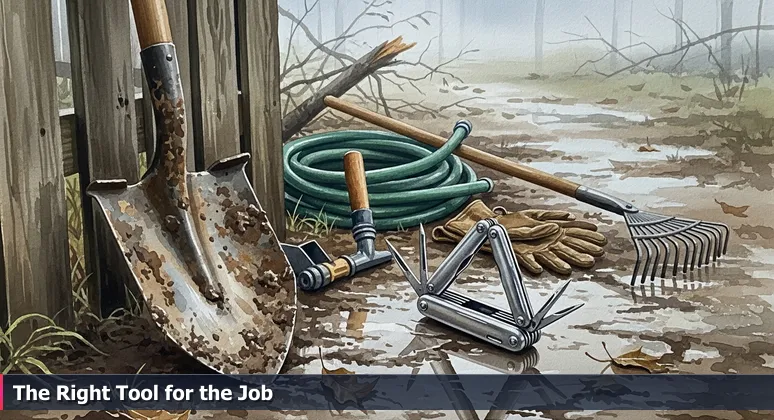
When a storm clears, the choice is instinctive: the reliable shovel over the multi-tool gadget. Detroit's 2026 AI startup ecosystem operates on that same principle of practical utility. Here, innovation is less about chasing theoretical breakthroughs and more about forging specialized tools to solve gritty, high-stakes problems in industry and community.
This tool-making ethos is rooted in the region's manufacturing heritage and amplified by world-class research from institutions like the University of Michigan. The focus is on vertical AI - applications built for specific domains like civic zoning, infrastructure repair, and skilled trades. From Corktown’s Michigan Central district to the research corridors of Ann Arbor, startups are turning local challenges into scalable solutions, proving that Detroit's ecosystem has massive momentum as an affordable place to scale high-tech companies.
Evidence of this focused innovation is clear. Metro Detroit ranks among the country's top regions for new AI patents. Financial support is growing, with the Detroit Startup Fund awarding over $500,000 to local tech founders to accelerate community-focused solutions. The result is a portfolio of companies that measure success not in model parameters, but in tangible outcomes: lead pipes located with over 90% accuracy, months of zoning review condensed into days, and decades of skilled trade knowledge preserved against a retiring workforce.
Table of Contents
- The Rise of Practical AI in Detroit
- AutoSitu
- JustAir Solutions
- Optilogic
- Genomenon
- Refraction AI
- BlueConduit
- DeepHow
- SkySpecs
- MemryX
- Voxel51
- The Right Tools for the Job
- Frequently Asked Questions
Follow the steps to begin an AI career in Detroit next year with this detailed guide.
AutoSitu
The notorious bottleneck of municipal zoning and development approvals, which can stall projects for months, is precisely the kind of inefficiency Detroit's practical AI targets. Emerging from the collaborative Michigan Central/Newlab ecosystem in Corktown, AutoSitu is an AI-native workspace built to cut through this red tape.
Its platform uses generative AI to interpret complex, often contradictory zoning codes and automatically review building plans for compliance. This process flags potential issues that would otherwise require weeks of human planner effort, reducing approval timelines from months to days. The startup, which raised $500,000 from backers like Y Combinator, is piloting its platform with the City of Detroit and surrounding municipalities in 2026.
By directly addressing a critical pain point in urban revitalization, AutoSitu exemplifies how local AI innovation is being applied to civic efficiency and housing goals. Its success hinges on transforming a legacy system of paperwork and delay into a streamlined, data-driven process for rebuilding.
JustAir Solutions
Air pollution's impact is felt block by block, not by city-wide average. JustAir Solutions tackles this disparity by deploying a network of IoT sensors paired with computer vision AI to monitor hyperlocal air quality, providing real-time alerts and insights directly to residents.
Founded by Detroit entrepreneur Darren Riley, JustAir's key differentiation is its granularity. Instead of relying on sparse regional data, its AI identifies neighborhood-level pollution "hot spots," empowering communities with precise data for advocacy and enabling targeted policy interventions. The startup has secured $50,000 from the Detroit Startup Fund and won multiple statewide pitch competitions, validating its model.
Having deployed sensors across Detroit’s riverfront and West Side neighborhoods, JustAir turns environmental data into a tangible tool for health and equity. As federal funding for environmental justice and smart-city initiatives grows, this practical application of AI is perfectly positioned to scale from Detroit to cities nationwide, ensuring the right to clean air is informed by the most local data possible.
Optilogic
In the wake of global disruptions, the mandate for supply chains has shifted from pure efficiency to resilience. Headquartered in the heart of a global logistics corridor, Optilogic provides the vertical AI needed to meet this new standard through its "Cosmic Frog" platform for supply chain design and simulation.
Founded by supply chain software pioneer Don Hicks, Optilogic combines traditional optimization with AI-driven "what-if" scenario planning. This allows companies to digitally stress-test their entire global logistics network against potential disruptions - from geopolitical shocks to factory fires - before they happen, enabling proactive redesign.
The critical need for this practical tool is underscored by its traction. In late 2025, Optilogic secured a substantial $40 million Series B round to scale operations, signaling strong investor confidence. Its platform is seeing rapid adoption by Fortune 500 manufacturers seeking to de-risk operations, making it a foundational player in rebuilding more robust, AI-informed supply chains from Detroit's industrial core.
Genomenon
The monumental task of diagnosing a rare genetic disease often involves sifting through millions of scientific papers - an impossible endeavor for any clinician. Genomenon tackles this bottleneck with advanced natural language processing (NLP), organizing the world's published genomic research into an instantly searchable database.
Their Mastermind Genomic Search Engine ingests billions of data points from scientific literature, enabling researchers to identify disease-causing genetic markers in seconds instead of months. Founded by pathologist and molecular biologist Dr. Mark Kiel, the company exemplifies the convergence of Michigan's strong life sciences and AI research sectors.
With over $20 million in Series B funding from investors like Beringea, Genomenon has achieved significant traction. Its platform is now used by more than 2,000 diagnostic labs and pharmaceutical companies globally. As the precision medicine movement accelerates, this practical AI tool serves as essential infrastructure, making the vast and growing body of genomic knowledge directly actionable for better health outcomes.
Refraction AI
Autonomous last-mile delivery often stumbles on two hurdles: prohibitive cost and unreliable weather. Refraction AI, founded by University of Michigan professors, engineered a practical solution by designing the REV-1, a lightweight, low-cost autonomous delivery robot built for real-world conditions.
Its key innovation is form factor. Unlike heavy sidewalk robots, the REV-1 is designed to operate in bicycle lanes. This allows it to better navigate the snow, rain, and variable road conditions common in Midwest winters - a tangible problem often overlooked by coastal robotics firms. Backed by over $10 million from eLab Ventures and Trucks VC, the company is running ongoing commercial pilots with restaurants and grocery chains in Ann Arbor and Detroit.
By significantly lowering delivery costs for local businesses and solving the weather challenge, Refraction AI isn't just building a robot; it's engineering a resilient logistics tool. Its success is a case study in the region's ethos of creating specialized tools that work where abstract solutions fail.
BlueConduit
The challenge of removing toxic lead water pipes is both a massive public health imperative and a financial nightmare for cities, where excavating every potential line is economically crippling. BlueConduit applies vertical AI directly to this critical infrastructure problem, using machine learning to predict the location of lead service lines with over 90% accuracy.
Founded by researchers Eric Schwartz and Ian Robinson, who helped tackle the Flint water crisis, BlueConduit's models analyze historical records, construction data, and other variables to guide targeted, cost-effective excavations. This practical approach saves municipalities millions of dollars by preventing unnecessary digs. The startup closed a $10 million+ Series A round led by Insight Partners to scale its mission.
Driven by federal mandates and infrastructure funding, BlueConduit's tool has moved from local solution to national standard. The company now holds contracts with over 100 cities, including Detroit, Chicago, and Buffalo, demonstrating how AI built for public good translates data science into direct community health impact and fiscal responsibility.
DeepHow
As experienced manufacturing and trades workers retire, they take with them decades of invaluable, hands-on "tribal knowledge" - a brain drain known as the "silver tsunami." DeepHow addresses this critical workforce challenge by using NLP and generative AI to capture expert know-how on video and automatically transform it into searchable, interactive training modules.
The platform can index procedural steps, translate instructions, and create smart tutorials, making complex skills transferable at scale. Led by former Siemens and Microsoft executives, DeepHow has raised over $25 million in Series A/B funding from firms like Foundry Group.
This isn't merely a training tool; it's a strategic workforce solution for the industrial heartland. Already adopted by global manufacturers like Stanley Black & Decker, DeepHow's practical AI ensures the foundational knowledge of "how things are made" is preserved and amplified, directly supporting Detroit's workforce in the AI age.
SkySpecs
Inspecting a 300-foot wind turbine blade is a dangerous, expensive, and slow process that typifies the hands-on challenges of the green energy transition. SkySpecs automates this critical task by deploying autonomous drones equipped with computer vision to inspect renewable energy assets, directly addressing the industry's labor and safety crisis.
Founded by former University of Michigan aerospace researchers Danny Ellis and Tom Brady, the company's Horizon platform doesn't just collect data. It uses AI to analyze imagery for microscopic cracks and wear, predicting mechanical failure months in advance and shifting maintenance from reactive to proactive. This practical application of robotics and AI has scaled the Ann Arbor-based startup into a late-stage powerhouse.
SkySpecs has raised over $138 million through Series D funding and now manages more than 100GW of renewable energy assets across 30+ countries. Their success demonstrates how Detroit-area expertise in hardware and intelligent systems can dominate a global vertical market, providing the essential, reliable tools needed to maintain the 21st-century energy grid.
MemryX
The future of AI in automotive and robotics isn't just in the cloud - it's in the device itself, where real-time processing is critical. Running complex models locally, however, demands immense computing power without draining the battery. MemryX designs the specialized silicon to solve this dilemma with its high-performance, low-power Edge AI accelerator chips.
Founded by University of Michigan professor Dr. Wei Lu, an expert in neuromorphic computing, the company's chips use a novel Dataflow Architecture to deliver high AI throughput while consuming a fraction of the power of traditional GPUs. This technical breakthrough is backed by over $30 million from investors including eLab Ventures and strategic semiconductor partners.
In a region defined by mobility, MemryX provides the essential hardware that enables the next generation of intelligent machines. The company is actively piloting its technology with major automotive and drone manufacturers for 2026 production cycles, cementing Detroit’s role in the critical hardware-software stack of the practical AI revolution.
Voxel51
Before an AI can reliably "see," developers must first understand their visual data - a monumental bottleneck in building computer vision models for autonomous vehicles and industrial inspection. Voxel51 owns this critical foundation, providing the essential platform for visualizing, analyzing, and improving massive, messy visual datasets.
Co-founded by Jason Corso, a renowned computer vision professor at the University of Michigan, the company's open-source tool, FiftyOne, has become the industry standard for the "data-centric AI" movement. It enables thousands of developers at companies from Google to Berkshire Hathaway to build more reliable models by ensuring they're constructed on high-quality, well-understood data.
Having raised over $15 million from investors like Drive Capital, Voxel51's success highlights the strategic depth of Detroit's AI ecosystem. Their tools are the indispensable plumb line for the region's computer vision ambitions, attracting talent and investment to solve this foundational problem and proving that the most impactful innovation often supports the builders behind the flashy applications.
The Right Tools for the Job
The resurgence of Detroit's AI sector in 2026 proves that the most impactful innovation isn't the most abstract - it's the tool that fits perfectly in your hand to clear real debris and break new ground. These ten startups represent a specialized toolkit for the future: robust, practical, and engineered for the hard work of rebuilding infrastructure, preserving knowledge, and ensuring community health.
For the aspiring professional, this practical revolution offers a unique front-row seat. The Detroit-Warren-Dearborn metro provides a living lab where AI gets its hands dirty, delivering undeniable value to foundational industries. It's an ecosystem where you can learn by building solutions for the very challenges these startups are solving.
This hands-on, tool-building mindset extends to education. Accessible pathways like Nucamp's AI bootcamps are designed for this landscape, offering affordable, flexible programs from $2,124 to $3,980 that teach the practical skills to contribute to - or even launch - the next generation of vertical AI tools. With strong ties to local employers and a focus on community-based learning, such programs demystify the field, turning observers into builders equipped to shape Detroit's next chapter.
Frequently Asked Questions
Why is Detroit highlighted as a key location for AI startups in 2026?
Detroit offers a unique advantage with a lower cost of living than coastal tech hubs, strong ties to automotive and mobility industries, and a growing innovation ecosystem fueled by universities like the University of Michigan. Startups here, such as Voxel51 and MemryX, focus on practical AI tools that solve real-world problems, making the region a hotspot for impactful technology in 2026.
How were these specific startups selected for the top 10 list?
The selection prioritizes startups with specialized AI applications addressing high-stakes industry and community challenges, backed by significant funding and traction in Detroit's ecosystem. For example, SkySpecs raised over $138M for drone-based inspections, while BlueConduit uses AI with 90% accuracy to predict lead pipes, highlighting their practical impact and growth potential.
What are AI job salaries like in Detroit compared to places like Silicon Valley?
AI roles in Detroit offer competitive salaries, often reaching six figures, combined with a much lower cost of living - housing costs here are significantly cheaper than in coastal hubs. This makes it an attractive career move, especially with opportunities at major employers like General Motors and startups focusing on mobility and robotics.
How can someone interested in AI careers connect with these Detroit startups?
Engage through local networking events, innovation hubs like Michigan Central in Corktown, and university-sponsored programs. Startups such as Refraction AI and DeepHow are actively hiring for roles in computer vision and machine learning, with many running pilots in Ann Arbor and Detroit, offering hands-on experience in autonomous delivery and workforce training.
In what ways does Detroit's automotive heritage influence its AI startup scene?
The region's manufacturing expertise drives AI innovation in mobility, supply chain resilience, and robotics, as seen with startups like Optilogic, which secured a $40M Series B for logistics optimization. This practical focus helps solve challenges like winter-proof delivery with Refraction AI, leveraging Detroit's hands-on ethos to build robust tools for global markets.
For a detailed analysis of highest paying tech companies in Detroit, including salary ranges and equity details, read this article.
Find detailed 2026 AI bootcamp rankings in the Detroit-Warren-Dearborn area with cost analysis.
Find out where to get free tech skills at Detroit libraries and community centers.
This article explains Detroit's tech transformation in 2026 and its impact.
Explore the 2026 guide to women in tech communities in Michigan for local insights.

Irene Holden
Operations Manager
Former Microsoft Education and Learning Futures Group team member, Irene now oversees instructors at Nucamp while writing about everything tech - from careers to coding bootcamps.