









Is Dallas, TX a Good City for a Tech Career in 2026?
By Irene Holden
Last Updated: February 28th 2026
Quick Explanation
Yes, Dallas, TX is an outstanding city for a tech career in 2026, fueled by its massive tech workforce of over 227,000 and Texas's largest AI talent pool with 19,000 professionals. With no state income tax and salaries averaging $140,000 for mid-level engineers, DFW offers a financial boost perfect for enterprise-scale and AI-focused roles.
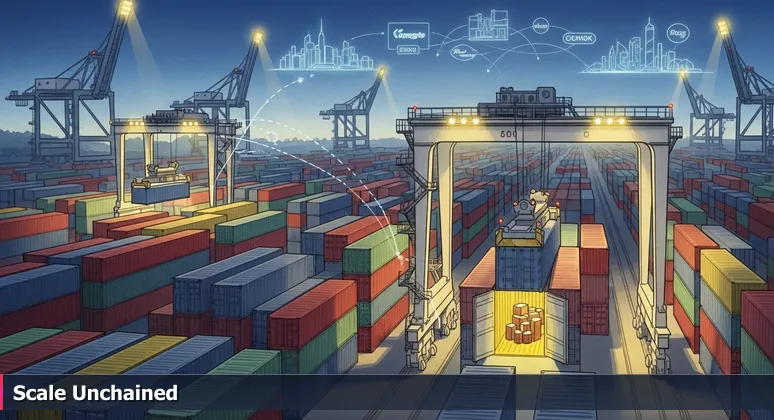
The most important decisions in American tech aren't made in glass-walled conference rooms on the coasts. They're made in nerve centers for moving freight - places that understand scale, efficiency, and connectivity above all else. Picture a massive, humming rail yard at twilight, where automated cranes stack endless shipping containers, each destined for a different corporation or city. This is the physical backbone of commerce, where value is measured in throughput and reliable connections.
By 2026, Dallas-Fort Worth (DFW) has become precisely that: America's logistical hub for tech talent and corporate scale. It’s the premier enterprise-scale platform where talent is standardized, companies are relocated, and AI infrastructure is physically built. While other hubs chase buzz, DFW delivers throughput. With a tech workforce of over 227,220 - a 26% surge since 2021 that is second only to New York in raw job growth - the region has cemented its status as the nation's #2 market for IT employment.
The region's ascent is built on hard metrics: leading the nation in corporate relocations, with 100 companies moving their headquarters to North Texas between 2018 and 2024. As the top-ranked tech hub in North America, DFW isn't merely a growing tech city. It is the strategic platform where scalable American tech is being deployed, a fact underscored by analysts who note DFW's advantages come down to "lower costs, explosive tech job growth, zero state income tax, and a startup ecosystem that just hit #1."
The question is no longer if DFW is a good tech city, but whether you can afford to ignore the platform where the future is being engineered. As detailed in an exclusive report on Dallas's tech talent surge, the region is the undeniable engine room for a new era of American tech, built on a foundation of relentless growth and pragmatic execution.
What We Cover
- Why Dallas-Fort Worth Is America's Tech Scale Platform
- The DFW Job Market: Where Enterprise Meets AI Innovation
- Maximizing Your Earnings: The DFW Tech Premium
- Living in DFW: A Grounded Tech Community
- DFW vs. Other Tech Hubs: A 2026 Reality Check
- Is DFW Right for You? Who Should Move in 2026
- Your Strategic Move to DFW in 2026
- Common Questions
If you're looking for an AI career guide for Dallas in 2026, this comprehensive resource has you covered.
The DFW Job Market: Where Enterprise Meets AI Innovation
DFW's tech ecosystem isn't a single star; it's a constellation. Built on a foundation of massive, established corporations, it's now supercharged by a surging wave of AI and startup activity - a powerful network, not just an isolated node.
The Corporate Anchor
The region is a headquarters capital, leading the nation in corporate relocations. This corporate density, detailed in the Dallas Regional Chamber's report on major relocations, creates a stable, high-demand environment for tech roles. The anchors are legendary: AT&T in Dallas, Texas Instruments as a semiconductor pillar, and Nokia's North America HQ in Plano, alongside software giants like NTT DATA, Sabre, and Microsoft.
The AI & Startup Surge
Alongside these titans, a dynamic new layer has emerged. DFW's AI talent base of 19,000 professionals is larger than Austin's, and the startup ecosystem attracted over $1.1 billion in investment in 2024. This growth is supported by massive bets, like Texas Instruments' $30 billion commitment for new manufacturing plants projected to create 3,000 jobs. Companies like Topaz Labs and o9 Solutions are homegrown AI leaders, proving innovation thrives here.
Skills-First Hiring
A critical evolution is DFW's shift to a "skills-first" economy. The market prioritizes demonstrable abilities and certifications, often over four-year degrees, especially in high-demand fields. This opens doors for career changers who can prove their competency through targeted training, such as the affordable, community-based AI bootcamps offered by Nucamp Coding Bootcamp in DFW, which align perfectly with this pragmatic trend.
Maximizing Your Earnings: The DFW Tech Premium
The raw numbers of job growth tell only half the story. The compelling reason for relocation is DFW's powerful financial advantage, often called the "tech premium," where robust salaries are supercharged by Texas's favorable economics.
Tech salaries in Dallas are competitive nationally. According to SMU's 2025 guide, mid-level software engineers average $130,000-$140,000, with top-tier roles exceeding $209,000. Specialized roles command strong wages, with the Motion Recruitment 2026 Salary Guide showing cybersecurity professionals at a median of $132,100 and senior cloud engineers reaching $148,000.
These figures gain immense power from Texas's lack of a state income tax and a cost of living that remains roughly 2% below the national average. While median home prices have risen, they are significantly more affordable than in coastal hubs. The Payscale cost-of-living calculator confirms this lasting financial edge for residents.
The practical effect is a profound cost-of-living arbitrage. A senior developer salary of $165,000 in DFW affords a dramatically higher quality of life than a $250,000 salary in San Francisco, where costs are approximately 30% higher. Your capital simply goes further here, transforming high gross pay into superior net take-home pay and disposable income for building long-term wealth.
Living in DFW: A Grounded Tech Community
DFW's tech scene is often described as more "grounded" than its coastal counterparts, deeply connected to real-world industries like finance, logistics, and telecommunications. This creates a professional culture focused on solving tangible business problems at scale, within a community organized into powerful geographic hubs.
Neighborhoods as Tech Clusters
The community is strategically organized, reducing commute times by concentrating opportunity. The Telecom Corridor in Richardson remains a historic and dense cluster of telecom and hardware giants. The Frisco/Plano Tech Ridge is a suburban powerhouse hosting corporate HQs, while Deep Ellum & Downtown Dallas form the creative heart of the startup and venture capital scene. Living and working within these clusters is a common and effective strategy for tech professionals.
Investing in Livability
The region is proactively enhancing urban amenities to complement its economic growth. Major projects like the expansion of Klyde Warren Park and the long-term Trinity River Project aim to transform green spaces and recreational opportunities. This focus on community and quality of life is part of what makes DFW, as noted in analysis of its top workplaces and culture, a compelling home for a growing tech workforce seeking balance alongside ambition.
This evolving landscape supports a vibrant ecosystem, with the Dallas startup scene including over 360 active companies as of 2026. The combination of focused tech clusters and intentional investments in livability fosters a connected, pragmatic community where professionals can build a career and a life.
DFW vs. Other Tech Hubs: A 2026 Reality Check
How does DFW truly stack up against its perennial competitors? The data reveals a clear narrative of scale versus specialization, positioning North Texas as the operational powerhouse.
| Factor | Dallas-Fort Worth (DFW) | Austin | Houston | Atlanta |
|---|---|---|---|---|
| Tech Talent Pool | 227,220+ (Large/Diverse) | 90,000+ (Startup-Heavy) | 100,000+ (Energy-Tech) | 110,000+ (FinTech) |
| AI Talent Base | 19,000 (Highest in TX) | 12,000 | Lower | Moderate |
| Office Rent (psf) | $32.20 | $48.70 | ~$30.00 | ~$35.00 |
| Key Advantage | Enterprise Scale & AI | Venture/Startup Brand | Energy/MedTech | Logistics/FinTech |
The North Texas vs. Austin dynamic is particularly instructive. While Austin excels in venture capital density and brand buzz, DFW wins on operational scale and cost. For every tech-degree graduate Austin produces, DFW produces nearly double. Its lower office rents and massive infrastructure make it the preferred choice for corporate "second HQs" and data center expansions. This strategic dominance is why Site Selection Magazine named DFW America's Top Tech Hub, a title earned through relentless corporate relocation wins and sustained growth that defies national trends.
Is DFW Right for You? Who Should Move in 2026
Dallas-Fort Worth's unique scale platform makes it an exceptional fit for specific tech professionals, while others might find better opportunities elsewhere. Understanding this fit is key to a successful strategic move.
Dallas-Fort Worth is BEST for:
- Enterprise Software Engineers & IT Professionals: Seeking stable, high-paying roles at the Fortune 500 companies that anchor the region.
- AI & Machine Learning Practitioners: Looking to join the largest AI talent pool in Texas, working on applied problems in finance, logistics, and telecom.
- Career Changers: Benefiting from the "skills-first" hiring approach and accessible, affordable training pathways like local bootcamps that align with employer needs.
- Scalability Experts & Financial Pragmatists: Those who thrive on deploying technology across vast organizations and prioritize take-home pay and long-term wealth building.
Dallas-Fort Worth might NOT be ideal for:
- Early-Stage Startup Purists: If your dream is exclusively to work at a pre-seed, 10-person startup, Austin's ecosystem remains more densely packed with those opportunities.
- Those Who Hate Car-Centric Living: While tech clusters help, a car is still a necessity for full mobility across the metroplex.
- Professionals Seeking "Peak" Coastal Salaries: While the adjusted compensation is superior, the raw, pre-tax salary number for a similar role may still be higher in San Francisco or New York.
For career changers, the region's pragmatic approach is a significant advantage. The shift to skills-based hiring, noted by industry observers, creates clear on-ramps. Entry-level IT support roles here can pay between $56,000 and $72,000, offering a viable launchpad for those transitioning into the field through focused upskilling.
Your Strategic Move to DFW in 2026
The evidence points to a resounding verdict: Dallas-Fort Worth is the undisputed capital of scale, execution, and economic sensibility. For the engineer who wants to see their code impact millions of customers on a reliable network, for the data scientist optimizing global supply chains, or for the career changer leveraging affordable training into a six-figure role, DFW isn't just a good choice - it's the strategic platform for a durable, high-impact tech career.
The region's ascent to America's top destination for corporate relocations and its cultivation of the largest AI talent pool in Texas represent a fundamental shift. This is where scalable American tech is physically built and deployed, supported by a financial equation - high salaries, no state income tax, and rational living costs - that is increasingly irresistible.
The culture has evolved to match this ambition, becoming more skills-oriented and connected to the real-world industries that form the backbone of the national economy. For professionals ready to move beyond buzz and into building, the platform is here, operational, and growing.
The train, as they say, is leaving the station. The infrastructure is laid, the talent is assembling, and the enterprises are all aboard. The final question for 2026 is not about analyzing the trend, but about action: Are you on board?
Common Questions
Is Dallas, TX actually a promising city for tech careers in 2026?
Yes, Dallas-Fort Worth has solidified its position as a top tech hub, with over 227,220 tech jobs and a 26% growth surge since 2021. It's the nation's #2 market for IT employment, offering a stable, scalable platform for enterprise and AI roles, backed by major corporate anchors and a booming startup scene.
What are the highest-paying tech roles in Dallas-Fort Worth right now?
Roles like senior software engineers, AI specialists, and cybersecurity professionals command top salaries, with mid-level engineers averaging $130,000-$140,000 and leadership positions like CTOs earning up to $206,000. These figures are boosted by Texas's no state income tax, making take-home pay more competitive against higher-cost coastal cities.
How does Dallas compare to Austin for tech opportunities in 2026?
Dallas wins on scale and cost-effectiveness, with a tech talent pool over twice the size of Austin's and office rents around $32 per square foot versus Austin's $48.70. While Austin excels in startup buzz, DFW's enterprise focus, larger AI talent base of 19,000, and corporate relocations make it better for stable, high-impact careers.
Can I break into tech in Dallas without a traditional degree?
Absolutely. DFW's shift to a skills-first economy prioritizes demonstrable abilities over degrees, especially in fields like cybersecurity and cloud engineering. Local bootcamps like Nucamp offer affordable, community-based programs in AI and coding, providing viable pathways into six-figure roles for career changers and newcomers.
What are the lifestyle advantages of living in Dallas for tech professionals?
Dallas offers a grounded, cost-effective lifestyle with a cost of living 2% below the national average and no state income tax. The metro area is organized into tech clusters like the Telecom Corridor in Richardson and Frisco/Plano, reducing commutes, while projects like Klyde Warren Park enhance livability for a balanced work-life experience.
This article lists the best free tech courses in Dallas libraries for 2026, perfect for aspiring tech professionals.
This guide helps you choose from the top AI tech bootcamps in Dallas in 2026.
This step-by-step tutorial on AI engineering in Dallas covers everything from Python to local job markets.
Read about the top 10 tech startups hiring junior developers in Dallas, TX in 2026.
For a rundown of Dallas's AI startups to watch in 2026, check out this comprehensive ranking.

Irene Holden
Operations Manager
Former Microsoft Education and Learning Futures Group team member, Irene now oversees instructors at Nucamp while writing about everything tech - from careers to coding bootcamps.