









How to Become an AI Engineer in Clarksville, TN in 2026
By Irene Holden
Last Updated: February 26th 2026
Quick Summary
To become an AI engineer in Clarksville, TN in 2026, follow a 12-month blueprint that uses local resources like Austin Peay State University's AI courses and hands-on projects for sectors such as defense and healthcare. This path leads to an average salary of $105,161 in Tennessee, with Clarksville's no state income tax and lower cost of living making it a smart career move in the booming Middle Tennessee tech corridor.
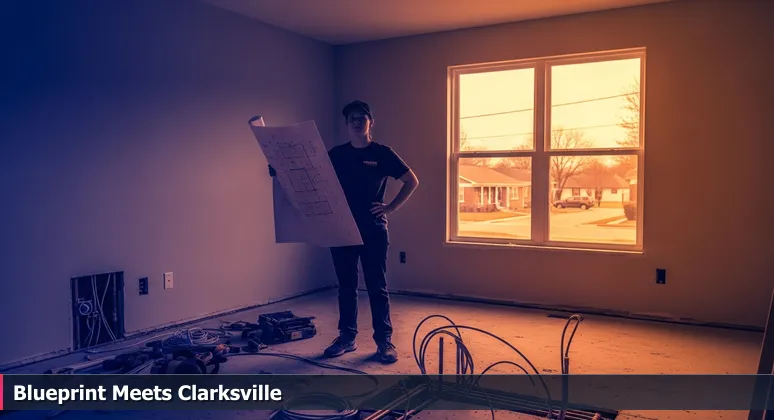
Every build starts with a vision, but the reality is a construction site. Before you can shape the AI systems of tomorrow, you need to gather the permits and tools that make the work possible here in Clarksville. This isn't about abstract theory; it's about assembling the practical foundation for a career in a field projected to grow from roughly $390 billion to over $3.4 trillion by 2033.
Your toolkit begins with mathematical aptitude. You don't need a doctorate, but comfort with algebra, logical problem-solving, and the core concepts of linear algebra and statistics is non-negotiable. Next, your physical workstation: a reliable computer with at least 16GB of RAM and a solid-state drive is essential. A dedicated GPU accelerates model training, but cloud solutions offer a powerful start.
For software, installing Python 3.9 or newer and a robust code editor like VS Code is your first action. Familiarity with the command line is your gateway to controlling these tools. As noted in industry discussions, proficiency with AI is becoming an unwritten expectation, making these skills your baseline.
Most critically, you need the mindset of a builder, not just a student. The field moves fast; your ability to learn, adapt, and solve problems is the most important tool in your belt. This mindset pays off: in Tennessee, generative AI engineers command an average salary of $105,161, a powerful income in our no-state-income-tax region. Structured local education, like the computer science and technology programs at Austin Peay State University, can formalize this journey from the start, ensuring your toolkit is calibrated for the local market's demands.
Steps Overview
- Gear Up with Essential Tools and Mindset
- Build a Rock-Solid Foundation with Python
- Construct Core AI Frameworks with Math and Models
- Install Cutting-Edge Deep Learning Systems
- Wire Your Skills for Production and Local Industries
- Verify Your Readiness for an AI Career in Clarksville
- Common Questions
Explore the AI job market in Clarksville, TN for 2026 with this comprehensive analysis.
Build a Rock-Solid Foundation with Python
With your toolkit assembled, it's time to pour the concrete footers. The first three months are dedicated to mastering Python and data manipulation - the unglamorous but essential work every AI system rests upon. Industry experts emphasize that moving into AI engineering is less about a "career reset" and more about "software engineering plus models plus judgment."
Your first month is for Python fundamentals. Go beyond basic syntax to achieve deep fluency in lists, dictionaries, functions, classes, and error handling. This is your hammer and saw. In month two, specialize in data wrangling with NumPy for numerical operations and Pandas for tabular data. Since most real-world data is messy, learning to clean and analyze it is a core competency.
- Master Python: Dedicate focused time to core programming concepts.
- Learn Data Wrangling: Use NumPy and Pandas to transform raw data into usable formats.
- Complete a Foundational Project: Build a CLI application. For a Clarksville-relevant start, create a program that analyzes public city data, like service requests, to identify local trends.
This hands-on practice proves you can extract meaning from local data, a skill directly applicable to the regional economy. As highlighted in the AI Engineer Roadmap from Turing College, a strong command of Python and its core libraries is the non-negotiable first pillar for any aspiring engineer. Avoid the common mistake of jumping straight into neural networks; this foundation is what allows you to debug issues and build robust systems later.
Construct Core AI Frameworks with Math and Models
Now, with Python as your solid ground, you erect the wooden frame: the core mathematical concepts and machine learning models that give AI systems their shape. This phase bridges abstract theory with practical building, focusing on the intuitive understanding needed for Clarksville's applied tech landscape.
Concurrently with hands-on projects, begin a structured review of essential mathematics. Focus on developing a working knowledge of Linear Algebra (vectors, matrices), Calculus (especially derivatives for understanding optimization), and Statistics (probability, distributions). The goal isn't to derive every formula but to grasp what the math represents in code.
- Study the Core Math: Use online platforms like Khan Academy to build foundational intuition for these disciplines.
- Build Your First Models: Learn scikit-learn, the essential library for traditional machine learning. Implement models to predict local home values or cluster Clarksville businesses by type.
- Enroll in Structured Learning: Formalize your education with a course like MATH 4310: Machine Learning I at APSU, which bridges practical coding with mathematical theory.
This step integrates the "why" with the "how." As part of the Artificial Intelligence Minor at Austin Peay State University, this structured path connects you with local faculty and provides accredited learning tailored to the foundational paradigms of AI problem-solving. It's the framework upon which you'll later install more specialized, cutting-edge systems.
Install Cutting-Edge Deep Learning Systems
This is where you install the specialized electrical and plumbing - the deep learning frameworks and large language models that power modern AI applications. Moving beyond traditional machine learning, you'll work with the systems that are transforming industries right here in Middle Tennessee.
Your first decision is choosing a deep learning framework. Dive into either PyTorch, often favored for research flexibility, or TensorFlowprompt engineering for reliable outputs.
- Master a Deep Learning Framework: Gain proficiency in PyTorch or TensorFlow through hands-on model building.
- Understand LLMs & Prompt Engineering: Learn to reliably integrate and query advanced language models as components in larger applications.
- Advance Your Formal Education: Enroll in specialized courses like CSCI 4452: Generative A.I. at APSU to solidify the theory behind these tools.
As emphasized in a comprehensive roadmap for 2026, an AI engineer's value lies in building reliable systems around these often-unpredictable models. The field's projected growth to a $3.4 trillion market makes this specialized skill set critical, but the hype demands focus on robust integration, not just experimentation.
Wire Your Skills for Production and Local Industries
A house isn't livable until it's wired for electricity and passes inspection. These final months are about making your AI work production-ready and understanding the "local building codes" of Clarksville's key industries - defense, healthcare, and logistics.
- Learn Production MLOps: Study tools like LangChain for complex LLM workflows and the basics of Retrieval-Augmented Generation (RAG). Get comfortable deploying a simple model on a cloud platform like AWS or Azure.
- Build a Local Capstone Project: Create a portfolio centerpiece for a major local sector. For Fort Campbell defense contractors, this could be a secure document analysis tool, incorporating knowledge of frameworks like the Cybersecurity Maturity Model Certification (CMMC) for AI. For healthcare, develop a predictive model using synthetic data, carefully documenting HIPAA compliance considerations.
- Complete Specialized Training: Solidify advanced concepts through a course like CSCI 4452: Generative A.I. at APSU or an intensive, short-term option like the 5-day AI & Deep Learning Bootcamp in Nashville.
This phase transforms you from a learner to a practitioner who can navigate specific industry requirements. Start building your professional network by attending local tech events, such as the AI Specialists: AgenticAI Monthly Momentum Mixer in Clarksville. The goal is to treat AI not as magic, but as infrastructure you can reliably deploy for the unique challenges of the Middle Tennessee economy.
Verify Your Readiness for an AI Career in Clarksville
You haven't just followed a blueprint; you've become a builder capable of adapting plans to the local terrain. You'll know you're ready for the Clarksville and Middle Tennessee market when specific, verifiable conditions are met.
First, your portfolio must speak through 3-4 substantial projects on GitHub, with at least one addressing a problem relevant to our defense, healthcare, or logistics sectors. Second, you can articulate the nuanced differences between building for a Nashville healthcare startup versus a Fort Campbell contractor, referencing specific compliance needs like HIPAA or CMMC. Third, you hold a credential from a structured program, whether it's APSU's AI Minor, the Data Science Bootcamp at Nashville Software School, or an equivalent certified course.
Ultimately, you prove readiness by demonstrating end-to-end capability: taking a local problem, finding and cleaning data, training or integrating a model, and deploying a minimal viable application. This skill set opens the door to a "future-proof" career in an exploding field. In Tennessee, where generative AI engineers command an average salary of $105,161, this expertise offers powerful earning potential amplified by our no state income tax and lower cost of living. The journey maps to dedicated effort, but the destination is becoming an architect for the unique landscape of our booming tech corridor.
Common Questions
Is it realistic to pursue an AI engineering career in a smaller city like Clarksville, TN?
Yes, Clarksville offers a viable path with unique regional advantages, including no state income tax and a lower cost of living. Proximity to Nashville's expanding tech hub and local employers like Fort Campbell creates growing opportunities for AI roles in defense, healthcare, and logistics.
How long will it take me to become job-ready as an AI engineer in Clarksville?
The article outlines a focused 12-month blueprint that combines foundational skills with local projects. By dedicating consistent effort, you can develop a portfolio and practical expertise to enter the job market within a year, leveraging resources like Austin Peay State University's courses.
What kind of salary can I expect as an AI engineer in Tennessee?
Generative AI engineers in Tennessee earn an average salary of $105,161, according to regional data. With no state income tax and a lower cost of living compared to larger metros, this offers a strong financial incentive for building a career in Clarksville and the Middle Tennessee area.
Are there local educational programs or bootcamps I can attend in Clarksville to learn AI?
Yes, Austin Peay State University offers an AI Minor with courses like CSCI 4450, and nearby Nashville has options like the Data Science Bootcamp at Nashville Software School. These provide structured, accredited learning without needing to relocate from Clarksville.
Do I need a degree to become an AI engineer, or can I succeed with self-study and bootcamps?
While a degree can be helpful, practical skills and a strong portfolio are crucial. Programs like APSU's AI Minor or intensive bootcamps offer credentials, but focusing on building deployable projects relevant to local sectors like defense or healthcare is key to standing out in the Clarksville job market.
Gain knowledge on negotiating AI salaries in Clarksville, TN in this expert guide for career advancement.
Find comprehensive information on Nucamp's guide to Clarksville tech career affordability in 2026.
Discover Clarksville's promising AI startups for 2026 and their impact on the local economy.
For a detailed guide on how to pay for tech training in Clarksville, TN in 2026, visit our comprehensive resource.
Read about the leading fields employing machine learning experts in Clarksville in 2026.

Irene Holden
Operations Manager
Former Microsoft Education and Learning Futures Group team member, Irene now oversees instructors at Nucamp while writing about everything tech - from careers to coding bootcamps.