









Is Charleston, SC a Good City for a Tech Career in 2026?
By Irene Holden
Last Updated: February 25th 2026
Quick Explanation
Yes, Charleston is an outstanding city for a tech career in 2026, driven by a record-high average tech wage of over $130,000 and a cost of living on par with the national average. The tech sector is growing at a rapid 7.2% annually, fueled by major employers like Boeing and a burgeoning AI ecosystem, offering a balanced lifestyle without the extreme costs of larger hubs.
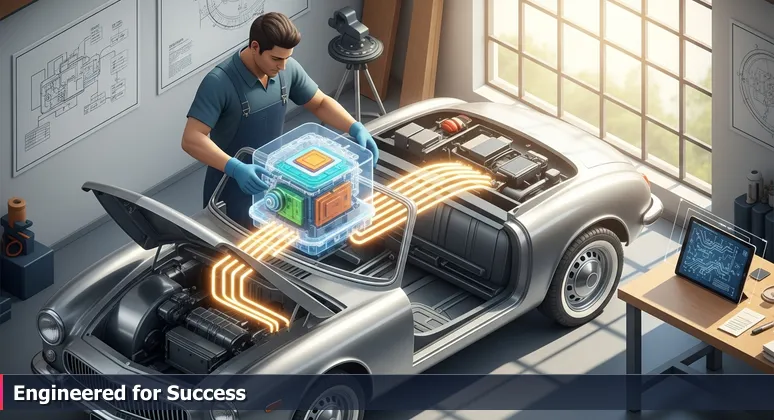
The most powerful upgrades aren't about building a new machine from the ground up. They happen when a master technician fits a state-of-the-art engine into a classic, enduring frame. This is the essence of Charleston, South Carolina’s evolution into "Silicon Harbor." It’s not a brand-new prototype city; it’s a historic, high-performance economic engine being supercharged for the future.
Common career advice presents a binary choice: chase the shiny concept cars of coastal tech hubs or settle for perceived stagnation. But Charleston offers a compelling third way. Its historic economic chassis, built on aerospace, manufacturing, and global trade, is now powered by a new engine of AI, SaaS, and cybersecurity. The moniker "Silicon Harbor" captures this retrofit perfectly, branding a resilient and high-value tech ecosystem.
This transformation is the result of sustained, deliberate growth. The sector has grown at a 7.2% annual rate over the last decade, significantly outpacing the national average. This durable trend proves the city isn't experiencing a fleeting boom but a fundamental economic upgrade. The integration of modern tech into legacy industries creates a uniquely stable yet innovative career platform.
For tech professionals, this means access to the proven infrastructure and networks of established global companies, now layered with the dynamic opportunities of a maturing startup scene. It’s the best of both worlds: the torque of a legacy platform with the horsepower of a frontier engine.
What We Cover
- Charleston's Rise as Silicon Harbor
- Why Charleston's Tech Momentum Matters
- Defense, Aerospace & Advanced Manufacturing
- Software and SaaS Innovation
- Logistics and Supply Chain Tech
- Emerging AI and Cybersecurity
- Community Infrastructure and Support
- Is a Charleston Tech Career Right for You?
- Comparing Charleston to Other Southeast Hubs
- Upskilling for the Charleston Market
- Conclusion: The Smart Bet for 2026
- Common Questions
If you're interested in an AI career in Charleston 2026, this guide is essential.
Why Charleston's Tech Momentum Matters
Charleston’s tech story is defined by sustained, deliberate growth rather than a fleeting boom. The sector has grown at a 7.2% annual rate over the last decade, outpacing the national average of 5.1%. This isn't a bubble; it's a durable trend with deep roots in the region's industrial base.
The most compelling data point is compensation. In 2025, the average tech wage hit a record $130,522 - more than double the regional average for all occupations. This momentum has held, with the Charleston Regional Development Alliance confirming it represents the highest average tech wage on record for the region.
This growth is underpinned by strong fundamentals. Tech employment now accounts for 12.1% of the regional economy and is growing at 3.2% annually, again outpacing the national average. The hiring outlook remains robust, with approximately 40% of local tech companies expecting to hire. The broader job market is also strong, with the Charleston metro ranking #11 among the best-performing cities in the U.S., adding 21,000 new jobs.
High wages are only meaningful when measured against the cost of living. Here, Charleston offers a distinct advantage. While the cost of living is about 6% higher than the South Carolina state average, it remains roughly on par with the national average. This creates a favorable ratio where high tech salaries go significantly further than they would in premium coastal hubs.
Defense, Aerospace & Advanced Manufacturing
This cluster represents the classic, enduring chassis of Charleston's economy. Anchored by Boeing's 787 Dreamliner assembly line in North Charleston, it creates massive, sustained demand for software engineers, cybersecurity experts, and data analysts. This isn't just about building planes; it's about integrating cutting-edge digital systems into advanced manufacturing.
Companies like Boeing are constantly hiring for tech roles that support these complex operations. Recent postings for positions like Programmer Analyst highlight the need for professionals who can bridge manufacturing and information technology. The presence of Volvo Cars and Mercedes-Benz Vans plants further drives innovation in logistics, automation, and the Industrial Internet of Things (IIoT).
This sector's strength provides a stable foundation for tech careers. Statewide, computer and mathematical occupations are projected to grow about 24% from 2022 to 2032, with much of that demand fueled by advanced manufacturing's digital transformation. For tech professionals, it means applying skills in AI, data analytics, and secure software development to some of the world's most sophisticated physical products.
The "retrofit" is clear: a historic strength in making things is being powerfully augmented by software and data. This creates a resilient career path where tech skills meet tangible, high-value industrial output.
Software and SaaS Innovation
If defense manufacturing is Charleston's classic chassis, the Software & SaaS sector is the modern electric motor being integrated. Blackbaud, a global leader in cloud software for social good, has long been the anchor tenant, establishing a deep bench of software talent. They are now joined by a growing roster of specialized firms like Case Status in legal tech and AVOXI in telecommunications.
This dense network is evolving rapidly, with a notable rise in AI-focused service providers. Companies like eGroup Enabling Technologies and Ignite Digital Services point to the sector's shift toward intelligent applications. Charleston has become the fastest-growing mid-sized metro for software engineers, creating a virtuous cycle of talent attraction and company formation.
The ecosystem supports this growth through active collaboration and a strong culture. Professionals report a "flexible, resilient workforce" and note the "give back" culture among tech firms. This environment fosters both innovation and stability, making it attractive for both startups and established software companies seeking to grow.
The result is a software landscape that blends the scalability of SaaS with Charleston's distinctive community focus, proving that high-tech innovation thrives outside traditional coastal hubs.
Logistics and Supply Chain Tech
Powered by the Port of Charleston - one of the busiest container ports in the nation - this sector is a natural proving ground for tech innovation. The port's massive throughput creates complex challenges in coordination, forecasting, and efficiency, which are now being solved with software and data science.
Startups and established companies are applying AI and machine learning to optimize global supply chains, predictive logistics, and port operations. This blends the city’s centuries-old role as a trade hub with cutting-edge technology, creating a unique niche. The tech-enabled transformation of logistics is a prime example of Charleston's economic retrofit in action.
The talent demand here is significant and specialized. Statewide, roles for data scientists - who are crucial for building these optimization models - are projected to grow by a remarkable 48% from 2022 to 2032. This growth is fueled by both the port's own digital initiatives and the ecosystem of tech companies that serve the global logistics and maritime industries.
For tech professionals, this means opportunities to work on large-scale, real-world problems where software directly impacts the flow of physical goods. It's a sector where a line of code can help unload a container ship faster, making the abstract powerfully concrete.
Emerging AI and Cybersecurity
This sector represents the cutting-edge control system being installed in Charleston's economic engine. The market for AI and cybersecurity roles isn't just growing - it's accelerating, with positions expected to grow by 20% by 2026. For professionals already in the workforce, AI/ML skills are becoming what local analysts call "retention imperatives."
The demand is fueled by a powerful dual engine. First, the established defense and aerospace contractors have deep, ongoing needs for cybersecurity and autonomous systems. Second, a new wave of startups and specialized firms is emerging, with 2025 seeing a notable rise in AI-focused service providers and product companies. This creates demand across the spectrum, from research to implementation.
The growth projections are staggering at the state level, with data scientist roles alone projected to expand by 48% from 2022 to 2032. This surge validates Charleston's position as a serious hub for applied artificial intelligence, moving beyond hype to tangible job creation and technological integration within its core industries.
For practitioners, entering this vertical in 2026 means positioning yourself in a high-demand niche within a market that is both growing and maturing. It’s where the future of Charleston's tech retrofit is being programmed, offering a front-row seat to the integration of intelligent systems into every layer of the local economy.
Community Infrastructure and Support
Every innovative workshop needs a central hub, and Charleston's is the Charleston Tech Center (CTC). This 92,000-square-foot facility, operated in partnership with the Charleston Digital Corridor, offers coworking spaces, private tech suites, and a Google-backed Learning Center. It functions as the physical heart of "Silicon Harbor," providing the collaborative environment where startups and established teams can connect and grow.
The ecosystem is structurally supported by key organizations that provide funding and resources. The South Carolina Research Authority (SCRA) offers critical early-stage funding and business support, while the Charleston Digital Corridor drives programming and advocacy. This institutional backing helps translate ideas into viable businesses.
Momentum is sustained through major industry events. The DIG SOUTH Tech Summit remains the premier regional gathering, while the inauguration of Charleston Tech Week in 2025 added a new platform for showcasing local innovation and attracting national attention.
Finally, the community is energized by active grassroots networks. Meetups like Charleston Women in Tech and TechYeet foster peer-to-peer connection, mentorship, and knowledge sharing. This combination of physical space, institutional support, curated events, and organic community creates a comprehensive infrastructure that few mid-sized markets can match.
Is a Charleston Tech Career Right for You?
Evaluating a Charleston tech career means looking beyond the headlines to your personal career stage and lifestyle priorities. The city's unique blend of high wages and coastal living creates a specific value proposition that excels for some professionals more than others.
Charleston is Best For:
- Mid-Career Professionals Seeking Balance: You command a competitive salary (near or above the $130k average) but value a cost of living that allows for homeownership and immediate beach access. As Zach McNamara, CEO of Portside Technology, noted, it’s a "business-friendly environment...to attract and retain top technology talent."
- Specialists in Defense, Aerospace, or Logistics Tech: Your skills are in high demand at major anchors and their surrounding ecosystem of innovators.
- AI and Cybersecurity Practitioners: With a 20% growth projected by 2026, this is a high-demand niche. Professionals note these skills are becoming "retention imperatives" in the local market.
- Those Prioritizing Lifestyle Integration: You want a career that doesn't require sacrificing world-class dining, history, and coastal access.
Charleston Might Not Be Ideal For:
- Entry-Level Candidates Seeking Countless Options: While growing, the market is smaller than Atlanta or Raleigh. Competition for classic entry-level software roles can be stiffer.
- Those Who Crave a "24/7 Megacity" Vibe: Charleston is a top-tier mid-sized city. Its pace and urban density differ from larger hubs.
- Professionals Dependent on Robust Public Transit: The region remains largely car-dependent, and commute times have increased with growth.
Comparing Charleston to Other Southeast Hubs
| Factor | Charleston (Silicon Harbor) | Raleigh-Durham (RTP) | Atlanta |
|---|---|---|---|
| Primary Strength | Defense, Aerospace, SaaS, and Logistics Tech. A retrofit of legacy industries. | Life Sciences, Semiconductors, and Academia. A large, research-driven market. | Fintech, Logistics, and Corporate B2B. A massive, diverse, and competitive ecosystem. |
| Market Scale | Smaller, high-growth, and tight-knit. Tech employs 12.1% of the regional economy. | Large, stable, and anchored by major university research. | One of the largest in the Southeast, defined by sheer volume and corporate HQs. |
| Vibe & Lifestyle | Coastal, historic, resort-like balance. Offers a renowned "give back" culture and immediate beach access. | Academic, suburban, and family-oriented. A classic tech hub feel. | Urban, massive in scale, with notorious traffic. A true major metropolis. |
The Verdict: Choose Charleston for a specialized, high-growth market in an unparalleled lifestyle package where your work integrates with established industries. Choose Raleigh for pure research and biotech depth, or Atlanta for sheer volume and big-city corporate roles.
Upskilling for the Charleston Market
| Program | Duration | Tuition | Charleston Market Fit |
|---|---|---|---|
| Solo AI Tech Entrepreneur | 25 weeks | $3,980 | Ideal for targeting the city's growing AI startup scene, focusing on building AI-powered products and SaaS monetization. |
| AI Essentials for Work | 15 weeks | $3,582 | Provides practical skills for professionals at companies like Boeing or Blackbaud to integrate AI and prompt engineering into existing workflows. |
| Back End, SQL & DevOps with Python | 16 weeks | $2,124 | Teaches foundational Python and cloud skills crucial for data-heavy roles in Charleston's logistics, aerospace, and SaaS industries. |
With AI skills cited as a local retention imperative, targeted upskilling is a strategic career move. Bootcamps like these offer an accelerated, practical alternative to traditional degrees, perfectly aligned with the urgent needs of Charleston employers. The community-based learning model, offering flexibility for working professionals, mirrors the collaborative, workshop ethos of the "Silicon Harbor" ecosystem itself.
The affordability - with programs from approximately $2,124 - is a significant advantage in a market where high salaries are magnified by a sensible cost of living. This makes gaining in-demand skills in AI, cybersecurity, and full-stack development a high-return investment for building a future-proof career in Charleston's retrofit economy.
Conclusion: The Smart Bet for 2026
Evaluating a tech career in 2026 becomes less about chasing the loudest hype and more about finding platforms with durable infrastructure already in place, now supercharged for the future. Charleston presents a masterclass in this approach. It offers record-breaking wages in a cost-effective package, all anchored by blue-chip industries undergoing deep technological integration.
The city's rise is defined by proven momentum, not speculation. A 7.2% annual growth rate over a decade and tech wages that have surged to record highs demonstrate a resilient, sustainable ecosystem. This is the reliable torque of a legacy economic engine, now augmented with the high-performance horsepower of AI and software innovation.
For the professional who views their career as a craft - something built with skill, precision, and an eye for lasting value - Charleston’s "Silicon Harbor" offers an compelling proposition. It combines the community and lifestyle of a world-class coastal city with the serious economic opportunity of a dedicated tech hub. The sustained success of Carolina cities like Charleston highlights a broader regional shift, positioning it as a leader in the new geography of tech.
The retrofit is complete. The historic frame has been fitted with a cutting-edge engine, and the road ahead is open. For those ready to build a meaningful career without sacrificing quality of life, the invitation to help pilot this high-performance hybrid into the future stands clear.
Common Questions
Is Charleston really a good city for a tech career in 2026?
Yes, Charleston offers a compelling tech career in 2026, with record-breaking average tech wages over $130,000 and a cost of living on par with the national average. Its tech sector is growing at 7.2% annually, outpacing the national average, supported by industries like aerospace and SaaS in 'Silicon Harbor.'
What are tech salaries like in Charleston compared to other cities?
Tech salaries in Charleston are competitive, averaging around $130,522, which is more than double the regional average. When combined with a cost of living about 6% higher than the state average but on par nationally, it provides better value than pricier hubs like San Francisco or New York.
Which tech industries are strongest in the Charleston area?
Charleston's tech economy is driven by defense, aerospace, and advanced manufacturing anchored by Boeing and Volvo, along with a growing SaaS sector led by companies like Blackbaud. Logistics tech from the Port of Charleston and emerging AI and cybersecurity fields also show strong demand, with AI roles projected to grow 20% by 2026.
How does the job market in Charleston look for tech professionals?
The Charleston tech job market is robust, with tech employment making up 12.1% of the regional economy and growing at 3.2% annually. About 40% of local tech companies expect to hire in 2026, supported by a thriving startup ecosystem and institutions like the Charleston Tech Center.
Is Charleston a good fit for someone interested in AI or cybersecurity careers?
Definitely, Charleston is a promising hub for AI and cybersecurity, with demand for these roles expected to grow by 20% by 2026. Local employers, from Bosch to startups, are increasingly integrating AI, and skills in this area are becoming retention imperatives, making it a strategic choice for specialists.
Learn about top cybersecurity employers in Charleston like Boeing and Blackbaud in this analysis.
This article provides a complete overview of AI and ML salaries by experience level in Charleston for 2026, including bonus structures.
If you're seeking the best places for tech startups in Charleston, this article provides expert recommendations.
This article provides a ranking of AI tech bootcamps for Charleston residents in 2026.
Discover leading apprenticeships and internships for tech careers in Charleston with this detailed guide.

Irene Holden
Operations Manager
Former Microsoft Education and Learning Futures Group team member, Irene now oversees instructors at Nucamp while writing about everything tech - from careers to coding bootcamps.