









Top 10 AI Prompts and Use Cases and in the Hospitality Industry in Cayman Islands
Last Updated: September 7th 2025
Too Long; Didn't Read:
Top 10 AI prompts and use cases for Cayman Islands hospitality: virtual concierge, dynamic pricing, predictive housekeeping, multilingual support and emergency alerts. Start with a 90‑day pilot. Case results: PriceLabs ~18% RevPAR gain; Pricepoint +19% revenue / +13% occupancy; Optii ~18% labor drop.
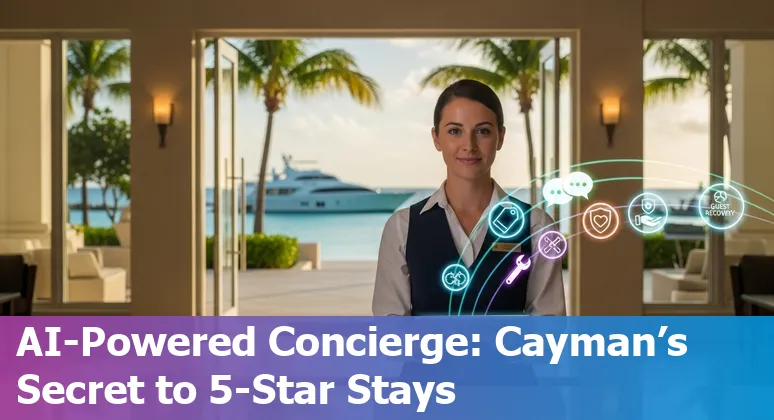
The Cayman Islands hospitality scene is uniquely suited to practical AI adoption: island hoteliers can use virtual concierges, dynamic pricing and predictive housekeeping to boost revenue and resilience without losing the human touch.
Industry playbooks catalog real-world options - see NetSuite's catalog of AI use cases for examples like virtual assistants, maintenance prediction and real-time translation - and EHL's analysis on personalization and multilingual support shows how those capabilities deepen guest loyalty across diverse visitors.
For operators ready to start small, a Cayman-focused 90-day AI pilot playbook outlines quick wins and measurable KPIs to protect revenue and streamline operations.
The aim isn't replacement but amplification: faster check-ins, timely hurricane communications, and tailored upsells that feel like service, not sales.
| Bootcamp | Length | Early bird cost (USD) |
|---|---|---|
| AI Essentials for Work bootcamp - Gain practical AI skills for any workplace (Syllabus) | 15 Weeks | $3,582 |
| Solo AI Tech Entrepreneur bootcamp - Build and launch your AI startup (Syllabus) | 30 Weeks | $4,776 |
| Cybersecurity Fundamentals bootcamp - Three top cybersecurity certificates (Syllabus) | 15 Weeks | $2,124 |
We saw how technology is being harnessed to enhance efficiency and the guest experience: analyzing big data allows hoteliers to gather more insight and thus proactively customize their guests' journey. However, we recognized that hospitality professionals' warmth, empathy, and individualized care remain invaluable and irreplaceable. The human touch makes guests feel appreciated and leaves an indelible impression on them.
Table of Contents
- Methodology - How We Built These Prompts & Use Cases
- Virtual Concierge for Island Arrivals
- Reservation Assistant with Dynamic Upsell
- Localized Property Description Generator
- Multilingual Guest Support and Translation (Spanish, Portuguese, French)
- Housekeeping & Maintenance Scheduler (Predictive HVAC & Pool Alerts)
- Guest Feedback Summary and Sentiment Alert
- Event & Group Planning Assistant for Corporate Retreats
- Dynamic Pricing and Competitor Monitor (30-Day Rate Plan)
- Fraud Detection & Secure Payment Check
- Emergency Communications - Hurricane & Health Alerts
- Conclusion - Next Steps for Cayman Hoteliers
- Frequently Asked Questions
Prioritize people with targeted staff training and change management to preserve service empathy while adopting AI.
Methodology - How We Built These Prompts & Use Cases
(Up)Methodology: the prompts and Cayman-focused use cases were built like an engineer's playbook - start with clear roles, inject local context, then iterate until dependable.
That meant using structured prompt frameworks (role + context + output format) drawn from industry practice - see the Parloa guide to prompt engineering frameworks, including role assignment and context injection - and combining meta-prompting loops so models help write and refine their own prompts as outlined in the PromptHub meta-prompting primer for iterative prompt refinement.
Practical techniques from production-grade prompting (ask-the-model-to-ask clarifying questions, require self-evaluation scores, and supply one or two targeted examples) were used to tame edge cases and ensure consistent multilingual concierge replies and upsell language.
Iteration happened in simulated island scenarios - reservation spikes, hurricane alerts, and multilingual guest messages - so prompts could be versioned, audited, and given safe fallbacks (escalate to a human when uncertain).
The result: compact, repeatable templates that Cayman hoteliers can deploy quickly, then monitor and refine with the same feedback loops that scale prompt engineering into durable operations.
For step-by-step tactics, review the Toward Data Science article on practical prompt engineering techniques.
Virtual Concierge for Island Arrivals
(Up)Virtual concierges turn the island arrival into a seamless, locally informed welcome: Cayman properties can surface live menus, events, VIP meet‑and‑greet signups and even reserve snorkel gear or a Seven Mile Beach cabana before a guest steps off a short 4.0‑mile transfer from Owen Roberts International.
Tools that pair a visual Concierge Menu Book with an iPad/mobile app - like the solutions promoted by the Cayman Islands Tourism Association's Virtual Concierge offering - keep recommendations current (menus, holiday calendars and island experiences) so upsells feel like service, not sales; lightweight mobile apps such as the Sunshine Suites Grand Cayman app (iPhone/iPad, 4.8 rating) prove the model works on devices guests already use.
Luxury and boutique operators from The Ritz‑Carlton to independent villas and condo resorts can integrate these prompts into pre‑arrival sequences to confirm airport transfers, book Stingray City excursions, or pre‑stock groceries, creating a welcome that's both anticipatory and unmistakably Caymanian.
| Service | Key detail | Source |
|---|---|---|
| Virtual Concierge (CITA) | Concierge Menu Book / iPad & mobile app for resorts and condos | Cayman Islands Tourism Association Virtual Concierge details |
| Sunshine Suites App | iPhone/iPad app - Rating 4.8 | Sunshine Suites Grand Cayman iOS app information |
| The Ritz‑Carlton, Grand Cayman | Seven Mile Beach property - 4.0 miles from Owen Roberts Intl Airport | Ritz‑Carlton Grand Cayman hotel overview |
Reservation Assistant with Dynamic Upsell
(Up)A Reservation Assistant that pairs booking data with a live PMS and a bit of island savvy can turn routine confirmations into meaningful revenue and happier guests: send tailored pre‑arrival offers 7–21 days out (room upgrades, spa slots or a chilled bottle of champagne on a balcony as the sun dips over Seven Mile Beach) and follow up with a three‑day reminder to capture late planners, while in‑stay SMS or app prompts surface one‑tap extras like sunset sails or late checkout.
Integrate dynamic pricing and availability so offers are real‑time at check‑in, give front‑desk agents a simple upsell dashboard, and automate mid‑stay nudges for experiences that match guest profiles - approaches recommended by Book4Time for pre‑arrival and bundled offers, Oaky for front‑desk upsell workflows and yield management, and Canary for automated guest messaging and mid‑stay promotions.
The result: relevant, time‑sensitive offers that feel like thoughtful service, not a hard sell, and which free staff to focus on the warm, personalized moments that make Cayman stays unforgettable.
“We're getting more bookings since using SiteMinder. As an added bonus, more than half of those are coming in via our own website. The setup was super easy. Our team quickly learned to navigate the new system and today, we're operating seamlessly.” - Jan Wichmann, Owner and Property Manager, Hotel Graf Bentinck
Localized Property Description Generator
(Up)A localized property description generator turns generic room copy into search‑smart, island‑specific narratives that actually help guests find and book a Cayman stay: feed the generator a few facts (property name, proximity to Seven Mile Beach or George Town, unique amenities) and it outputs SEO‑ready meta titles, concise H1/H2 headings, image alt text, and long‑tail phrases that match local intent - think
ocean‑view balcony sunset on Seven Mile Beach
rather than a bland
sea view.
Templates can embed HotelRoom schema and Google Business Profile copy so listings show up cleanly in the map pack, while variants tuned for mobile and compressed image alt tags protect page speed; the approach follows resort SEO best practices like Parador's
9 SEO strategies for resorts
and Cayman keyword targeting used by local agencies such as WOWebsites' Cayman SEO services.
The payoff is concrete: higher visibility for location + amenity queries, richer snippets in search results, and descriptions that read like a local guide - so a potential guest lands on your page and instantly knows where the towels are, how close the beach is, and why this property is unmistakably Caymanian.
Multilingual Guest Support and Translation (Spanish, Portuguese, French)
(Up)Multilingual guest support in Cayman properties turns small friction into a memorable welcome: think Spanish, Portuguese and French menus, check‑in scripts and in‑room guides that read naturally and avoid tone or cultural slip‑ups so a tired traveler can relax the moment they arrive.
Practical deployments pair AI-powered, real‑time tools (Relay's TeamTranslate offers speech‑to‑speech translation across dozens of languages) with human review and staff training so translations stay accurate and culturally sensitive rather than merely literal; see Relay's TeamTranslate for real‑time frontline use.
Backing those tools with a translation style guide and a terminology glossary ensures consistency across website copy, booking engines and guest messaging - Lionbridge explains how those assets speed localization and reduce rework.
For day‑to‑day operations, certified translation services and prompt templates make translated menus, safety notices and concierge replies dependable and fast, increasing inclusivity without extra headcount (United Language Services outlines the guest‑experience benefits of hospitality translations).
The payoff is immediate: a family can book a Stingray City trip or order dinner confidently in their language, staff spend less time clarifying, and the property's online listings and SEO perform better in target markets.
Housekeeping & Maintenance Scheduler (Predictive HVAC & Pool Alerts)
(Up)On Cayman properties, a smart Housekeeping & Maintenance Scheduler ties predictive analytics to island realities - think humidity‑driven HVAC checks and pool‑chemical alerts scheduled around peak check‑ins and hurricane windows - so rooms are guest‑ready without frantic late‑night fixes.
Combine mobile checklists and real‑time boards so a housekeeper can snap a photo, send a maintenance ticket, and have a technician routed automatically (no three people fixing the same leak), while predictive staffing forecasts and Inventory Horizon‑style analytics make shift planning weeks ahead far less guesswork.
Platforms proven in large resorts automate dispatch, elevate productivity, and surface the highest‑impact tasks for supervisors, freeing teams to focus on warm service rather than paperwork; operators aiming for measurable wins can review automation playbooks like Flexkeeping's Palace Resorts case study and Optii's optimization outcomes for concrete ROI signals.
The payoff on a compact island operation: fewer emergency wake‑ups, faster pool reopens after filter alerts, and cleaner rooms exactly when guests arrive - sometimes a single photo prevents a midnight complaint and turns a potential review into praise.
| Solution | Key benefit / stat | Source |
|---|---|---|
| Flexkeeping | Photo‑to‑maintenance dispatch; handled >1M room service deliveries/year; up to 150 housekeepers on large shifts | Flexkeeping Palace Resorts housekeeping automation case study |
| Optii | Predictive housekeeping tech - reduce labor costs (~18%) and boost productivity (~24%) | Optii hotel housekeeping optimization overview |
| Hotel Effectiveness / Housekeeping Optimizer | Inventory Horizon predictive staffing and real‑time room status for better board building | Actabl overview of Housekeeping Optimizer |
“We wanted to speed up and automate communication between departments so that our guests would get answers and services delivered as quickly as possible. Flexkeeping does all that and more.” - Magdalena Kazimierczak, Corporate Rooms Division Manager at Palace Resorts
Guest Feedback Summary and Sentiment Alert
(Up)Guest Feedback Summary and Sentiment Alert brings island-scale clarity to the chatter that matters: combine TripAdvisor's AI Review Summary tactics with automated sentiment analysis to turn scattered reviews into timely, actionable alerts for Cayman properties - so operators can spot a recurring housekeeping gripe or a praise trend around Seven Mile Beach experiences before it shifts booking intent.
Leverage the practical tactics laid out for TripAdvisor's summary panel to highlight strengths and priority fixes that improve satisfaction and optimise booking potential, use sentiment‑classification methods to tag comments as positive or negative and extract emotion-driven themes, and feed TripAdvisor‑level data pipelines into dashboards (or safe scraping partners) so alerts trigger staff follow‑ups and marketing adjustments.
The payoff is concrete and fast: clearer reputational signals, fewer surprises during peak weeks, and the ability to route a high‑impact complaint straight to a manager instead of letting it erode future demand - because in island hospitality, reputation moves as quickly as the tide.
See the TripAdvisor AI review tactics, practical sentiment analysis methods, and TripAdvisor data approaches for implementation details.
Event & Group Planning Assistant for Corporate Retreats
(Up)An Event & Group Planning Assistant for Cayman corporate retreats streamlines venue matching, room blocks, AV and catering while leaning into island-only experiences - think half‑day breakout sessions at the Kimpton Seafire or a beachfront reception at The Ritz‑Carlton - so planners trade spreadsheet chaos for a single playbook that books Stingray City excursions, catamaran team‑builds, or a pickleball tournament without missing AV specs or meal blocks; it can also flag the best travel windows (book 6–12 months out and favour the Dec–May dry season) and coordinate local DMC services and impact experiences like mangrove restoration or Blue Iguana tours.
By automating proposals, quote comparison and on‑site logistics (shuttles, permits, room‑block pickup) the assistant makes a Cayman retreat feel effortless - leaving teams to sketch strategy on the lawn and actually try snorkeling between sessions.
For venue options and practical lead times see the Cayman Islands corporate events guide and an island roundup of top Cayman event venues.
| Venue | Best for | Key detail |
|---|---|---|
| The Ritz‑Carlton, Grand Cayman | Large‑scale conferences & galas | 22,035 sq ft total event space; island's largest ballroom |
| Kimpton Seafire Resort + Spa | Beachfront incentives & large outdoor events | 20,000+ sq ft indoor/outdoor event space (22,000 sq ft beachfront) |
| The Westin Grand Cayman | Mid‑size conferences & team retreats | ~8,867 sq ft meeting space with Governor's Lawn for outdoor events |
| Hotel Indigo Grand Cayman | Executive meetings & intimate boardrooms | Azure Ballroom (6,720 sq ft) and Sapphire Boardroom for small executive sessions |
“From the moment I walked through the door, I felt welcomed by the team at Hotel Indigo Grand Cayman. The staff's genuine Caymankindness and attention to every little detail, from the refreshing cool cloth and beverage upon arrival to the impeccable housekeeping service, made our stay unforgettable.”
Dynamic Pricing and Competitor Monitor (30-Day Rate Plan)
(Up)A 30‑day rate plan built around AI-driven dynamic pricing and competitor monitoring gives Cayman hotels a low‑risk way to stop leaving money on the table: connect your PMS, let the engine watch pick‑up patterns, occupancy and nearby comps, then run an automated 30‑day trial to see hourly recommendations that respond to seasonality, events and last‑minute demand so rates can rise as the sun drops over Seven Mile Beach instead of staying static.
Revenue managers in the Caribbean already lean on data‑first strategies to balance occupancy and yield - see RevOptimum's case for specialised revenue management - and affordable, trial‑friendly platforms like PriceLabs let properties test a full month of hyper‑local, competitor‑aware pricing without lock‑in.
For smaller independents, tools that promise real‑time updates and simple overrides (or a mobile app) free staff to focus on guest experience while algorithms handle the math, turning competitive rate shopping into a steady RevPAR lift rather than a spreadsheet scramble.
| Tool | Key benefit / result | Source |
|---|---|---|
| PriceLabs | 30‑day free trial; Hyper Local Pulse algorithm, users saw ~18% RevPAR gains | PriceLabs hotel dynamic pricing platform |
| Pricepoint | AI real‑time pricing; claims +19% revenue, +13% occupancy | Pricepoint AI hotel revenue management |
| RoomPriceGenie | Real‑time optimization; tracks 10 biggest competitors for compset positioning | RoomPriceGenie real-time hotel pricing optimization |
“With Pricepoint in January, we projected $12,5K in hotel sales and we brought in $23,5K. So, I think it was pretty dramatic.”
Fraud Detection & Secure Payment Check
(Up)For Cayman hoteliers, a compact but layered fraud strategy protects both revenue and the guest experience: require deposits or pre-authorisation at booking, enforce CVV/AVS checks and 3‑D Secure for online payments, and publish clear cancellation terms so last‑minute sabotage bookings don't become a costly surprise - Sertifi's chargeback playbook notes a single chargeback can cost about $190 and shows why tying payments to signed authorisations matters.
Add real‑time transaction screening and adaptive authentication so high‑risk, same‑day or unusual bookings trigger stepped verification rather than a blunt block, and bring machine‑learning anomaly detection into the stack to flag odd pick‑up patterns or card‑testing activity as described in ML frameworks for hotel transactions.
Layer behavioral and device signals to spot bot or manual fake reservations early (see Trustfull's guidance on phone, email and behavioral intelligence), and keep basics tight on property: verified IDs at check‑in, separate guest/staff Wi‑Fi and staff phishing training to stop social‑engineering routes.
For practical, implementable playbooks see Infosys BPM's overview of hotel fraud prevention and combine those tools with clear guest communications and easy refund paths so disputes are handled before they become chargebacks - for a small island operation, preventing one disputed booking can be the difference between a quiet week and a staffing scramble.
“People who have used numerous systems will find SiteMinder to be extremely user-friendly. Compared to the other complicated systems, it is just so simple to use. When we expand our hotel to other areas, SiteMinder will again be our first choice.”
Emergency Communications - Hurricane & Health Alerts
(Up)For Cayman hotels, emergency communications must be island‑specific, fast, and redundantly delivered: prepare concise, empathetic templates for before/during/after a storm (email for longer instructions, SMS and push for urgent directives), build a single “current conditions” event page and homepage alerts so guests and staff always have one source of truth, and segment recipients by location or role so only those in harm's way get evacuation orders or shelter info.
Use pre‑written, multi‑channel templates and rehearsal playbooks so messages go out in minutes, not hours, and include clear actions (evacuate, shelter, check‑in status) plus local resources and reopening updates; practical examples and templates are available from AlertMedia hurricane communications library and Text‑Em‑All SMS safety guides.
From a marketing and operational angle, follow hotel disaster comms playbooks that treat messaging as service - not sales - by pausing paid campaigns when appropriate and publishing regular recovery updates to show care for guests and the community (see TravelBoom hotel disaster planning guide).
The payoff is simple: fewer frantic calls at midnight, clearer staff routing, and guest trust when the next storm threatens.
“One of the takeaways that I have from Hurricane Harvey is to have a backup for your backup.”
Conclusion - Next Steps for Cayman Hoteliers
(Up)Next steps for Cayman hoteliers are deliberately practical: pick one high‑value, guest‑facing use case (virtual concierges or AI chatbots that handle routine inquiries and bookings are proven starters) and run a time‑boxed pilot with clear KPIs, then scale what moves the needle - this mirrors industry guidance on using AI to enhance service and personalization from Alvarez & Marsal and the playbook advice on selecting focused pilots and assembling the right team from ScottMadden; pair those pilots with staff prompt‑writing and operational training so technology amplifies, not replaces, your warm Cayman service (consider the Nucamp AI Essentials for Work bootcamp syllabus as a hands-on option).
Prioritise fast iterations, measurable outcomes, and simple governance: small wins (faster check‑ins, targeted upsells, reliable hurricane comms) validate investment and protect reputation.
For operators without in‑house AI expertise, a 90‑day roadmap and an executive sponsor will keep pilots honest and fundable - start small, measure hard, and make every iteration feel unmistakably Caymanian to guests.
| Action | Why | Resource |
|---|---|---|
| Run a focused 90‑day pilot | Fast validation with measurable KPIs | 90‑Day AI Pilot Playbook for Cayman Hospitality |
| Design use case & team | Choose needle‑moving use cases and involve stakeholders early | ScottMadden guide: Launching a successful AI pilot program for executives |
| Train staff in practical AI skills | Prompts + tooling make pilots deployable and safe | Nucamp AI Essentials for Work bootcamp syllabus |
“By leveraging our position as the owner of hotels in two well‑positioned Caribbean destinations, we can provide these opportunities to hard‑working and deserving Caymanians who have displayed interest and ability to have meaningful careers in hospitality.” - Joanne Lawson, Dart Chief of Staff
Frequently Asked Questions
(Up)What are the top AI use cases for the hospitality industry in the Cayman Islands?
Key AI use cases for Cayman hoteliers include: virtual concierges (pre‑arrival sequences, local recommendations, bookings), reservation assistants with dynamic upsells, localized property description generators for SEO, multilingual guest support (Spanish, Portuguese, French), predictive housekeeping & maintenance (HVAC/pool alerts), guest feedback summary and sentiment alerts, event & group planning assistants, dynamic pricing and competitor monitoring, fraud detection and secure payment checks, and multi‑channel emergency communications for hurricanes and health incidents.
How should a Cayman property start with AI and how do you measure success?
Start small: pick one high‑value, guest‑facing use case (virtual concierge or AI chatbot are common starters), run a time‑boxed 90‑day pilot with an executive sponsor, define clear KPIs and iterate. Typical KPIs include faster check‑in times, upsell conversion rate, RevPAR lift, occupancy changes, reduced housekeeping labor or response times, fewer emergency maintenance incidents, and improved guest sentiment scores. Example measurable outcomes referenced in the article include ~18% RevPAR gains reported by some PriceLabs users and productivity or labor reductions cited for housekeeping platforms (Optii and similar providers).
What methodology and safeguards were used to build the Cayman‑focused prompts and use cases?
The playbook uses structured prompt frameworks (role + local context + desired output format), meta‑prompting loops (models help refine prompts), and production techniques (ask the model clarifying questions, require self‑evaluation scores, provide targeted examples). Iteration occurred in island scenarios (reservation spikes, hurricane alerts, multilingual messages), with versioning, audit trails, and safe fallbacks that escalate to humans when uncertain. Translation glossaries, style guides and human review were used to ensure cultural sensitivity and consistent tone.
How do AI solutions address multilingual guest support and emergency communications specific to Cayman?
Multilingual support pairs real‑time AI tools (speech‑to‑speech and text translation) with human review, a translation style guide and a terminology glossary to keep tone and cultural nuance correct for Spanish, Portuguese and French guests. Emergency communications use pre‑written, multi‑channel templates (SMS/push for urgent directives, email for longer instructions), segmented recipient lists, a single current‑conditions webpage, rehearsal playbooks and rapid send‑out procedures so hurricane and health alerts are redundant, timely and clear.
What training or resources are recommended and what are typical costs mentioned in the article?
The article recommends a focused 90‑day AI pilot plus staff prompt‑writing and operational training, and suggests having an executive sponsor. Bootcamp options listed in the article (as example training/pricing) are: 15 weeks for $3,582, 30 weeks for $4,776, and an early‑bird 15‑week option for $2,124. The advice is to train staff in practical AI skills, start with a pilot, measure outcomes, and scale what demonstrably improves service while preserving the human touch.
Learn why local Cayman tourism expertise as a differentiator will help human staff outcompete generic AI responses and secure higher-value guest interactions.
Machine-learning models using historical bookings and events enable precise ML staffing and schedule optimization, lowering overtime and agency reliance in the Caymans.

Ludo Fourrage
Founder and CEO
Ludovic (Ludo) Fourrage is an education industry veteran, named in 2017 as a Learning Technology Leader by Training Magazine. Before founding Nucamp, Ludo spent 18 years at Microsoft where he led innovation in the learning space. As the Senior Director of Digital Learning at this same company, Ludo led the development of the first of its kind 'YouTube for the Enterprise'. More recently, he delivered one of the most successful Corporate MOOC programs in partnership with top business schools and consulting organizations, i.e. INSEAD, Wharton, London Business School, and Accenture, to name a few. With the belief that the right education for everyone is an achievable goal, Ludo leads the nucamp team in the quest to make quality education accessible