









Who's Hiring Cybersecurity Professionals in Cambridge, MA in 2026?
By Irene Holden
Last Updated: February 24th 2026
Key Takeaways
In 2026, cybersecurity professionals in Cambridge, MA can expect hiring from big tech firms like Google and Akamai, defense contractors such as MIT Lincoln Laboratory, and regulated industries like biotech with Moderna and healthcare systems. Salaries are projected to surge up to 30% due to AI-driven threats and the innovation hub around MIT and Harvard, offering roles in cloud security, national defense, and compliance. This dense ecosystem ensures stable, high-impact careers with employers leveraging the local talent pool and research ties.
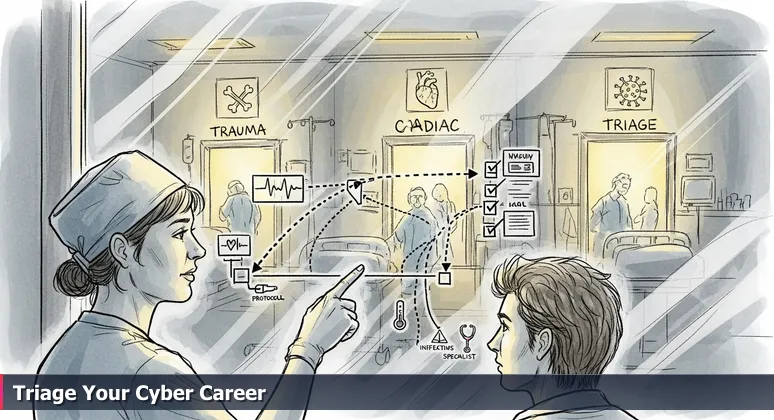
The most critical skill in a Boston emergency room isn't just medical knowledge - it's the ability to instantly diagnose what kind of emergency you're facing and which specialist team is required. In Cambridge’s cybersecurity job market, that same skill of triage separates candidates who get lost in a sea of generic applications from those who land high-impact, high-salary roles. This city isn't a single job market; it's a collection of parallel, high-stakes ecosystems defending against unique threats under different regulatory and operational heartbeats.
To secure your future here, you must learn to diagnose the landscape. Experts predict the cybersecurity environment operates in a state of "continuous atmospheric instability" due to AI-driven threats, which paradoxically makes skilled human analysts more critical than ever. This instability is a key driver behind forecasts of a 20-30% surge in cybersecurity salaries by late 2026. The projected growth for information security analysts is a robust 33% through 2033, with innovation hubs like Cambridge seeing concentrated, explosive demand that professionals describe as a "career fortress."
Success means moving beyond a generic search for a "cybersecurity job." You must start by diagnosing which of Cambridge's specialized emergency rooms - be it the cloud infrastructure ward of Big Tech, the national security bunker of the defense sector, or the compliance-driven IP protection wing of biotech - your skills are meant for. Each requires speaking a distinct language of threats, tools, and regulations. Mastering this triage is the first, non-negotiable step to building a career that is not just stable, but central to the world being built along the Charles River.
In This Guide
- Mastering the Cybersecurity Triage in Cambridge
- Decoding Cambridge's Cybersecurity Job Market Pulse
- Cloud and Edge Security: Big Tech's High-Stakes Battle
- Cyber-Physical Defense: National Security Careers
- Compliance and IP Protection in Biotech and Healthcare
- Building Your Cambridge-Ready Cybersecurity Profile
- Future-Proofing Your Career with AI and Instability
- Frequently Asked Questions
Get the latest on 2026 AI career insights for Cambridge including roles like Bio-AI Scientist.
Decoding Cambridge's Cybersecurity Job Market Pulse
Cambridge, Massachusetts, exists at a unique crossroads of global tech innovation, world-leading academic research, and critical national infrastructure. This convergence creates a cybersecurity hiring landscape of exceptional depth and specialization, driven by more than just corporate demand. The projected growth for information security analysts is a robust 33% through 2033, with hubs like Cambridge seeing concentrated demand that industry experts describe as an "unbeatable choice" for stability.
This demand is fueled by a paradox: the rise of AI-driven threats that adapt in real-time creates a state of "continuous atmospheric instability," which in turn makes human analytical skills more critical than ever. This instability is a primary driver behind expert forecasts of a 20-30% surge in cybersecurity salaries by late 2026, as high-profile failures prove AI cannot fully replace human expertise. For professionals, this means opportunity is everywhere - but only if you can speak the specific language of your target sector.
The local advantage is structural. Proximity to MIT, Harvard, and a dense network of venture capital in Kendall Square fuels a relentless cycle of innovation and defense. Massachusetts-specific regulations, like the strict data protection mandates of 201 CMR 17.00, create continuous demand for governance, risk, and compliance (GRC) professionals. Meanwhile, the presence of Hanscom Air Force Base and a sprawling defense contractor ecosystem offers a clear military-to-cyber transition path, often requiring U.S. security clearances and creating a distinct, high-stakes sub-market.
Cloud and Edge Security: Big Tech's High-Stakes Battle
The Cloud & Edge Emergency
This triage bay handles high-volume, global-scale digital emergencies, where employers focus on protecting cloud infrastructure, AI research pipelines, and the internet's backbone. In Cambridge, this battle is waged from the heart of Kendall Square.
Akamai Technologies’ Cambridge headquarters is a global hub for defending the edge, actively hiring Senior Engineering Managers to secure platforms like the Akamai Inference Cloud against large-scale DDoS attacks. Senior engineering roles here command $114,000 - $156,000+. Just blocks away, Google’s Kendall Square office is a center for advanced security research, hiring specialized talent like Senior Red Team Security Consultants through its Mandiant division. Compensation for senior researchers often exceeds $160,000+ with substantial equity, reflecting the critical mission of securing both Google Cloud and the AI/ML research pipeline flowing from MIT.
Success in this bay demands deep, hands-on platform expertise in AWS, GCP, or Akamai, often coupled with a software engineering background. Certifications like the AWS Security Specialty and offensive skills validated by the OSCP (Offensive Security Certified Professional) are highly valued, as the paramount challenge shifts to Infrastructure-as-Code (IaC) security and the novel attack surfaces of serverless architectures.
Cyber-Physical Defense: National Security Careers
The Cyber-Physical Emergency
This is the bunker for national security emergencies, where digital defense is inextricably linked to physical systems. Roles here, fueled by proximity to Hanscom Air Force Base and the defense intellect of Lexington, frequently require U.S. Citizenship and the ability to obtain a Security Clearance.
MIT Lincoln Laboratory is a massive player, hiring aggressively for roles that blend computer science with physical systems, such as Aviation Cybersecurity Researchers and Operational Technology (OT) specialists. The mission is securing mission-critical "cyber-physical" systems, from aircraft to ground stations. Salaries reflect the high-stakes specialization, ranging from $93,000 - $123,000 for a Level 3 Analyst to $145,000 - $220,000 for senior OT-focused roles. Organizations like The MITRE Corporation further define this sector, hiring for forward-looking positions such as Offensive Security Developers and Zero Trust Architects to solve complex problems for government sponsors.
The actionable path into this bay is clear: a security clearance is often the golden ticket. For entry-level roles, the CompTIA Security+ certification is frequently a hard requirement to meet DoD 8570 compliance. The respected military-to-cyber transition path here involves gaining baseline certs, securing an internship or entry-level role at a contractor to obtain clearance, and then specializing in cyber-physical or offensive security domains.
Compliance and IP Protection in Biotech and Healthcare
The Compliance & IP Emergency
This wing handles emergencies where digital security is inextricably linked to human health, financial integrity, or groundbreaking research. The threats range from espionage to life-threatening disruption, but the overriding driver is stringent compliance with regulations that act as a sector's vital signs.
In Kendall Square, companies like Moderna and Biogen defend the world's most valuable intellectual property: genetic codes and therapeutic formulas. Moderna hires for specialized roles like GxP Endpoint Engineers, where the challenge is building secure systems that also comply with strict FDA quality (GxP) regulations, with salaries ranging from $130,800 - $209,400. Just across the Charles, in the Longwood Medical Area, Mass General Brigham recruits for roles like Information Security Engineer III, specializing in Application and Cloud Security, with salaries between $92,102 - $155,032 to protect patient data under HIPAA.
The actionable takeaway for this bay is that domain knowledge is king. Understanding HIPAA, GxP, or financial regulations is as critical as technical skills. Certifications like the CISSP (Certified Information Systems Security Professional) demonstrate the broad understanding of security and risk management that resonates here. Training pathways like the Year Up United Cyber Security Training Program in Cambridge place graduates in regulated industries, with 75% employed within four months, proving that compliance expertise provides a powerful entry point.
Building Your Cambridge-Ready Cybersecurity Profile
Training Pathways & Building Your Cambridge-Ready Profile
Breaking into Cambridge's specialized cybersecurity market demands a strategic approach to training and credentialing, moving beyond generic skill-building to sector-specific preparation. The academic pipeline is powerful, with intern and co-op programs at MIT Lincoln Laboratory, Google, and Akamai heavily fed by students from MIT and Harvard, often serving as the primary entry point for high-level research roles.
For career-changers, accelerated bootcamps provide a crucial on-ramp. Nucamp’s Cybersecurity bootcamp, for instance, is a 15-week program priced at $2,124 designed to build foundational, hands-on skills. Organizations like Year Up United run intensive Cyber Security Training Programs in Cambridge, placing graduates in internships at major local firms, with 75% employed within four months.
Certification Strategy & Networking
Your certification path must align with your target triage bay. For defense and entry-level roles, the CompTIA Security+ is often a hard requirement for DoD compliance. Tech specialization calls for credentials like the AWS Security Specialty or OSCP, while senior roles in regulated industries value the gold-standard CISSP.
Finally, engage with the ecosystem on the ground. Networking in Cambridge is about proximity; attend events in Kendall Square and connect with local chapters of (ISC)² and ISACA. The city's innovation cycle thrives on connection, making your physical and professional presence in the ecosystem a critical component of your profile.
Future-Proofing Your Career with AI and Instability
As we look toward late 2026, the trends solidify Cambridge's position as a cybersecurity epicenter. The predicted "continuous atmospheric instability" caused by AI-powered threats will not diminish human analysts but elevate their strategic value, directly driving the forecasted 20-30% surge in cybersecurity salaries. In this environment, hiring managers are increasingly prioritizing demonstrated skills from labs, simulations, and hands-on problem-solving over credentials alone.
The companies defining Cambridge - from Moderna's labs in Kendall Square to the research halls of MIT Lincoln Lab - are not just using technology; they are creating the future. Protecting that future, whether it's a groundbreaking mRNA sequence or a next-generation aircraft system, is the mission. This reality makes cybersecurity a "career fortress," where professionals who combine technical vigilance with an understanding of their sector's unique stakes will remain indispensable.
Future-proofing your career here means embracing the instability. It requires continuous learning, perhaps through focused upskilling in AI-augmented security or cloud-native defense via programs like specialized bootcamps that build relevant, project-based skills. Whether your expertise is best suited to triage a cloud DDoS attack, secure a cancer therapy's research data, or harden a cyber-physical system, your emergency room in Cambridge is hiring. Diagnose your sector, speak its language, and build a career central to the world being built along the Charles River.
Frequently Asked Questions
Who are the top employers hiring cybersecurity professionals in Cambridge, MA in 2026?
In 2026, Cambridge's cybersecurity hiring is dominated by three key sectors: big tech firms like Akamai and Google in Kendall Square, defense contractors such as MIT Lincoln Laboratory near Hanscom Air Force Base, and biotech giants like Moderna defending valuable IP. Each ecosystem offers specialized roles, from cloud security to compliance-driven positions in regulated industries.
What can I expect to earn in a cybersecurity role in Cambridge by 2026?
Salaries are projected to surge 20-30% by late 2026 due to high demand and AI-driven threats. For example, senior engineering roles at Akamai can range from $114,000 to $156,000+, while biotech positions at Moderna offer $130,800 to $209,400, reflecting Cambridge's competitive market.
Do cybersecurity jobs in Cambridge require security clearances?
Yes, many defense and government contractor roles, such as those at MIT Lincoln Laboratory or Raytheon, require U.S. citizenship and security clearances. This is a common pathway, especially with the local presence of Hanscom Air Force Base and a strong defense ecosystem.
How can someone without a tech background break into cybersecurity in Cambridge?
Career changers can leverage local bootcamps like Nucamp's Cybersecurity program or intensive training from Year Up, which place graduates in internships with firms like Harvard and Wayfair. For instance, Year Up reports 75% employment within four months at average starting salaries of $53,000.
What certifications are most valuable for cybersecurity roles in Cambridge in 2026?
Key certifications include Security+ for defense compliance, AWS Security Specialty for tech roles, and CISSP for senior positions. Offensive skills validated by OSCP are also highly valued, especially in Cambridge's innovation-driven sectors like biotech and big tech.
Explore Cambridge AI employment trends in non-tech sectors for 2026 in this blog post.
Get everything about AI meetups and networking in Cambridge for 2026 from this complete guide.
This evaluation of Cambridge as a tech hub for 2026 careers offers key data and trends.
Get a detailed review of AI tech bootcamps in Cambridge, MA for your career planning.
Get insights into leading tech apprenticeships for career changers in Cambridge.

Irene Holden
Operations Manager
Former Microsoft Education and Learning Futures Group team member, Irene now oversees instructors at Nucamp while writing about everything tech - from careers to coding bootcamps.