









Is Baltimore, MD a Good City for a Tech Career in 2026?
By Irene Holden
Last Updated: February 22nd 2026
Quick Explanation
Yes, Baltimore is an excellent city for a tech career in 2026, thanks to a 34% surge in tech job postings and its federal designation as an AI and biotech hub. With average tech salaries around $97,600 and living costs 27% lower than in Washington, D.C., it delivers strong value and proximity to major employers like Johns Hopkins and cybersecurity centers.
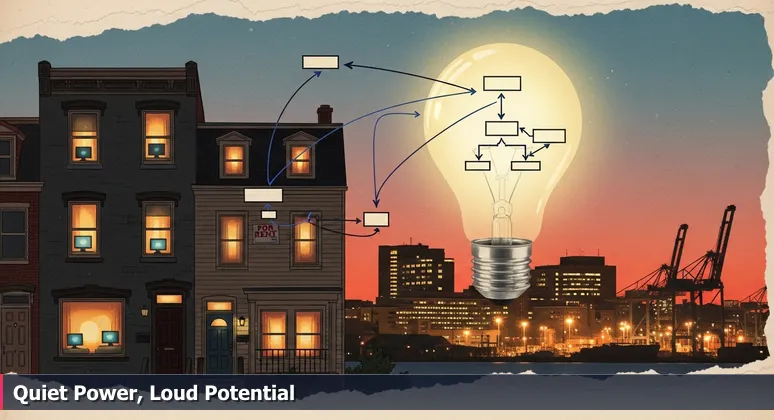
The most powerful assets in tech aren’t always the loudest. While mainstream attention fixates on coastal megahubs, strategic advantages have been quietly amassing in places mainstream narratives overlook. For tech professionals eyeing 2026, this is the story of Baltimore, Maryland - an affordable, federally-backed epicenter of innovation that represents a high-leverage career bet.
This is the industry's sleeper cell: an unassuming interface with immense latent power, now activated. The data is decisive. In early 2026, Baltimore was the only major U.S. metropolitan area to post year-over-year growth in tech job postings, with a staggering 34% increase. This momentum is turbocharged by its official designation as a Federal Tech Hub for artificial intelligence and biotechnology, a strategy aiming to catalyze billions in regional value.
The foundation isn't new; it's the activation of long-standing, world-class assets. At the heart is Johns Hopkins University, the nation’s leader in research spending, encircled by giants like the Johns Hopkins Applied Physics Laboratory (APL) and corporate anchors from T. Rowe Price to Northrop Grumman. This isn't a speculative scene but a mature, resilient market, as noted in analyses of Baltimore's innovation scene.
For the AI engineer tired of untenable rents or the data scientist seeking tangible impact, Baltimore poses a crucial reframe. The question isn't "Is Baltimore good?" but "Are you positioned to see what Baltimore is becoming?" The sleeper cell is awake. The mission is live.
What We Cover
- The Sleeper Cell Awakens
- Baltimore's Tech Reality in 2026
- The Affordability & Proximity Advantage
- Building a Career in the Baltimore Ecosystem
- Who Is Baltimore Best For?
- Baltimore vs. Other Tech Hubs
- Seeing the Potential
- Common Questions
This comprehensive roadmap for AI professionals in Baltimore includes salary data and employer insights.
Baltimore's Tech Reality in 2026
The momentum in Baltimore isn't speculative; it's quantifiable and rooted in world-class institutions. The city's tech job openings surged from approximately 3,300 to over 4,700 in recent tracking periods, a trend powered by its formal recognition as a critical node in the national innovation strategy.
This growth is anchored by academia. Johns Hopkins University leads the nation in research and development spending, investing $3.4 billion in 2022 alone. This powerhouse fuels a concentric ecosystem of major employers. The Johns Hopkins Applied Physics Laboratory (APL) is consistently ranked among the "Best Places to Work in IT", tackling national security and space exploration challenges. Corporate giants like T. Rowe Price, Under Armour, and Northrop Grumman provide massive, tech-reliant employment bases.
Simultaneously, a dynamic startup wave is cresting. The region tracks roughly 486 technology startups, with concentrated strength in predictive healthcare, biotech, and cybersecurity. As highlighted in the 2025 Baltimore Tech Ecosystem Report, this blend of established anchors and entrepreneurial energy creates a resilient and mature market.
The federal catalyst cannot be overstated. Baltimore's designation as a Federal Tech Hub for AI and biotechnology aims to catalyze $4.6 billion in regional economic value over seven years. This isn't just funding; it's a signal that positions Baltimore as a primary interface where groundbreaking research meets scalable commercial and governmental application.
The Affordability & Proximity Advantage
Choosing a tech city is a value equation: earnings versus expenses, and strategic location. Baltimore solves this with a uniquely favorable balance that transforms gross salary into real quality of life. While the average tech salary here is approximately $97,600, the cost of living tells the decisive story.
Living in Baltimore is 27% less expensive than in Washington, D.C., and 36% less expensive than in Boston. This dramatically changes the financial calculus. Analyses suggest a salary of $85,000 allows a single adult to live comfortably in the city. For comparison, Maryland as a state ranks #1 for median tech wages at $126,467, indicating the high-value roles available in the broader region.
Geography acts as a career accelerator. The Baltimore-Washington Corridor is a dense ribbon of opportunity, allowing professionals to live in Baltimore's affordable neighborhoods while accessing jobs at federal agencies and contractors located between the two cities. This proximity to Fort Meade, the NSA, and the U.S. Cyber Command creates an exceptionally strong market for cybersecurity professionals with security clearances.
This combination isn't just about being cheaper; it's about strategic positioning. You gain proximity to the "clearance economy" and federal innovation funding while enjoying the discretionary income and community feel of a major city on the rise, all factors highlighted in regional tech ecosystem reports.
Building a Career in the Baltimore Ecosystem
Building a tech career in Baltimore means navigating distinct, mission-driven pathways. The growth is guided by an "Equitech" mission - a focus on inclusive innovation that builds wealth across the community. This manifests in practical talent strategies. Companies like Catalyte use AI to identify potential in non-traditional candidates, training them at no cost to address local hiring needs directly.
Success stories underscore this approach. A Morgan State University graduate leveraged local career guidance to land a role at The MITRE Corporation, where her work "directly impacts the general population." For career-changers, this ethos creates accessible on-ramps.
The momentum is strongest in four key sectors:
- AI & Machine Learning: Driven by the Federal Tech Hub designation and Johns Hopkins research.
- Cybersecurity: Fueled by proximity to Fort Meade and U.S. Cyber Command.
- Health Tech & Biotech: Where world-class medical research meets commercialization.
- FinTech & Data Science: Anchored by firms like T. Rowe Price and growing insurtech companies.
For training, bootcamps like Nucamp offer a strategic fit. Their Back End, SQL and DevOps with Python bootcamp ($2,124) builds foundational data engineering skills for prevalent cloud roles, while the Solo AI Tech Entrepreneur Bootcamp ($3,980) equips developers to build products aligned with the city's startup wave. This model aligns with Baltimore's equitable growth by providing affordable, accessible pathways directly into high-demand local jobs.
Who Is Baltimore Best For?
Baltimore’s tech ecosystem offers a compelling value proposition for specific professional profiles, making it a calculated, high-potential bet for the right candidate. The city is particularly ideal for those who prioritize impact, affordability, and proximity to foundational research over the sheer volume of hype-driven startup roles.
Baltimore is a strategic fit for:
- Early and Mid-Career Professionals seeking greater responsibility and tangible impact without the crushing cost of living of coastal megahubs. The Wall Street Journal recently named Baltimore a top-five city for new graduates, citing strong hiring and affordability.
- Cybersecurity and AI Specialists, especially those eligible for security clearances, due to the unparalleled concentration of defense and intelligence community work around the Baltimore-Washington Corridor.
- Career Changers who value affordable, practical training pathways and a community actively working to integrate new talent through equitable hiring initiatives.
- Researchers and Engineers drawn to being adjacent to top-tier academic and federal R&D at institutions like Johns Hopkins and the Applied Physics Laboratory.
Baltimore may be less ideal for professionals seeking the density of late-stage startup or FAANG-level roles found in Silicon Valley or New York. As noted in discussions on the local tech job market, the 2026 landscape is selective. Recruiters emphasize that companies prioritize candidates who "can step in, take ownership, and navigate ambiguity," making in-demand skills in cybersecurity, data science, or cloud engineering essential for success.
Baltimore vs. Other Tech Hubs
The crucial reframe is this: Baltimore is not merely a cheaper Washington, D.C. It represents a different strategic position in the national tech landscape, offering a unique calculus of cost, community, and career trajectory that varies dramatically depending on your starting point.
From Washington, D.C., the move is about trading central proximity for community and potential. You exchange the intense federal contracting grind for a city where you can more easily build a cross-sector network across academia, startups, and established corporations. While the average tech salary adjusts down by roughly 7%, you gain a 27% reduction in living costs, often resulting in a net increase in disposable income and quality of life.
From high-cost coastal hubs like San Francisco, New York, or Boston, the move is a lifestyle and financial reset. You retain vital East Coast connectivity and access to elite research institutions while gaining the realistic ability to own a home, build substantial savings, and engage deeply in a collaborative, rising tech community. The cost of living savings, reaching 36% compared to Boston, can be transformative.
From other regions, Baltimore offers a singular blend of East Coast connectivity, federal economic stability from its Tech Hub designation, and genuine urban affordability. It provides a tangible, high-value on-ramp to the massive government, healthcare, and cybersecurity tech sectors that are otherwise difficult to access without already being in an expensive coastal metro.
Seeing the Potential
The ultimate question for 2026 isn't "Is Baltimore good?" but "Are you positioned to see what Baltimore is becoming?" The evidence converges: sustained job growth where other hubs faltered, transformative federal investment, and a cost-of-living leverage that turns salaries into genuine prosperity.
This is the activation of a long-standing strategic advantage. As highlighted in the February 2026 Tech Jobs Report, Baltimore's standout 34% year-over-year growth in postings is directly tied to its emergence as a federally designated hub at the nexus of AI, biotech, and government. It’s a city where your career can gain serious traction in foundational sectors, and your life can have the space to grow.
For the AI specialist seeking impact beyond exorbitant rents, or the career-changer looking for a dynamic, affordable entry point, Baltimore represents a high-potential bet. The training pathways exist, from equitable hiring initiatives to practical bootcamps that build the precise skills - like Python, SQL, and DevOps - in demand at local anchors and startups. The innovation index shows a resilient economy built for the long term.
The sleeper cell is awake. The mission is live. The opportunity is to build a career not just where tech is, but where it's decisively headed.
Common Questions
Is Baltimore actually a good city for tech careers in 2026?
Yes, Baltimore is emerging as a strong tech hub, with a 34% increase in tech job postings in early 2026 and a Federal Tech Hub designation for AI and biotech. This federal strategy aims to catalyze $4.6 billion in regional economic value, making it a viable option for professionals seeking growth.
What tech jobs are most in demand in Baltimore?
Baltimore's job market is strongest in AI and machine learning, cybersecurity, health tech, and biotech, driven by employers like Johns Hopkins and the cybersecurity hub near Fort Meade. Fintech and data science roles are also growing, thanks to anchors like T. Rowe Price and the startup ecosystem.
How affordable is Baltimore for tech workers compared to other cities?
Baltimore offers a great balance: the average tech salary is around $97,600, but living costs are 27% lower than in Washington, D.C. This means higher disposable income, with $85,000 often sufficient for a comfortable single adult lifestyle, making it a smart financial move.
Which companies in Baltimore hire a lot of tech talent?
Major employers include Johns Hopkins University and its Applied Physics Laboratory, T. Rowe Price, Under Armour, and Northrop Grumman. The region also has a booming startup scene with over 480 tech companies, especially in cybersecurity and biotech along the Baltimore-Washington corridor.
Are there good training programs in Baltimore for switching into tech?
Yes, affordable bootcamps like Nucamp offer programs from $2,124 to $3,980, focusing on skills like data engineering and AI that align with local job demand. Their career services help connect graduates to employers in Baltimore's growing tech ecosystem.
For the latest on top women in tech groups in Baltimore, refer to this 2026 guide.
Get insights into coworking spaces near Johns Hopkins and Fort Meade for tech professionals.
Get the latest data on 2026 cost of living vs tech salaries in Baltimore from this expert guide.
Read about the leading artificial intelligence startups in Baltimore, MD in this detailed list.
Our complete guide to tech training funding in Baltimore for 2026 covers all options.

Irene Holden
Operations Manager
Former Microsoft Education and Learning Futures Group team member, Irene now oversees instructors at Nucamp while writing about everything tech - from careers to coding bootcamps.