









How to Pay for Tech Training in Bahrain in 2026: Scholarships, Grants & Government Programs
By Irene Holden
Last Updated: April 9th 2026
Key Takeaways
Yes - in 2026 you can largely avoid paying full price for tech training in Bahrain by stringing together Tamkeen grants, employer sponsorships, scholarships and low-cost bootcamps like Nucamp; Tamkeen can cover up to 100 percent of approved certifications while Nucamp programmes range from BHD 172 to BHD 2,124. Tamkeen has invested over USD 440 million and helped more than 170,000 people, and with Bahrain’s no personal income tax, the AWS Middle East Bahrain cloud region, and employers like Batelco, ALBA and Gulf Air, you have strong local levers to stack funding and convert training into higher-paying roles.
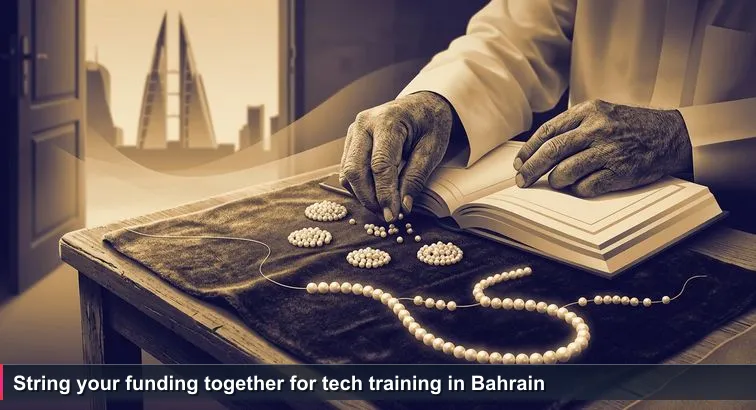
In a tiny pearl shop in Muharraq, I once watched an old jeweller tap a handful of almost weightless pearls across a low wooden table. He rejected some, kept others, and slowly threaded a half-finished strand lying on dark velvet into a finished necklace worth BHD 800. No single pearl looked like much on its own, but in the right order, on the right thread, the value suddenly appeared.
Most people in Bahrain still try to pay for tech training as if it were a single giant pearl they must somehow buy in cash. They see bootcamps and AI programmes as one terrifying price tag, rather than what they really are: a collection of small, stackable funding pieces - national schemes like Tamkeen, employer budgets, scholarships, bootcamp discounts, and even free cloud credits from providers operating in the AWS Middle East (Bahrain) region.
The pearling economy never worked that way. Divers, boat owners, and merchants shared both the cost and the reward of each voyage. Today’s ecosystem is similar: public funds like Tamkeen’s training support, a startup-friendly environment highlighted by the Bahrain Economic Development Board’s view of Bahrain as a “hub for innovation and growth,” and cloud and fintech initiatives anchored around Bahrain FinTech Bay all exist to co-finance your skills - if you understand their rules and timing. You can see this strategy laid out in Tamkeen’s own long-term plans on their 2026-2030 strategy page and in the EDB’s profile of how tech talent thrives in Bahrain.
This guide is about shifting from “How do I afford this course?” to “Which pieces belong on my string?” It will walk you through the major funding “pearls” available in Manama right now, and how to combine them into a complete plan:
- Government programmes and national funds
- Scholarships and employer-sponsored support
- Payment plans, ISAs, and private financing
- Plus decision trees, calendars, and checklists tailored to AI and tech careers in Bahrain
In This Guide
- Introduction: The Pearl-Shop Funding Mindset
- Understand the real cost of tech training in Bahrain
- Tamkeen: The engine behind funded tech training
- Government-backed digital training and public-sector paths
- Scholarships and employer-sponsored funding
- Nucamp and affordable private financing options
- Other bootcamps, ISAs and professional providers
- Eligibility decision tree for Bahrainis vs expatriates
- Application calendar and timing for 2026
- Documentation checklist for applications and approvals
- How to stack funding sources into your “necklace”
- Bahrain vs other GCC tech hubs: why the ecosystem matters
- Contact points: where to actually go and ask
- Your 30-day action plan to start threading your first pearl
- Frequently Asked Questions
Understand the real cost of tech training in Bahrain
Before you start threading funding “pearls” together, you need a clear view of the actual sticker prices in Bahrain’s tech education market. Full-time in-person coding or data bootcamps based in Manama typically run between BHD 3,000-4,500 for multi-month programmes. That’s roughly equivalent to one or more months of a junior developer’s salary, which is why many people freeze at the brochure and never get to the application form.
At the specialised end, high-end cybersecurity training such as SANS courses often costs around BHD 3,100-3,300 (USD 8,300+) for a single course. That pricing is consistent with SANS’ regional events like their Cyber Defense Initiative, listed on official SANS training schedules. Without subsidies, a full reskilling path through multiple SANS courses can easily exceed what many early-career professionals in Bahrain earn in several months.
University routes are not cheap either. A bachelor’s degree in computer science, AI, or cloud computing at a private institution can mean paying several thousand BHD per year in tuition alone, even if you secure partial scholarships. For families used to public schooling, those fees can feel closer to an overseas education than a local upgrade.
This is why lower-cost, hybrid options matter so much. International online providers like Nucamp price multi-month programmes between BHD 172 and 2,124: Web Development Fundamentals (4 weeks, BHD 172), Back End, SQL & DevOps with Python (16 weeks, BHD 799), Cybersecurity (15 weeks, BHD 799), Full Stack Web & Mobile (22 weeks, BHD 980), Solo AI Tech Entrepreneur (25 weeks, BHD 1,497), AI Essentials for Work (15 weeks, BHD 1,348), and the Complete Software Engineering Path (11 months, BHD 2,124). You can see their global catalogue on the Nucamp remote bootcamps page.
When you compare a BHD 3,500 in-person bootcamp to a BHD 799-1,497 online programme - and remember that Bahrain has no personal income tax on the salary boost you’re aiming for - the ROI equation starts to look very different. The goal of this guide is to help you combine funding so that even these more affordable options become manageable, or close to free.
Tamkeen: The engine behind funded tech training
If you’re Bahraini and serious about AI or software careers, Tamkeen is not just “one option” - it is the main engine behind funded tech training. Since 2006, the Labour Fund has supported over 170,000 individuals and businesses and invested more than USD 440 million in training and support, with its latest strategy explicitly prioritising high-impact digital skills and AI.
Professional Certification Scheme: Your first funding pearl
The Professional Certification Scheme (PCS) is Tamkeen’s flagship programme for individual upskilling. For approved courses and providers, PCS can cover up to 100% of tuition, exam fees, and study materials for Bahraini nationals - including cloud (AWS, Azure), cybersecurity, networking, and data certifications.
- Who qualifies: Bahraini students, jobseekers, and employees
- What’s required: Pick a certification and provider from Tamkeen’s pre-approved list
- Key rule: Apply and obtain approval before you pay any fees
An overview of how PCS fits into the wider support system is outlined in the government’s own description of Tamkeen’s training support on Bahrain’s National Portal.
Jobseeker Training & National Employment Program 3.0
For unemployed Bahrainis, Tamkeen’s Jobseeker Training Program creates structured pathways into high-demand roles. It is often paired with the National Employment Program 3.0, which can subsidise up to 50% of your salary for as long as three years, making it much easier for private employers to hire and train you in-house while you pursue bootcamps or certifications.
AI Training Bundles: Targeting 50,000 Bahrainis
Under its 2026-2030 strategy, Tamkeen has launched AI Training Bundles aimed at training 50,000 Bahrainis in AI by 2030, with tracks for leaders, general users, and specialists. These bundles are short, subsidised on-ramps into AI literacy and tooling, designed to sit alongside deeper programmes like Nucamp or cloud certifications. A detailed breakdown of new and updated programmes is available in independent overviews such as Fin-Soul’s analysis of Tamkeen 2026 programmes.
Government-backed digital training and public-sector paths
Not all tech training in Bahrain happens through private bootcamps. If you already work in government, or you are still building basic digital skills, there is a deep layer of government-backed programmes designed to raise the whole country’s digital baseline before you ever pay for an intensive AI course.
National digital literacy and youth tech programmes
The national eGovernment portal curates free and subsidised courses in digital literacy, coding, and STEM for students, jobseekers, and mid-career professionals. These range from introductory IT skills and office automation to youth robotics and AI competitions under initiatives like Innovate for Bahrain. They are short, low-pressure ways to test your interest in data, cloud, or AI before committing to a multi-month bootcamp.
MOFNE: Data and fintech skills for public servants
If you are a government employee, your first stop is often your own ministry’s training budget. The Ministry of Finance and National Economy runs a catalogue of professional courses in areas such as data analytics, economic modelling, and financial technology. These workshops, listed under MOFNE’s official training courses for public-sector staff, give civil servants hands-on exposure to tools like dashboards and analytical software that later translate directly into private-sector data roles.
EDB-style graduate rotations with built-in training
For new graduates, structured programmes such as the Economic Development Board’s graduate trainee schemes combine a full salary with curated training in investment promotion, tech ecosystems, and digital policy. Participants rotate through teams working on cloud, fintech, and AI-related projects, often gaining access to sponsored certifications and short courses as part of their development plan.
Military and security forces as technical training grounds
The Bahrain Defence Force and Ministry of Interior also operate their own technical education tracks. The BDF Training Wing, for example, runs courses for volunteers and personnel that cover not only military skills but also IT, communications, and systems maintenance, as highlighted in public updates shared via platforms like BDF news channels. For many Bahrainis, these internal academies are their first serious exposure to networks, cybersecurity, and mission-critical software.
Scholarships and employer-sponsored funding
Once you understand what training actually costs, the next question is who else has a reason to help you pay for it. In Bahrain, scholarships and employer budgets are not side options; they are central parts of how locals move into AI, cloud, and cybersecurity roles without taking on heavy debt.
University and local academic scholarships
Several Bahraini universities run merit-based schemes that can wipe out most or all tuition for tech-related degrees. The American University of Bahrain, for example, offers scholarships that cover 100% of tuition and books for top students in selected programmes, outlined on its dedicated scholarships information page. Bahrain Polytechnic and University of Bahrain also bundle industry-recognised credentials (such as cloud or cybersecurity certs) into degree programmes, effectively giving you funded certifications alongside your diploma.
International and professional awards
Beyond campus, niche scholarships can cover exams, materials, or even full degrees. The ISACA Bahrain scholarship provides around BHD 150 plus a career-building bundle to IT and cybersecurity students, particularly at University of Bahrain. At the more academic end, Japan’s MEXT scholarship finances full master’s or PhD studies abroad, including tuition, travel, and a monthly allowance for Bahraini students in engineering or computing disciplines.
Women in Tech and startup-focused grants
If you plan to build products rather than only seek employment, accelerator-linked grants are powerful. The Standard Chartered Foundation’s Women in Tech programme, delivered locally with Bahrain FinTech Bay, has already supported 61 women-led, tech-enabled startups in Bahrain, with 22 companies receiving a combined BHD 145,367 in equity-free grants, as reported in Bahrain FinTech Bay’s coverage. Many founders use these funds to pay for advanced AI, cloud, or product-development training for themselves and their teams.
Employer-sponsored training and Bahrainisation
Large employers - including Batelco, stc Bahrain, Alba, Bapco, NBB, BBK, Gulf Air, and major consultancies - maintain annual training budgets, often boosted by Bahrainisation incentives. Some, like Bapco, also run structured scholarship schemes; one publicised intake offered 24 engineering scholarships for study inside Bahrain and abroad. On top of that, Tamkeen co-funds many corporate upskilling initiatives, so when you ask your manager to sponsor a bootcamp or certification, you are rarely asking them to carry the full cost alone.
Nucamp and affordable private financing options
When Tamkeen or your employer cannot (or will not) cover everything, Nucamp sits in a sweet spot between free YouTube tutorials and BHD 3,000-4,500 in-person bootcamps. It is an international online bootcamp with Bahrain-based learners in most cohorts, and tuition for its core programmes ranges from BHD 172 to BHD 2,124, with monthly payment plans that spread costs over the course duration instead of demanding a single lump sum.
For AI-focused careers, three programmes matter most. Solo AI Tech Entrepreneur runs for 25 weeks at BHD 1,497, teaching LLM integration, prompt engineering, AI agents, and SaaS monetisation. AI Essentials for Work lasts 15 weeks at BHD 1,348, aimed at professionals who want to use tools like ChatGPT to automate and augment their daily work. Back End, SQL and DevOps with Python runs 16 weeks at BHD 799, giving you the Python, SQL, and cloud foundations every AI or data engineer relies on.
| Programme | Duration | Tuition (BHD) | Primary Focus |
|---|---|---|---|
| Web Development Fundamentals | 4 weeks | 172 | HTML/CSS & web basics |
| Front End Web & Mobile | 17 weeks | 799 | JavaScript & front-end apps |
| Back End, SQL & DevOps with Python | 16 weeks | 799 | Python, SQL, DevOps |
| Cybersecurity Bootcamp | 15 weeks | 799 | Practical cyber defence skills |
| Full Stack Web & Mobile | 22 weeks | 980 | Front-end + back-end development |
| Solo AI Tech Entrepreneur | 25 weeks | 1,497 | AI products & monetisation |
| AI Essentials for Work | 15 weeks | 1,348 | Applied AI skills for professionals |
| Complete Software Engineering Path | 11 months | 2,124 | End-to-end software engineering |
Outcomes are competitive: an employment rate around 78%, graduation near 75%, and a Trustpilot rating of 4.5/5 from roughly 398 reviews, with about 80% of them five-star. Students consistently highlight affordability, structure, and community: “I searched and searched for a bootcamp I could afford and Nucamp was the best option for me.”
Because Bahrain has no personal income tax, any salary jump you earn after graduating stays in your pocket. Many Manama professionals therefore combine Nucamp’s monthly instalments with partial employer sponsorship, following playbooks like this guide on asking your company to pay for training, turning what looks like a personal expense into a shared investment.
Other bootcamps, ISAs and professional providers
Beyond Nucamp and university programmes, Bahrain’s ecosystem now includes several intensive bootcamps and specialist providers. These tend to sit at the higher end of the price spectrum, but for Bahraini nationals they can become effectively free once Tamkeen steps in, while expatriates often access them via instalment plans or employer sponsorship.
General Assembly Bahrain runs full-time and part-time courses in software engineering, data, UX, and related fields. Tuition for these global-calibre programmes is typically in the multi-thousand BHD range, but selected cohorts for Bahrainis have been fully funded by Tamkeen, covering both tuition and career support. GA’s Middle East team has even picked up regional HR awards for its impact, and details of current Manama offerings are outlined on the dedicated page to learn in-demand tech skills with General Assembly in Bahrain.
Reboot01, a local coding institute powered by the 01Edu model, takes a different approach: peer-to-peer learning on campus, often backed by deferred tuition or Income Share Agreements (ISAs). Instead of paying upfront, you may agree to share a percentage of your future salary for a fixed period, usually with a cap. That can be a lifeline if cash is tight, but it makes reading the fine print around income thresholds, geographic restrictions, and maximum repayment amounts absolutely critical. Programme details and admission criteria are published on the Reboot01 Bahrain website.
Specialist cybersecurity providers such as SANS also partner with Tamkeen and local institutions to run “cyber reskilling” cohorts for Bahrainis, where market-rate courses are offered at 100% funding to selected participants. Combined with free cloud training from providers like Microsoft Learn and the AWS Academy partnerships inside Bahraini universities, these options give you multiple ways to acquire deep technical skills even if you never pay a traditional bootcamp entirely out of pocket.
Eligibility decision tree for Bahrainis vs expatriates
Your first step is to understand which side of Bahrain’s funding system you stand on. Almost every support scheme, from national wage subsidies to Tamkeen-backed bootcamps, starts by asking two questions: are you a Bahraini national or an expatriate, and are you currently employed, unemployed, or a student? Once you answer those, the path to “who pays what” becomes far less mysterious.
For Bahraini nationals, the decision tree usually begins with national support and only then moves to private options:
- If you are unemployed or a fresh graduate, register with the Ministry of Labour and Tamkeen, then look at jobseeker training routes, wage-subsidy schemes, and fully funded cohorts at providers like General Assembly or SANS.
- If you are already employed, your first call is HR: many banks, telecoms, and industrial firms will co-fund certifications and bootcamps, often with Tamkeen sharing the bill.
- If you are a university student, prioritise campus-linked cloud and AI programmes (such as AWS Academy partnerships at local universities) plus embedded certifications before paying separately for external bootcamps.
For expatriates, Tamkeen support is generally off the table, so the tree flips: your primary funding source becomes your employer, backed by lower-cost online bootcamps and free learning platforms. Many Manama-based expats pair their company’s annual training budget with instalment-based programmes like Nucamp’s AI and software paths, whose tuition sits in the mid three-figure to low four-figure BHD range instead of the multi-thousand fees typical of in-person GCC bootcamps.
Regardless of nationality, you then layer in zero-cost “boosters”: free cloud and AI training from platforms such as Microsoft Learn’s catalogue of cloud and AI modules, GitHub-hosted projects, and hackathons or innovation challenges run through local initiatives. Used well, these resources close much of the skill gap before you ever commit to a paid course.
Seen this way, eligibility is not a yes/no verdict; it is a sequence. Nationals start with government programmes and employer support, then add targeted bootcamps. Expats start with employer and personal financing, then minimise costs with affordable online options and free cloud training. The key is to place yourself correctly on that tree before you start applying.
Application calendar and timing for 2026
In Bahrain, funding and training do not run on a single, continuous tap; they move in seasons. Understanding when Tamkeen refreshes programmes, when universities decide scholarships, and when employers finalise training budgets will often matter more than whether you “want it badly enough.”
Most Tamkeen initiatives operate in cycles. New or renewed programmes are typically announced early in the year, with application windows clustered in the first quarter and cohorts running through the middle of the year. Independent overviews of the 2026 package, such as Fin-Soul’s breakdown of Tamkeen’s 2026 programmes and grants, highlight that major support schemes tend to be confirmed or extended around January, after which places in popular tech tracks can fill quickly.
Academic and international scholarships follow their own rhythm. Ministry-linked and university scholarships usually open between January and April, with deadlines falling from late spring into midsummer for autumn intakes. Competitive awards like external government scholarships or postgraduate funding often require you to assemble transcripts, recommendations, and test scores months in advance, so your “real” deadline is often one semester earlier than the advertised cut-off.
Bootcamps and specialist providers then layer on top of this. General Assembly Bahrain, Reboot01, and SANS-style cohorts tend to launch several intakes a year, but they time their marketing around when Tamkeen approvals are live and when employers set training plans. Online options such as Nucamp run rolling cohorts, yet even there you will find that the easiest approvals happen when you align your enrolment with your company’s annual performance and budgeting cycle.
Finally, remember that employers in Manama often recruit graduates and entry-level tech hires in waves. Banks, telecoms, and industrial firms commonly promote graduate schemes and analyst programmes around mid-year, while Tamkeen has separately publicised offering over a thousand tech training opportunities in recent drives, as noted by a report from Bahrain’s national news agency. Your best odds come when you map your applications to these tides instead of swimming against them.
Documentation checklist for applications and approvals
Most funding delays in Bahrain are not because your idea is weak; they happen because one document is missing. Whether you are applying to Tamkeen, a university scholarship, or your own HR department, you will see the same patterns of paperwork again and again.
Start by assembling core identity and status documents. For almost every application you will need a valid CPR smart card, your passport, and for expatriates a copy of your residency permit. Add a recent passport-style photo in digital form. Having these ready makes filling in online portals far quicker.
Next, prepare your education and employment evidence. At minimum, keep an up-to-date CV, copies of your school or university transcripts, and any degree certificates. If you are employed, you will typically be asked for an employment letter showing your job title and start date, plus recent payslips or a salary certificate. Guides that walk through Tamkeen’s training support process, such as this explainer on how to apply for Tamkeen’s training programmes, consistently highlight these items as mandatory checks.
Financial and course-specific documents then sit on top. For payment plans or bank financing you may be asked for 3-6 months of bank statements, while Tamkeen and scholarship committees usually want an offer or admission letter from the training provider and a formal quotation listing total tuition in BHD, duration, and payment schedule. Employer sponsorship requests work the same way: attach the course outline, cost breakdown, and a short justification linking the skills to your role.
The simplest way to stay ahead is to maintain a single “funding folder” on your laptop or cloud drive. Store scanned PDFs of all IDs, transcripts, contracts, bank documents, and one generic motivation letter you can adapt. When a Tamkeen window opens or a bootcamp announces a new AI cohort, you will be threading a necklace from pieces already in front of you, not scrambling through drawers for each missing pearl.
How to stack funding sources into your “necklace”
Stacking funding is where the pearl-shop metaphor becomes practical. Instead of hoping one source will magically cover everything, you line up multiple “small” pieces - national schemes, employer budgets, scholarships, and low-cost bootcamps - so that together they pay for a complete reskilling. In Bahrain’s AI and cloud market, this is exactly how many people move from non-technical roles into jobs with Batelco, NBB, or fintechs without taking on heavy debt.
Consider a Bahraini jobseeker targeting cloud or DevOps. A realistic necklace might look like this:
- Use Tamkeen’s Professional Certification Scheme to fund vendor courses and exams in AWS or Azure.
- Enter a short AI or digital-skills bundle to build literacy around automation and data.
- Once hired with wage support, ask your new employer to co-fund Nucamp’s Back End, SQL & DevOps with Python, whose tuition sits in the mid three-figure BHD range and runs for about four months.
- Layer in free cloud labs from providers with a presence in Bahrain’s AWS region to deepen hands-on experience.
An employed Bahraini analyst in banking might build a different stack to move into data and AI:
- Secure internal funding for an applied course such as Nucamp’s AI Essentials for Work to automate reporting and analysis.
- Apply separately through Tamkeen for a Microsoft or cloud data certification that aligns with Power BI or Azure tools already used in the bank.
- If you’re building a fintech side project, explore women-focused accelerators that provide equity-free grants and mentoring.
For an expatriate software tester in Manama, the necklace often starts with personal and employer financing: self-fund an affordable online path like Nucamp’s Solo AI Tech Entrepreneur, propose an AI-enabled test automation project to unlock partial employer sponsorship, and surround both with free AI/cloud content from ecosystems highlighted in analyses of Bahrain’s AI upskilling needs, such as the overview on why upskilling beats fear for future jobs. The common pattern is deliberate sequencing: government first if you qualify, then employer, then targeted private spend.
Bahrain vs other GCC tech hubs: why the ecosystem matters
When you decide to invest in tech skills, you are not choosing in a vacuum. Manama competes with Riyadh, Dubai, and Doha for talent, startups, and cloud infrastructure, and the way each city funds training changes your return on every dinar you spend.
Training cost and funding, side by side
Across the GCC, intensive bootcamps are priced in a similar band, but the subsidy models differ sharply. Bahrain’s Labour Fund structure means that, for nationals, list prices often matter far less than in neighbouring hubs.
| Hub | Typical Bootcamp Cost | Primary Funding Body | Coverage for Nationals |
|---|---|---|---|
| Manama, Bahrain | BHD 3,000-4,500 | Tamkeen | Up to 100% |
| Riyadh, KSA | BHD 4,000-6,000 | Tuwaiq Academy / HRDF | Up to 100% |
| Dubai, UAE | BHD 5,000-7,500 | KHDA / Corporate | Partial, competitive |
| Doha, Qatar | BHD 4,500-6,500 | MCIT / Qatar Foundation | Competitive |
What makes Bahrain’s ROI different
For Bahrainis, Tamkeen’s ability to fund up to 100% of approved programmes, combined with no personal income tax, means every dinar spent on AI or cloud training can translate into a larger after-tax salary bump than in many rival hubs. Public investment has deliberately targeted digital skills and private-sector readiness, a shift highlighted in regional analysis of how Bahrain’s education reforms aim to “improve attainment levels” and better match labour-market needs, such as the review by Oxford Business Group on bridging the skills gap.
Cloud, fintech, and cross-border opportunity
Bahrain also punches above its weight on infrastructure and ecosystem. The AWS Middle East (Bahrain) Region anchors local cloud demand; Bahrain FinTech Bay concentrates banks, startups, and regulators in one waterfront cluster; and major employers like Batelco, Alba, Gulf Air, and regional offices of multinationals create steady appetite for AI, data, and cybersecurity skills. Because Nucamp-style online programmes are priced far below in-person GCC averages, learners in Manama can stack generous subsidies with relatively low tuition and then work locally or remotely across the wider Gulf.
Contact points: where to actually go and ask
Once you know your target role and rough budget, the next step is simple: knock on the right doors in the right order. In Bahrain, the most powerful conversations often start not with a bootcamp, but with a funder or institution that already has money earmarked for exactly the skills you want to build.
If you are a Bahraini national, your primary contact is Tamkeen. Create an account on their portal, browse the Professional Certification Scheme and Jobseeker Training options, and, if needed, book an advisory call through the same system. Their own FAQs on Tamkeen’s programme information page explain which documents you need and how to check whether your chosen course is pre-approved before you commit to any fees.
In parallel, talk to your current or target institution. At universities, the registrar or scholarships office can brief you on merit awards, embedded cloud programmes, and whether Tamkeen support already covers some of your degree. In the public sector, HR or training departments act as gatekeepers for MOFNE-backed data and fintech courses. In major corporates like Batelco, Alba, or NBB, your first email should go to your line manager and HR together, attaching a course outline and a short case for how AI or cloud skills will improve your team’s KPIs.
Specialist scholarships and accelerators have their own contact points. For cybersecurity, check the application instructions on the dedicated ISACA Bahrain scholarship portal. For founder-focused grants such as Women in Tech, you will usually apply through accelerator partners like Bahrain FinTech Bay, who publish timelines and selection criteria each year.
Finally, when you approach bootcamps and training providers themselves - whether that is Nucamp, General Assembly Bahrain, Reboot01, BIBF, or a SANS partner - treat their admissions or sales teams as consultants. Ask directly what funding arrangements they already have with Tamkeen or employers, what past Bahraini students used to pay, and how previous cohorts combined instalment plans with subsidies. Their answers will tell you which pearls belong on your string next.
Your 30-day action plan to start threading your first pearl
Over the next 30 days, you can move from “I should learn AI or cloud someday” to having a funded place in a concrete programme, with dates on your calendar and documents ready. Think of this month as the moment you lay out all your pearls on the table and choose what to thread first.
Week 1: Define your target and shortlist options
The first week is about clarity, not applications. Decide what you are aiming for and which learning paths actually match Bahrain’s job market.
- Pick one target role (for example: cloud engineer, data analyst, AI product builder, cybersecurity analyst).
- Note 2-3 realistic programmes per role: a national scheme (Tamkeen route or university path), an affordable bootcamp like Nucamp, and one specialist cert.
- Roughly estimate cost and time for each so you can see which mixes are feasible this year.
Week 2: Talk to funders, not just trainers
In week two, you start conversations. Your goal is to understand what money is already available for you as a Bahraini or expatriate in Manama.
- If you are Bahraini, register on Tamkeen’s portal and check your eligibility as jobseeker, employee, or student.
- If you are employed, book a short meeting with your manager and HR to ask about annual training budgets and how they link to your role.
- If you are a student or public servant, speak to your university scholarships office or ministry training unit about existing tech initiatives.
Week 3: Build your funding stack and paperwork
With options and constraints clear, week three is about design and documentation.
- Choose one “primary” funding source (Tamkeen, employer, or scholarship) and one “secondary” (instalment plan, savings).
- Assemble a digital folder with CPR, passport, transcripts, employment letters, bank statements, and course quotations.
- Draft a one-page justification showing how the training supports clear KPIs; employers understand that upskilling is cheaper than hiring, a reality captured in tools like the Bahrain-focused cost of recruitment calculator.
Week 4: Apply, enrol, and block your learning time
The final week is execution. Submit at least one major application (Tamkeen, scholarship, or bootcamp enrolment with payment plan), confirm a start date, and block weekly study slots in your calendar. Once a specific course and date are locked in, you have threaded your first pearl; everything else you add - extra certs, side projects, cloud credits - will sit more easily on the same string.
Frequently Asked Questions
Can I get my tech bootcamp fully funded in Bahrain in 2026?
Yes - many Bahraini nationals can get full funding through Tamkeen (Professional Certification Scheme and reskilling cohorts), which has supported over 170,000 people and invested roughly USD 440 million historically. Coverage can reach up to 100% for approved certs and reskilling programmes, while typical in-person bootcamps run BHD 3,000-4,500 and affordable options like Nucamp start around BHD 799.
I'm an expat in Manama - what realistic funding routes do I have?
As an expat your best routes are employer sponsorship (ask HR about training budgets), lower-cost private bootcamps with monthly plans (Nucamp paths run BHD 799-1,497), and free cloud learning from AWS/Azure - Tamkeen funding is generally reserved for Bahraini nationals. If your employer has digital transformation projects, frame the training as business ROI to increase chances of co-funding.
How do I stack funding sources so I don’t pay a BHD 4,000 fee all at once?
Build a ‘necklace’ of funding: start with Tamkeen PCS or AI bundles for certifications, add employer co-funding (National Employment Program 3.0 can subsidise wages up to 50% which makes employers likelier to sponsor training), apply for small scholarships or accelerators, then fill gaps with affordable bootcamps like Nucamp (e.g., BHD 799 Back End & DevOps).
What documents should I prepare before applying for Tamkeen or employer funding?
Prepare your CPR/residency, passport, an updated CV, academic transcripts, and an employment letter or payslips if employed, plus the course offer/cost breakdown and a short training-request letter for HR. For bank-backed payment plans or ISAs, have 3-6 months of bank statements ready.
When in 2026 should I apply for Tamkeen support or cohort spots?
Monitor Tamkeen from Q1 (Jan-Mar) when many programme cycles and PCS updates are posted, as cohorts commonly run through Q2-Q3; submit your PCS or funding request before you enrol and ideally 6-8 weeks ahead of a bootcamp start. Also check university and employer deadlines (scholarships and graduate intakes often open Jan-Apr and May-Aug).
Our comprehensive Bahrain cybersecurity hiring guide maps employers like Batelco, Bapco Energies and Bahrain FinTech Bay to job types.
Where to find AI jobs in Bahrain: top 10 industries beyond Big Tech
2026 list: Best entry-level tech jobs, apprenticeships & internships in Bahrain
For a Manama perspective on tech careers, see the best places to work for AI engineers in Bahrain.

Irene Holden
Operations Manager
Former Microsoft Education and Learning Futures Group team member, Irene now oversees instructors at Nucamp while writing about everything tech - from careers to coding bootcamps.