









The Complete Guide to Using AI in the Education Industry in Bahrain in 2025
Last Updated: September 5th 2025
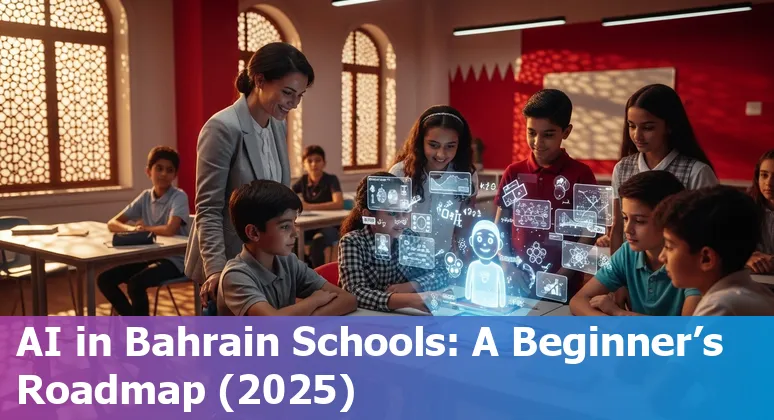
Too Long; Didn't Read:
In 2025 Bahrain combines a National AI Policy and a 2024 AI regulation to embed ethics and procurement standards across education; Tamkeen aims to train 50,000 Bahrainis, while practical courses (AI Essentials - 15 weeks, $3,582) and salaries (BHD 950–2,500) align skills with demand.
Bahrain's 2025 push to put AI at the heart of public services and learning is both practical and principled: a new national AI policy and the long-standing National AI Strategy set legal, ethical and educational guardrails while aiming to scale skills across the workforce, with Tamkeen targeting 50,000 Bahrainis for AI training and Bahrain Polytechnic's Artificial Intelligence Academy running industry partnerships with Microsoft; learn more from the Bahrain government AI overview and the Bahrain national AI policy announcement.
From AI that monitors every palm tree to chatbots in banks and universities, the focus for educators is clear - blend responsible governance with hands‑on upskilling - so practical courses like Nucamp's AI Essentials for Work (15 weeks) can help teachers and administrators learn prompt writing and tool use to boost classroom outcomes and operational efficiency.
| Bootcamp | Length | Early-bird Cost | Register |
|---|---|---|---|
| AI Essentials for Work | 15 Weeks | $3,582 | Register for Nucamp AI Essentials for Work (15-week bootcamp) |
“promote the responsible and secure use of AI to drive economic and social growth, while improving government efficiency across key sectors.” - Mohammed Ali Al Qaed, iGA Chief Executive
Table of Contents
- What is the AI strategy in Bahrain?
- Ethical framework and responsible AI in Bahrain's schools and universities
- Education & workforce development programs in Bahrain
- AI in K-12 and higher education: case studies from Bahrain
- Which countries are using AI in education? (Global context for Bahrain)
- Careers & salaries: How much do AI engineers make in Bahrain?
- How are Bahraini banks and financial institutions currently using AI?
- Procurement, standards, and ecosystem for AI in Bahrain's education sector
- Conclusion & next steps for schools and educators in Bahrain
- Frequently Asked Questions
Nucamp's Bahrain community brings AI and tech education right to your doorstep.
What is the AI strategy in Bahrain?
(Up)Bahrain's AI strategy ties a clear, practical playbook to strong ethical guardrails: the Information & eGovernment Authority's National Policy - aligned with the GCC Guiding Manual on AI ethics - frames AI rollout around four pillars (legal compliance, responsible adoption, public education, and international cooperation) and insists systems meet national laws like the Personal Data Protection Law and Open Data Policy; see the full policy on the iGA National AI Policy (Bahrain) for official guidance.
Complementing the policy is a 2024 standalone AI regulation that embeds duties for privacy, transparency and human oversight and bans harmful uses, signalling that innovation will be rolled out under enforceable rules rather than left to chance.
The strategy also pushes government-wide adoption - targeting public services from healthcare and education to urban monitoring - and pairs that rollout with workforce training and procurement standards so schools and universities aren't left guessing.
That balance - practical pilots (think satellite tools spotting construction changes or even monitoring palm trees) plus a regional ethical charter - is designed to build public trust while positioning Bahrain as a regional leader in responsible AI governance; for a concise regulatory overview, read the Nemko summary of Bahrain AI framework.
“promote the responsible and secure use of AI to drive economic and social growth, while improving government efficiency across key sectors.” - Mohammed Ali Al Qaed, iGA Chief Executive
Ethical framework and responsible AI in Bahrain's schools and universities
(Up)Bahrain's ethical framework for AI in schools and universities builds directly on the National Policy's four pillars - legal compliance, responsible adoption, public education and international cooperation - and folds in the GCC Guiding Manual's cultural guardrails so classroom AI tools must respect human dignity, privacy and Islamic values while promoting fairness and safety; see the full Bahrain National AI Policy and GCC Ethics Manual - iGA for how these principles map to existing laws like the Personal Data Protection Law and Open Data Policy.
Practical follow‑through matters: the policy stresses workforce training and workshops for ministry and education staff so teachers and administrators gain the skills to evaluate systems, insist on human oversight, and use AI to augment teaching rather than replace judgement - echoing the UN's call to keep education “centred on humanity” and prioritize teacher training and clear ethical guardrails (UN guidance on human‑centred AI integration in education).
The result should be measurable trust: safer school services, clearer accountability, and AI that adds value only when it preserves human agency and student rights.
“promote the responsible and secure use of AI to drive economic and social growth, while improving government efficiency across key sectors.” - Mohammed Ali Al Qaed, iGA Chief Executive
Education & workforce development programs in Bahrain
(Up)Bahrain's workforce push is now concrete: Tamkeen's landmark AI Training Program aims to upskill 50,000 Bahrainis by 2030 with three tailored tracks - AI Generalists for employees with foundational IT literacy, AI for Executives to shift leadership mindsets, and an AI Specialists stream to build technical capacity - backed by partnerships with local and international training providers and aligned with Tamkeen's 2025 priorities and the kingdom's wider digital vision; registration is open for the AI Generalists track and enterprises can enroll staff through Tamkeen's portal (Tamkeen AI Training Program registration and details), while practical career coaching and employability tools can help graduates translate skills into jobs (AI career coaching and employability tools for Bahrain education).
The scale - 50,000 learners over the coming years - creates a talent pipeline large enough to reshape hiring patterns across education, fintech and public services, and gives schools and bootcamps a clear signal to align short, skills-focused programs with employer demand.
| Track | Focus / Registration |
|---|---|
| AI Generalists | Foundational AI skills for employees - registration open |
| AI for Executives | Leadership and strategic adoption - designed for C-suite and entrepreneurs |
| AI Specialists | Technical training to build AI tools - registration to be announced |
“We launched this program to align the skills of Bahraini talent with labor market needs and equip them with future-ready capabilities. This training will support Bahrainis and open doors for their career development prospects. In addition, entrepreneurs and executives will also benefit from utilizing AI to boost efficiency, productivity, and the adoption of innovative technological solutions.” - Khalid Al Bayat, Chief Growth Officer at Tamkeen
AI in K-12 and higher education: case studies from Bahrain
(Up)Bahrain's most concrete classroom and campus experiments are coming from Gulf University, where an award‑winning virtual assistant, “Mariam,” won the 2025 Bahrain Digital Content Award for Learning and Education and now answers student academic and administrative queries in real time - a vivid example of generative AI moving beyond pilots into everyday campus services (Gulf University Mariam AI assistant 2025 award); the same campus ran a 60‑hour faculty training that certified 60 staff in practical AI uses for curriculum design, assessment and student support, and hosted the Arab Forum on AI in Higher Education with 387 regional and international participants to share scalable practices (Arab Forum on AI in Higher Education (Gulf University event)).
Alongside these innovations, local research flags the risks teachers see every day: a Gulf University classroom test showed colleagues could spot AI‑generated student reports by clues like “robotic sentence structure” and a lack of human opinion, and recommended clear university policies and guidance to teach ethical use rather than ban tools outright (Gulf University case study on academic integrity and AI).
Together these case studies sketch a pragmatic roadmap for Bahrain's education sector - build useful AI services, train staff, and pair each tool with policy and media‑literacy teaching so technology amplifies learning instead of hollowing it out.
“This forum is highly significant as it aligns with national initiatives and the directives, we give to universities to focus on artificial intelligence. We support this field wholeheartedly. AI has become indispensable in education - essential for developing student skills and launching specialized academic programs.” - Dr. Diana Abdulkarim Al-Jahrami
Which countries are using AI in education? (Global context for Bahrain)
(Up)Bahrain is part of a regional trend - alongside the UAE, Saudi Arabia, Qatar, Oman and Kuwait - where governments push AI into public services and schools to spur economic diversification and better learning outcomes, a pattern documented in a comparative analysis of GCC national AI strategies that highlights a
“soft regulation” approach favoring principles over binding rules.
That shared approach is a practical cue for Bahraini educators: common challenges such as data limitations, talent shortages and aligning tools with cultural values mean pilots must be paired with stronger legal safeguards and stakeholder engagement to avoid ethics‑washing.
On the ground, the regional context translates into concrete opportunities for schools and universities in Bahrain - from using predictive enrolment forecasting to optimise faculty allocation and reduce wasted seats to adopting AI career‑coaching tools that fast‑track student employability - see examples of predictive enrolment forecasting in Bahrain and AI career‑coaching tools for Bahrain students to see how global lessons map to local practice.
For full context, read the comparative analysis of GCC national AI strategies.
Careers & salaries: How much do AI engineers make in Bahrain?
(Up)Salaries for AI roles in Bahrain are rising but vary a lot by role, sector and experience - a clear reason why students and educators should track market benchmarks as they train for in‑demand positions (see the regional breakdown at DigitalDefynd Bahrain AI salary regional breakdown).
Entry‑level hires commonly start around BHD 950–1,000 per month for roles like data scientist, NLP or computer‑vision engineer, while mid‑career and specialist roles in fintech or e‑governance often push monthly pay into the BHD 1,700–2,500 range; for example, machine learning engineers are listed at roughly BHD 1,000–1,500 for juniors and BHD 1,800–2,500 for experienced practitioners, and AI product managers and solutions architects show similar upward mobility.
TalentUp Bahrain machine learning engineer salary benchmark also flags a market benchmark - reporting a base salary of BHD 30,800 for a machine learning engineer - which is worth checking during recruitment conversations and may reflect a different timeframe or compensation structure.
That numerical spread means a move from junior to senior can double take‑home pay, a vivid career inflection that makes targeted upskilling pay off quickly. Practical supports - like AI career coaching and sector‑matched bootcamps - can help bridge the gap between coursework and negotiated offers, so use salary data when planning a learning-to-hiring pathway.
| Role | Bahrain salary (from DigitalDefynd) |
|---|---|
| Machine Learning Engineer | BHD 1,000 – BHD 2,500 |
| Data Scientist | BHD 950 – BHD 2,400 |
| NLP / Computer Vision Engineer | BHD 950 – BHD 2,200 |
| AI Product Manager / Solutions Architect | BHD 1,000 – BHD 2,500 |
How are Bahraini banks and financial institutions currently using AI?
(Up)Bahraini banks and financial institutions are moving from pilots to production, using AI to speed service, manage risk and personalise products: the national portal highlights the surge in AI‑driven chatbots - for example, Batelco's “Basma” and ila Bank's “Fatima” - as a visible front end to wider back‑office automation (Bahrain national portal official AI guidance on AI use in financial services).
Industry analysis shows these customer‑facing tools sit alongside robo‑advisors, fraud detection, credit scoring, insurance risk modelling and digital‑payments integration (think BenefitPay) supported by Central Bank guidance and fintech sandboxes that let banks experiment safely (10xDS industry review: integrating AI into Bahrain industries).
The payoff is material - around one‑third of local financial firms already report using AI in operations - which both raises demand for specialised talent and creates real opportunities for education providers to offer targeted, finance‑focused AI upskilling and career coaching (Bahrain EDB analysis: the future of financial services in Bahrain).
Procurement, standards, and ecosystem for AI in Bahrain's education sector
(Up)Bahrain's education sector benefits from a national ecosystem that pairs early leadership on AI procurement with clear standards and capacity building: the Kingdom was among the first to pilot the World Economic Forum's AI procurement guidelines - an effort led with the EDB and iGA - and those guidelines now sit alongside the iGA's National AI Policy and the GCC Guiding Manual to set expectations for transparency, human oversight, privacy and accountability when public schools and universities buy AI tools; read the WEF procurement pilot coverage and the official iGA policy for details.
Those procurement rules aren't just paperwork - they work with the 2024 standalone AI law and national initiatives (from the Artificial Intelligence Academy at Bahrain Polytechnic to Tamkeen's training pipeline and iGA's innovation hub) to create predictable contracts, explainability requirements and testing pathways so vendors must prove safety and non‑discrimination before systems enter classrooms or student services.
The result is a practical procurement path: vetted vendor frameworks, sandboxes and award categories (like the eGovernment Excellence Award's AI category) that let education buyers adopt useful AI - from predictive enrolment tools to campus chatbots - without sacrificing student privacy or ethical standards, even for large-scale programs that monitor everything from enrolment trends to environmental data such as the national palm‑tree monitoring projects.
“When it comes to the governance and regulation of emerging technologies, Bahrain has earned a reputation as the Middle East's testbed thanks to its innovative regulatory framework, strong technology ecosystem and rapid shift to eGovernment. AI can deliver huge benefits to citizens, but it needs a robust framework for successful implementation, and this project with WEF will build a global knowledge-base that can be used by other governments to sustainably and responsibly introduce AI across their public sector institutions.” - Khalid Al Rumaihi, Chief Executive, Bahrain EDB
Conclusion & next steps for schools and educators in Bahrain
(Up)For Bahraini schools and educators the path forward is practical: anchor AI adoption to national goals like the Bahrain Economic Vision 2030 and the Ministry's Education & Training strategic plan, combine clear procurement and ethics checks with short, job‑focused training for teachers and staff, and use proven use cases - predictive enrolment forecasting to stop wasted faculty hours and AI career‑coaching tools to fast‑track student employability - to show quick wins that preserve teacher agency and student rights.
Start with small, monitored pilots that map to the ministry's 2023–2026 priorities, require vendor explainability and data‑protection clauses in contracts, and scale only after staff complete targeted upskilling so classroom tools augment instruction rather than replace it; practical programs like Enroll in Nucamp AI Essentials for Work - 15-week bootcamp give administrators and teachers hands‑on prompt writing and tool workflows they can deploy next term.
These steps - policy alignment, accountable procurement, and focused training - turn national ambition into classroom impact, so every pilot becomes a building block toward the kingdom's long‑term vision for a skills‑ready workforce and more efficient, equitable schools.
| Bootcamp | Length | Early-bird Cost | Register |
|---|---|---|---|
| AI Essentials for Work | 15 Weeks | $3,582 | Register for Nucamp AI Essentials for Work 15-Week Bootcamp |
Frequently Asked Questions
(Up)What is Bahrain's AI strategy and regulatory framework for education in 2025?
Bahrain's 2025 approach combines a National AI Policy (issued by the Information & eGovernment Authority) aligned with the GCC Guiding Manual on AI ethics and a 2024 standalone AI regulation. The strategy emphasises four pillars - legal compliance, responsible adoption, public education and international cooperation - and requires conformity with national laws such as the Personal Data Protection Law and the Open Data Policy. The result: government‑led pilots and sector rollouts (including education) under enforceable duties for privacy, transparency and human oversight rather than unregulated experimentation.
How is AI already being used in Bahrain's schools and universities?
Use cases range from campus virtual assistants and chatbots to curriculum and assessment support. Gulf University's award‑winning assistant “Mariam” handles student academic and administrative queries; universities have run faculty training programs (e.g., 60‑hour certifications) for curriculum design and assessment; and pilots extend to predictive enrolment forecasting, campus chatbots, fraud detection in fintech partnerships and even environmental monitoring (for example, palm‑tree monitoring). Most deployments pair tools with policies and staff training to preserve teacher oversight and student rights.
What workforce and training programmes support AI skills in Bahrain?
Tamkeen's AI Training Program aims to upskill 50,000 Bahrainis by 2030 across three tracks: AI Generalists (foundational skills, registration open), AI for Executives (leadership), and AI Specialists (technical). Bahrain Polytechnic's Artificial Intelligence Academy runs industry partnerships and applied training. Private providers and bootcamps also fill demand - example: Nucamp's AI Essentials for Work is a 15‑week practical course (early‑bird cost listed as $3,582) focused on prompt writing and tool workflows for educators and administrators.
What procurement, ethics and safety steps should schools take before adopting AI tools?
Follow national procurement and explainability standards: require vendor testing, data‑protection clauses, human‑in‑the‑loop oversight, transparency/explainability, and non‑discrimination guarantees. Bahrain has piloted WEF AI procurement guidelines and embeds iGA policy and the 2024 AI law into procurement practices. Practical steps for schools include small monitored pilots aligned to ministry priorities, mandatory staff upskilling before scale‑up, and contracts that enforce privacy and auditability.
What are career prospects and typical salary ranges for AI roles in Bahrain?
Demand for AI talent is rising across education, fintech and government. Reported monthly salary ranges vary by role and experience: Machine Learning Engineer BHD 1,000–2,500; Data Scientist BHD 950–2,400; NLP/Computer Vision Engineer BHD 950–2,200; AI Product Manager / Solutions Architect BHD 1,000–2,500. Moving from junior to senior roles can materially increase pay, so targeted upskilling, career coaching and sector‑aligned bootcamps can accelerate employability and salary growth.
Cut processing costs with enrolment automation and RPA that handle transcripts and admissions workflows.
See why prompt-engineering training at the Artificial Intelligence Academy is critical to teacher adoption and safety.
Read how School Administrative Assistant automation risks from chatbots and RPA threaten routine tasks but open new career routes.

Ludo Fourrage
Founder and CEO
Ludovic (Ludo) Fourrage is an education industry veteran, named in 2017 as a Learning Technology Leader by Training Magazine. Before founding Nucamp, Ludo spent 18 years at Microsoft where he led innovation in the learning space. As the Senior Director of Digital Learning at this same company, Ludo led the development of the first of its kind 'YouTube for the Enterprise'. More recently, he delivered one of the most successful Corporate MOOC programs in partnership with top business schools and consulting organizations, i.e. INSEAD, Wharton, London Business School, and Accenture, to name a few. With the belief that the right education for everyone is an achievable goal, Ludo leads the nucamp team in the quest to make quality education accessible