









Is Austin, TX a Good City for a Tech Career in 2026?
By Irene Holden
Last Updated: February 22nd 2026
Quick Explanation
Yes, Austin is a strong tech career city in 2026, especially for AI and hardware specialists, with the highest tech talent growth rate in North America and top startup rankings. Senior tech salaries average around $165,000, enhanced by no state income tax, offering financial benefits in a maturing market that prioritizes focused expertise.
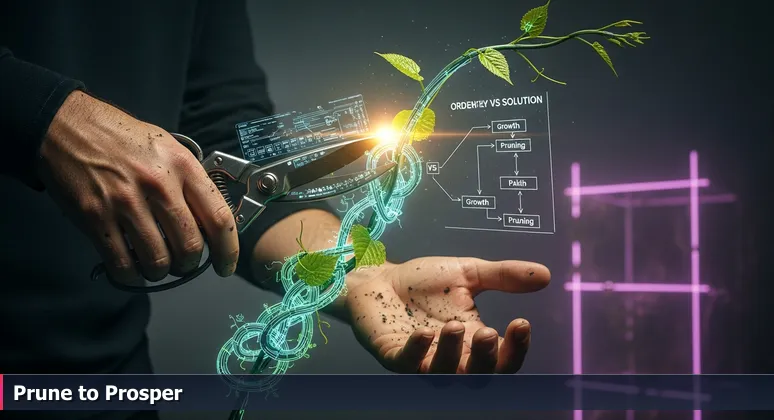
That decisive moment when a gardener assesses a thriving but unruly vine - deciding which shoots to cut and where to place a trellis for lasting strength - is exactly where Austin's tech ecosystem finds itself. The city's explosive, sometimes chaotic growth is being intentionally shaped into a mature and resilient landscape.
Conflicting headlines can be confusing: while The Wall Street Journal has questioned Austin's reign, data from organizations like CBRE shows it climbing into the top five North American tech markets. This isn't a contradiction but a sign of maturation. The frenzy of the pandemic boom has cooled, giving way to what experts at Opportunity Austin call a period of "normalization" and "resilience."
The strategic cuts are evident. Hiring has become more selective, favoring specialists over generalists, as the market intelligently prunes for quality. Simultaneously, massive, long-term investments act as trellises for future growth, like Samsung's $17 billion semiconductor factory in nearby Taylor. This isn't an end to growth, but a redirection of Austin's remarkable 29.1% tech talent growth rate - the highest in North America - into durable, world-class infrastructure.
For tech professionals, the opportunity in 2026 is no longer about merely chasing a boom. It’s about understanding where to put down roots within an ecosystem being deliberately cultivated by global giants and a surging AI startup scene, all while benefiting from Texas's no state income tax. The wild frontier is being thoughtfully gardened, and the strongest careers will grow on its newly built supports.
What We Cover
- Austin's Strategic Prune in 2026
- Job Market Evolution: From Boom to Selectivity
- Financial Picture: Salaries vs. Cost of Living
- Quality of Life: Safety, Vibe, and Outdoor Escapes
- Who Should Move to Austin in 2026?
- Practical Pathways: Skill Development for Austin
- The Verdict: Austin's Durable Tech Hub Status
- Common Questions
Read the complete guide to starting an AI career in Austin, TX in 2026 for all the details.
Job Market Evolution: From Boom to Selectivity
The nature of Austin's job growth has undergone a fundamental shift. While the region still boasts the highest tech talent growth rate in North America at 29.1%, the hiring spree of recent years has matured into a more deliberate and specialized expansion. As market analyst Wheatley observes, "Austin is still a strong job market, especially in tech and AI, but hiring has become more selective and less explosive than during the pandemic boom."
This selectivity has created what professionals describe as a "splitting market." Generalist software engineering roles are more competitive, while explosive demand exists for expertise in AI tooling, cloud infrastructure, and cybersecurity. This specialization is supported by colossal, long-term investments that act as trellises for career growth:
- Semiconductors & Hardware: Samsung's $17 billion investment in Taylor anchors decades of hardware engineering and advanced manufacturing roles.
- Corporate AI Integration: Giants like Apple, Tesla, and Oracle use their Austin HQs to embed AI into products and enterprise software, creating specialized integration roles.
- The AI Startup Surge: Ranked the #1 best U.S. city for startups in 2026, Austin sees firms like Apptronik raising nearly $1 billion for robotics, inventing job categories that didn't exist here five years ago.
Geographically, the center of gravity is shifting north. While downtown hubs like Capital Factory remain vital, sustained growth is booming in suburbs like Round Rock (Dell), Cedar Park, and Pflugerville. These areas offer top schools, lower crime, and direct proximity to the campuses of Apple and Samsung, becoming where tech professionals increasingly plant family roots.
Financial Picture: Salaries vs. Cost of Living
The financial calculus of an Austin tech career represents a significant strategic pruning, where the gap in take-home pay compared to coastal hubs has dramatically narrowed. While average senior salaries hover around $165,000, the true advantage lies in Texas's no state income tax, a powerful boost to net income. An analysis by MOD24 shows this significantly narrows the savings gap for high-earning tech workers compared to San Francisco.
To live comfortably as a single adult in Austin requires an estimated $114,659 annually, the highest in Texas according to a Fox 26 Houston report. However, when combined with the tax advantage and more attainable housing, this represents a substantial quality-of-life upgrade. The financial "prune" redirects energy from surviving exorbitant costs toward building lasting wealth and comfort.
| Hub | Key Advantage | Avg. Tech Salary | Median Home Price |
|---|---|---|---|
| Austin | Growth rate, AI startups | ~$165k | ~$550k-$625k |
| San Francisco | Highest salaries, VC access | $175k-$197k | $1.45M |
| Dallas-Fort Worth | Corporate diversity, finance tech | Lower than Austin | Lower than Austin |
| Raleigh-Durham | Extreme affordability | Lower than Austin | ~$425k |
This comparison underscores Austin's durable value proposition: strong, competitive salaries are amplified by the state's tax structure and a housing market that, while the priciest in Texas, remains accessible compared to traditional tech epicenters. The financial landscape has been pruned for sustainable growth, not just peak earnings.
Quality of Life: Safety, Vibe, and Outdoor Escapes
Austin's promise has always blended career opportunity with a distinctive lifestyle, and in 2026, that blend has matured with clearer trade-offs. The search for community and stability is increasingly driving professionals to the northern suburbs, where areas like Cedar Park and Georgetown are consistently ranked among the safest in America. This decentralization, detailed in reports from CultureMap Austin, is a deliberate choice for those planting long-term roots, prioritizing excellent schools and lower crime rates.
The city's collaborative, "laid-back" spirit remains a major draw, offering a stark contrast to the high-grind culture of other tech hubs. It's a place professionals choose to build a life, not just a resume. This innovative energy is continuously fueled by major events like SXSW, which draws thousands of global startups and investors to the city each year, solidifying its status as a cultural nexus for technology.
The unparalleled access to nature serves as the ultimate counterbalance to screen time. Whether it's paddling on Lady Bird Lake, hiking the Barton Creek Greenbelt, or exploring the Hill Country, these outdoor escapes are integral to Austin's identity. This immediate connection to green space and sunshine isn't just a perk; it's a fundamental component of the work-life balance that makes the Silicon Hills a sustainable place to thrive for the long term.
Who Should Move to Austin in 2026?
Understanding Austin's pruned and maturing ecosystem reveals clear profiles for who will find the most fertile ground. The city's "splitting market" means opportunity is no longer uniform but highly specialized, rewarding those whose skills align with its deepening industrial strengths.
Austin is ideal for specialists in high-growth sectors. This includes AI & ML engineers building products for the booming startup scene, hardware and semiconductor professionals anchored by Samsung's generational investment in Taylor, and cloud/DevOps experts needed to scale the region's infrastructure. It's also excellent for career-changers entering tech with these focused, in-demand specializations, as noted in professional analyses of the 2026 job market.
Conversely, Austin might be less ideal for other profiles. Entry-level generalist coders face a more competitive and selective landscape. Those seeking the absolute maximum pre-tax salary above all else will find that, while strong, Austin's pay slightly lags behind Silicon Valley's peaks. Finally, urban purists on a strict budget may find the cost of a walkable downtown loft prohibitive, as the value and growth have decisively shifted toward the suburbs.
This selective fit underscores the city's maturation. As discussions on platforms like LinkedIn affirm, Austin's reign isn't ending - it's evolving into a hub of durable strength best suited for those ready to grow where the ecosystem is being deliberately and intelligently supported.
Practical Pathways: Skill Development for Austin
For those ready to plant themselves in Austin's ecosystem, navigating the "splitting market" demands strategic skill development. The path forward requires building a personal "trellis" of specialized, demonstrable competencies, particularly in high-growth fields like AI and cloud infrastructure that the city's pruned landscape now prioritizes.
This is where accessible, high-quality education becomes critical. Bootcamps offer a direct route to align with Austin's demand signals, providing the focused training needed without putting life on hold. For example, Nucamp's affordable programs are designed for this exact purpose, with options like the 25-week Solo AI Tech Entrepreneur Bootcamp for building AI products, the 15-week AI Essentials for Work for practical prompt engineering, and the 16-week Back End, SQL and DevOps with Python bootcamp that covers the foundational stack for AI/ML careers.
Programs like these, with community-based learning and flexible schedules, represent a pragmatic step toward becoming the specialized talent that Austin's maturing ecosystem is actively seeking. They equip aspiring professionals with the precise tools to contribute to the city's top-ranked startup scene and corporate AI integrations, turning career transition into strategic growth on the city's sturdy new supports.
The Verdict: Austin's Durable Tech Hub Status
So, is Austin a good city for a tech career in 2026? The answer is a confident yes, but one that requires a mature understanding of what "good" means in this new phase. The city is no longer the wild, untamed frontier of tech - it is a thoughtfully cultivated landscape. While headlines sometimes hint at a boomtown past its peak, the deeper reality is of normalization and solidified foundation.
The evidence points to durable strength. Austin is ranked the No. 9 best city in America for jobs in 2026 by WalletHub, specifically citing strong socioeconomic factors. Experts note its tech GDP growth still trails only Silicon Valley, and it remains a "crown jewel of Texas tech" and a hub rivaling San Francisco for startup energy. The explosive, sometimes chaotic growth has been pruned into specialized industries, stable suburban communities, and a financial advantage that retains talent.
For the tech professional who strategically aligns their skills with Austin's deepening strengths - who is ready to grow where the ecosystem is being deliberately supported - the Silicon Hills offer not just a job, but a place to truly take root and thrive. The frenzy has cooled, but the trellises are built, and the opportunity for sustained, fruitful growth has never been clearer.
Common Questions
Is Austin still a top choice for tech professionals in 2026?
Yes, Austin remains a premier tech hub with a 29.1% tech talent growth rate, the highest in North America. The ecosystem is maturing with stable opportunities in AI, semiconductors, and startups, making it ideal for those with specialized skills.
What tech skills are most in demand in Austin's job market?
AI and machine learning roles are surging, driven by employers like Apple, Tesla, and local startups. Hardware engineering for Samsung's $17 billion expansion and cloud infrastructure expertise are also highly sought after, reflecting Austin's focused growth areas.
How do tech salaries in Austin compare to places like San Francisco?
Austin offers competitive salaries averaging around $165,000 for senior roles, and with no state income tax, net income can rival higher-paying hubs. While San Francisco salaries might reach $197k, Austin's median home price of $550k-$625k and lower overall costs provide better financial value.
Is it worth moving to Austin for a tech career given the high cost of living?
Yes, because Austin's cost of living, while the highest in Texas, is still lower than coastal cities, and the tax advantage boosts take-home pay. You need about $114,659 annually to live comfortably, but this is a significant upgrade compared to San Francisco's expenses.
What are the best areas in Austin for tech workers to live?
Suburbs like Round Rock, Cedar Park, and Pflugerville are booming due to safety, school quality, and proximity to major tech campuses like Dell and Apple. Cedar Park is consistently ranked among the safest in America, offering a family-friendly environment with easy access to jobs.
Discover Austin's top earn-while-you-learn programs for aspiring technologists.
Find detailed reviews of tech coworking and incubation spots in Austin for various needs.
Find out about the top-rated AI tech bootcamps in Austin in 2026 and how they compare.
Find out where AI talent is in high demand in Austin outside of major tech companies.
Learn where to find AI roles in Austin in 2026 at leading companies like NVIDIA and Tesla.

Irene Holden
Operations Manager
Former Microsoft Education and Learning Futures Group team member, Irene now oversees instructors at Nucamp while writing about everything tech - from careers to coding bootcamps.